LS3 Install guys - temp gauge?

Thread Starter
Burning Brakes


Joined: Apr 2008
Posts: 825
Likes: 40
From: Glasgow, Scotland
 LS3 Install guys - temp gauge?
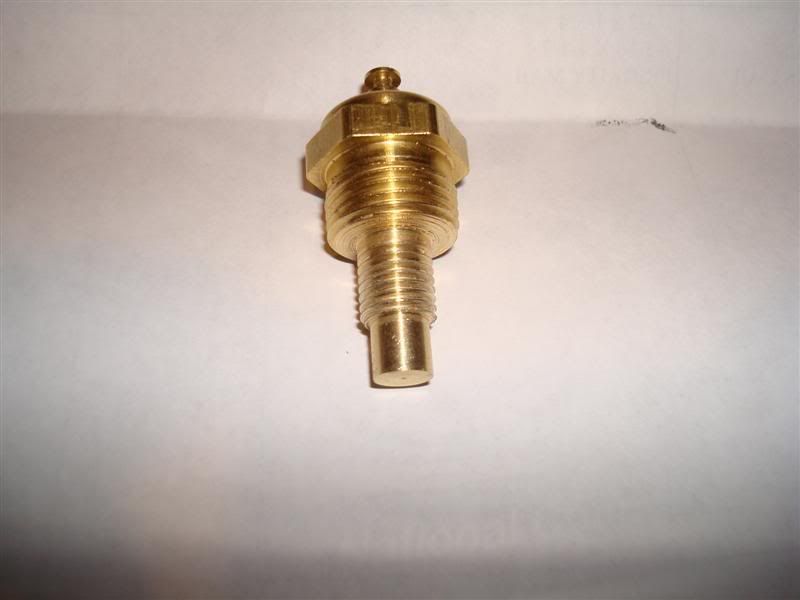
Ive got 2 gm temp senders in the ls3 block, one for the ecu and other to work a temp gauge, the temp gauge ive got is the problem, not slowing any sign of life, can anyone point me towards a gauge that will work with the ls3 gm sender?
gm temp sender has 2 pins, one for earth and other resistence, I think!
cheers
dave
gm temp sender has 2 pins, one for earth and other resistence, I think!
cheers
dave

Melting Slicks


Joined: Sep 2004
Posts: 2,655
Likes: 19
The front drivers head sensor is for the ecu, +5V and low reference, no ground. No idea what the other one is for. I drilled and tapped the drivers side brass block plug for 1/2" NPT and used the sender that went with my OEM 68 gauge.
Thread Starter
Burning Brakes
Joined: Apr 2008
Posts: 825
Likes: 40
From: Glasgow, Scotland
cheers
dave
Melting Slicks
Joined: Sep 2004
Posts: 2,655
Likes: 19
Tough to say what that sender is for. They come in different resistance ranges for various manufacturers. What gauge are you wanting to use? It might be easier/cheaper to try to get a sender for that. There are adapters for the metric head hole. I've also seen people drill and tap the passenger rear location for a standard sender.
For me it was easiest to drill and tap the block plug.
For me it was easiest to drill and tap the block plug.
Thread Starter
Burning Brakes
Joined: Apr 2008
Posts: 825
Likes: 40
From: Glasgow, Scotland
Tough to say what that sender is for. They come in different resistance ranges for various manufacturers. What gauge are you wanting to use? It might be easier/cheaper to try to get a sender for that. There are adapters for the metric head hole. I've also seen people drill and tap the passenger rear location for a standard sender.
For me it was easiest to drill and tap the block plug.
For me it was easiest to drill and tap the block plug.
there must be a gauge that works in that range?
cheers
Thread Starter
Burning Brakes
Joined: Apr 2008
Posts: 825
Likes: 40
From: Glasgow, Scotland
The PCM uses the signal for many of the control systems that affect fuel economy, emissions and idle, so any degraded or loss of signal has a great impact on the engine performance.
There are two different ECT sensors. One is a three wire used on very early (1997-98) LS1 engines, where the third wire (usually green) goes directly to the temperature gauge on the instrument panel. The later engines use a two wire sensor and the pcm conditions the signal and a separate signal from the pcm goes to the gauge on the instrument cluster."
some good info, therefore need to try and find the signal wire in loom for a gauge
dave

Safety Car

Joined: Aug 2001
Posts: 4,883
Likes: 11
From: North Easton Mass
"The ECT, like the IAT is a thermistor sensor, so it also changes the resistance based on temperature. The same range of resistance (ohms) is used as in the IAT. The pcm also sends a 5V signal to the sensor and monitors the return voltage. When the engine has not been run for several hours, the scan tool should read the IAT and ECT temperatures close to each other.
The PCM uses the signal for many of the control systems that affect fuel economy, emissions and idle, so any degraded or loss of signal has a great impact on the engine performance.
There are two different ECT sensors. One is a three wire used on very early (1997-98) LS1 engines, where the third wire (usually green) goes directly to the temperature gauge on the instrument panel. The later engines use a two wire sensor and the pcm conditions the signal and a separate signal from the pcm goes to the gauge on the instrument cluster."
some good info, therefore need to try and find the signal wire in loom for a gauge
dave
The PCM uses the signal for many of the control systems that affect fuel economy, emissions and idle, so any degraded or loss of signal has a great impact on the engine performance.
There are two different ECT sensors. One is a three wire used on very early (1997-98) LS1 engines, where the third wire (usually green) goes directly to the temperature gauge on the instrument panel. The later engines use a two wire sensor and the pcm conditions the signal and a separate signal from the pcm goes to the gauge on the instrument cluster."
some good info, therefore need to try and find the signal wire in loom for a gauge
dave

Rick B.
Corvette Stories
The Best of Corvette for Corvette Enthusiasts

Top 10 Most Expensive Corvettes Ever Sold on Bring A Trailer
Brett Foote
10 Things Every Corvette Owner Needs (2026 Edition)
Michael S. Palmer
8 Most "Only Corvette Owners Understand" Quirks and Problems
Pouria Savadkouei
10 Reasons the C6 Z06 is Still A Performance Benchmark After 20 Years
Joe Kucinski
How Much Horsepower Every Corvette Engine "LOST" in 1972
Joe Kucinski
Top 10 DOs and DON'Ts for Protecting Your Convertible Top!
Michael S. Palmer
Top 10 Most Explosive Corvettes Ever Made: Power-to-Weight Ratio Ranked!
Joe Kucinski
150 hp to 1,250 hp: Every Corvette Generation Compared by the Specs That Matter
Joe Kucinski
8 Coolest Corvette Pace Cars (and Replicas) of All Time
Verdad Gallardo
Burning Brakes
Joined: Oct 2008
Posts: 1,037
Likes: 14
From: Mobile Alabama
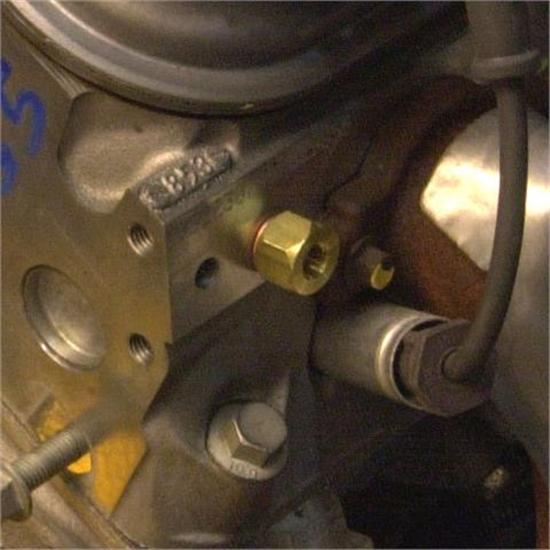
If it was me, I would get a sender for the gauges I wanted to use. Then decide how to install it. I like matched gauge sets, instead of finding one gauge to match the sender. I used an adapter like this to hook up mine.
Later on I am thinking of adding a tablet computer to the dash. Here is a cool application using bluetooth. See post 9
http://ls1tech.com/forums/conversion...e-options.html
Later on I am thinking of adding a tablet computer to the dash. Here is a cool application using bluetooth. See post 9
http://ls1tech.com/forums/conversion...e-options.html
Last edited by 74modified; Oct 8, 2012 at 09:29 PM.

Advanced

Joined: Mar 2011
Posts: 78
Likes: 1
From: SoCal California
I recently swapped a 2011 LS3 into my 1966 Nova SS. For my Auto Meter water temp guage to work properly I:
- Removed the small screw-in plug on the passenger side cylinder head located just rearward of the last header tube.
- Threaded in a metric-to-SAE brass conversion gizmo made by Auto Meter
- Then threaded the Auto Meter temp sensor into the conversion gizmo. From there, the wiring is as dictated by the Auto Meter instructions.
- Removed the small screw-in plug on the passenger side cylinder head located just rearward of the last header tube.
- Threaded in a metric-to-SAE brass conversion gizmo made by Auto Meter
- Then threaded the Auto Meter temp sensor into the conversion gizmo. From there, the wiring is as dictated by the Auto Meter instructions.

Race Director


Joined: Dec 1999
Posts: 19,610
Likes: 778
From: Forked River NJ
I recently swapped a 2011 LS3 into my 1966 Nova SS. For my Auto Meter water temp guage to work properly I:
- Removed the small screw-in plug on the passenger side cylinder head located just rearward of the last header tube.
- Threaded in a metric-to-SAE brass conversion gizmo made by Auto Meter
- Then threaded the Auto Meter temp sensor into the conversion gizmo. From there, the wiring is as dictated by the Auto Meter instructions.
- Removed the small screw-in plug on the passenger side cylinder head located just rearward of the last header tube.
- Threaded in a metric-to-SAE brass conversion gizmo made by Auto Meter
- Then threaded the Auto Meter temp sensor into the conversion gizmo. From there, the wiring is as dictated by the Auto Meter instructions.
The stock sensor I do not think will work with any gauges other than the factory one it was designed for. I'm no electrical engineer so I'm sure it could be done but with a lot of work.

Race Director


Joined: Feb 1999
Posts: 19,659
Likes: 34
From: Lenoir City Tennessee
Ci 6, 8 & 10 Veteran
St. Jude Donor '05-'06-'07-'08-'09-'10-'11-'12-'13-'14-'15
Well, I guess I went the hardest way about it when I did mine. I had a stock sensor from Autozone or wherever and had one of the machinist at work cut it down to fit the LS fittings on the motor. One thing about cutting it down like I did is it should react to temp changes quicker, good or bad.