







ignitor II
Thread Starter
Intermediate

Joined: Jul 2009
Posts: 46
Likes: 0
 ignitor II
1972 coupe with 1969 350 from Impala. Removed the distributor and installed the ignitor II and flame thrower coil. May not have got the rotor back on in the exact position. I marked the distributor and aligned the marks when I reinstalled it. so it will not run. Should I pull the plug and start from scratch ? im not the best at this but not a complete novice. I cant locate a balast resistor, where did they install that. It had a condensor mounted to the coil bracket and ran to the coil.

Drifting

Joined: Mar 2011
Posts: 1,886
Likes: 9
The older cars had ballast resistors to feed the coil. The coil only sees 12 volts when cranking. At some point, Chevrolet changed to a resistor wire. My '74 has the resistor wire to reduce the running voltage to the coil. Check the instructions, but I think your new coil is rated 12 volts full time. So you have to run a (fused!) wire from a switched outlet from your fuse box to the coil, to give it 12 volts full time.
To get the engine running again, you may have to go back to the basics. Set the crank to #1 TDC and make sure the rotor is pointed to the correct distributor tower. Probably, the engine will start with the timing a bit too advanced rather than too much retarded. So you could try to "fudge" things a bit in that direction, if it becomes desperate time. After it starts, set the timing correctly right away.
Good luck, buddy. I know there is nothing more frustrating than to spend a bunch of time on a project and have it not work.
To get the engine running again, you may have to go back to the basics. Set the crank to #1 TDC and make sure the rotor is pointed to the correct distributor tower. Probably, the engine will start with the timing a bit too advanced rather than too much retarded. So you could try to "fudge" things a bit in that direction, if it becomes desperate time. After it starts, set the timing correctly right away.
Good luck, buddy. I know there is nothing more frustrating than to spend a bunch of time on a project and have it not work.
Thread Starter
Intermediate
Joined: Jul 2009
Posts: 46
Likes: 0
I pulled No. plug and got it on compression stroke and got the markes lined up. Put the distributor in and still wont crank. Put the points back in and wont crank. It fired up before I put the iggy in. I put new water pump and ran it. After getting on no. 1 compression I put the distributor back in per my manual and set point gap but still wont run.
Race Director


Joined: May 2006
Posts: 18,598
Likes: 2,540
Can you clarify, the engine cranks but wont start or it doesnt crank at all? If it doesnt crank at all it sounds more like a battery problem, did you disconnect the battery when you installed the ignitor? Are you sure you didnt reverse the wires going to the coil?

Advanced


Joined: Jul 2012
Posts: 56
Likes: 0
From: San Antonio, Tx
Dad and I had a similar weekend project when they were visiting - at first it wouldn't crank but then 'we' remembered to put the clutch in...
As far as setting the timing - there's a CHANCE that the first time you ran it to the compression stroke and set it, the rotor wasn't at the right spot to be pointing directly at #1 wire, or something. We did the compression stroke bit 2xs, second time it started right up. Lars' write up really made it quick and easy with the rotor walking method explained instead of screwing with a screwdriver on the oil pump.
I have a tag-on question regarding the ballast resistor - I have 2 wires from PO, or original (dunno) - the red cloth-covered resistor wire, and a black, 12 gauge wire run into the same orignial looking connector for the coil - combined, 14Vs in 'on', didn't test when engine was just running - is this the normal resistor wire setup, or did a PO run a 2nd IGN wire for me already?
As far as setting the timing - there's a CHANCE that the first time you ran it to the compression stroke and set it, the rotor wasn't at the right spot to be pointing directly at #1 wire, or something. We did the compression stroke bit 2xs, second time it started right up. Lars' write up really made it quick and easy with the rotor walking method explained instead of screwing with a screwdriver on the oil pump.
I have a tag-on question regarding the ballast resistor - I have 2 wires from PO, or original (dunno) - the red cloth-covered resistor wire, and a black, 12 gauge wire run into the same orignial looking connector for the coil - combined, 14Vs in 'on', didn't test when engine was just running - is this the normal resistor wire setup, or did a PO run a 2nd IGN wire for me already?
Drifting
Joined: Mar 2011
Posts: 1,886
Likes: 9
Dad and I had a similar weekend project when they were visiting - at first it wouldn't crank but then 'we' remembered to put the clutch in...
As far as setting the timing - there's a CHANCE that the first time you ran it to the compression stroke and set it, the rotor wasn't at the right spot to be pointing directly at #1 wire, or something. We did the compression stroke bit 2xs, second time it started right up. Lars' write up really made it quick and easy with the rotor walking method explained instead of screwing with a screwdriver on the oil pump.
I have a tag-on question regarding the ballast resistor - I have 2 wires from PO, or original (dunno) - the red cloth-covered resistor wire, and a black, 12 gauge wire run into the same orignial looking connector for the coil - combined, 14Vs in 'on', didn't test when engine was just running - is this the normal resistor wire setup, or did a PO run a 2nd IGN wire for me already?
As far as setting the timing - there's a CHANCE that the first time you ran it to the compression stroke and set it, the rotor wasn't at the right spot to be pointing directly at #1 wire, or something. We did the compression stroke bit 2xs, second time it started right up. Lars' write up really made it quick and easy with the rotor walking method explained instead of screwing with a screwdriver on the oil pump.
I have a tag-on question regarding the ballast resistor - I have 2 wires from PO, or original (dunno) - the red cloth-covered resistor wire, and a black, 12 gauge wire run into the same orignial looking connector for the coil - combined, 14Vs in 'on', didn't test when engine was just running - is this the normal resistor wire setup, or did a PO run a 2nd IGN wire for me already?
Last edited by gcusmano74; Nov 1, 2012 at 09:42 PM.
Corvette Stories
The Best of Corvette for Corvette Enthusiasts

2027 Corvette vs The World: Every Model vs Closest Competitor
Joe Kucinski
10 Most Common Corvette Problems of the Last 20 Years!
Joe Kucinski
5 MOST and 5 LEAST Popular Corvette Model Years in History!
Joe Kucinski
2027 Corvette Buyer's Guide: Everything You Need to Know!
Joe Kucinski
10 Things C8 Corvette Owners Hate (But Won't Tell You)
Joe Kucinski
10 Best Corvettes Coming to Barrett-Jackson Palm Beach 2026!
Brett Foote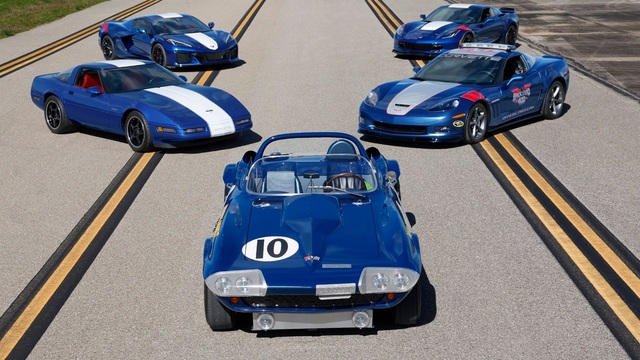
Every Corvette Grand Sport Explained! (C2, C4, C6, C7, & C8)
Joe Kucinski
Grand Sport & Grand Sport X Launch Alongside All-New 535hp LS6 V8!
Michael S. Palmer
5 Reasons Bad Drivers Crash & 5 Ways to Avoid a Costly Mistake!
Joe Kucinski
Tech Contributor

Joined: Jun 2004
Posts: 20,779
Likes: 957
From: I tend to be leery of any guy who doesn't own a chainsaw or a handgun.
The coil normally has two "hot" wires. The first wire delivers 12 volts to the coil. It is connected through the starter relay and is only live while the starter is running. The stock coil is only rated for 12 volts for a short period of time. The second wire is the resistor wire. It is connected anytime the ignition switch is "On" and the engine is running. The resistor line delivers much less voltage to the coil on a continuous basis. The so called high voltage coils can deliver a hotter spark because they are designed to run full time on 12 volts.