



New calipers for '81.
Thread Starter
Instructor


Joined: Nov 2001
Posts: 128
Likes: 1
From: Sherwood Ar
St. Jude Donor '16-'17,'19
 New calipers for '81.
Hope I don't regret posting after instead of before.
I'm replacing the calipers on my 81. I am unable to find a tool to spread the pads apart while slipping the new caliper over the rotor and couldn't hold the pistons in with my hands. My new rear calipers have three bleeder screws, the two on the leading end of the caliper and another on the trailing end outboard. As firm as the pressure is on the pistons I assume there must be fluid inside the caliper. I cracked open all three bleeders which released enough pressure that I could spread the pads far enough with my hands to slip over the rotor. No fluid leaked out when I opened the bleeders. I assume I have let air into the caliper but it has to be bled anyhow. Is what I did okay?
I'm replacing the calipers on my 81. I am unable to find a tool to spread the pads apart while slipping the new caliper over the rotor and couldn't hold the pistons in with my hands. My new rear calipers have three bleeder screws, the two on the leading end of the caliper and another on the trailing end outboard. As firm as the pressure is on the pistons I assume there must be fluid inside the caliper. I cracked open all three bleeders which released enough pressure that I could spread the pads far enough with my hands to slip over the rotor. No fluid leaked out when I opened the bleeders. I assume I have let air into the caliper but it has to be bled anyhow. Is what I did okay?

Le Mans Master


Joined: Oct 2010
Posts: 6,938
Likes: 848
From: melbourne florida
2023 C3 of the Year Finalist - Modified
most corvette suppliers have pad holders that hold them back and you slip them on and then remove the pad holders,they aren't expensive. when i changed to o ring calipers i removed the piston springs and they are easier to swap pads on
Thread Starter
Instructor
Joined: Nov 2001
Posts: 128
Likes: 1
From: Sherwood Ar
St. Jude Donor '16-'17,'19
With no brake line attached to the caliper you will be able to push both brake pads outboard to slip caliper over the rotor.
thanks for the replies.
edit: ha. no wonder i couldn't quote mike's response. i guess he had deleted it. thanks anyway.

Thread Starter
Instructor
Joined: Nov 2001
Posts: 128
Likes: 1
From: Sherwood Ar
St. Jude Donor '16-'17,'19
Also, i've read some yay and nays on here and elsewhere with regards to using silicon grease to lube the back of the pads and using anti-seize on the edges of the pads. I can't seem to find them anymore.

Melting Slicks


Joined: Mar 2009
Posts: 3,126
Likes: 15
Sorry about that. The new Photobucket is giving me fits. I wanted to post a pic.. Still working on it.
As 7t9l82 posted there are springs behind the pistons most times. Use the upper bleeders when you start to bleed the calipers. Most rear calipers have a plug on the lower outboard. mike...

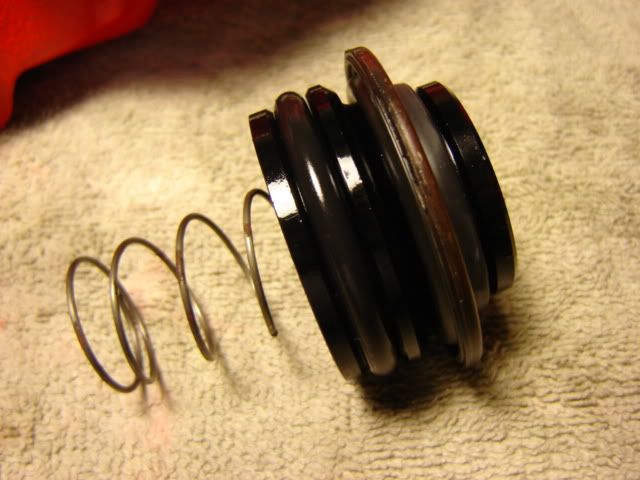
As 7t9l82 posted there are springs behind the pistons most times. Use the upper bleeders when you start to bleed the calipers. Most rear calipers have a plug on the lower outboard. mike...
Last edited by mds3013; Mar 9, 2013 at 04:34 PM.

Race Director


Joined: Jul 2001
Posts: 15,892
Likes: 42
Many people stick a small block of wood between the pads to hold them apart. It gets pushed out the top of the caliper as it's slid into place over the rotor.
Rebuilders install three bleeders for their convenience, no need to open the lower one.
Stock calipers with stock pads and piston seals do not require any silicone of other goop to stop squealing or squeaking. The piston springs help in a minor way although this is not their purpose.
Rebuilders install three bleeders for their convenience, no need to open the lower one.
Stock calipers with stock pads and piston seals do not require any silicone of other goop to stop squealing or squeaking. The piston springs help in a minor way although this is not their purpose.
Thread Starter
Instructor
Joined: Nov 2001
Posts: 128
Likes: 1
From: Sherwood Ar
St. Jude Donor '16-'17,'19
i had read about the block of wood trick but I couldn't get my pads spread far enough open to even do that. I presume there was just a lot of pressure inside the caliper and cracking the bleeders relieved that enough for me to be able to get them pushed open far enough.
I'm not sure if my calipers have lip seals or orings. i bought them at auto zone. they do have ss inserts.
I'm not sure if my calipers have lip seals or orings. i bought them at auto zone. they do have ss inserts.
Melting Slicks
Joined: Mar 2007
Posts: 2,520
Likes: 11
From: Hinckley OH
 The block of wood needs to be 1 1/4 inches. Two pieces of wood (one on each side of the pin) works even better.
Corvette Stories
The Best of Corvette for Corvette Enthusiasts

Every 2027 Corvette Engine Explained
Joe Kucinski
Designer Imagines A Corvette That Looks More Like a Corvette Than the Corvette
Verdad Gallardo
10 Ugly Corvettes That We Still Kinda Love
Joe Kucinski
Top 10 Most Expensive Corvettes Ever Sold on Bring A Trailer
Brett Foote
10 Things Every Corvette Owner Needs (2026 Edition)
Michael S. Palmer
8 Most "Only Corvette Owners Understand" Quirks and Problems
Pouria Savadkouei
10 Reasons the C6 Z06 is Still A Performance Benchmark After 20 Years
Joe Kucinski
How Much Horsepower Every Corvette Engine "LOST" in 1972
Joe Kucinski
Top 10 DOs and DON'Ts for Protecting Your Convertible Top!
Michael S. Palmer
Safety Car


Joined: Nov 2008
Posts: 3,725
Likes: 557
From: Seattle Washington
Any decent Auto Parts store should sell a Brake Shoe exspander. Its a small Scissor Jack. I have had mine for probably 30 years and have used it for every brake pad I have ever installed. You should have the Master Cylinder open to allow the Fluid to fill when the Pistions are pushed in.
You mentioned that the brake lines were not hooked up yet, if so and the lines were capped off the there would be no place for the Air to go when You pushed the Pistons in. By opening the Bleeders that gave the air someplace to go.
You mentioned that the brake lines were not hooked up yet, if so and the lines were capped off the there would be no place for the Air to go when You pushed the Pistons in. By opening the Bleeders that gave the air someplace to go.

Team Owner


Joined: Jun 2000
Posts: 38,923
Likes: 1,482
From: Southbound
Cruise-In II Veteran

Last edited by Easy Mike; Mar 11, 2013 at 12:35 PM.

Race Director


Joined: Apr 2007
Posts: 11,152
Likes: 890
From: South Western Ontario
That didn't hurt anything and you are probably right that you were trying to compress the air in the caliper. I'm guessing there's a plastic plug in the hole the line connects to otherwise the air would have exited from that hole.
Many companies sell these U shaped brackets that you're supposed to use to install the calipers but I found them mostly useless.
Many companies sell these U shaped brackets that you're supposed to use to install the calipers but I found them mostly useless.
Race Director
Joined: Jul 2001
Posts: 15,892
Likes: 42
Thread Starter
Instructor
Joined: Nov 2001
Posts: 128
Likes: 1
From: Sherwood Ar
St. Jude Donor '16-'17,'19
Thanks for the replies. i was just concerned as an afterthought, instead of as a forethought, that opening the bleeders might not have been a good idea. once i opened them it really wasn't hard at all to compress the pistons and slide the pads over the rotor.
Now then. After doing some more reading I am wondering if I am doing enough just replacing the calipers and the rubber hoses. Should I consider replacing all of the brake lines and the proportioning valve thingy? And maybe even the master cylinder? I replaced the calipers back in 99/2000 when i bought the car. It has been basically sitting in the garage for the last 4 or 5 years. The fluid in the master cylinder seems to be pretty dark. I think the lines are original and I'm afraid they are corroded and will cause problems with the new calipers.
Is replacing all the lines a doable job for a novice knucklebuster?
edit: my screen says no unread PMs fwiw.
Now then. After doing some more reading I am wondering if I am doing enough just replacing the calipers and the rubber hoses. Should I consider replacing all of the brake lines and the proportioning valve thingy? And maybe even the master cylinder? I replaced the calipers back in 99/2000 when i bought the car. It has been basically sitting in the garage for the last 4 or 5 years. The fluid in the master cylinder seems to be pretty dark. I think the lines are original and I'm afraid they are corroded and will cause problems with the new calipers.
Is replacing all the lines a doable job for a novice knucklebuster?
edit: my screen says no unread PMs fwiw.
Last edited by arklacat; Mar 11, 2013 at 02:45 PM.
Thread Starter
Instructor
Joined: Nov 2001
Posts: 128
Likes: 1
From: Sherwood Ar
St. Jude Donor '16-'17,'19
Should I consider replacing all of the brake lines and the proportioning valve thingy? And maybe even the master cylinder? I replaced the calipers back in 99/2000 when i bought the car. It has been basically sitting in the garage for the last 4 or 5 years. The fluid in the master cylinder seems to be pretty dark. I think the lines are original and I'm afraid they are corroded and will cause problems with the new calipers.
Is replacing all the lines a doable job for a novice knucklebuster?
Is replacing all the lines a doable job for a novice knucklebuster?
Melting Slicks
Joined: Mar 2009
Posts: 3,126
Likes: 15
Look inside the rear hard caliper lines for corrosion. Or run a pipe cleaner into one of them. May tell you a little about how much moisture has been absorbed by the DOT3 fluid in the past. Was the brake fluid clear and clean or dark and dirty? Outside corrosion is of course easy to see. mike...
Safety Car
Joined: Nov 2008
Posts: 3,725
Likes: 557
From: Seattle Washington
Assuming that as the old Brakes Pads were worn, the Master Cylinder should of been properly topped off and maintained at the proper level. Then when new Pads were installed just where is all this extra Brake Fluid suposed to go? As far as allowing dirt and moisture in, well You control the dirt factor with your own house keeping. As far as moisture goe's, I believe its an old wives tale about only using a new un opened container of brake fluid due to water contamination. Brake Fluid comes in Plastic Containers, and You have the cap off for what, 30 seconds when you pour some in. I'd like to see how many brake shops don't buy there Fluid in bulk. Besides, brake fluid is something that should be changed as regular maintanace. Depending on the Vehicle it might need to be changed more often than the brake pads them selves.
Race Director
Joined: Jul 2001
Posts: 15,892
Likes: 42
Removing the cap has no effect on fluid returning to the reservoir.

Burning Brakes

Joined: Feb 2013
Posts: 1,062
Likes: 28
From: Burkburnett TX
I service low master cylinders. Might just give you a pedal push or two in the event something bad happens to your brake system. That extra pedal push might be what saves your life. If full you do have to pump out some of the brake fluid prior to pushing in the calipers, or you can do the old rag around the cracked open master cylinder, but that is messy.