


What Causes Run-on / Dieseling?


Thread Starter
Drifting

Joined: May 2012
Posts: 1,353
Likes: 44
From: Calgary Alberta
 What Causes Run-on / Dieseling?
My 70 occasionally diesels on shut down. I've always thought this condition was typically caused by excessive idle speed / open throttle blades...but my idle is only at about 750 - 800, which is factory spec for a L46. I also don't think I have any real detonation issues, except possibly at very high RPM.
What else can cause this, and how can I track it down?
What else can cause this, and how can I track it down?

Melting Slicks


Joined: Feb 2004
Posts: 2,111
Likes: 32
From: Damascus MD
L46
Mine does the same unless I mix in a little 110 octane fuel. Usually 4-5 gallons per tank full. Mine will usually ping without the high octane too.
I suspect a carbon build up on the top of the pistons.
Mine runs flawlessly with the extra octane so I am almost afraid to take it apart. It should be able to run on 93 Octane without a problem but I have never had any success.
I had someone suggest to to de-carbon the motor with either sea foam or GM top end cleaner. I am not sure I feel comfortable going that route.
Mine has all original components. Carb, Dist, coil, etc...
I will be curious to see the responses.
I would love to get it running right on 93 Octane.
Bill
I suspect a carbon build up on the top of the pistons.
Mine runs flawlessly with the extra octane so I am almost afraid to take it apart. It should be able to run on 93 Octane without a problem but I have never had any success.
I had someone suggest to to de-carbon the motor with either sea foam or GM top end cleaner. I am not sure I feel comfortable going that route.
Mine has all original components. Carb, Dist, coil, etc...
I will be curious to see the responses.
I would love to get it running right on 93 Octane.
Bill

Burning Brakes

Joined: Apr 2013
Posts: 926
Likes: 2
From: Castle Rock CO
I stole this from a web link so the words are not all my own and everything said here is what I believe to cause engine run on.
http://en.wikipedia.org/wiki/Dieseling
In older cars you can get Carbon Buildup on the heads, Valves and Plugs so I would start there. If you have worn out rings or valve guides it will allow oil into the combustion chamber and it causes carbon build up. Not knowing how many miles are on your engine most of the older V8s would start to wear out at about between 80,000 and 100,000 miles if not properly taken care of with regular oil changes and filter maintenance. Those did get good attention would run to 120,000 to 150,000 miles before internal parts would wear out. In 1970 most of the dirt was pulled in through the Valve Cover Breathers. Pull the plugs and inspect them for build up. This is the most common for the engine to run on. Check your timing and Dwell. Full Tune ups on Point style Ignition systems should be performed between 20,000 and 30,000 miles. I used tune my engines to check timing and Dwell about every 5000 to 10,000 miles when I had points style and they were always needing adjustment. Fine Tweaking
Built-up carbon in the ignition chamber can glow red after the engine is off, providing a mechanism for igniting unburnt fuel. Such a thing can happen when the engine runs very rich, depositing unspent fuel and particles on the pistons and valves. Similarly, rough metal regions within the piston chamber can cause this same problem, since they can glow red. It has also been suggested that an improperly rated spark plug can retain heat and cause the same problem.
A carburetor that does not completely close can contribute to running once the engine is off, since the extra fuel and oxygen mixture can combust easily in the warm piston chamber. Similarly, hot vaporized oil gases from the engine crankcase can provide ample fuel for dieseling.
Incorrect timing.
An engine that runs too hot or too lean may produce an environment conducive to allowing unspent fuel to burn.
An idle speed that is too fast can leave the engine with too much angular momentum upon shutdown, raising the chances that the engine can turn over and burn more fuel and lock itself into a cycle of continuous running.
http://en.wikipedia.org/wiki/Dieseling
In older cars you can get Carbon Buildup on the heads, Valves and Plugs so I would start there. If you have worn out rings or valve guides it will allow oil into the combustion chamber and it causes carbon build up. Not knowing how many miles are on your engine most of the older V8s would start to wear out at about between 80,000 and 100,000 miles if not properly taken care of with regular oil changes and filter maintenance. Those did get good attention would run to 120,000 to 150,000 miles before internal parts would wear out. In 1970 most of the dirt was pulled in through the Valve Cover Breathers. Pull the plugs and inspect them for build up. This is the most common for the engine to run on. Check your timing and Dwell. Full Tune ups on Point style Ignition systems should be performed between 20,000 and 30,000 miles. I used tune my engines to check timing and Dwell about every 5000 to 10,000 miles when I had points style and they were always needing adjustment. Fine Tweaking
Built-up carbon in the ignition chamber can glow red after the engine is off, providing a mechanism for igniting unburnt fuel. Such a thing can happen when the engine runs very rich, depositing unspent fuel and particles on the pistons and valves. Similarly, rough metal regions within the piston chamber can cause this same problem, since they can glow red. It has also been suggested that an improperly rated spark plug can retain heat and cause the same problem.
A carburetor that does not completely close can contribute to running once the engine is off, since the extra fuel and oxygen mixture can combust easily in the warm piston chamber. Similarly, hot vaporized oil gases from the engine crankcase can provide ample fuel for dieseling.
Incorrect timing.
An engine that runs too hot or too lean may produce an environment conducive to allowing unspent fuel to burn.
An idle speed that is too fast can leave the engine with too much angular momentum upon shutdown, raising the chances that the engine can turn over and burn more fuel and lock itself into a cycle of continuous running.
Last edited by MakoJoe; Sep 14, 2013 at 09:58 PM.

Melting Slicks
Joined: May 2011
Posts: 2,753
Likes: 119
From: Springfield Missouri
do you have a solenoid on the carb that drops down offs the throttle arm when the car is shut off and allows the idle to do way down and no problem then??? You adjust the arm of the solenoid with a wrench.
Melting Slicks


Joined: Aug 2012
Posts: 2,548
Likes: 379
From: Woodinville WA
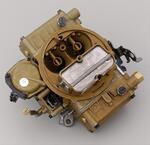
worn throttle blade rod on the primaries. The original stuff is steel on aluminum and it wears in an oblong pattern. Eventually, it gets worn enough to hang a throttle blade open. That allows extra gas to pool in the manifold and dieseling is the result. There are a variety of other, less common, reasons, but that one is pretty common. You can actually test the theory with the carb on the car. Remove the throttle return spring, and check for play in the throttle shaft (rock up and down/back and forth) - any play is bad play. The solution is relatively easy to drill and rebush the bottom plate. With that said, it's also really easy to screw it up, so if you hesitate doing that - get a qualified rebuilder.
Whatever you do, don't let it diesel. If it won't shut off immediately (for automatic) leave the car in gear when you shut the motor off; or with a manual (be careful) use the transmission in gear to drag the motor off by getting a bit of drag on the clutch (don't dump the clutch).
Whatever you do, don't let it diesel. If it won't shut off immediately (for automatic) leave the car in gear when you shut the motor off; or with a manual (be careful) use the transmission in gear to drag the motor off by getting a bit of drag on the clutch (don't dump the clutch).
Le Mans Master


Joined: Oct 2006
Posts: 7,123
Likes: 433
From: Gladstone MO
C3 of Year Finalist (appearance mods) 2019
Save your cash- if you decide to de-carbon the cylinders you don't need to spend money on seafoam or GM top end cleaner. Water works just as well.

Le Mans Master
Joined: Dec 2007
Posts: 6,422
Likes: 591
From: McHenry Illinois
 And doesn't cause a neighborhood full of smoke!
Le Mans Master
Joined: Mar 2008
Posts: 5,948
Likes: 72
From: Oxford MA-----You just lost the game!!!!
It's true...have you ever seen a cylinder head that's been removed to replace a blown head gasket? You can tell any combustion chambers that have had coolant leaking into them, because they will be all shiny and clean.
Scott
Scott

Le Mans Master
Joined: Jan 2004
Posts: 8,295
Likes: 30
From: one night in Bangkok you are never lonely

Tech Contributor
Joined: Jun 2004
Posts: 20,894
Likes: 962
From: I tend to be leery of any guy who doesn't own a chainsaw or a handgun.
My 70 occasionally diesels on shut down. I've always thought this condition was typically caused by excessive idle speed / open throttle blades...but my idle is only at about 750 - 800, which is factory spec for a L46. I also don't think I have any real detonation issues, except possibly at very high RPM.
What else can cause this, and how can I track it down?
What else can cause this, and how can I track it down?



Melting Slicks
Joined: Feb 2004
Posts: 2,111
Likes: 32
From: Damascus MD
run on
Motor has about 120k miles on it.
Already had the carb bushed professionally and re-kitted. Original carb.
New plugs, new wires, new points, rebuilt original distributor to factory specs. Timing, idle, and dwell are dead nuts.
Only way it stops is with more octane.
When I say it runs flawlessly with more octane I mean flawlessly. Does not use a drop of oil or blow any smoke at start up. It is only with todays pump gas that it runs on and pings. It did the same exact thing only a little worse before going through everything. Even starts perfectly and kicks down exactly as it did new.
Let me also add that when I pulled the oil pan it was spotless meaning the oil was changed often.
In terms of vacuum leaks, we plugged up the vacuum at the carb to eliminate that as a possibility. We did find a leak and fixed it. Did not help.
The only thing I have not done is de-carbon the motor.
I sure wish one of you was close by to double check my work. It is very frustrating and expensive to have to put in CAM2 gas.
Bill
Already had the carb bushed professionally and re-kitted. Original carb.
New plugs, new wires, new points, rebuilt original distributor to factory specs. Timing, idle, and dwell are dead nuts.
Only way it stops is with more octane.
When I say it runs flawlessly with more octane I mean flawlessly. Does not use a drop of oil or blow any smoke at start up. It is only with todays pump gas that it runs on and pings. It did the same exact thing only a little worse before going through everything. Even starts perfectly and kicks down exactly as it did new.
Let me also add that when I pulled the oil pan it was spotless meaning the oil was changed often.
In terms of vacuum leaks, we plugged up the vacuum at the carb to eliminate that as a possibility. We did find a leak and fixed it. Did not help.
The only thing I have not done is de-carbon the motor.
I sure wish one of you was close by to double check my work. It is very frustrating and expensive to have to put in CAM2 gas.
Bill
Melting Slicks

Joined: Nov 2001
Posts: 2,668
Likes: 43
From: Eastern US XX
I always get a kick out of people asking TIMING questions when someone says "My engine diesels "WHEN I SHUT THE KEY OFF". I would LOVE to hear what they think timing does with the ignition off.......

Le Mans Master
Joined: Dec 2003
Posts: 5,727
Likes: 38
From: Fremont CA
Your L-46 is 11:1 compression, it will not shut off on todays crap fuels, learn to live with it by killing the motor with the trans in gear and letting out the clutch when you shut if off this is SOP on our 70 LT-1 unless race fuel is mixed into the tank.

Melting Slicks
Joined: Mar 2008
Posts: 2,989
Likes: 198
From: Meriden CT
Because improper timing can cause hi temps in the combustion chamber that causes the fuel to self ignite, with no ignition spark present. still getting a kick?
Racer

Joined: Sep 2005
Posts: 359
Likes: 0
From: Shoemakersville Pa
Dieseling
You would'nt happen to have a MSD ignition system with a 6A box would you? If so they supply a diode to put in line with you're altenator to bleed off any residual power to the ignition box after you cut the power. So as not to supply any further spark to the plugs, which can promote dieseling.