




LSx Swap Fuel Tank Question
Thread Starter
Pro

Joined: Nov 2013
Posts: 730
Likes: 37
From: Catoosa Okla
 LSx Swap Fuel Tank Question
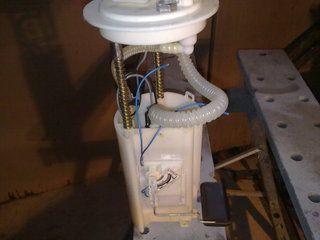
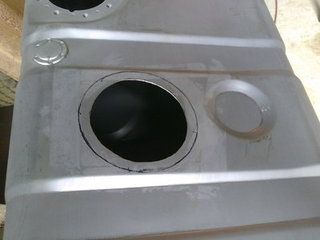
I dropped the fuel tank on my 74 today in order to figure out how to do the internal fuel pump (Yes, I realize I COULD use an external, but I'm set on doing it in the tank.) Also, the Vette tank isn't baffled, so I plan on using an F Body pump that has the bucket around the pump to keep sloshing fuel at 1/2 tank or lower from effecting the fuel delivery. Onto the 30 dollar question. Once I got the fuel tank on the ground, there seems to be plenty of room to mount an F-Body Ls fuel pump in the top of the tank just below the fuel fill area or to either side by cutting a hole and installing a flange kit for the LS fuel pump. I plan on leaving the bottom mounted factory fuel sending unit in the tank as well for gas gauge purposes. I'm curious if there might be an easier or even a better way to achieve dependable fuel delivery? Please chime in!
Last edited by Patro46; Feb 23, 2014 at 09:11 PM. Reason: typo
Thread Starter
Pro
Joined: Nov 2013
Posts: 730
Likes: 37
From: Catoosa Okla
Is there a reason why you didn't mount the LS pump toward the rear of the fuel fill cap? The reason I ask is if I mount it in the middle, it has a wider piece of flat metal. It looks like the lock ring overhangs narrower lip? Also, please tell me about the flange you used to secure the LS1 fuel pump to the tank.
Last edited by Patro46; Feb 23, 2014 at 10:18 PM. Reason: Added question
Burning Brakes

Joined: Oct 2008
Posts: 1,037
Likes: 15
From: Mobile Alabama
Is there a reason why you didn't mount the LS pump toward the rear of the fuel fill cap? The reason I ask is if I mount it in the middle, it has a wider piece of flat metal. It looks like the lock ring overhangs narrower lip? Also, please tell me about the flange you used to secure the LS1 fuel pump to the tank.
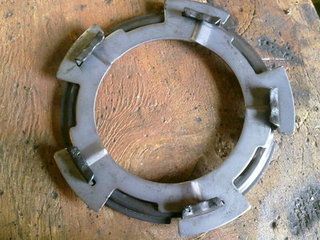


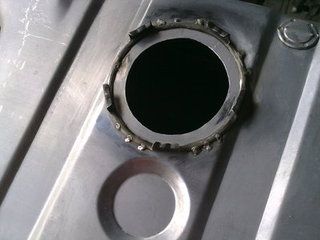
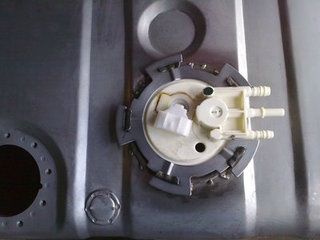
Last edited by 74modified; Feb 24, 2014 at 10:11 PM.
Melting Slicks


Joined: Feb 2009
Posts: 2,797
Likes: 608
From: Dallas Georgia
2020 Corvette of the Year Finalist (track prepared)
C3 of Year Winner (track prepared) 2019
Did you have to do anything special to bypass the internal regulator or just not loop the lines and run it to the rails, through the regulator and back to the tank/through the pump?
Burning Brakes
Joined: Oct 2008
Posts: 1,037
Likes: 15
From: Mobile Alabama

Corvette Stories
The Best of Corvette for Corvette Enthusiasts

5 Best & 5 Worst Corvette Daily Drivers
Joe Kucinski
The Headlights of Every Corvette Generation Explained
Joe Kucinski
5 Best & 5 Most Overrated Corvette Track Packages of All Time!
Joe Kucinski
Every 2027 Corvette Engine Explained
Joe Kucinski
Designer Imagines A Corvette That Looks More Like a Corvette Than the Corvette
Verdad Gallardo
10 Ugly Corvettes That We Still Kinda Love
Joe Kucinski
Top 10 Most Expensive Corvettes Ever Sold on Bring A Trailer
Brett Foote
10 Things Every Corvette Owner Needs (2026 Edition)
Michael S. Palmer