








Fuel tank pressure

Thread Starter
Navigator

Joined: Jul 2007
Posts: 9
Likes: 1
From: Mountain Home Arkansas
 Fuel tank pressure
I have a 69 vette with 350 ci / 300 hp engine. I am having a problem with the tank building up pressure and pushing fuel out the carburetor into the engine and overflowing onto the outside of the intake. Any suggestions on the problem?

Melting Slicks


Joined: Mar 2005
Posts: 2,093
Likes: 297
From: Midlothian VA
Engine off and full tank? See answer above.
Thread Starter
Navigator
Joined: Jul 2007
Posts: 9
Likes: 1
From: Mountain Home Arkansas
Fuel tank pressure
Gas cap is vented, but only allowing air in. It does not allow pressure to escape. It does it when engine is not running, such as air temperature rising or hauling in trailer (sloshing around). Carb has been checked more than once and has new kit, needle valve and float properly set. Needle valve has been re-checked.
Thread Starter
Navigator
Joined: Jul 2007
Posts: 9
Likes: 1
From: Mountain Home Arkansas
Fuel tank pressure

Melting Slicks
Joined: Mar 2002
Posts: 2,164
Likes: 7
From: Beringen
My take on things and this is from my experience to converting over to efi.
When fuel is under pressure, it cannot boil. But when that hot fuel returns to the tank and it ends up in a low pressure area, that hot fuel flashes to vapor which is pressurizing your fuel tank.
I'm not sure I understand how that you relate the fuel tank pressure to the carb overflowing. However,
If you have a return line from the line feeding your carb to your tank and not a return from the fuel pump to your tank as in the normal situation, the fuel is heating up while on your engine. The carb overflowing however is because the fuel in your carb fuel bowls gets hot enough to start boiling. Since in the fuel bowls your fuel is not under pressure it flashes to vapor really easy.
On my car this was caused by exhaust heat rising up in the engine compartment and ending up on top of the engine were it started heating up things. This wasn't so much a problem when driving, but it raised it's ugly head once the car was standing still and not running.
But i'm running exhaust headers which put a considerable amount of heat in the engine compartment.
When fuel is under pressure, it cannot boil. But when that hot fuel returns to the tank and it ends up in a low pressure area, that hot fuel flashes to vapor which is pressurizing your fuel tank.
I'm not sure I understand how that you relate the fuel tank pressure to the carb overflowing. However,
If you have a return line from the line feeding your carb to your tank and not a return from the fuel pump to your tank as in the normal situation, the fuel is heating up while on your engine. The carb overflowing however is because the fuel in your carb fuel bowls gets hot enough to start boiling. Since in the fuel bowls your fuel is not under pressure it flashes to vapor really easy.
On my car this was caused by exhaust heat rising up in the engine compartment and ending up on top of the engine were it started heating up things. This wasn't so much a problem when driving, but it raised it's ugly head once the car was standing still and not running.
But i'm running exhaust headers which put a considerable amount of heat in the engine compartment.
Thread Starter
Navigator
Joined: Jul 2007
Posts: 9
Likes: 1
From: Mountain Home Arkansas
My take on things and this is from my experience to converting over to efi.
When fuel is under pressure, it cannot boil. But when that hot fuel returns to the tank and it ends up in a low pressure area, that hot fuel flashes to vapor which is pressurizing your fuel tank.
I'm not sure I understand how that you relate the fuel tank pressure to the carb overflowing. However,
If you have a return line from the line feeding your carb to your tank and not a return from the fuel pump to your tank as in the normal situation, the fuel is heating up while on your engine. The carb overflowing however is because the fuel in your carb fuel bowls gets hot enough to start boiling. Since in the fuel bowls your fuel is not under pressure it flashes to vapor really easy.
On my car this was caused by exhaust heat rising up in the engine compartment and ending up on top of the engine were it started heating up things. This wasn't so much a problem when driving, but it raised it's ugly head once the car was standing still and not running.
But i'm running exhaust headers which put a considerable amount of heat in the engine compartment.
When fuel is under pressure, it cannot boil. But when that hot fuel returns to the tank and it ends up in a low pressure area, that hot fuel flashes to vapor which is pressurizing your fuel tank.
I'm not sure I understand how that you relate the fuel tank pressure to the carb overflowing. However,
If you have a return line from the line feeding your carb to your tank and not a return from the fuel pump to your tank as in the normal situation, the fuel is heating up while on your engine. The carb overflowing however is because the fuel in your carb fuel bowls gets hot enough to start boiling. Since in the fuel bowls your fuel is not under pressure it flashes to vapor really easy.
On my car this was caused by exhaust heat rising up in the engine compartment and ending up on top of the engine were it started heating up things. This wasn't so much a problem when driving, but it raised it's ugly head once the car was standing still and not running.
But i'm running exhaust headers which put a considerable amount of heat in the engine compartment.
Corvette Stories
The Best of Corvette for Corvette Enthusiasts

150 hp to 1,250 hp: Every Corvette Generation Compared by the Specs That Matter
Joe Kucinski
8 Coolest Corvette Pace Cars (and Replicas) of All Time
Verdad Gallardo
Top 10 Corvette Engines RANKED by Peak Torque (70+ Years of Muscle!)
Joe Kucinski
Corvette ZR1X Will Be Pacing the Indy 500, And Could Probably Race, Too!
Verdad Gallardo
Top 10 Corvettes Coming to Mecum Indy 2026!
Brett Foote
Top 10 C9 Corvette MUST-HAVES to Fix These C8 Generation Flaws!
Michael S. Palmer
10 Revolutionary 'Corvette Firsts' Most People Don't Know
Joe Kucinski
5 Reasons to Upgrade to an LS6-Powered Corvette; 5 Reasons to Stay LT2
Michael S. Palmer
2027 Corvette vs The World: Every C8 vs Its Closest Competitor
Joe Kucinski
Burning Brakes


Joined: Feb 2002
Posts: 752
Likes: 31
From: Melbourne Australia

Joe
Melting Slicks
Joined: Mar 2002
Posts: 2,164
Likes: 7
From: Beringen
On a 1969, the fuel return line is connected to a fuel filter which is located between the fuel pump and carb. It appears my problem is due to pressure building up in the tank and pushing fuel back up the return line and past the carb needle valve, thus overflowing the carb.
Burning Brakes

Joined: Dec 2008
Posts: 971
Likes: 45
From: Middlesex NJ
My 69 is doing the same thing on hot days. My gas tank HAS a vent on it as well as a vented cap. Cap vent is to bleed off tank pressure. The tank vent is most likely for allowing air in to prevent tank collapse and vacuum as gas is taken out via the pump. There is no EEC on the 69.
If you stop the car for a few minutes and go to start it again on a hot day its flooded. I put two and two together the other day when I pop'd the gas cap off and got a pressure release.
Take for a quick ride on a real hot day and come back and you hear a hissing in the back of the car. Pop the gas cap an whosh. I am thinking the hissing is coming from the vent on the tank as the cap vent is NOT allowing the pressure to bleed off.
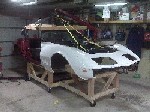
I think my vented cap is hanging up. If i push up on the little pintle in the cap it seems to be stuck at first. I wonder if the valve is rusty due to the e85 gas? My car has been going through a 7 year body off and all my stuff is new. So something could be bad. I don't know how the valve built into the top of thank works Ill have to reach inside.
1969-1970 my tank from Corvette Central 363005
*18-Gallon Capacity
*Without E.E.C.
*Without Side Bracket
*With Flat Metal Valve
*With Vent Tube on Passenger Side
*GM Number: 3967741
YES my return line is blocked off at the tank but I have insulated my feed line to the pump to prevent vapor lock. I do not see how a return line would reduce pressure in a sealed system its meant to prevent vapor lock in the feed line before the fuel pump. In fact a return line will stir up the gas more and cause more vapors that need to be released. If they aren't being released its gona push out through the carb causing the flooding like you and I have.
I pop'd the cap the last time I stopped and no flooding. So I believe my cap is bad... I may drill out the stupid vent valve or rip the rubber seal off. I am not sure at what pressure the valve in the cap should blow off. The 69 does NOT have EEC so it MUST vent gas fumes out through the cap. Latter years used EEC and carbon filters with sealed gas caps to capture the fumes and suck them through the carb.
tank vent on top of tank

gas cap vent

If you stop the car for a few minutes and go to start it again on a hot day its flooded. I put two and two together the other day when I pop'd the gas cap off and got a pressure release.
Take for a quick ride on a real hot day and come back and you hear a hissing in the back of the car. Pop the gas cap an whosh. I am thinking the hissing is coming from the vent on the tank as the cap vent is NOT allowing the pressure to bleed off.
I think my vented cap is hanging up. If i push up on the little pintle in the cap it seems to be stuck at first. I wonder if the valve is rusty due to the e85 gas? My car has been going through a 7 year body off and all my stuff is new. So something could be bad. I don't know how the valve built into the top of thank works Ill have to reach inside.
1969-1970 my tank from Corvette Central 363005
*18-Gallon Capacity
*Without E.E.C.
*Without Side Bracket
*With Flat Metal Valve
*With Vent Tube on Passenger Side
*GM Number: 3967741
YES my return line is blocked off at the tank but I have insulated my feed line to the pump to prevent vapor lock. I do not see how a return line would reduce pressure in a sealed system its meant to prevent vapor lock in the feed line before the fuel pump. In fact a return line will stir up the gas more and cause more vapors that need to be released. If they aren't being released its gona push out through the carb causing the flooding like you and I have.
I pop'd the cap the last time I stopped and no flooding. So I believe my cap is bad... I may drill out the stupid vent valve or rip the rubber seal off. I am not sure at what pressure the valve in the cap should blow off. The 69 does NOT have EEC so it MUST vent gas fumes out through the cap. Latter years used EEC and carbon filters with sealed gas caps to capture the fumes and suck them through the carb.
tank vent on top of tank
gas cap vent
Last edited by mysixtynine; Sep 18, 2014 at 10:10 AM.

Race Director

Joined: Jul 2001
Posts: 15,892
Likes: 42
On a 1969, the fuel return line is connected to a fuel filter which is located between the fuel pump and carb. It appears my problem is due to pressure building up in the tank and pushing fuel back up the return line and past the carb needle valve, thus overflowing the carb.
The return line at the filter has no impact one way or the other.


Race Director
Joined: Jul 2001
Posts: 15,892
Likes: 42
Burning Brakes
Joined: Dec 2008
Posts: 971
Likes: 45
From: Middlesex NJ
Ok ... I took my cap apart (repo). Try it at your own risk. I bent back the tabs and it almost flew apart due to the lock spring pressure.
Anyone who thinks this cap allows air into the tank is flat out wrong! It is simply impossible for it to let air in ...it is a pressure release only (not a very good one at that).
Gas cap apart (small parts are facing up (would have to be rotated 180 to be put back into the base of the cap for orientation purposes).

close up..Not how severe the rubber seal is squashed and the little pintle cup (ill call it that since its like a pintle in the center on a valve seat in disc shape) Note also the cut outs in the disc used to allow the pressure to get past but since the back of disc also seals against the rubber it would have needed allot more pressure to get by.

I removed the rubber disk so that it could not seal so hard. It was so sealed I have no idea how it could build up enough pressure to unseat the rubber disc (which is really soft and almost gooey) which was almost cut it was so loaded up against the metal seal surface.
Without the rubber disc it can bypass easier and I have not noticed any strong gas smell in the garage as the little metal pintle cup is still in place as well as the spring and disc... it just doesn't have the rubber seal anymore.
If this is too much I am taking some loops outa the pink valve spring.
Anyone who thinks this cap allows air into the tank is flat out wrong! It is simply impossible for it to let air in ...it is a pressure release only (not a very good one at that).
Gas cap apart (small parts are facing up (would have to be rotated 180 to be put back into the base of the cap for orientation purposes).
close up..Not how severe the rubber seal is squashed and the little pintle cup (ill call it that since its like a pintle in the center on a valve seat in disc shape) Note also the cut outs in the disc used to allow the pressure to get past but since the back of disc also seals against the rubber it would have needed allot more pressure to get by.
I removed the rubber disk so that it could not seal so hard. It was so sealed I have no idea how it could build up enough pressure to unseat the rubber disc (which is really soft and almost gooey) which was almost cut it was so loaded up against the metal seal surface.
Without the rubber disc it can bypass easier and I have not noticed any strong gas smell in the garage as the little metal pintle cup is still in place as well as the spring and disc... it just doesn't have the rubber seal anymore.
If this is too much I am taking some loops outa the pink valve spring.
Last edited by mysixtynine; Oct 14, 2014 at 08:44 AM.

Melting Slicks
Joined: Mar 2005
Posts: 2,838
Likes: 10
From: Austin TX
In 68 & 69 (and 67, I think), the cast iron q-jet intake had a 'channel' to where exhaust heat is sent to the bottom of the primary side of the q-jet. This was done to help atomize the fuel on a cold engine.
If the correct heat baffle is missing, this heat, after the engine achieves operating temp, will boil the fuel in the q-jet's fuel bowl. You can probably hear the 'percolation', especially after the warm engine is shut down. Fuel will make it's way out the vent, etc, and spill everywhere.
Here's what you need:
http://www.rickscamaros.com/camaro-c...1967-1969.html
Sandwich this baffle between a pair of q-jet gaskets (make sure they're correct for your 69) and your problem is likely solved.
Or better yet, block the "exhaust crossover" with intake gaskets designed for this purpose and keep your q-jet much cooler,..better for a lot of reasons.
Good luck!
Last edited by 73, Dark Blue 454; Oct 15, 2014 at 04:31 PM.