





Carb showdown...which to go with?

Had a 1976 L-82, 4-sp


Joined: Mar 2011
Posts: 5,338
Likes: 1,213
From: Some days your the dog and some days your the hydrant.
Royal Canadian Navy

The only issue I EVER have with a holley, is an occasional float that sticks and will over fill the bowl. Its happened twice on my 850 in the last 3 months, once it had a piece of trash in the needle/seat, the second time I found nothing in the needle/seat so I just put it back in, slightly lowered the float level and its been fine since. I do have a race float and jet extensions in this carb and that may have something to do with it. I've never had this problem on any of the 3310s. And it literally takes 2 mins to pull the needle/seat out, blow throw it and put it back in... Try that on a q jet..LOL
Le Mans Master


Joined: Apr 2011
Posts: 6,284
Likes: 1,171
From: Hermosa
Bats, I decided quite a while back the at if I wanted to run any carb, I was going to have to be the expert on that carb. As you have noted you cannot set a carb up perfectly on one engine for every engine.
I got Cliffs book on the q-jet and learned by doing.
So now whenever I make any change to the engine or intake or exhaust or altitude or temp I can tune the q-jet accordingly.
I'll admit, like any sensitive piece of equipment the q-jet is finicky in it's adjustments to get it just right. Once there however it performs very very well.
The q-jet has it's inharent weakness' as anything does and addressing them sooner rather than later will save a lot of futzing around later on.
I run a cam with 14" of vacuum at 800rpm and down to 10" in gear or lower. The q-jet needed more bypass air to do this well, but so would any carb to do it well.
The 76 through 79 q-jet would be the one of my choosing as it has the APT adjustment which is very useful. I run mine with no choke and it runs great just like that since I only run it in warmer weather anyhow.
So whatever you go with, you will have to become the expert on that carb if you want to run it at peak performance.
With my 377HP 350 I get 19 MPG in combined driving and 22MPG on the highway, TH350 trans 2600 stall converter with a 3.08 rear, 27" tires.
I got Cliffs book on the q-jet and learned by doing.
So now whenever I make any change to the engine or intake or exhaust or altitude or temp I can tune the q-jet accordingly.
I'll admit, like any sensitive piece of equipment the q-jet is finicky in it's adjustments to get it just right. Once there however it performs very very well.
The q-jet has it's inharent weakness' as anything does and addressing them sooner rather than later will save a lot of futzing around later on.
I run a cam with 14" of vacuum at 800rpm and down to 10" in gear or lower. The q-jet needed more bypass air to do this well, but so would any carb to do it well.
The 76 through 79 q-jet would be the one of my choosing as it has the APT adjustment which is very useful. I run mine with no choke and it runs great just like that since I only run it in warmer weather anyhow.
So whatever you go with, you will have to become the expert on that carb if you want to run it at peak performance.
With my 377HP 350 I get 19 MPG in combined driving and 22MPG on the highway, TH350 trans 2600 stall converter with a 3.08 rear, 27" tires.
Burning Brakes

Joined: Oct 2008
Posts: 1,037
Likes: 14
From: Mobile Alabama
Bats, I decided quite a while back the at if I wanted to run any carb, I was going to have to be the expert on that carb. As you have noted you cannot set a carb up perfectly on one engine for every engine.
I got Cliffs book on the q-jet and learned by doing.
So now whenever I make any change to the engine or intake or exhaust or altitude or temp I can tune the q-jet accordingly.
I'll admit, like any sensitive piece of equipment the q-jet is finicky in it's adjustments to get it just right. Once there however it performs very very well.
The q-jet has it's inharent weakness' as anything does and addressing them sooner rather than later will save a lot of futzing around later on.
I run a cam with 14" of vacuum at 800rpm and down to 10" in gear or lower. The q-jet needed more bypass air to do this well, but so would any carb to do it well.
The 76 through 79 q-jet would be the one of my choosing as it has the APT adjustment which is very useful. I run mine with no choke and it runs great just like that since I only run it in warmer weather anyhow.
So whatever you go with, you will have to become the expert on that carb if you want to run it at peak performance.
With my 377HP 350 I get 19 MPG in combined driving and 22MPG on the highway, TH350 trans 2600 stall converter with a 3.08 rear, 27" tires.
I got Cliffs book on the q-jet and learned by doing.
So now whenever I make any change to the engine or intake or exhaust or altitude or temp I can tune the q-jet accordingly.
I'll admit, like any sensitive piece of equipment the q-jet is finicky in it's adjustments to get it just right. Once there however it performs very very well.
The q-jet has it's inharent weakness' as anything does and addressing them sooner rather than later will save a lot of futzing around later on.
I run a cam with 14" of vacuum at 800rpm and down to 10" in gear or lower. The q-jet needed more bypass air to do this well, but so would any carb to do it well.
The 76 through 79 q-jet would be the one of my choosing as it has the APT adjustment which is very useful. I run mine with no choke and it runs great just like that since I only run it in warmer weather anyhow.
So whatever you go with, you will have to become the expert on that carb if you want to run it at peak performance.
With my 377HP 350 I get 19 MPG in combined driving and 22MPG on the highway, TH350 trans 2600 stall converter with a 3.08 rear, 27" tires.
Le Mans Master
Joined: Apr 2011
Posts: 6,284
Likes: 1,171
From: Hermosa
Given I had to say one way or the other, there are likely more people using holleys, therefore it is more likely you will find someone who has a clue in regards to the Holley vs the Q-jet.
That would make a q-jet person's skill set more rare and potentially more valuable, also less needed though.

Dr. Detroit

Joined: Mar 2012
Posts: 10,097
Likes: 4,027
From: New Braunfels Texas
The Edelbrock is a great unit.....
Just get a 750...and do the step up springs and metering rods/jets as needed.
I had a 650 AVS on my 327 and it was a rock solid performer....but it took me a whole day to jet it!
Ran it for 5 years.....
Q-Jets are great too.....but hard to find one not wore out.
The Holley 3310 is a wonderful unit as well......very forgiving on a mild Big Block.
The key is to get what you feel comfortable jetting.
Edelbrocks can be tuned with out pulling the lid off in most cases....
Holleys make a mess but I love them.......a moroso drain cup is a great tool...
Although you made not need 750cfm....a 750 cfm carb will come jetted much closer than a smaller counterpart.
Keep us informed on what you decide
Jebby
Just get a 750...and do the step up springs and metering rods/jets as needed.
I had a 650 AVS on my 327 and it was a rock solid performer....but it took me a whole day to jet it!
Ran it for 5 years.....
Q-Jets are great too.....but hard to find one not wore out.
The Holley 3310 is a wonderful unit as well......very forgiving on a mild Big Block.
The key is to get what you feel comfortable jetting.
Edelbrocks can be tuned with out pulling the lid off in most cases....
Holleys make a mess but I love them.......a moroso drain cup is a great tool...
Although you made not need 750cfm....a 750 cfm carb will come jetted much closer than a smaller counterpart.
Keep us informed on what you decide
Jebby
Racer

Joined: Jul 2013
Posts: 294
Likes: 10
From: Palmer Alaska
Worked on and tuned both. For the daily driver the q-jet was great. Usually went Holley when the daily driver became a toy that I modified often. I am pulling the trigger on an AED very soon. I concur with the gents that are applauding the Vac Secondary Holleys. Work great, smooth operation, reliable and easy to tune. If you can get a good price that would be my choice. There is a ton of info on how to tune them (LARS provides great info via email).....Another plug for a guy who freely shares his knowledge. If your engine is basically stock which it sounds like it is for the most part, an out of the box would likely do well with some minor adjustments. An option is to get as many of the specs on the car you can, gear ratios, cam, compression, etc, send to AED and ask for a quote. Expect to Pay upwards of $700. If you can get a boxed version for less than $400 from Summit or???....how much is time worth? Either way neither is rocket science. You can learn to tune either so if you are most familiar with qjet I would order one, if Holley then those. If your looking to bolt it on and go, best option is have one built by a quality shop, there are numerous ones. For me if I am keeping the car and don't want to worry about it, I buy new.
Corvette Stories
The Best of Corvette for Corvette Enthusiasts

Every 2027 Corvette Engine Explained
Joe Kucinski
Designer Imagines A Corvette That Looks More Like a Corvette Than the Corvette
Verdad Gallardo
10 Ugly Corvettes That We Still Kinda Love
Joe Kucinski
Top 10 Most Expensive Corvettes Ever Sold on Bring A Trailer
Brett Foote
10 Things Every Corvette Owner Needs (2026 Edition)
Michael S. Palmer
8 Most "Only Corvette Owners Understand" Quirks and Problems
Pouria Savadkouei
10 Reasons the C6 Z06 is Still A Performance Benchmark After 20 Years
Joe Kucinski
How Much Horsepower Every Corvette Engine "LOST" in 1972
Joe Kucinski
Top 10 DOs and DON'Ts for Protecting Your Convertible Top!
Michael S. Palmer
Melting Slicks

Joined: Oct 2012
Posts: 2,156
Likes: 273
From: Dunedin NZ.
My vote would be the Quickfuel Bd-1957. Recently an acquaintance fitted one to the 350 in his truck, no problems worked well straight out of the box. This Quickfuel is an updated and improved version of the Holley 3310. There are some guys running these on C2's if you want to check that forum, not sure if any on C3's but its what I will seriously look at once my transmission issues are resolved.
Thread Starter
Race Director


Joined: Mar 2003
Posts: 11,608
Likes: 780
From: Eustis ( Area 51 Bat Cave ) Fl
I want to thank everyone for a great thread, I do not care if people agree I do not have to agree with a fellow to learn from him,
So no one need agree with me on what I have gathered, so please do not take offense.
The Qjet is a very complex carb, while people have made it perform well in higher performance than stock applications it comes at several prices.
On cruisers that get romped on here or there they seem to do very well, I also see that too many people relay on a tech to set it up and get it close to right, and would be lost if that tech closed his doors, ( yes, more than one qjet guru out there )
I would be in that boat, I love to learn about the things I work on/with I can tune dual/multi webers something that scares some people, but the fact is that came at years of learning, I would have to spend that time learning the Qjet, I simply do not want to invest the time in a carb that while I do believe it can work well I believe it has built in short comings I do not want to deal with, it's too cantankerous for me at this time.
My car has a 650 Edelbrock on it, and after sitting close to or over 3 years it will need a rebuild if the tripe in todays gas didn't ruin it from sitting,
I might play a bit more with it but after reading more on that Holley 3310 750 I would like to try it, it seems to be a very popular carb and very forgiving and far more user friendly than the qjet
So no one need agree with me on what I have gathered, so please do not take offense.
The Qjet is a very complex carb, while people have made it perform well in higher performance than stock applications it comes at several prices.
On cruisers that get romped on here or there they seem to do very well, I also see that too many people relay on a tech to set it up and get it close to right, and would be lost if that tech closed his doors, ( yes, more than one qjet guru out there )
I would be in that boat, I love to learn about the things I work on/with I can tune dual/multi webers something that scares some people, but the fact is that came at years of learning, I would have to spend that time learning the Qjet, I simply do not want to invest the time in a carb that while I do believe it can work well I believe it has built in short comings I do not want to deal with, it's too cantankerous for me at this time.
My car has a 650 Edelbrock on it, and after sitting close to or over 3 years it will need a rebuild if the tripe in todays gas didn't ruin it from sitting,
I might play a bit more with it but after reading more on that Holley 3310 750 I would like to try it, it seems to be a very popular carb and very forgiving and far more user friendly than the qjet
Racer
Joined: Jun 2013
Posts: 484
Likes: 43
From: NJ
Melting Slicks
Joined: Jan 2014
Posts: 2,478
Likes: 254
From: Downers Grove Illinois
Thread Starter
Race Director
Joined: Mar 2003
Posts: 11,608
Likes: 780
From: Eustis ( Area 51 Bat Cave ) Fl
You believe 650 cfm is enough for a mild 454? 
I come from a time when everyone over carbbed over cammed and the cars went percolating like a gagging goldfish in and out of the cruise spot,
I didn't want that and picked the 650 thinking it would be fine on my 454 but then I got guys telling me it's not big enough, so back when I was testing it and putzing with it, from a stop it would take off hard, if I didn't let up it would melt the 275 60's, it would climb well but if at cruise speed and you floored it, it seemed to have a dead spot that would last about a second then take off, I busted that rear strut and that is where testing stopped, the car hopefully will be back from the frame swap out very soon, and yes, I have no problem rebuilding the edelbrock I have rebuilt several, piece of cake to work with.
I come from a time when everyone over carbbed over cammed and the cars went percolating like a gagging goldfish in and out of the cruise spot,
I didn't want that and picked the 650 thinking it would be fine on my 454 but then I got guys telling me it's not big enough, so back when I was testing it and putzing with it, from a stop it would take off hard, if I didn't let up it would melt the 275 60's, it would climb well but if at cruise speed and you floored it, it seemed to have a dead spot that would last about a second then take off, I busted that rear strut and that is where testing stopped, the car hopefully will be back from the frame swap out very soon, and yes, I have no problem rebuilding the edelbrock I have rebuilt several, piece of cake to work with.

Le Mans Master
Joined: Oct 2007
Posts: 7,458
Likes: 978
From: RI, Now Franklin/Nashville TN
I don't know of any Holley clones (not sure what youre talking about? Like Chinese knock offs or GOOD ones like AED, Pro Systems, etc etc)
If youre sticking to a real tight budget, you can get the Holley #3310 aluminum body carb (the polished looking one) for around $300 shipped if you shop around. I have one of these on a mild 454 with a performer intake and old school comp 270H cam and it runs excellent. The one I just bought was a #3310-C which is the old green colored dichromate finish that I wanted for a stock appearing build.
You can always pick up a swap meet carb and rebuild it but...Honestly, I am not big on used carbs..I find they tend to always have some issue that a normal rebuild does not solve. I typically start out with a new carb and then rebuild them myself as need through the years.
Holleys are very easy work on, basic parts/gaskets are in stock at every O Reilys/Auto Zone around and you can literally pull the fueling components apart on one on the side of the road in 10 mins.
Between my dad's cars and mine, we own 7 Holley carbs on current running cars, I maintain/tune them all, and I would never run anything else.
I have had Quadrajets as well, some were good, some where terribly problematic...all of them were hard to work on and pretty finicky/inconsistent at best... I do still have one on a 350/270hp engine that is not in a car that ran pretty well for several years...However I never saw the "great gas mileage" that people claim for Q jets. it got 10-12 mpg just like the holleys.
For a mild 454, a #3310 will bolt on and go, you usually don't even have to set the float levels...Just bolt it on, hook up your linkage/vacuum stuff, adjust your idle mixture screws and idle speed screw, and forget about it for 20 years.
If youre sticking to a real tight budget, you can get the Holley #3310 aluminum body carb (the polished looking one) for around $300 shipped if you shop around. I have one of these on a mild 454 with a performer intake and old school comp 270H cam and it runs excellent. The one I just bought was a #3310-C which is the old green colored dichromate finish that I wanted for a stock appearing build.
You can always pick up a swap meet carb and rebuild it but...Honestly, I am not big on used carbs..I find they tend to always have some issue that a normal rebuild does not solve. I typically start out with a new carb and then rebuild them myself as need through the years.
Holleys are very easy work on, basic parts/gaskets are in stock at every O Reilys/Auto Zone around and you can literally pull the fueling components apart on one on the side of the road in 10 mins.
Between my dad's cars and mine, we own 7 Holley carbs on current running cars, I maintain/tune them all, and I would never run anything else.
I have had Quadrajets as well, some were good, some where terribly problematic...all of them were hard to work on and pretty finicky/inconsistent at best... I do still have one on a 350/270hp engine that is not in a car that ran pretty well for several years...However I never saw the "great gas mileage" that people claim for Q jets. it got 10-12 mpg just like the holleys.
For a mild 454, a #3310 will bolt on and go, you usually don't even have to set the float levels...Just bolt it on, hook up your linkage/vacuum stuff, adjust your idle mixture screws and idle speed screw, and forget about it for 20 years.

As I have said many times before, the Qjet is good carb when it operates correctly but it was GM's attempt to stave off the advent of mechanical/electronic fuel injection in the late 60's/70's/and early 80's by attempting to precisely meter fuel through a carb in the hopes of better fuel mileage, drivability, versatility, and lower emissions. The Qjet is overly complicated for what a carb needs to do and can be problematic when things go wrong, being kind.
Everything Ajrothm said about the vacuum secondary Holley's is true-reliable, easy to tune, easy to rebuild, etc. I have had a Holley 4175 650 CFM vacuum secondary Qjet replacement carb on my 78 L-82 since 1985 and the Holley has been dead reliable, same gas mileage as the Qjet, and easy to tune. I went up 4 primary jet sizes on the Holley 4175 this past spring with the newly rebuilt 355 L-82 425 HP engine and the carb did not even hiccup with the engine upgrade-amazing….
I just don't see this fascination with the Qjet……except that it is the carb that many C3's came from the factory with but the best??? very debatable..
Last edited by jb78L-82; Feb 7, 2015 at 09:55 PM.

Le Mans Master


Joined: Oct 2010
Posts: 6,941
Likes: 850
From: melbourne florida
2023 C3 of the Year Finalist - Modified
GM used Holleys on a very few high performance engines with over 11 to 1 compression, solid lifter cams and tons of overlap. Holley is better suited to the weak vacuum signal and, the racers used Holleys because of the ease of jet changes and tuning at the track. Holley stickers were on all the track cars. That said the GM High Performance applications were all Holley vacuum secondaries and the baddest of the bunch the L88 used a 780 CFM vacuum secondary Holley.

Race Director


Joined: Feb 2001
Posts: 11,343
Likes: 2,101
From: Grapevine Tx
2018 C3 of Year Finalist
2016 C3 of the Year Finalist
I've been thinking about replacing the 1972 Holley on my LT-1 with a Quick Fuel 750. Seems like a Holley 4150 with current technology.

Race Director
Joined: May 2005
Posts: 10,674
Likes: 122
From: Millington Illinois
St. Jude Donor '08-'09

Melting Slicks
Joined: Jun 2003
Posts: 2,802
Likes: 241
From: Niles, MI
I know this isn't what you want to hear but I purchased this Q-jet from a forum member and had Lars rebuild all for less than $300 total. Bolted it on and ran great with no adjustment - not even idle speed. I have another one just like it that I purchased from another forum member that I will be sending to Lars as well. Can't hurt to have a spare since these carbs are so "complex and difficult to tune".
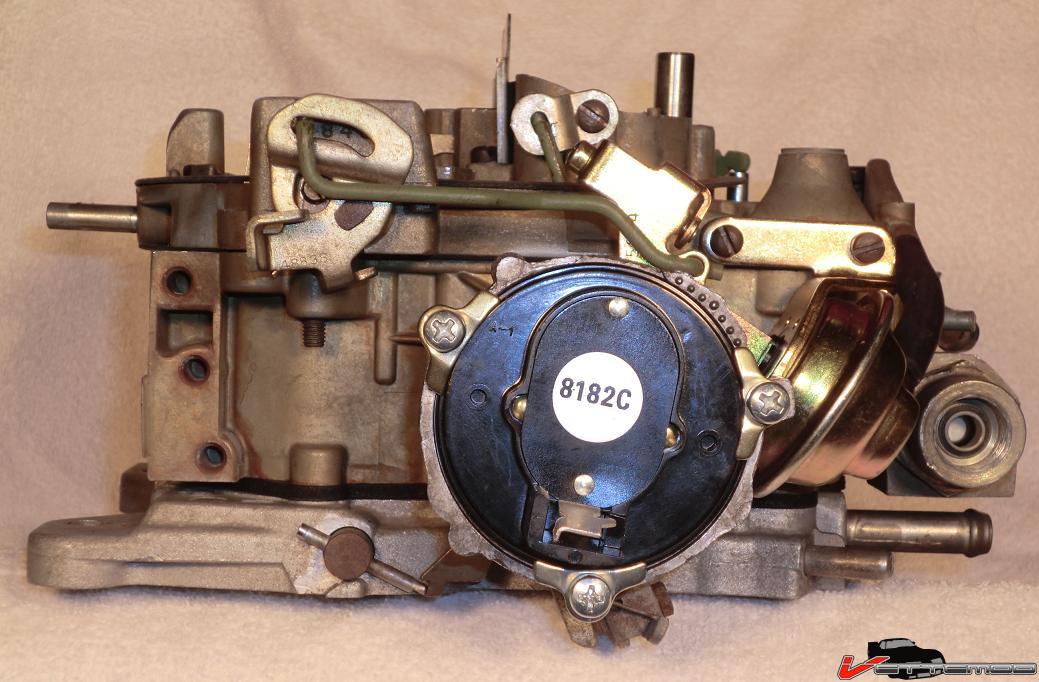
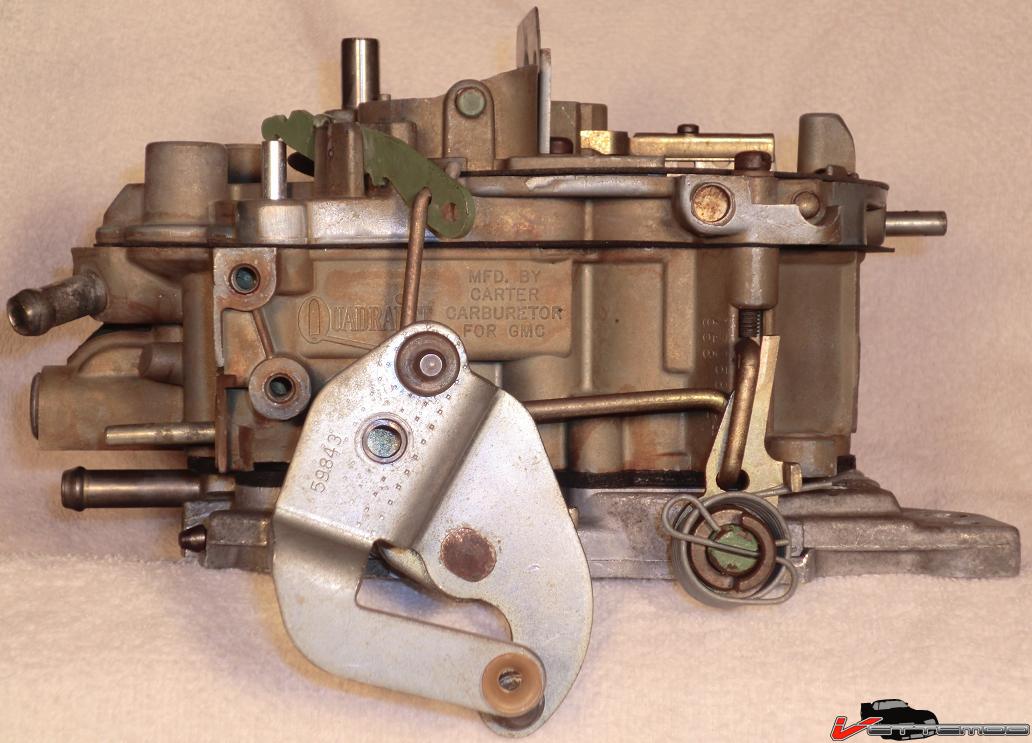
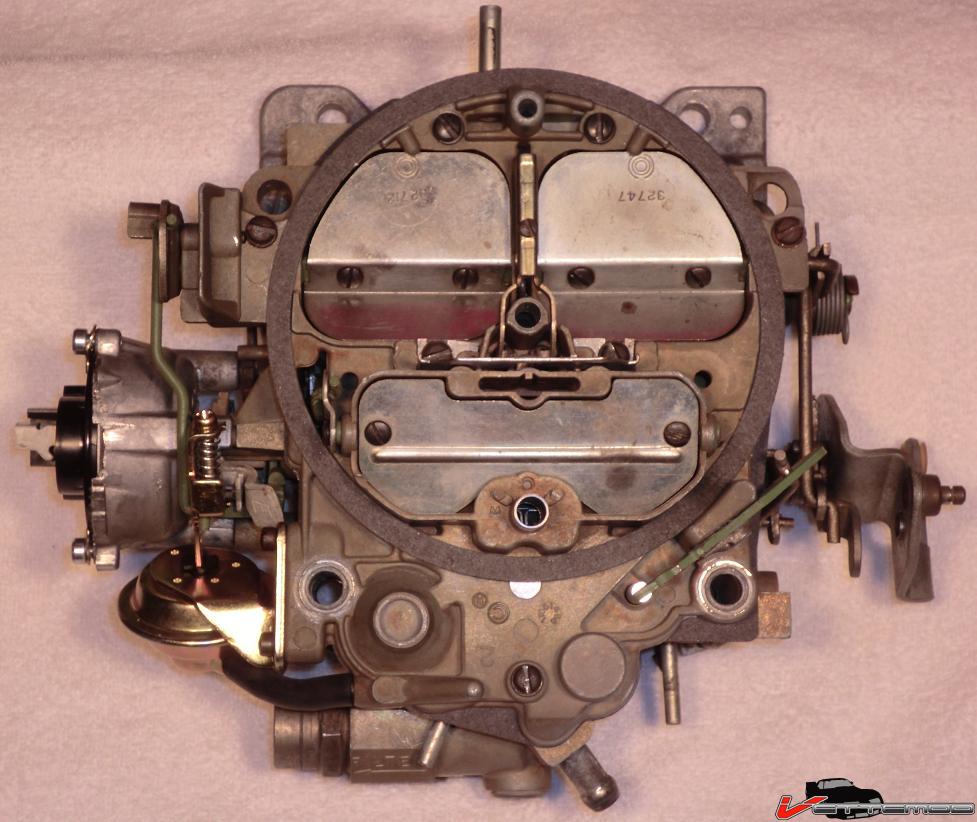
This replaced my Holley 4165 spreadbore that flooded out and killed the engine whenever I hit the brakes hard.
This replaced my Holley 4165 spreadbore that flooded out and killed the engine whenever I hit the brakes hard.
Racer
Joined: Jun 2013
Posts: 484
Likes: 43
From: NJ
You believe 650 cfm is enough for a mild 454?
I come from a time when everyone over carbbed over cammed and the cars went percolating like a gagging goldfish in and out of the cruise spot,
I didn't want that and picked the 650 thinking it would be fine on my 454 but then I got guys telling me it's not big enough, so back when I was testing it and putzing with it, from a stop it would take off hard, if I didn't let up it would melt the 275 60's, it would climb well but if at cruise speed and you floored it, it seemed to have a dead spot that would last about a second then take off, I busted that rear strut and that is where testing stopped, the car hopefully will be back from the frame swap out very soon, and yes, I have no problem rebuilding the edelbrock I have rebuilt several, piece of cake to work with.
I come from a time when everyone over carbbed over cammed and the cars went percolating like a gagging goldfish in and out of the cruise spot,
I didn't want that and picked the 650 thinking it would be fine on my 454 but then I got guys telling me it's not big enough, so back when I was testing it and putzing with it, from a stop it would take off hard, if I didn't let up it would melt the 275 60's, it would climb well but if at cruise speed and you floored it, it seemed to have a dead spot that would last about a second then take off, I busted that rear strut and that is where testing stopped, the car hopefully will be back from the frame swap out very soon, and yes, I have no problem rebuilding the edelbrock I have rebuilt several, piece of cake to work with.
Do you plan on running it on the autocross track? Do you plan on Racing it at the drag strip? Do you plan on racing your friends at the local cruise nights? Were you planning on putting it on the Dyno to see what kind of HP you are making?
If the answer to the above questions is no then the 650 would be enough. It might not be the ideal carb for your engine but it will work and work fine.
As you said, you can spin the tires at will.  With a little tuning you can get rid of the dead spot you mentioned. What more do you want?
I know circle track guys putting out a lot more HP than you and are running a carb almost half the size that you have.


Pro

Joined: Dec 2011
Posts: 691
Likes: 1
From: gilboa ny
Never had a qjet so cant comment on those.
Ive used a few edlebrocks no complaints. But couldn't figure out what the problem was when the one on my sisters 69 impala went bad.
Holly, had a few never had a problem that couldn't be fixed with hand tools and some time.
For fun factor my fave was a 650 mechanical secondary. Had that in my 72 chevelle.
Something about feeling the secondary open through the pedal. Akin to slamming through the gears with a manual trans even though nowadays an auto can be setup to run just as good if not better.
Ive used a few edlebrocks no complaints. But couldn't figure out what the problem was when the one on my sisters 69 impala went bad.
Holly, had a few never had a problem that couldn't be fixed with hand tools and some time.
For fun factor my fave was a 650 mechanical secondary. Had that in my 72 chevelle.
Something about feeling the secondary open through the pedal. Akin to slamming through the gears with a manual trans even though nowadays an auto can be setup to run just as good if not better.