



When is it the carb?
Thread Starter
Racer


Joined: Mar 2005
Posts: 288
Likes: 1
From: Maple Ridge British Columbia
 When is it the carb?
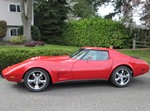
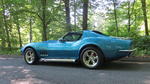
I'm having an issue where the engine runs rough/stutters when I slowly give it the gas from idle up to about 2000 rpm. My vette is a 77 with L48, quadrajet and TH350. Here's what I've done to date to try to solve this:
1. New cap, rotor, electronic ignition module.
2. New plugs with .035" gap
3. Checked all plug wires (Taylor Blue Wires) for heat damage, cracks, etc. None found.
4. Car idles at 650 rpm, 550 rpm in gear.
5. Checked all vacuum lines to see if there was a leak, but none detected.
6. Checked carb base and intake manifold for vacuum leaks but none detected.
7. Put vacuum gauge on car at idle, reads 19 hg and is very steady.
8. Checked timing with vacuum can disconnected it's at 16 degrees at idle and 34 degrees all in at 2700 rpm.
9. Replaced fuel filter in the carb.
Do you think I have a carb issue or is there something else I can check?
1. New cap, rotor, electronic ignition module.
2. New plugs with .035" gap
3. Checked all plug wires (Taylor Blue Wires) for heat damage, cracks, etc. None found.
4. Car idles at 650 rpm, 550 rpm in gear.
5. Checked all vacuum lines to see if there was a leak, but none detected.
6. Checked carb base and intake manifold for vacuum leaks but none detected.
7. Put vacuum gauge on car at idle, reads 19 hg and is very steady.
8. Checked timing with vacuum can disconnected it's at 16 degrees at idle and 34 degrees all in at 2700 rpm.
9. Replaced fuel filter in the carb.
Do you think I have a carb issue or is there something else I can check?
Thread Starter
Racer
Joined: Mar 2005
Posts: 288
Likes: 1
From: Maple Ridge British Columbia
Yes, I removed the air cleaner and with the car not running I used a flashlight to check that there was a strong squirt of gas on both sides of the carb when I operated the throttle. BTW, the previous owner was a helicopter mechanic and he kept notes of all the things he did to the car. He installed a rebuilt Q-Jet in 2006 which was 20,000 miles ago.

Pro

Joined: Jun 2013
Posts: 586
Likes: 26
From: Orange Park FLORIDA
Yes, I removed the air cleaner and with the car not running I used a flashlight to check that there was a strong squirt of gas on both sides of the carb when I operated the throttle. BTW, the previous owner was a helicopter mechanic and he kept notes of all the things he did to the car. He installed a rebuilt Q-Jet in 2006 which was 20,000 miles ago.
Thread Starter
Racer
Joined: Mar 2005
Posts: 288
Likes: 1
From: Maple Ridge British Columbia
I'm going to get the Q-Jet rebuilt at a local carb shop. They have 30 years experience with Q-Jets and actually told me to stay with my Q-Jet when I asked about switching to a Holley carb. They claim the Q-Jet will give me better fuel economy and is a better car for a cruiser. They only recommend Holley for all out performance cars or drag cars. Not the answer I expected, but it makes me believe these guys are serious about Q-Jets and can rebuild mine and make it better than ever.
Also, might try Seafoam first to see if it helps before spending the $200 to get the carb rebuilt.
Also, might try Seafoam first to see if it helps before spending the $200 to get the carb rebuilt.

Melting Slicks


Joined: Jul 2006
Posts: 2,288
Likes: 489
From: Salmon Arm, BC
With 19 inches of steady vacuum I assume this is a stock or very close to it engine. It's good that you have a steady accelerator pump shot, so have you tried to make any adjustments to the idle mixture screws? I'm thinking it's running lean and your not getting any (or enough) fuel out of the transfer slot during transition.
Try to richen it one or 11/2 turns on each idle screw to see if that helps.
Try to richen it one or 11/2 turns on each idle screw to see if that helps.
Corvette Stories
The Best of Corvette for Corvette Enthusiasts

How Much Horsepower Every Corvette Engine "LOST" in 1972
Joe Kucinski
Top 10 DOs and DON'Ts for Protecting Your Convertible Top!
Michael S. Palmer
Top 10 Most Explosive Corvettes Ever Made: Power-to-Weight Ratio Ranked!
Joe Kucinski
150 hp to 1,250 hp: Every Corvette Generation Compared by the Specs That Matter
Joe Kucinski
8 Coolest Corvette Pace Cars (and Replicas) of All Time
Verdad Gallardo
Top 10 Corvette Engines RANKED by Peak Torque (70+ Years of Muscle!)
Joe Kucinski
Corvette ZR1X Will Be Pacing the Indy 500, And Could Probably Race, Too!
Verdad Gallardo
Top 10 Corvettes Coming to Mecum Indy 2026!
Brett Foote
Top 10 C9 Corvette MUST-HAVES to Fix These C8 Generation Flaws!
Michael S. Palmer
Thread Starter
Racer
Joined: Mar 2005
Posts: 288
Likes: 1
From: Maple Ridge British Columbia
Yes, I did turn out the mixture screws approx 2 turns. Made it idle a bit higher, but no change on the part throttle stumble/hesitation. I really did a lot of searching on the forum before posting and tried to eliminate every thing I could as most times it seems the issue(s) are not with the carb itself but rather the ignition/vacuum/timing set ups.




Racer

Joined: Aug 2006
Posts: 330
Likes: 3
From: Wellington, New Zealand
pull your timing back to about 10 degrees (idle) and see how it runs. It sounds to me like you have too much advance (either mechanical or vacuum). This will cause a rough idle and terrible off idle miss.
Thread Starter
Racer
Joined: Mar 2005
Posts: 288
Likes: 1
From: Maple Ridge British Columbia
According to Lars paper on how to set up timing for performance, he states that initial timing should not be lower than 12 degrees and 18 degrees is optimal as long as it doesn't result in more than 36 degrees of total timing with the vacuum can disconnected. So 10 degrees seems low?
Race Director


Joined: Jan 2000
Posts: 12,399
Likes: 247
From: San Jose CA
If it is running lean, going fat on the idle mixture screws may help a little, but it would be better to adjust APT. This is not for the faint of heart, though and would require the willingness to dive into the carb.
Is this new, or something that has been going on for a while?
Thread Starter
Racer
Joined: Mar 2005
Posts: 288
Likes: 1
From: Maple Ridge British Columbia
It's been going on for a while. I decided to start from scratch and adjust everything again. I adjusted the idle set screw so I was at 750 RPM in park and 600 RPM in drive. (Note that I`m using the tach on my timing light not the one in the car) Then I seated the mixture adjustment screws and turned them out 4 turns as it wouldn't stay running at 3 turns. 6 turns was the magic number to get me to a max of 20 inches of vacuum. I then disconnected my vacuum advance, capped it and set the base timing at 14 degrees using a dial back timing light. Then I adjusted the idle again as well as the mixture screws just to be sure. 6 turns of the mixture screws still gave me the most vacuum at 20 inches. Net result of all this is it idles a bit better, but it still has part throttle hesitation. So I`m going to run a can of Seafoam in my gas for a while to see if it frees up the card. If not I`m off to get it rebuilt. I will be staying with the Q-Jet as it was working very well when I bought the car, so I suspect it just needs some well deserved TLC after 9 years of service.
Racer
Joined: Aug 2006
Posts: 330
Likes: 3
From: Wellington, New Zealand
I had this issue with my 74 L48 and I had to dial back the timing, there is an ideal timing setting and then there is what the engine can take. There is an overlap period where you still have quite a bit of vacuum advance and mechanical advance is starting to come in, combined they give too much advance at a too low revs. My suggestion was to pull the timing back to a very safe figure and just drive the car to see what happens, I'm not suggesting that this is the ideal setting for your timing but it will certainly identify if timing is the issue. I wrestled with this problem for quite some time untill I worked out what was wrong with my car.
Racer
Joined: Aug 2006
Posts: 330
Likes: 3
From: Wellington, New Zealand
My car can run a maximum of 11 degrees initial. The problem we have is that our vacuum canisters pull in too much advance at idle (about 5 degrees too much) so we are either faced with restricting the amount of vacuum advance or dial back the initial advance by the 5 degrees. I plan to limit my vacuum advance in the future but until then I dial back the initial. My car runs very poorly at 16 degrees (rough idle and miss fires under light load) but runs perfectly at 11 degrees.