When you click on links to various merchants on this site and make a purchase, this can result in this site earning a commission. Affiliate programs and affiliations include, but are not limited to, the eBay Partner Network.
When I built my L-82 into a 355 using forged crank, forged rods, etc I asked the builder about hypereutectic pistons in place of the TRW forged OEM's and he said no way...not a fan. We used JE forged racing 9:1 pistons....
Wow! Thanks to all of you who have responded with your own experience and what you have learned from it. I never imagined when I started this simply build documentation that it would generate such interest!
Sorry for the delay in commenting. I am a pastor and my weekends are pretty much booked. I also take care of my aging parents, one who is in a nursing home, so it sometimes takes me a while to get caught up on posts.
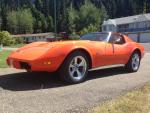
Let me start by addressing cardo0's suggestion that the build might have gotten out of hand. That is sort of the nature of the beast isn't it? You start out with one plan and things sort of morph along the way. I started with a '76 vet with an original untouched engine and decided to build a replacement and keep the numbers matching unit stock. That way I could still drive the car until the new engine was ready.
My plan was to build something that sounded like an L79 since that is my favorite engine. Actually, what I planned was an L46, more on that in a future post. But Joe made the comment that I could build a 383 for the same cost which was pretty much true. So I made the first shift.
That is the way the build went. At each step along the way I faced decisions that I had not even thought about and ran into problems and issues that I did not expect. Those dictated choices that led me in a different direction than what I originally planned, and to a new set of choices.
If you are an engine builder or have built a lot of engines, you develop a pattern of what works and doesn't work. Those of us who are just getting started don't have that luxury. What I wanted to document in the post are the things that I don't hear people talk about in an engine build. The tough choices, the frustration, and sometimes the anxiety of trying to make choices you will be happy with.
Joe was a real help in this regard. He builds basic engines to sell to local hot-rodders who are extremely cost conscious and before he retired sold heads and services to guys who are on the upper end of the price scale. He would suggest options but he let me build the engine the way I wanted because I was the one who had to live with it. He was very pleased with the end result even though it would not be what he built himself.
So, a few comments on the choices. I never planned for this engine to be more than 500 horsepower which is why I chose the rotating assembly I did. Joe says a lot of dirt track guys he works with are using cast cranks at 500+ hp. I don't recommend that but it is a reality. Given that, I figured I would be safe with a crank rated for 500 hp. Same with Hypereutectic pistons. They were sufficient for what I planned to do.
I traded for a lot of the components so I wound up getting better items than you would expect for a budget build (like the heads). And a lot of things I experimented with because I could. One of the main reasons to do the Corvette project was to have fun (My wife says I work too much and need more fun in my life, good woman!)
So far as upgrading the engine, this one is going in the Corvette and will be strictly a street engine. I wanted good power and a long lasting engine hence many of the choices I made. I have another 010 block, another set of HVH heads, and the 200mph Spitfire frame in the garage. If I decide I want an engine with more power, I can always build another one.
There was some question about the oil pump. I chose the Melling 1055 not because of the increased capacity but because it is a heavier casting. Joe had seen a lot of Melling M55's that cracked when used for racing applications. The 1055 series was not that much more expensive so it seemed like cheap insurance. Same logic using an oversized oil pan. Those were really the only reasons for those choices.
Let me conclude by saying that I am no expert on building these engines, many of you have more experience and know how. There are also a lot of build lists out there and more knowledgeable opinions about how something should be done. I am not trying to tell anyone that you should make the same choices I did. I am only trying to document those choices and the logic behind them -- and the emotions that go with it -- so others can make informed decisions.
The engine build was both an enjoyable and educational process for me. It was easy to get lost in the engine project and forget about all the demands of daily life of which I have plenty. If someone decides to build their own engine I hope they have a better understanding of what you have to go through to make it work because of this post.
Again, thanks for all the feedback, warnings, and advice. This is turning out to be almost as much fun as building the engine!
From: Las Vegas - Just stop perpetuating myths please.
Well i enjoyed the thread as it showed how any changes u make can really turn a snowball into and avaleanche. Sorry i didnt know u traded up for AFR heads or at least missed that as they are an excellent head but for the cam, lift and compression u are using a lessor head would produce nearly same results - at least i believe so. Also a stock oil pan or maybe a Z28 oil pan would have fit the performance level u have and saved a few $$$. I think reusing the stock head bolts just once would have been much cheaper and adequate also (but what AFR says for washers). If that block had showed signs for rebuild then no, i would not reuse the bolts again. But head studs would be out of the question for a street motor. I havent researched oil pumps for a long time but i have heard of weak castings on the melling stock replacements. But a high press pump for a street motor with normal brg clearances just makes it alot more work to find the desired spring and fit up the pickup.
I guess what im saying here is a mild performance stroker build shouldnt be anything more than a rebuild/overhaul kit for a sbc. More so if using a flat tappet cam. Machine it, clean it, install it and measure your clearances.
Well regardless u did a good job of your stroker rebuild and documenting for others here. Yes there is some amount of therapy in the process. Thx for sharing.
Also i wanted to say that was a good catch with the piston/rod orientation. Could have had bad things happen w/o correcting that. Can be scary some of the pieces and work the vendor will send u.
The classic heads for almost any Chevy small block from the sixties were the Chevy double hump heads, also known as camel hump heads because they had a double hump like a Bactrian camel cast in the end. These are the brown heads in the pictures. They are brown because they are cast iron. Yep, they weigh a ton.
Chevy Iron Double Hump Heads
So I am talking to Joe one day about the engine project, and he tells me that he needs help ripping up his carpet and putting down Pergo floor. Personally I think Pergo is a waste of time and money – give me ¾” oak or nothing – but I will admit it is better than carpet, especially if your wife has asthma.
So we’re talking floor and engine project and he says, “I’ll make you a deal, you come over and put down my floor for me and I’ll give you a set of HVH double hump aluminum heads. In fact, I’ll throw in the cam, the lifters, the whole valve train.” And he pulls out the heads. Ooooh! Shiny! Yep, I’ll work for car parts!
So I spent several weekends helping Joe put down his floor – which I have done a lot of – and he gives me a set of heads, and valves, and cam, and rockers, the whole top end of the engine.
HVH Double Hump Heads Boxed
HVH Double Hump Heads End
Pictures are of the heads, several angles. Notice the double hump on the end. Joe Patel of HVH designed and ported them and they were cast by Diesel Head Products in Lenoir City, about 20 miles away. (Unfortunately DHP has since gone out of business so there will be no more HVH double hump heads. Of course, a few of us have some squirreled away for future projects)
Yes, I understand that most everything is cast in China. But it matters how good the Chinese people are who cast your parts, not all Chinese parts are equal. Based on the fit and finish on the sets I have seen, HVH heads are very well made. Also, since they are aluminum they are about 40 pounds lighter than the original ones.
I have also attached a magazine article from Chevy Rumble about the heads. Keep in mind that the ones in the article were the stock set that HVH sold. The engine is one Joe built for the article. He ran a single plane manifold for the dyno test. My heads are going to have a few modifications as we will discuss in a future post.
For the techno geeks out there here are the flow numbers for original double hump heads (upgraded to 2.02 and 1.60 valves) the “as cast” double hump HVH heads, and the AFR 180 Street Head.
Chevy 462 Double Hump Iron Heads - 2.02” intake/ 1.60” exhaust
Valve Lift (Inches) Intake flow in cfm (2.02”) Exhaust flow in cfm (1.60”)
0.1” 84 56
0.2” 130 104
0.3” 166 125
0.4” 196 136
0.5” 214 141
Source: Stan Weiss’ Cylinder Head Flow Data at http://users.erols.com/srweiss/tablehdc.htm#Chevy
AFR 180 Street Aluminum Heads - 2.02” intake/ 1.60” exhaust
Valve Lift (Inches) Intake flow in cfm (2.02”) Exhaust flow in cfm (1.60”)
0.1” – Not listed by AFR
0.2” 138 110
0.3” 198 158
0.4” 240 190
0.5” 260 207
Source: http://www.airflowresearch.com/index.php?cPath=24_25
Yes, the AFR heads outflow the HVH units at the high end (They are 180cc intake ports while the HVH heads are 175), but we are going to fix that down the road.
Every project has a point at which you put your own special spin on it. For me it was the cylinder heads. First, I had access to some of the best cylinder head people in the business. Second, I was already interested in cylinder head design (having done a lot of experimenting with Rover V8 head porting for my 200mph Spitfire project). Third, it seemed like an interesting diversion to make the engine my own. So I set out to make the best set of cylinder heads I could make.
I want to concede up front that there was probably no need to massage the HVH heads. They would have worked fine for my application as cast. The flow numbers were already excellent. But I was intrigued by cylinder head design and porting and wanted to learn about the process from some really knowledgeable people.
A word of caution however. Most cylinder heads have already been engineered by someone who knew what he was doing. If you limit your head work to cleaning up the castings, you can make an improvement. If you perform more in depth modifications without the proper guidance you can actually make the flow worse instead of better! I had the advantage of direct access to the people who actually designed my head, so I was confident in their direction.
For those who are interested in just a budget build, you are probably better off picking a set of heads from a reputable source and going with them. Later on I will talk about some things you can do to clean up your castings if you choose a head that is not CNC’d when you get it. And you may find the issues I went through trying to get the ports to match helpful.
The HVH heads come set up for 2.02” intake valves and 1.60” exhaust valves. These are the same size valves used on the high performance version of the DH heads in the L79 Corvette (Chevy casting 461 or 462). Joe happened to have a set of 2.08 intakes that he had bought for another project and never used. And these were not run of the mill straight valves, they were the waisted high quality versions (The picture shows the waisted – turned down – area between the head and the shaft). Hum, wonder if we could upsize the intakes?
Under head valve recess
For a street engine with 450 horsepower there is really no reason to use larger intake valves, the 2.02’s are good for at least 500 horsepower. But I tend to think like the poet in the Corvette forum who wrote:
I like big valves, I don’t know why,
I like to lift them way up high!
I like to rev and hear them sing,
And show your tuner I am king!
Or something to that effect. And Joe already had these in hand. Unfortunately, bigger is not always better. In fact, there are times when smaller may be better.
Joe had retired from HVH by this time, but he talked to several of the guys there about the 2.08 valve issue. What he found was that no one had tried using 2.08 valves in these heads so there were no flow numbers. HVH also had a backlog and would not be able to look at the issue for a couple of months. On paper 2.08’s looked good, an extra 5 horse power. We put a 2.08 intake and a 1.60 exhaust valve in the heads and they cleared!
2.08 and 1.60 valves test fit
One day when we were out to lunch we decided to go by and talk with Bill about the idea. Bill happened to have a set of the same heads I am using and pulled out a 2.08 and 1.60 valve, put them in the head, and measured the distance between them. There was .0030 clearance. Joe asked him if that would work. Bill scratched his head and said, it would “probably” work, but he likes to see at least .0040 between the valves. When a guy with 30+ years building engines says “probably” you need to take notice.
I always thought about valves going neatly straight up and down. But Bill explained that they actually dance around, like a tree swaying in the wind. Maybe not that far, but you get the picture. Even more when the guides start wearing, like a rock rattling around in a bucket. Makes sense when you think that in a four stroke engine at 6000 rpm the valves are opening 50 times per second! Yikes!
If there is not enough clearance between the valves, the intake and exhaust can “kiss” as they pass each other. What happens then? Bill has had it happen before, it’s bad! So I’m wondering about Bill’s “probably” and thinking what would happen to my engine if we don’t allow enough clearance? Then Joe suggests using 2.05 valves. Bill does the math and says they would clear just fine. Bill’s son actually has a set of the HVH heads with 2.05 valve intakes that were done by a local head porter. (Joe remembered them, said they were a “work of art!). OK, I will ponder that for a bit.
Had another thought later in the week and Joe thought it was a good idea. Since we are well into the comfort range on the compression ratio why not have Bill run the mill over the heads to make sure they are perfectly flat before we assemble them? They may have been flat when they left the factory but I have seen other parts – like brake rotors – thrown out of round from handling in shipping. So Bill is going to take .001 or .002 off the heads to make sure they are flat. That will raise the compression a little bit, but probably not more than 10.2:1, well within reason.
After a couple of weeks Joey -- Joe’s son, the CNC guy at HVH -- came up for air. Joey was working full time, going to school, remodeling his house, and had a new baby, so his plate was pretty full. Joe talked with him about the 2.05 valve idea and Joey said the heads we had were designed for 2.02 valves and that 2.05’s would actually flow LESS than the 2.05’s. This intrigued me so I set out to investigate; here is what I have learned.
The main problem with 2.05 valves is increased valve shrouding. What is valve shrouding you might ask? Valve shrouding is when something in the vicinity of the valve interrupts the flow of air when the valve opens. The particular problem with the 2.05 valves is shrouding from the cylinder bore. With this head when you use 2.05 valves on a 4” bore it places the edge of the valve close enough to the wall of the cylinder that it interferes with the air flow reducing the amount that enters the cylinder. On a 4.125” bore like the Chevy 400 valve shrouding is less of an issue than it is on the 4.030" bore of the standard 383.
One of the attached pictures shows what valve shrouding looks like (From David Vizard’s book, How to Build Horsepower). The red area is where bore shrouding is a problem – where the proximity of the valve to the bore interferes with the air flow. The green area is where chamber shrouding can cause interference.
Valve shrouding from Vizard
There are heads that are designed for 2.05 valves and even larger, but they tend to be high dollar items for racing that don’t work well for street use. And they are not really necessary for a street engine. There is some shrouding even with a 2.02 valve but since these heads were designed for the 2.02 they compensated for the shrouding with the design. So the only way to really get these heads to really work with 2.05 valves is to redesign the ports and chambers, or reshape them if you are a really competent head porter (Sorry, not me!).
That settled the valve size issue. 2.02 and 1.60 it is! Larger is not always better and may actually be worse (keep that in mind for future posts). So I ran some simulations comparing the vintage double hump heads and the HVH heads. (You guys who don’t like dyno software have my permission to skip the rest of the post!)
327cid Stock DH heads with 2.02 intake and 1.60 exhaust valves = 345.7hp / 355.0 tq
The actual figures for the original L79 were 350hp / 360tq, so we are within 2% of what the L79 actually produced in its day. Looks like the estimates are pretty close. I can live with that.
Next I ran the 383 configuration with out of the box HVH heads, 2.02 intake and 1.60 exhaust = 419.8hp / 444.1tq. That’s good. But I think we can make it better.
I always thought about valves going neatly straight up and down. But Bill explained that they actually dance around, like a tree swaying in the wind. Maybe not that far, but you get the picture. Even more when the guides start wearing, like a rock rattling around in a bucket. Makes sense when you think that in a four stroke engine at 6000 rpm the valves are opening 50 times per second! Yikes!
Check out this video. It shows the rocker side, not the chamber side, but really shows the harmonics that develop. Watch the whole thing to see all the crazy motions the assembly goes through.
That is a pretty awesome illustration. It is one thing to imagine the movement, it is quite something else to actually see it.
We actually had a problem with valve float on my engine. We used 0.100 long valves and elected not to put the spacers in until we had run the dyno in order to take some pressure off the cam. We experienced valve float about 6200 rpm. (OK, there is another argument for a roller cam)
After the cam was broken in we shimmed the springs and they should be good to 6500 now.
It's very similar in scope and thought process as to how I put together my 383 for my Malibu, and I see a handful of the same part numbers. Major differences for mine: vortec 5700 block, roller cam (lunati 60122) and a set of used afr 195's. All in I was at $4500 and came up with 535 horse, 507 tq on 92 pump gas. (I should note I got some killer deals along the way, mere mortals would have paid nearly $6500)
Last edited by AW IR C3; Dec 15, 2015 at 09:31 PM.
It's very similar in scope and thought process as to how I put together my 383 for my Malibu, and I see a handful of the same part numbers. Major differences for mine: vortec 5700 block, roller cam (lunati 60122) and a set of used afr 195's. All in I was at $4500 and came up with 535 horse, 507 tq on 92 pump gas. (I should note I got some killer deals along the way, mere mortals would have paid nearly $6500)
Yep, the deals make the day! Those are pretty impressive numbers! What did you use for intake and carburetor? Inquiring minds want to know!
Also give us a report on the driveability. Interesting to see how it actually works on the street.
You definitely went to the max with the AFR 195's, here are the numbers for those who are interested...
AFR 195 flow numbers
And the cam card from Lunati, looks like a nice grind.
Lunati 60122 cam card
Also note the difference in ratio between horsepower and torque from my numbers: 442hp/471tq versus 535hp/507tq. I'll bring that up again later.
Streetability is very good (to me). I put this combo together to be as aggressive as you can get with a street car while maintaining very mild street manners, on pump gas; all while keeping it budget friendly. The concept was to produce decent vac through sharp valve events on the cam profile and a relatively small head port volume to keep velocity up. However I owe a lot of my "streetability" to the converter and trans combo. The car starts moving off idle and has a good feedback feel through the accelerator. Idle is set for 1050 indicated rpm, vac is 15.5 at idle. Brakes work well enough but go nearly to the floor before engaging but then there is very good feedback for the last 2 inch of travel. Car starts up like a shot with two full pumps of the accelerator summer or winter, warm or cold start.
Build specs if I can remember:
- 750Hp series Holley
-RPM air gap intake port matched to heads
-5700 series Vortec block (for factory roller configuration)
-Eagle crank: 10352375057I
-Scat I beam rods: 2-ICR5700-7/16
-Keith Black pistons: KB134-030 (The PN# I have is discontinued, I believe this is the equivalent, calculated static compression was 10.72)
-Cant recall head gasket PN# or specs
-Lunati 60122 cam
-GM OEM LS hydraulic lifters and retainers
-Comp pushrods (don't recall numbers)
-AFR 195 eliminators
-1.6 ratio rockers on intake side
-MSD ready2run distributor (note: only compatible gear with this cam and shaft diameter is a composite gear, not bronze or steel)
- Carter 172gph competition series race fuel pump mechanical (no longer available)
- Schonnfield headers 1-3/4>3.5 collector with an 12 inch step down to 3" with 5/8" extractor tubes.
- Locally bent exhaust, 3", X pipe, Flowmaster 10 series dumped at rear axle
Drivetrain:
-200-4r built localy by my good buddy Chuck Dublick @ Countywide Transmission
- Rev Max 9.5" converter, 3900 stall speed w/ lockup (click here)
- 9" rear from quick performance 3.90 gear
- 28" tire.
I do my tuning with a LM2 Wideband, vac gauge, and dial back timing light.
Fuel milage is ~12mpg around town, and 20 on the highway. I call it a having your cake and eating it too.
Your are definitely on the ragged edge! Glad you were able to accomplish your goals. Very similar build with different aims and ends. You seem to have three major differences in your engine.
The Lunati specs are very similar to the L79 in duration. It would be a good option for those wanting to go with a roller cam. The lift definitely takes it to the next level.
The AFR 195's are also a step beyond my heads. Fully ported I suspect mine are 180-185. Unfortunately we never thought to cc the heads after the porting was done.
Your 10.7 compression ratio is a fair bit higher than mine. Glad it worked for you.
With the idle speed you are running and the vacuum issues, I think you have definitely found the edge for a street engine! I salute you my friend!
Your are definitely on the ragged edge! Glad you were able to accomplish your goals. Very similar build with different aims and ends. You seem to have three major differences in your engine.
The Lunati specs are very similar to the L79 in duration. It would be a good option for those wanting to go with a roller cam. The lift definitely takes it to the next level.
The AFR 195's are also a step beyond my heads. Fully ported I suspect mine are 180-185. Unfortunately we never thought to cc the heads after the porting was done.
Your 10.7 compression ratio is a fair bit higher than mine. Glad it worked for you.
With the idle speed you are running and the vacuum issues, I think you have definitely found the edge for a street engine! I salute you my friend!
I never knew about the HVH heads before this thread. I'm glad you put a spotlight on them. I'll put that in my arsenal of knowledge for a future build. My mid level go to heads have always been RHS or Patriot. You say you know the guys at HVH?
One thing I'd like to point out since this is a learning exercise for you, is the main difference between specs on our two cams is not what is listed overtly on the cam card. It's the ramp rates. With roller cams the profiles can get much more aggressive going from seat to full lift and back again. For instance: lets take two near identical cams that have an @.5 duration of 230* and an identical lift of .5". One is flat tappet and other is roller. The total duration for the flat tappet will be around 290* while you can have the roller as tight as say 275*. This gives you a few solid benifits: 1. Higher airflow velocity (quicker opening) 2. better idle characteristics (less overlap on intake and exhaust valve events) 3. More vacuum 4. ability to run a tighter lobe separation and maintain similar idle characteristics 5. Be able to bleed off more dynamic compression (allowing for higher static compression). This is why I went the route I did with the cam selection and why I always recommend roller cams. They're always worth the money. That and I run Mobil 1 5w30 oil off the shelf in this car without worrying one bit about zddp specs. Not saying flat tappets are wrong, just that the benefits of roller cams far outpace the cost.
Last edited by AW IR C3; Dec 16, 2015 at 10:02 PM.
The HVH heads are definitely a deal if you can find a set. HVH has a very good reputation locally. Joe Patel is a wizard with flow if you get him interested in your situation ($ do talk, so does liquid refreshment).
I talked with a local racer the other day who was singing Patel's praises. Said he was tired of being a half second behind other racers per lap. Heard about HVH and took his heads in for Patel to work on. Next race he was a full second per lap faster than the competition.
Of course they filed a complaint. Marshals completely disassembled his engine and could find nothing wrong. He cleaned up the mess they made with a smile on his face.
The two people I knew best at HVH are now gone. But I have met most of the crew at one time or another. They definitely seem to know what they are doing.
I am aware of the difference in ramp rates, but according to the Howard cams people (whom I have found very helpful for this post) the difference between flat tappet and rollers with similar profiles is 5-10%. A lot of guys think it is a lot more.
The flat tappet vrs. roller cam debate is one that has been addressed pretty thoroughly in this thread. No one argues that roller cams have benefits. Everyone has to weigh the cost/benefit ratio for their own build. To each his own!
Those of you who have been around the forum for a while know that one of the biggest challenges building an engine for a C3 Corvette is the intake height. The stock manifold (a very low design) barely fits and most aftermarket manifolds are 1”+ taller than stock. And it doesn’t help that different years have different clearance issues.
Taller manifolds generally flow more air than shorter ones because they provide a straighter path to the cylinders. I remember what Joey Martin told me when we were working on my heads, “Air does not like to bend!”
Many of the guys who claim to make taller manifolds work in their Corvette either reduce the height of the air filter or use a special filter that sits lower on the carburetor. Unfortunately either of these options can reduce the airflow to the carb negating the benefit of having a taller manifold. So there are very few aftermarket manifolds that will actually fit under a C3 hood and really work.
My original choice to deal with this problem was the Weiand Street Warrior (8121). It was not very expensive and I found a couple of guys using it on 76-77 Corvettes. I ordered one and Joe and I looked it over when it came in. It was a good looking manifold and Joe was pretty impressed with the quality. Joe said the Street Warrior is one of the best manifolds he has seen and he has seen a few.
Weiand Street Warrior 8121
But then one day Joe made the comment that the limiting factor on my engine was probably still going to be the intake manifold. All the other parts will probably make more power than the intake will support. Of course that got me thinking. Were there any other intake candidates that I might have overlooked?
After I stewed over this for a while I determined what was really bothering me was even though my manifold was really good and will work on the Corvette, it is only rated up to 5500 rpm and I was shooting for 6500. So back to research. What I wound up doing was putting together a list of all the manifolds – single and dual plane – that I could find dimensions for. Since I have never seen this list all together in one place, I am adding it here for reference. They are in ascending height based on the front edge dimension (unless noted) which is normally where clearance problems on a C3 occur.
OE 1971 L48 Cast Iron c/n 3973460 F: 2.69” R: 4.375” B GM Performance Parts ZZ4 F: 3.50” R: 4.63” I L76 Aluminum F: 3.75” R: 4.75” T
Dual Plane: Weiand Action Plus (8004) F: 3.50" R: 4.00" (Idle-6000) S SB Professional Prod. Cyclone (52001) SL:? RP: 4.05” (Idle-5500) P S SB Professional Prod. Cyclone Plus (52011) SL:? RP: 4.40” (Idle-5500) P S Weiand Street Warrior (8120) F: 3.50” R: 4.50” (Idle-5500) W J Edelbrock Performer (2101) F: 3.50" R: 4.60" (Idle-5500) E SB Professional Products Typhoon (52021) SL:? RP:4.65” (1500-6500) P S Professional Products Crosswind (52026) SL:? RP:4.65” (1500-6500) D P S Holley Street Dominator (300-64) F: 3.68" R: 5.02" (Idle-6000) W Edelbrock Performer Air Gap (2601) F: 3.72" R: 4.92" (Idle-5500) E SB Edelbrock Performer EPS (2701) F: 3.74” R: 4.80” (Idle–5500) E Weiand Action Plus (8000) F: 3.75" R: 4.63" (Idle-6000) S SB Weiand Stealth (8016) F: 4.18" R: 4.50" (Idle-6800) S Weiand Speed Warrior (8150, 8127, 8501) F: 4.19" R: 5.27" (1500-6700) W Edelbrock Performer RPM Q-Jet (7104) F: 4.20" R: 5.25" (1500-6500) E SB * Edelbrock Performer RPM (7101) F: 4.20" R: 5.25" (1500-6500) E * Edelbrock Performer RPM Air Gap (7501) F: 4.20" R: 5.25" (1500-6500) D E *
Dual Plane Vortec: Professional Prod. Cyclone Vortec (52007) SL:? RP: 4.25” (Idle-5500) P S SB Weiand Street Warrior Vortec (8121) F: 3.75” R: 4.50” (Idle-5500) W, J Professional Prod Crosswind Vortec (52028) SL:? RP: 4.65” (1500-6500) D P S Edelbrock Performer EPS Vortec (2116) F: 3.87” R: 5.28” (Idle-5500) E J * Edelbrock Performer EPS Vortec (2716) F: 3.96” R: 5.08” (Idle-5500) S J Weiand Stealth Vortec (8151) F: 4.19” R: 5.27” (1500-6700) W, J Weiand Speed Warrior Vortec (8502) F: 4.19” R: 5.27”(1500-6700) AG J W Edelbrock Performer RPM Vortec (7116) F: 4.20" R: 5.25" (1500-6500) E J * Edelbrock Performer RPM Vortec AG (7516) F: 4.20" R: 5.25" (1500-6500) D E J *
Single Plane: Weiand X-celerator IMCA (7547-1) F: 3.09" R: 4.06" (2500-7000) W Weiand Team G (7525) F: 3.50" R: 4.50" (1500-6000) Edelbrock Torker II (5001) F: 3.53" R: 4.63" (2500-6500) E Weiand Team G (7530, 7531, 7532) F: 3.63" R: 4.56" (2800-7200) W Weiand X-celerator (7546) F: 4.38" R: 5.31" (1500-6000) H Edelbrock Victor Jr 23 (2975) CL: 4.58” SL: 3 (3500-8000) E Edelbrock Victor E 23 (2978) CL: 4.58” SL: 3 (4500-8500) E Edelbrock Super Victor 23 (2925) CL: 5.50” SL: 0 (4000-8000) E Holley Strip Dominator (300-25) F: 5.11" R: 5.97" (4500-7600) W Professional Products Hurricane (52031) SL:? RP: 6.06” (3000-7500) P S Professional Prod Hurricane Plus (52035) SL:? RP: 6.06” (3000-7500) P S Professional Prod. Super Hurricane (52037) SL:? RP: 6.06” (3000-7500) P S Holley Keith Dorton Series (300-110) F: 6.13” F: 6.13” (4500-8500) W Edelbrock Super Victor II (2892) CL: 6.75” SL: 0 (4000-8000) E
Single Plane Vortec: Edelbrock Victor E-Tec EFI (29145) CL: 4.63” SL: 0 (3000-8000) E
Edelbrock Super Victor E-Tec EFI (29135) CL: 5.63” SL: 0 (3500-8000) J Edelbrock Super Victor Vortec (2913) CL: 5.63” SL: 0 (3500-8000) E Chevrolet Performance 12496822 CL: 5.6” SL:? Professional Prod Hurricane Plus (52033) SL:? RP: 6.06” (3000-7500) P S
Legend: AG = Air Gap CL = At Centerline RP = Measurement at the height of the rear carb mounting pad SB = Spread Bore +Square Bore SL = Slope in degrees B = User “BeaterShark” on the Corvette Action Center board D = Window Center Divider E = Edelbrock F = Front of manifold using a straight edge H = User “opelitis5” on Hot Rod Forum I = User “66since71” on Corvette Forum J = Jegs P = Professional Products R = Rear of manifold using a straight edge W = Weiand S = Summit Racing T = User “65tripleblack” on Corvette Forum * = Note on listing “Does not clear stock Corvette hood”
Edelbrock has a nice page that gives the dimensions of many of their performance manifolds (including port sizes). All heights are measured at the center which makes it a little difficult to compare to other brands. Still, it gives a point of reference. You can find it here:
One other thing to consider for a mild street engine is if there is the presence of a balancing port on a dual plane. :See below: This will give a constant vac signal to the idle circuit and allow for better tune-ability for idle-transition circuit. Otherwise your vac is dependent the vacuum pulse of 1/2 your engine, causing higher curb idle rpm and a more rich idle mixture.
That is unless you run an open spacer, but I doubt that you can if you're trying to stick it under a stock hood.
Edit: you have this feature listed as "W" for windowed center divider.
_
Last edited by AW IR C3; Dec 21, 2015 at 08:41 PM.
From: Las Vegas - Just stop perpetuating myths please.
Originally Posted by mbhnm
Those of you who have been around the forum for a while know that one of the biggest challenges building an engine for a C3 Corvette is the intake height. The stock manifold (a very low design) barely fits and most aftermarket manifolds are 1”+ taller than stock. And it doesn’t help that different years have different clearance issues.
Taller manifolds generally flow more air than shorter ones because they provide a straighter path to the cylinders. I remember what Joey Martin told me when we were working on my heads, “Air does not like to bend!”
Many of the guys who claim to make taller manifolds work in their Corvette either reduce the height of the air filter or use a special filter that sits lower on the carburetor. Unfortunately either of these options can reduce the airflow to the carb negating the benefit of having a taller manifold. So there are very few aftermarket manifolds that will actually fit under a C3 hood and really work.
My original choice to deal with this problem was the Weiand Street Warrior (8121). It was not very expensive and I found a couple of guys using it on 76-77 Corvettes. I ordered one and Joe and I looked it over when it came in. It was a good looking manifold and Joe was pretty impressed with the quality. Joe said the Street Warrior is one of the best manifolds he has seen and he has seen a few.
Weiand Street Warrior 8121
But then one day Joe made the comment that the limiting factor on my engine was probably still going to be the intake manifold. All the other parts will probably make more power than the intake will support. Of course that got me thinking. Were there any other intake candidates that I might have overlooked?
After I stewed over this for a while I determined what was really bothering me was even though my manifold was really good and will work on the Corvette, it is only rated up to 5500 rpm and I was shooting for 6500. So back to research. What I wound up doing was putting together a list of all the manifolds – single and dual plane – that I could find dimensions for. Since I have never seen this list all together in one place, I am adding it here for reference. They are in ascending height based on the front edge dimension (unless noted) which is normally where clearance problems on a C3 occur.
OE 1971 L48 Cast Iron c/n 3973460 F: 2.69” R: 4.375” B GM Performance Parts ZZ4 F: 3.50” R: 4.63” I L76 Aluminum F: 3.75” R: 4.75” T
Dual Plane: Weiand Action Plus (8004) F: 3.50" R: 4.00" (Idle-6000) S SB Professional Prod. Cyclone (52001) SL:? RP: 4.05” (Idle-5500) P S SB Professional Prod. Cyclone Plus (52011) SL:? RP: 4.40” (Idle-5500) P S Weiand Street Warrior (8120) F: 3.50” R: 4.50” (Idle-5500) W J Edelbrock Performer (2101) F: 3.50" R: 4.60" (Idle-5500) E SB Professional Products Typhoon (52021) SL:? RP:4.65” (1500-6500) P S Professional Products Crosswind (52026) SL:? RP:4.65” (1500-6500) D P S Holley Street Dominator (300-64) F: 3.68" R: 5.02" (Idle-6000) W Edelbrock Performer Air Gap (2601) F: 3.72" R: 4.92" (Idle-5500) E SB Edelbrock Performer EPS (2701) F: 3.74” R: 4.80” (Idle–5500) E Weiand Action Plus (8000) F: 3.75" R: 4.63" (Idle-6000) S SB Weiand Stealth (8016) F: 4.18" R: 4.50" (Idle-6800) S Weiand Speed Warrior (8150, 8127, 8501) F: 4.19" R: 5.27" (1500-6700) W Edelbrock Performer RPM Q-Jet (7104) F: 4.20" R: 5.25" (1500-6500) E SB * Edelbrock Performer RPM (7101) F: 4.20" R: 5.25" (1500-6500) E * Edelbrock Performer RPM Air Gap (7501) F: 4.20" R: 5.25" (1500-6500) D E *
Dual Plane Vortec: Professional Prod. Cyclone Vortec (52007) SL:? RP: 4.25” (Idle-5500) P S SB Weiand Street Warrior Vortec (8121) F: 3.75” R: 4.50” (Idle-5500) W, J Professional Prod Crosswind Vortec (52028) SL:? RP: 4.65” (1500-6500) D P S Edelbrock Performer EPS Vortec (2116) F: 3.87” R: 5.28” (Idle-5500) E J * Edelbrock Performer EPS Vortec (2716) F: 3.96” R: 5.08” (Idle-5500) S J Weiand Stealth Vortec (8151) F: 4.19” R: 5.27” (1500-6700) W, J Weiand Speed Warrior Vortec (8502) F: 4.19” R: 5.27”(1500-6700) AG J W Edelbrock Performer RPM Vortec (7116) F: 4.20" R: 5.25" (1500-6500) E J * Edelbrock Performer RPM Vortec AG (7516) F: 4.20" R: 5.25" (1500-6500) D E J *
Single Plane: Weiand X-celerator IMCA (7547-1) F: 3.09" R: 4.06" (2500-7000) W Weiand Team G (7525) F: 3.50" R: 4.50" (1500-6000) Edelbrock Torker II (5001) F: 3.53" R: 4.63" (2500-6500) E Weiand Team G (7530, 7531, 7532) F: 3.63" R: 4.56" (2800-7200) W Weiand X-celerator (7546) F: 4.38" R: 5.31" (1500-6000) H Edelbrock Victor Jr 23 (2975) CL: 4.58” SL: 3 (3500-8000) E Edelbrock Victor E 23 (2978) CL: 4.58” SL: 3 (4500-8500) E Edelbrock Super Victor 23 (2925) CL: 5.50” SL: 0 (4000-8000) E Holley Strip Dominator (300-25) F: 5.11" R: 5.97" (4500-7600) W Professional Products Hurricane (52031) SL:? RP: 6.06” (3000-7500) P S Professional Prod Hurricane Plus (52035) SL:? RP: 6.06” (3000-7500) P S Professional Prod. Super Hurricane (52037) SL:? RP: 6.06” (3000-7500) P S Holley Keith Dorton Series (300-110) F: 6.13” F: 6.13” (4500-8500) W Edelbrock Super Victor II (2892) CL: 6.75” SL: 0 (4000-8000) E
Single Plane Vortec: Edelbrock Victor E-Tec EFI (29145) CL: 4.63” SL: 0 (3000-8000) E
Edelbrock Super Victor E-Tec EFI (29135) CL: 5.63” SL: 0 (3500-8000) J Edelbrock Super Victor Vortec (2913) CL: 5.63” SL: 0 (3500-8000) E Chevrolet Performance 12496822 CL: 5.6” SL:? Professional Prod Hurricane Plus (52033) SL:? RP: 6.06” (3000-7500) P S
Legend: AG = Air Gap CL = At Centerline RP = Measurement at the height of the rear carb mounting pad SB = Spread Bore +Square Bore SL = Slope in degrees B = User “BeaterShark” on the Corvette Action Center board D = Window Center Divider E = Edelbrock F = Front of manifold using a straight edge H = User “opelitis5” on Hot Rod Forum I = User “66since71” on Corvette Forum J = Jegs P = Professional Products R = Rear of manifold using a straight edge W = Weiand S = Summit Racing T = User “65tripleblack” on Corvette Forum * = Note on listing “Does not clear stock Corvette hood”
Edelbrock has a nice page that gives the dimensions of many of their performance manifolds (including port sizes). All heights are measured at the center which makes it a little difficult to compare to other brands. Still, it gives a point of reference. You can find it here:
Professional Products dimensions can be found in their current catalog under “Intake Manifold Specifications.” They also list port sizes.
More to come in Part II ....
Man thats quite a nice write up for intakes. I think u are correct in that the whole system needs to flow well or a tight cleaner will undo what a nice intake could do. A good single plane sometimes will drive well enough down low also but u don't know until u try it and that gets resource consuming for most owners.
One other thing to consider for a mild street engine is if there is the presence of a balancing port on a dual plane. :See below: This will give a constant vac signal to the idle circuit and allow for better tune-ability for idle-transition circuit. Otherwise your vac is dependent the vacuum pulse of 1/2 your engine, causing higher curb idle rpm and a more rich idle mixture.
That is unless you run an open spacer, but I doubt that you can if you're trying to stick it under a stock hood.
Edit: you have this feature listed as "W" for windowed center divider.
_
You are correct. I plan to address this in the next post. Joe says their figures show significant improvement of the window/balancing port. Although the Stealth does not come with the window we added one to match the profile of the HVH Super Sucker.
Man thats quite a nice write up for intakes. I think u are correct in that the whole system needs to flow well or a tight cleaner will undo what a nice intake could do. A good single plane sometimes will drive well enough down low also but u don't know until u try it and that gets resource consuming for most owners.
Thanks Cardo0 Since I was working with some really knowledgeable flow guys I probably went a bit overboard on the research. There are just so many figures and claims out there by individual users I wanted to provide a semi-comprehensive reference. A few observations:
With few exceptions, a well made manifold of a certain height will probably flow pretty close to a competitors version. They are all watching what each other is doing so that is really no surprise. I have articles that will demonstrate that phenomenon in the next post for both single and dual plane. Paying more does not necessarily mean better! And according to Car Craft's test results, "the taller the manifold, the better the power."
Second, the quality of the casting is a huge issue in the ability of a manifold to flow. While many claim port matching does not add horsepower, it can reclaim horsepower if your casting happens to be off. That is why a CNC'd manifold (or heads) are generally better than "as cast." Even high dollar and reputable manifolds can have casting problems. According to Joe, HVH sent back loads of manifolds they ordered for porting work.
Third, you are correct that the system has to be designed to work together. Just buying parts and bolting them together is very likely to produce less than stellar results. I think that is the biggest mistake that first time builders make.
Fourth, for heads you can usually find flow numbers which allow you to estimate what a head will do on the engine. Unfortunately there does not appear to be any sort of standard for comparing intake manifolds. The only thing you can go by are comparison tests. But even there are flawed as they are engine specific.
Joe says their figures show significant improvement of the window/balancing port.
Thanks for such informative posts. As far as the improvements they saw - can you elaborate on their findings ? Better mixture distribution, a better idle, throttle response, HP or TQ, etc.. ?
Thanks for such informative posts. As far as the improvements they saw - can you elaborate on their findings ? Better mixture distribution, a better idle, throttle response, HP or TQ, etc.. ?
Thanks again.
Joe was hesitant to give out actual numbers as HVH considered them proprietary. All he was say is that there was generally a significant improvement with the addition of a plenum port. I'm sure it would vary with the configuration as well.
I have an article on the HVH Super Sucker that I am going to put in the next post which I hope to get out today. And also a test between the HVH single and dual plane Brodix manifolds and some other comparable units. Notice that the HVH Brodix dual plane has a fairly large plenum port.
My use of HVH material is not an endorsement or advertisement for HVH. And it is freely available on the Internet. I am just using what I have learned and the HVH people a where a lot of my information comes from. If someone feels like I am crossing a line here just let me know.











 Latest update
 That is sort of the nature of the beast isn't it? You start out with one plan and things sort of morph along the way. I started with a '76 vet with an original untouched engine and decided to build a replacement and keep the numbers matching unit stock. That way I could still drive the car until the new engine was ready.


 Thx for sharing.













 So back to research. What I wound up doing was putting together a list of all the manifolds – single and dual plane – that I could find dimensions for. Since I have never seen this list all together in one place, I am adding it here for reference. They are in ascending height based on the front edge dimension (unless noted) which is normally where clearance problems on a C3 occur.