





How High Compression Ratio on Premium Gas

Thread Starter
Burning Brakes


Joined: Aug 2007
Posts: 1,084
Likes: 8
From: Illinois
 How High Compression Ratio on Premium Gas
I am rebuilding my 1971 LT-1 engine which came originally with 9:1 cr (was probably more like 8.75 in reality). The engine builder due to worries about detonation and probably warranty says I should go no higher than 9:25 cr. It will be running solid lifters and the original 3972178 cam, iron heads, & 170 degree thermostat. Most of the people that I contacted (no names--don't want to drag them into this) have all said go 10:1 cr. Others have said 9:75:1. I would be running 93 octane pump gas. Curious if any of you with LT-1, Z28, or other higher compression motors have problems with detonation using pump gas in your cars. What is the max cr. Any suggestions/advice greatly appreciated.

Burning Brakes
Joined: Oct 2007
Posts: 816
Likes: 107
are the heads being worked or all stock? The more efficient the head the better you will be running a higher cr. The cam profile also plays a role. Either way 10:1 on 93oct is doable all day long...been done....doing it right now. I run 11:6 in my car but I have good flowing aluminum heads and lots of cam which help me get away with it.

Le Mans Master


Joined: Oct 2007
Posts: 9,702
Likes: 3,472
From: Akron Ohio
2025 Corvette of the Year Finalist - Modified
2024 C5 of the Year Winner - Modified
2023 C5 of the Year Finalist - Modified
2022 C5 of the Year Finalist - Modified
St. Jude Donor '09-'10-'11
You should have no issues at all. I run pump gas in my C4 race car that has 11.3:1. It does have a lot of good things on it like a tight quench, small chamber aluminum heads, and good cooling, but at the factory '71 LT1 spec you should have no problems at all.

Melting Slicks

Joined: Apr 2009
Posts: 2,632
Likes: 112
From: Great Plains Iowa
Yes, at low rpm the cam will bleed off cylinder pressure but at high rpm when the pressure is at it's highest it'll overpower the octane's ability to resist detonation. Limit the compression ratio to 10.5 to 1 maximum and you'll barely get by.
Corvette Stories
The Best of Corvette for Corvette Enthusiasts

Every 2027 Corvette Engine Explained
Joe Kucinski
Designer Imagines A Corvette That Looks More Like a Corvette Than the Corvette
Verdad Gallardo
10 Ugly Corvettes That We Still Kinda Love
Joe Kucinski
Top 10 Most Expensive Corvettes Ever Sold on Bring A Trailer
Brett Foote
10 Things Every Corvette Owner Needs (2026 Edition)
Michael S. Palmer
8 Most "Only Corvette Owners Understand" Quirks and Problems
Pouria Savadkouei
10 Reasons the C6 Z06 is Still A Performance Benchmark After 20 Years
Joe Kucinski
How Much Horsepower Every Corvette Engine "LOST" in 1972
Joe Kucinski
Top 10 DOs and DON'Ts for Protecting Your Convertible Top!
Michael S. Palmer
Drifting


Joined: Jan 2012
Posts: 1,908
Likes: 129
From: Fredericksburg Virginia
I run 10.4:1 compression on 93 octane fuel and have had no issues.
I hate to put 92 in there, but have been forced to a time or two. No issues.
All fuel in our area has 10% ethanol which I I have begun countering with StaBil 360.
I have access to "pure" fuel, but unfortunately it is only at an 87 octane.
I didn't know it made a difference, but if it does, my cam is a very aggressive solid roller with 290 duration at 0.015 tappet lift.
I hate to put 92 in there, but have been forced to a time or two. No issues.
All fuel in our area has 10% ethanol which I I have begun countering with StaBil 360.
I have access to "pure" fuel, but unfortunately it is only at an 87 octane.
I didn't know it made a difference, but if it does, my cam is a very aggressive solid roller with 290 duration at 0.015 tappet lift.




Le Mans Master


Joined: Oct 2010
Posts: 6,941
Likes: 850
From: melbourne florida
2023 C3 of the Year Finalist - Modified
I have 10-1 compression and pretty quick advance in the distributor with no issue. If you end up with some detonation you can back off on your timing a little. Truthfully I would be amazed if you had a problem.
Le Mans Master
Joined: Oct 2010
Posts: 6,941
Likes: 850
From: melbourne florida
2023 C3 of the Year Finalist - Modified
Total timing is initial, cyntrifical, and vacum, I'm closer to 52 degrees.compression makes power, timing affects the way an engine performs. Less timing doesn't mean higher compression isn't worthwhile.


Race Director


Joined: May 2005
Posts: 10,674
Likes: 122
From: Millington Illinois
St. Jude Donor '08-'09
A true 10 to 1 is no problem with that cam. Use a Felpro 1094 gasket if your block is undecked and your pistons are stock compression height. Shoot for .040 quench, no less than .035.
Last edited by 63mako; Oct 22, 2015 at 10:48 PM.

Team Owner


Joined: Apr 1999
Posts: 21,953
Likes: 1,445
From: Reno Nevada
2024 C3 of the Year Finalist- Modified
I am rebuilding my 1971 LT-1 engine which came originally with 9:1 cr (was probably more like 8.75 in reality). The engine builder due to worries about detonation and probably warranty says I should go no higher than 9:25 cr. It will be running solid lifters and the original 3972178 cam, iron heads, & 170 degree thermostat. Most of the people that I contacted (no names--don't want to drag them into this) have all said go 10:1 cr. Others have said 9:75:1. I would be running 93 octane pump gas. Curious if any of you with LT-1, Z28, or other higher compression motors have problems with detonation using pump gas in your cars. What is the max cr. Any suggestions/advice greatly appreciated.
I've rebuilt a few solid cam 70's Lt1's and went with the Crane solid.
I've always used flat top forged pistons with 1.6 ratio rockers. As cam duration goes up the dynamic compression ratio goes down. Read up on it.
I would find and engine builder than understands Chevy small blocks because I drive around today with a 11.2 on pump gas putting out in the mid 500's HP out of a small block and my other 434 small block is 11.7
http://www.cranecams.com/72-77.pdf
F-278-2
3000-
6800
113841
*
Last edited by gkull; Oct 23, 2015 at 01:02 AM.
Thread Starter
Burning Brakes
Joined: Aug 2007
Posts: 1,084
Likes: 8
From: Illinois
I think the consensus is 10:1 CR is not a problem. The question of how high on premium 93 octane gas is still open for discussion. I don't think 10.25:1 or maybe even 10.5:1 seems to be a problem with those that responded. Above that depends on the car--whether it has aluminum heads, timing, cam, etc. Thanks to all those individuals who took time to respond to my question. I really appreciate it.

Drifting
Joined: Jun 2012
Posts: 1,990
Likes: 183
From: Port St. Lucie Fl
I personally do not like backing off of the timing because of how high the compression is. The previous version of the engine in my car was flat top 406 with .041" (I think) gasket and 58 cc l98 heads, unknown cam and could only do 32* of timing on 93. I currently have about 11:1 version of the same engine with 36* and the engine seems happier (if that makes sense).

Skip Shift

Joined: Jan 2007
Posts: 2,031
Likes: 419
From: Citrus Hills, Florida
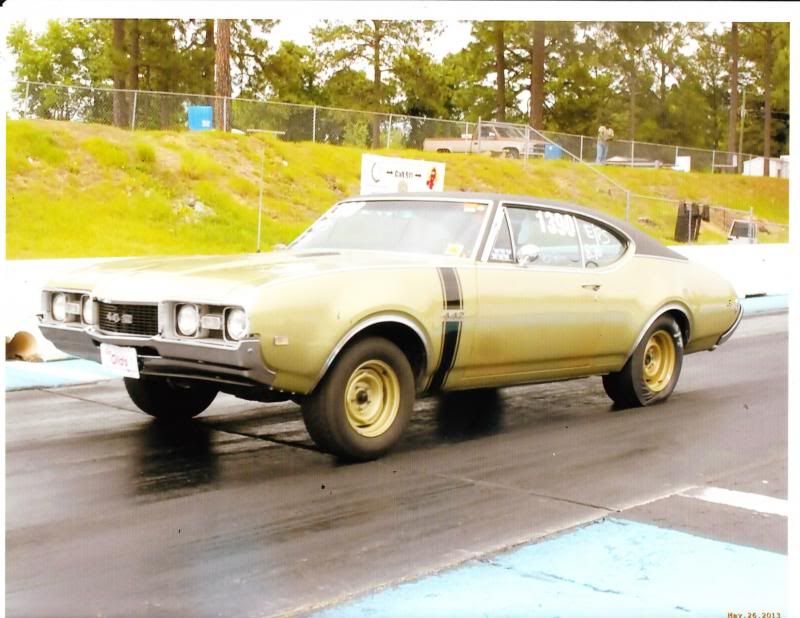
I run a stock 72 LT-1 on 93 with no problem...also run my 68 Olds 442 with stock 10:5 to 1 on 93 with no issues....BUT they both love 112 octane racing gas from time to time. 

Fred
Fred

Last edited by vettefred; Oct 23, 2015 at 03:36 PM.

Race Director
Joined: Apr 2000
Posts: 17,676
Likes: 201
From: Who says "Nothing is impossible" ? I've been doing nothing for years.
Because it is an iron head iron block engine and a 9.5cr for your '71 LT-1 you want to stay below at or below 10:1cr. I would not exceed 10:1cr with this combination regardless of cam duration. This way you know you are safe on premium gas and if you get stuck somewhere you could use a mid grade and get home.
The proof is in the pudding though, every engine is different. Your engine builder doesn't want your engine to have any problems so he plays it on the safe side.
I have a 600HP aluminum headed iron block with 10:6cr. Because I have all the tuning tools and gauges in my garage to make it run correctly I am able to run mid grade 91 octane in it.
You could probably do the same however the engine builder has no idea what knowledge or resources the customer ( you ) have he is always going to cover his ***. Stick to a CR below 10:1
The proof is in the pudding though, every engine is different. Your engine builder doesn't want your engine to have any problems so he plays it on the safe side.
I have a 600HP aluminum headed iron block with 10:6cr. Because I have all the tuning tools and gauges in my garage to make it run correctly I am able to run mid grade 91 octane in it.
You could probably do the same however the engine builder has no idea what knowledge or resources the customer ( you ) have he is always going to cover his ***. Stick to a CR below 10:1