




Hallo :) need your opinion...

Drifting


Joined: Mar 2001
Posts: 1,396
Likes: 6
From: Indiana

As for a better way, get yourself an "Air Lift" fill tool or a cheap copy like the FJC-43610. No more trapped air with these thing. They work by vacuum, so not only do they purge the air, but will also indicate a coolant leak somewhere if you can't hold a vacuum in the system. You need an air compressor though.
Race Director


Joined: Mar 2003
Posts: 11,608
Likes: 780
From: Eustis ( Area 51 Bat Cave ) Fl
I have seen intermitted sticking but not that discriminating.
This tells me your only problem is that you still have trapped air in the system. The way I used to burp the system was to get the front up on ramps so the radiator cap is the highest point in the system. Sometimes it takes a while, but it will burp.
As for a better way, get yourself an "Air Lift" fill tool or a cheap copy like the FJC-43610. No more trapped air with these thing. They work by vacuum, so not only do they purge the air, but will also indicate a coolant leak somewhere if you can't hold a vacuum in the system. You need an air compressor though.
As for a better way, get yourself an "Air Lift" fill tool or a cheap copy like the FJC-43610. No more trapped air with these thing. They work by vacuum, so not only do they purge the air, but will also indicate a coolant leak somewhere if you can't hold a vacuum in the system. You need an air compressor though.
So trapped air in the system would allow it to cool while moving yet overheat while at idle,
Last edited by The13Bats; Jun 17, 2016 at 06:51 PM.
Drifting
Joined: Mar 2001
Posts: 1,396
Likes: 6
From: Indiana
[QUOTE=The13Bats;1592447426]so it would only stick at idle never while moving?
I have seen intermitted sticking but not that discriminating.
Doubtful, but anything is possible. I've only encountered one stuck thermostat in my life. The only way to know for sure is pull or replace it and see what happens.
Very possible depending on the amount of displaced coolant. It would likely still run hotter than normal at speed though. The OP said it was doing "pretty well". Is "pretty well" a nice consistent 180 or 220?
I have seen intermitted sticking but not that discriminating.
so you doubt the sticking stat is doing this?
So trapped air in the system would allow it to cool while moving yet overheat while at idle,

Melting Slicks


Joined: Jul 2006
Posts: 2,291
Likes: 492
From: Salmon Arm, BC
How old is your Rad? Please show us a pic of the fan shroud you have. I bet that the shroud is your problem if you have all the other seals and dams in place, and your rad is newer.
The importance of the fan shroud covering the whole radiator in these cars cannot be ignored, this system needs the whole radiator to contribute to cooling, and if it's not you will get overheating troubles, especially in the hotter climates.
The importance of the fan shroud covering the whole radiator in these cars cannot be ignored, this system needs the whole radiator to contribute to cooling, and if it's not you will get overheating troubles, especially in the hotter climates.
Last edited by OMF; Jun 17, 2016 at 08:06 PM.

Drifting
Joined: Jul 2015
Posts: 1,765
Likes: 254
From: Catlett VA
Hi,
been busy with my '73 454 and now that summer is here it doesn't like the heat...it overheats very easly at idle but does pretty well when going.
I've had the 454 rebuilt with a bigger cam and intake and I have the transmission cooled by a separate cooler w/fan.
On a hot day temp. will get up to 250 and idle and Im really concerned about ruining the engine.
I have all the required radiator shroud, bottom bumper spoiler, even added Hyperlube super coolant additive but Im afraid that the all set up is so tight under the hood and there is not enough air flow
The only other thing is to add a radiator fan ...any suggestion on how many and what brand? ...they all look the same to me)
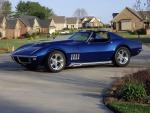
here's my set up:

cheers
been busy with my '73 454 and now that summer is here it doesn't like the heat...it overheats very easly at idle but does pretty well when going.
I've had the 454 rebuilt with a bigger cam and intake and I have the transmission cooled by a separate cooler w/fan.
On a hot day temp. will get up to 250 and idle and Im really concerned about ruining the engine.
I have all the required radiator shroud, bottom bumper spoiler, even added Hyperlube super coolant additive but Im afraid that the all set up is so tight under the hood and there is not enough air flow
The only other thing is to add a radiator fan ...any suggestion on how many and what brand? ...they all look the same to me
)here's my set up:

cheers
Race Director
Joined: Mar 2003
Posts: 11,608
Likes: 780
From: Eustis ( Area 51 Bat Cave ) Fl
When Chevy engineers decided where to locate the sensor for the temperature gauge, they placed it at the absolute hottest place on the entire 454 engine- right where the coolant has just come out of the engine and right next to the exhaust manifold. I moved the sensor to the top of the intake manifold where the coolant from both sides of the engine has mixed to a uniform temperature and is about to go back into the radiator. This is where many other engines have their temp sensor and is a more representative measure of the overall coolant temperature, rather than a localized reading at the engine's hot spot. If you get a 250 degree reading here, you do have a real problem. There will be a difference of about 20 degrees between the two locations. Purists will hate this idea.

In all due respects to purists just because the factory did it a certain way doesn't make it the very best, another reason I was never into factory stock I like to have the room to improve, update and upgrade things...
Drifting

Joined: Mar 2011
Posts: 1,347
Likes: 121
From: Kernersville NC
Before my engine swap my 454 ran 180 all the time regardless of outside temp. If I got on it real hard it would heat up one needle width on the gauge. After the ZZ454 went in it would run 180 on the road but at idle would creep up into the 210 range. All my seals were in place and I attributed it to the higher comp ratio and aluminum heads giving off their heat to the coolant more rapidly. I added a Spal slim 16" pusher on the front/left side of the radiator. I used a Derale controller set to come on about 185-190. It will cycle on and off now in stop and go traffic and never runs when moving. Total cost about $150
Fan Spal Electric Fans IX-30101517 from Summit Racing. This one is thin enough that the hood will not hit it when you open the hood.
Controller Derale 16759 adjustable controller. This controller switches the ground to operate the fan. The fuse is on the negative side of the fan wiring. I put it on the positive wire. I used the green a/c wire to switch fan on from inside the car manually.
Fan Spal Electric Fans IX-30101517 from Summit Racing. This one is thin enough that the hood will not hit it when you open the hood.
Controller Derale 16759 adjustable controller. This controller switches the ground to operate the fan. The fuse is on the negative side of the fan wiring. I put it on the positive wire. I used the green a/c wire to switch fan on from inside the car manually.
Corvette Stories
The Best of Corvette for Corvette Enthusiasts

Top 10 Most Expensive Corvettes Ever Sold on Bring A Trailer
Brett Foote
10 Things Every Corvette Owner Needs (2026 Edition)
Michael S. Palmer
8 Most "Only Corvette Owners Understand" Quirks and Problems
Pouria Savadkouei
10 Reasons the C6 Z06 is Still A Performance Benchmark After 20 Years
Joe Kucinski
How Much Horsepower Every Corvette Engine "LOST" in 1972
Joe Kucinski
Top 10 DOs and DON'Ts for Protecting Your Convertible Top!
Michael S. Palmer
Top 10 Most Explosive Corvettes Ever Made: Power-to-Weight Ratio Ranked!
Joe Kucinski
150 hp to 1,250 hp: Every Corvette Generation Compared by the Specs That Matter
Joe Kucinski
8 Coolest Corvette Pace Cars (and Replicas) of All Time
Verdad Gallardo
Thread Starter
Racer

Joined: Feb 2012
Posts: 462
Likes: 0
From: Virginia
Before my engine swap my 454 ran 180 all the time regardless of outside temp. If I got on it real hard it would heat up one needle width on the gauge. After the ZZ454 went in it would run 180 on the road but at idle would creep up into the 210 range. All my seals were in place and I attributed it to the higher comp ratio and aluminum heads giving off their heat to the coolant more rapidly. I added a Spal slim 16" pusher on the front/left side of the radiator. I used a Derale controller set to come on about 185-190. It will cycle on and off now in stop and go traffic and never runs when moving. Total cost about $150
Fan Spal Electric Fans IX-30101517 from Summit Racing. This one is thin enough that the hood will not hit it when you open the hood.
Controller Derale 16759 adjustable controller. This controller switches the ground to operate the fan. The fuse is on the negative side of the fan wiring. I put it on the positive wire. I used the green a/c wire to switch fan on from inside the car manually.
Fan Spal Electric Fans IX-30101517 from Summit Racing. This one is thin enough that the hood will not hit it when you open the hood.
Controller Derale 16759 adjustable controller. This controller switches the ground to operate the fan. The fuse is on the negative side of the fan wiring. I put it on the positive wire. I used the green a/c wire to switch fan on from inside the car manually.
Thread Starter
Racer
Joined: Feb 2012
Posts: 462
Likes: 0
From: Virginia
When Chevy engineers decided where to locate the sensor for the temperature gauge, they placed it at the absolute hottest place on the entire 454 engine- right where the coolant has just come out of the engine and right next to the exhaust manifold. I moved the sensor to the top of the intake manifold where the coolant from both sides of the engine has mixed to a uniform temperature and is about to go back into the radiator. This is where many other engines have their temp sensor and is a more representative measure of the overall coolant temperature, rather than a localized reading at the engine's hot spot. If you get a 250 degree reading here, you do have a real problem. There will be a difference of about 20 degrees between the two locations. Purists will hate this idea.