When you click on links to various merchants on this site and make a purchase, this can result in this site earning a commission. Affiliate programs and affiliations include, but are not limited to, the eBay Partner Network.
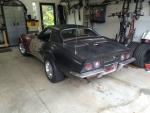
Hopefully someone can help me work my way through this problem as I am very frustrated. I seem to have the car running very well and starting perfectly until it gets warm. After driving for 5-10 minutes, the car just dies when I slow down. I can almost nurse it to stay alive with the throttle but it is almost impossible. Once the car cools down, it runs perfect again. The car has an abundance of power when I first start out. I have only driven the car about a dozen times but it is the same thing every time.
Here are the details
1969 big block 427
tripower
cam unknown
rectangular port heads
TI ignition removed
factory steel fuel lines
New fuel pump and plenty of fuel arriving to carb
float bowls seem to be just where they need to be when looking through the site plug, (even after the car refuses to run when hot)
I have no temperature gauge operating at the moment
radiator feels warm so it seems to be pulling the heat out of the engine
New factory exhaust, no headers
I am using no ethanol 94 octane gas
It is a rainy 50 degree day in Vancouver
Does anyone know where to begin? I really am frustrated and do not know where to begin after spending lots of time trying to get this tri power set up correctly. I was sure it was a fuel problem but now I am beginning to wonder.
Get a spare spark plug and check for spark when it won't run. Could be a Coil/ignition issue. Just attach the plug to #1 and let it sit on a good ground (bare metal) and have someone try to start (crank) the engine. You should see spark.
as stated above you have to determine if the problem is ignition or spark. If the method above determines no spark and you converted the TI to points, you didnt state what you have, it could be the coil or the points condenser.
If you have spark look down all three carburetor barrels and see if you have raw gas pouring into the carburetor throats. In addition activate the throttle and see if the center carburetor shows gasoline squirting from the accelerator nozzles.
Get a spare spark plug and check for spark when it won't run. Could be a Coil/ignition issue. Just attach the plug to #1 and let it sit on a good ground (bare metal) and have someone try to start (crank) the engine. You should see spark.
It is definitely sparking as when I go out and start it up , it is very difficult to keep running because it is still warm but it will start and run as long as I nurse the throttle with considerable RPM,,,, (need to keep it almost 1800RPM to keep running), once I leave it for a few hours, it will likely start and idle fine again.
as stated above you have to determine if the problem is ignition or spark. If the method above determines no spark and you converted the TI to points, you didnt state what you have, it could be the coil or the points condenser.
If you have spark look down all three carburetor barrels and see if you have raw gas pouring into the carburetor throats. In addition activate the throttle and see if the center carburetor shows gasoline squirting from the accelerator nozzles.
I must profess my lack of knowledge regarding ignition.
It has been 20 years since I owned and worked and set timing on an old camaro with points. Below is a picture of what I have on the car. I think I see points though they are much smaller than I remember from years ago???
If I can ask, why would a warmed up vehicle have problems related to ignition, this I don't understand? You can see from the picture that the coil on the car looks pretty old.
Shall I just replace the coil and part of the points system??? These seem like relatively inexpensive ideas. I received the car with the ignition the way it is so how do I even know this is a correct coil for the car?
As for the fuel system, I have spent lots of time on it and yes, the accelerator pump puts out a good solid shot of fuel.
there are some home made modification to that ignition system. someone has added a ground wire under the points condenser hold down screw and ran the other end of the wire to the vacuum advance. I'm also curious, since it was a TI ignition, what the voltage reading is on the + positive side of the coil when the engine is running. If it has 12+ volts you will burn out the points quite quickly, points systems used a resistance wire going to the + positive side of the coil in conjunction with a second wire that supplied 12+ volts only during cranking. The coil looks old and you probably cannt be sure if it is a points style coil as opposed to a TI coil.
OK
I will check out the voltage on the wire to the distributor.
And next up, a new distributor as I want to get this car completely dialed in. I see there are various types of coils but most seem to be about $100.
If nothing else, at least it will rule out that part of the system.
But could someone explain how a warm (or very hot) car has an effect on the ignition system. I get the fuel boiling and evaporation and so on with heat with respect to fuel problems but not with respect to spark. Do coils become let efficient as they build heat?
Do you have a ohm meter ? One way to tell if its the coil is when the engine is cold remove the two wires from the coil and take a ohms reading between the two posts, put the two wires back on and warm up the engine until it starts running bad than do the same test.Both readings should be the same.Many times when a bad coil gets hot the winding's inside start to separate and you'll get little or no spark.
But could someone explain how a warm (or very hot) car has an effect on the ignition system. I get the fuel boiling and evaporation and so on with heat with respect to fuel problems but not with respect to spark. Do coils become let efficient as they build heat?
A bad condenser will do just as you described. It will start and run just fine for a few mins. until it warms up then break down and barely run at all. I would replace the condenser as they are cheap then try another coil if that doesn't work. Looks like someone installed a ground wire in your pic so maybe it was to try and fix the problem.
OK, Thanks Sparky.
I started with the NEW COIL and will get a new condenser and points tomorrow. Car starts up very easily now. Here are the readings I am getting from the old and new coil on the inner windings when stone cold. I don't really know how to quantify these ohms readings but could this be part of the problem or is the old coil reasonable. I understand that when it heats up it could be quite different but am having another issue right now that precludes me from driving it till I get it sorted out?
I also replaced the thermostat just in case.
there are some home made modification to that ignition system. someone has added a ground wire under the points condenser hold down screw and ran the other end of the wire to the vacuum advance. I'm also curious, since it was a TI ignition, what the voltage reading is on the + positive side of the coil when the engine is running. If it has 12+ volts you will burn out the points quite quickly, points systems used a resistance wire going to the + positive side of the coil in conjunction with a second wire that supplied 12+ volts only during cranking. The coil looks old and you probably cannt be sure if it is a points style coil as opposed to a TI coil.
Regarding the voltage on the positive side, when I bought the coil they said there are 9 and 12 volt coils but mine calls for a 9 volt as there should be some type of step down from 12 to 9 in order to keep a good spark during engine start when starter robs the coil of voltage. I put the voltmeter on the + coil and it puts out about 9 volts during the start and 10 and a bit when running so I assume I purchased the correct coil.
ONE MORE ISSUE maybe unrelated.
I can start the car easily when cold but I have noticed that as the choke plate opens, the car begins to die and will shut down unless I keep considerable throttle. When I close the choke plate manually, it seems to come back to life. any ideas why this happens? Is the choke simply opening too early? Not enough vacuum?
I do have a factory automatic choke installed on the tri power.
So much appreciated having so much knowledge out there to help we work my way through this corvette!
In your photo you are measuring from the coil primary winding to the secondary winding which will have very high resistance (you are reading 7-9000 ohms). What you really want to measure is the primary resistance (use the 200 ohm scale) attach the leads to the two outer posts (+ and -) you should get something in the 1-2 ohm range. The original TI Coils are around 0.5 ohms. You should also check zero (short the leads and note the reading), sometimes leads will show a small resistance and you need to subtract that when dealing with low resistance values.
The Choke opening as it get warmed up is normal, it sounds like you have vacuum leaks and/or improperly adjusted idle settings (idle speed, mixture and timing). I suspect vacuum leaks are a major part of your issues (I have an 68 L71 Tri-power), more places to leak on a Tri-power. Some of the guys use a section on vac. hose as a stethoscope to find leaks, Carb cleaner spray or my favorite spray smoke (for testing smoke detectors) can also help.
Oh, by the way this place has some useful ignition info http://www.tispecialty.com/ for Corvette TI systems in case your car was originally TI equipped. My car had aftermarket Dist. and Coil installed when I bought it, but had all the TI wiring/Amp still present (Distributor was in a box of spare parts) and I'm currently running it as TI.
In your photo you are measuring from the coil primary winding to the secondary winding which will have very high resistance (you are reading 7-9000 ohms). What you really want to measure is the primary resistance (use the 200 ohm scale) attach the leads to the two outer posts (+ and -) you should get something in the 1-2 ohm range. The original TI Coils are around 0.5 ohms. You should also check zero (short the leads and note the reading), sometimes leads will show a small resistance and you need to subtract that when dealing with low resistance values.
Thanks Supr,
So I now have a new coil and on the 200 ohm scale I get 2.5 and with the leads shorted I get 1.5 so I assume that means it is 1 ohm resistance so that checks out. (it is brand new)
I also just replaced the condenser today.
So my problem is I get the car started but can't get it to idle at all, once I let my foot off gas it drops off and dies. Almost like the idle circuit is not working. Yes the carb float bowl has fuel and I very carefully cleaned out all passages on the metering block. Is it possible I need to open my mixture screws more than one and a half turns??
I just removed and replaced the gaskets on my centre carb and made sure everything is tight.
So I am starting to think maybe it is vacuum.?
Can you tell me what an idle vacuum verses a vacuum at 2000 RPM should be. I just purchased a small vacuum gauge that I will introduce into my system.
I will not quit until I get this car running but am finding it very frustrating
Any help would be very much appreciated!
I now know why other guys have given up on the tri powers
Thanks, Pete
I would say 1.5 turns should work. You won't get much info from the vac. gauge until you get it idling with the choke full open. I would keep it running by using the choke plate (you'll need a helper or rig something to hold the choke open), disconnect the choke pull-off vac. line and plug it. Once you have it idling, use the hose/carb spray/ smoke to find your leaks. The vac. gauge is a great tool, lots of info on the web to teach how to use it. I have a love/hate relationship with my Tri-power, the only thing I'd trade it for is an 8 stack EFI (winter project for my jet boat), which is the next level of hell for tuning.
Since your ignition system seems to work properly we can exclude this as failure cause.
I had a similar issue with a car, always started to run bad when hot and then died.
First I did a lot to keep the carb cooler, thinking it got too hot.
After the 20th emergency stop on the highway, and the car wont start usually until waiting half an hour, I tried to start it like it had to much fuel: with full throttle all the time. Then is slowly came back to life.
So I assumed it was running to rich, turned the mixtures screws in and the engine speed raised a bit, telling me that the idle mixture was way to rich.
It ended up with the idle screws completly in where the engine should usually die. But it ran quit good with this "adjustment" and this day we made it 300mls home without any trouble.
It was not my car, so I can´t tell you what was wrong with the carb.
But this is my advise to you. Turn the mixture screws when the engine is warm (not hot). Try to turn them in until the engine starts to die. Then a bit back out and you are not far away from a right adjustment.
You may also search vakuum leaks with break cleander sprayed to possible leak areas.
Vakuum reading depends on the cam you have. A stock cam will produce ~17Hg with a steady pointer needle.
2 Years ago I worked on a tri power with a very big cam, made only ~14Hg vakuum with a flickery needle, the car was not really driveable because of those cam. It did just not match the rest of the engine components.
So the owner went to the stock cam and was very happy with it.
Designer Imagines A Corvette That Looks More Like a Corvette Than the Corvette
Slideshow: A Jaguar designer's personal project imagines what a modern front-engined Corvette might look like if Chevrolet revisited the golden age of the Stingray.





 1969 Tripower will not run when hot















 where the engine should usually die. But it ran quit good with this "adjustment" and this day we made it 300mls home without any trouble.