




Wilwood Brakes

Team Owner


Joined: Apr 1999
Posts: 21,953
Likes: 1,445
From: Reno Nevada
2024 C3 of the Year Finalist- Modified

You got me thinking about this. So I went out and grabbed one of my stock 79 front rotors off a stack. It has been resurfaced and is ready to install on a vette with stock brakes. It weighs in at exactly 19 pounds. I had to look around for a colman 13.06 i had saved and it is worn from a race weekend with a visible ridge around the outer lip. It weighs in at nearly 3 #'s lighter at 16 pounds 1 oz.
Lets add in the aluminum hat and bolts with safety wire and call them at nearly equal in weight.
The Wilwood 8165's I'm using now even weigh less than the colmans because of the different diameter hat. You called it 12.3 almost 4 pounds lighter than the colman
I'm not sure where you came up with the 8.8 pound stock when my weight is 19 pounds

Safety Car


Joined: May 2004
Posts: 4,363
Likes: 1,587
From: los altos hills california

Tech Contributor
Joined: Jun 2004
Posts: 20,905
Likes: 962
From: I tend to be leery of any guy who doesn't own a chainsaw or a handgun.
You got me thinking about this. So I went out and grabbed one of my stock 79 front rotors off a stack. It has been resurfaced and is ready to install on a vette with stock brakes. It weighs in at exactly 19 pounds. I had to look around for a colman 13.06 i had saved and it is worn from a race weekend with a visible ridge around the outer lip. It weighs in at nearly 3 #'s lighter at 16 pounds 1 oz.
Lets add in the aluminum hat and bolts with safety wire and call them at nearly equal in weight.
The Wilwood 8165's I'm using now even weigh less than the colmans because of the different diameter hat. You called it 12.3 almost 4 pounds lighter than the colman
I'm not sure where you came up with the 8.8 pound stock when my weight is 19 pounds
Lets add in the aluminum hat and bolts with safety wire and call them at nearly equal in weight.
The Wilwood 8165's I'm using now even weigh less than the colmans because of the different diameter hat. You called it 12.3 almost 4 pounds lighter than the colman
I'm not sure where you came up with the 8.8 pound stock when my weight is 19 pounds
Please go back and read post #23, and the second paragraph of post #38. Let me know when you've read them, as I noticed a spelling error in post#23 and I'm itching to correct it.
The calculations are regarding the brake rotors on your car and mine, and the reasons why I'm running 11.75" rotors.
Team Owner
Joined: Apr 1999
Posts: 21,953
Likes: 1,445
From: Reno Nevada
2024 C3 of the Year Finalist- Modified
The weights are from the Wilwood website (I didn't pull anything out of the air).
Please go back and read post #23, and the second paragraph of post #38. Let me know when you've read them, as I noticed a spelling error in post#23 and I'm itching to correct it.
The calculations are regarding the brake rotors on your car and mine, and the reasons why I'm running 11.75" rotors.
Please go back and read post #23, and the second paragraph of post #38. Let me know when you've read them, as I noticed a spelling error in post#23 and I'm itching to correct it.
The calculations are regarding the brake rotors on your car and mine, and the reasons why I'm running 11.75" rotors.

Tech Contributor
Joined: Jun 2004
Posts: 20,905
Likes: 962
From: I tend to be leery of any guy who doesn't own a chainsaw or a handgun.
Team Owner
Joined: Apr 1999
Posts: 21,953
Likes: 1,445
From: Reno Nevada
2024 C3 of the Year Finalist- Modified
Yes, I m not sure what I'm missing. I was just very happy with my new lighter brakes. I also have the light weight billet aluminum rims
Your special 11.75 like Jason Stanley's weight 8.8 pounds
Your special 11.75 like Jason Stanley's weight 8.8 pounds
Last edited by gkull; Dec 4, 2016 at 11:54 PM.
Tech Contributor
Joined: Jun 2004
Posts: 20,905
Likes: 962
From: I tend to be leery of any guy who doesn't own a chainsaw or a handgun.
My point of asking you to reread (or perhaps, read) my prior posts is that I never made the claim that stock C3 rotors weighed 8.8 pounds, as you put in bolded letters in your post.
Team Owner
Joined: Apr 1999
Posts: 21,953
Likes: 1,445
From: Reno Nevada
2024 C3 of the Year Finalist- Modified
With all the moment of inertia put aside. The reason for getting bigger brakes was because I would have brake failure within a few laps with stock brakes even with 3 inch ductwork and 600 degree motul fluid
So to use 8.8 pound small rotors was not an option they would fail even faster
I was looking at 14 inch but I couldnot find a kit
So to use 8.8 pound small rotors was not an option they would fail even faster
I was looking at 14 inch but I couldnot find a kit
Corvette Stories
The Best of Corvette for Corvette Enthusiasts

Top 10 Most Expensive Corvettes Ever Sold on Bring A Trailer
Brett Foote
10 Things Every Corvette Owner Needs (2026 Edition)
Michael S. Palmer
8 Most "Only Corvette Owners Understand" Quirks and Problems
Pouria Savadkouei
10 Reasons the C6 Z06 is Still A Performance Benchmark After 20 Years
Joe Kucinski
How Much Horsepower Every Corvette Engine "LOST" in 1972
Joe Kucinski
Top 10 DOs and DON'Ts for Protecting Your Convertible Top!
Michael S. Palmer
Top 10 Most Explosive Corvettes Ever Made: Power-to-Weight Ratio Ranked!
Joe Kucinski
150 hp to 1,250 hp: Every Corvette Generation Compared by the Specs That Matter
Joe Kucinski
8 Coolest Corvette Pace Cars (and Replicas) of All Time
Verdad Gallardo
Le Mans Master


Joined: Dec 2006
Posts: 8,837
Likes: 1,028
http://www.wilwood.com/BrakeKits/Bra...tte&option=C-3
I don't know how good they are, but this is 14".
I don't know how good they are, but this is 14".
Team Owner
Joined: Apr 1999
Posts: 21,953
Likes: 1,445
From: Reno Nevada
2024 C3 of the Year Finalist- Modified
http://www.wilwood.com/BrakeKits/Bra...tte&option=C-3
I don't know how good they are, but this is 14".
I don't know how good they are, but this is 14".
Tech Contributor
Joined: Jun 2004
Posts: 20,905
Likes: 962
From: I tend to be leery of any guy who doesn't own a chainsaw or a handgun.
With all the moment of inertia put aside. The reason for getting bigger brakes was because I would have brake failure within a few laps with stock brakes even with 3 inch ductwork and 600 degree motul fluid
So to use 8.8 pound small rotors was not an option they would fail even faster
I was looking at 14 inch but I couldnot find a kit
So to use 8.8 pound small rotors was not an option they would fail even faster
I was looking at 14 inch but I couldnot find a kit
Team Owner
Joined: Apr 1999
Posts: 21,953
Likes: 1,445
From: Reno Nevada
2024 C3 of the Year Finalist- Modified
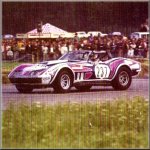
I worked around historic race cars for 10 years and some of them had extensive log books of testing and qualifying from back in the day. Their lap times are substantially faster now because of tire technology
Race Director


Joined: Aug 1999
Posts: 18,126
Likes: 174
From: WI
36 vintage races and mine never failed except for the one time I experimented with O-ring pistons, complete failure, I also never used any type of titanium thermal block on my car.
Team Owner
Joined: Apr 1999
Posts: 21,953
Likes: 1,445
From: Reno Nevada
2024 C3 of the Year Finalist- Modified
I thought you had the thermal block titanium pucks. Sorry i looked into them from dontov racing for modified j-56. Local track and Miller race track near Salt lake city has a 3000 foot main straight . The high power cars were over 200 mph. I went to a Moto GP race and the bike guys were doing like 214 mph
Last edited by gkull; Dec 5, 2016 at 09:31 PM.
Tech Contributor
Joined: Jun 2004
Posts: 20,905
Likes: 962
From: I tend to be leery of any guy who doesn't own a chainsaw or a handgun.
RedVettercr just showed you some what of what he did with J-56 and 12 inch rotors. They were so failure prone that they learned to install titanium thermal blocks between the pads and pistons. That is in lower class vette racing. You get up to the greenwood vettes Like I worked on and they all had world class aircraft inspired brakes like Alcon. the same thing as the fastest 24 hour racing cars from Europe
I worked around historic race cars for 10 years and some of them had extensive log books of testing and qualifying from back in the day. Their lap times are substantially faster now because of tire technology
I worked around historic race cars for 10 years and some of them had extensive log books of testing and qualifying from back in the day. Their lap times are substantially faster now because of tire technology
Team Owner
Joined: Apr 1999
Posts: 21,953
Likes: 1,445
From: Reno Nevada
2024 C3 of the Year Finalist- Modified
Around 80 the front tires would finally lock up and then you could finally let up some of pressure on the brake pedal
The first time it scared me and I started looking for alternative braking ideas
stock brakes are okay in Stock vettes because they can't go fast enough to exceed their ability
Drifting


Joined: Oct 2005
Posts: 1,527
Likes: 148
From: East London/SW Essex UK
My '68 has 18" rubber on all four corners - I'm using 'O' ring seals on stock calipers - I have no power assistance - I am using Hawk HP+ pads. Everyone says that stock brakes on C3's are fine - and perhaps they are (on cars with 'old school' rubber and lower hp engines) - I'm just not convinced - compared with current day cars IMHO the brakes are barely adequate - however until someone can do a direct like for like measured comparison with two cars - one with a stock brake set-up and 'old' tyres and one with 18" or 20" rubber, big discs and calipers I'm not prepared to spend a huge bundle of cash on upgrading the brakes.
Last edited by roscobbc; Dec 6, 2016 at 02:42 PM.
Race Director
Joined: May 2003
Posts: 10,956
Likes: 409
From: California
What you need, if you want to stop faster... is the Wildwood adjustable distribution valve with the knee brake point...
Currently you only have about 30% stopping power in your rear wheels, this is due to the distribution/proportioning valve, This stopes your rear wheels from locking up and putting your car into a spin.
it is well under powered so as the rear wheel will never lock up and any standard combination of tires will work and GM will never get sued.
This proportion is way off for safety, and then you go put wider tires on the rear and then its even further off
When you add this valve and adjust it correctly, it will in fact shorten your stopping distance.. the size of the brakes will never have anything to do with stopping distance... just how long you can use them before they fade..
I road race, as well as my 2 sons... standard brakes will over heat very fast, boil the fluid and then start to lock up or completely disappear.
We were out racing the canyons one day last year, middle son runs a highly modified C4, suspension engine ... but he did not have his new BEAR brakes on yet... at the end of the canyon, my C3 was perfect, my sons C5 with C6Z brakes perfect, the C4... brakes were gone, to the floor... wait about 30 minutes to cool,,, brakes back... he changed them out the next weekend.
Currently you only have about 30% stopping power in your rear wheels, this is due to the distribution/proportioning valve, This stopes your rear wheels from locking up and putting your car into a spin.
it is well under powered so as the rear wheel will never lock up and any standard combination of tires will work and GM will never get sued.
This proportion is way off for safety, and then you go put wider tires on the rear and then its even further off
When you add this valve and adjust it correctly, it will in fact shorten your stopping distance.. the size of the brakes will never have anything to do with stopping distance... just how long you can use them before they fade..
I road race, as well as my 2 sons... standard brakes will over heat very fast, boil the fluid and then start to lock up or completely disappear.
We were out racing the canyons one day last year, middle son runs a highly modified C4, suspension engine ... but he did not have his new BEAR brakes on yet... at the end of the canyon, my C3 was perfect, my sons C5 with C6Z brakes perfect, the C4... brakes were gone, to the floor... wait about 30 minutes to cool,,, brakes back... he changed them out the next weekend.
Last edited by pauldana; Dec 7, 2016 at 01:46 PM.
Le Mans Master
Joined: Dec 2006
Posts: 8,837
Likes: 1,028
I finally got some time off, and installed the Coleman rotors and alum hats, and the Wilwood units on the front.
I noticed they were not square to the world.
I removed the calipers per TimAT's idea, and measured the caliper brackets.
Both brackets were 1.06" from rotor to mount point at the top. (Tight to the spindle).
One was 1.08" at the bottom mount point, while the other was 1.11".(At the lower outboard point)
This helps to explain the taper in the old pads.
A few sledge hammer blows later, they were all 1.06"
Remounting the calipers showed equal spacing between calipers and rotors.
I always wondered about J-56, now I know. The stock brackets can and will bend, and need to be checked.
I noticed they were not square to the world.
I removed the calipers per TimAT's idea, and measured the caliper brackets.
Both brackets were 1.06" from rotor to mount point at the top. (Tight to the spindle).
One was 1.08" at the bottom mount point, while the other was 1.11".(At the lower outboard point)
This helps to explain the taper in the old pads.
A few sledge hammer blows later, they were all 1.06"
Remounting the calipers showed equal spacing between calipers and rotors.
I always wondered about J-56, now I know. The stock brackets can and will bend, and need to be checked.
Team Owner
Joined: Apr 1999
Posts: 21,953
Likes: 1,445
From: Reno Nevada
2024 C3 of the Year Finalist- Modified
It is a @4500 foot drop from the mountain top to the valley floor. My 3000 pound vette does very well with bigger thermal barrier caliper brakes