







Opinions on engine rebuild componenets
Thread Starter
Instructor

Joined: Feb 2018
Posts: 102
Likes: 10
From: Eastchester NY
 Opinions on engine rebuild componenets
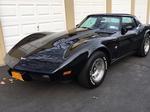
I bought a 1979 l48 a couple of weeks ago and I'll be starting an engine rebuild in a few weeks.
I'm very new to this and it's been my dream to work with a qualified mechanic to rebuild my engine. I want to do as much of the work as possible myself, with the proper guidance. I was very fortunate to find someone willing and enthused to work with me.
I've ordered a couple of "Chevy SB Rebuild" manuals (as recommended on this forum) and plan to read them cover to cover before starting.
I worked with Dougs Speed Shop in Binghamton NY to select components. I'm looking for somewhere between 350 - 400 hp and ft lbs.
The components we're thinking of are as follows:
Dart 180 heads
Comp Cams 268 hydraulic cam
650 - 700 CFM double pumper carb
Flat top pistons
Dual Plan intake manifold.
I'm also going to swap the automatic for a Tremec six speed from American Powertrain.
I've learned a lot from this forum so far and would appreciate opinions on the above set up, and maybe some things to be aware of with this job.
Thanks in advance for your input.
I'm very new to this and it's been my dream to work with a qualified mechanic to rebuild my engine. I want to do as much of the work as possible myself, with the proper guidance. I was very fortunate to find someone willing and enthused to work with me.
I've ordered a couple of "Chevy SB Rebuild" manuals (as recommended on this forum) and plan to read them cover to cover before starting.
I worked with Dougs Speed Shop in Binghamton NY to select components. I'm looking for somewhere between 350 - 400 hp and ft lbs.
The components we're thinking of are as follows:
Dart 180 heads
Comp Cams 268 hydraulic cam
650 - 700 CFM double pumper carb
Flat top pistons
Dual Plan intake manifold.
I'm also going to swap the automatic for a Tremec six speed from American Powertrain.
I've learned a lot from this forum so far and would appreciate opinions on the above set up, and maybe some things to be aware of with this job.
Thanks in advance for your input.
Thread Starter
Instructor
Joined: Feb 2018
Posts: 102
Likes: 10
From: Eastchester NY
Call me crazy, but I find bloodying up my knuckles on a car enjoyable...or I should say the satisfaction of finishing a job, then going out for a drive. .

Le Mans Master


Joined: Aug 2006
Posts: 7,427
Likes: 1,560
From: mount holly NC
2025 c3 ('74-'82) of the Year Finalist - Unmodified
2019 C3 of Year Finalist (appearance mods)
Hi again.
I'll let the experts help you with building more horsepower since you have to determine what you want to do with your Corvette first.
How will you use the car?
Local shows on the weekend?
Daily driver or long trips to visit Birmingham or tire smoking quarter miler?
Power band, transmission and rear end ratios all influence your decisions.
Going faster is lots of fun but what condition are the brakes?
Have you considered driving as is for the first 3 or 4 months to see what else needs to be done?
Do you have any maintenance records?
Hows the suspension bushing, the trailing arm bearings?
Have you addressed the no start/wiper problem?
Here's a '79 schemat if you still need it:
https://docs.google.com/viewer?a=v&p...TYyNWViMWY1NzY
How will you use the car?
Local shows on the weekend?
Daily driver or long trips to visit Birmingham or tire smoking quarter miler?
Power band, transmission and rear end ratios all influence your decisions.
Going faster is lots of fun but what condition are the brakes?
Have you considered driving as is for the first 3 or 4 months to see what else needs to be done?
Do you have any maintenance records?
Hows the suspension bushing, the trailing arm bearings?
Have you addressed the no start/wiper problem?
Here's a '79 schemat if you still need it:
https://docs.google.com/viewer?a=v&p...TYyNWViMWY1NzY
Thread Starter
Instructor
Joined: Feb 2018
Posts: 102
Likes: 10
From: Eastchester NY
Thank you very much for the response, and for remembering me and my wiper problem.
I replaced the battery along with the negative cable to the frame; cleaned up a lot of ground connections (fortunately I didnt see any signs of rust or corrosion...the frame is very clean); and I rebuilt the alternator. The wipers came back to life...and the car starts up properly.
The car will be a weekend cruiser, strictly for enjoyment, and maybe some shows....and I'd like to smoke the tires occasionally.
The reason I wanted a late C3 is because of the low horsepower and relatively poor performance. I thought it would be the perfect base to work off of for a rebuild and performance upgrade.
Your comments about the power band are spot on. I will be swapping the stock automatic transmission with a manual Tremec T56 (not yet confirmed). And on my list for this weekend is to research rear end gearing.
Brakes are in good shape, however someone pointed out that I have a leaky front caliper, so I'm going to replace all of the calipers and brake lines either shortly before or after the engine rebuild.
Definitely a good suggestion to drive it for several months as is, but I was very fortunate to find someone who is willing to work alongside me rebuilding the engine.
He's got the time and the enthusiasm and I dont want to lose it. He seems like someone I'd like to build a relationship with.
I dont have maintenance records, but from what I've seen, and in talking in depth with the previous owner, it appears that the car has been well maintained.
The suspension bushings are either in very good shape or have been replaced with poly.
You mentioned "trailing arm bearings". Did you mean bushings?
Thanks again for the input and please keep it coming.
I replaced the battery along with the negative cable to the frame; cleaned up a lot of ground connections (fortunately I didnt see any signs of rust or corrosion...the frame is very clean); and I rebuilt the alternator. The wipers came back to life...and the car starts up properly.
The car will be a weekend cruiser, strictly for enjoyment, and maybe some shows....and I'd like to smoke the tires occasionally.
The reason I wanted a late C3 is because of the low horsepower and relatively poor performance. I thought it would be the perfect base to work off of for a rebuild and performance upgrade.
Your comments about the power band are spot on. I will be swapping the stock automatic transmission with a manual Tremec T56 (not yet confirmed). And on my list for this weekend is to research rear end gearing.
Brakes are in good shape, however someone pointed out that I have a leaky front caliper, so I'm going to replace all of the calipers and brake lines either shortly before or after the engine rebuild.
Definitely a good suggestion to drive it for several months as is, but I was very fortunate to find someone who is willing to work alongside me rebuilding the engine.
He's got the time and the enthusiasm and I dont want to lose it. He seems like someone I'd like to build a relationship with.
I dont have maintenance records, but from what I've seen, and in talking in depth with the previous owner, it appears that the car has been well maintained.
The suspension bushings are either in very good shape or have been replaced with poly.
You mentioned "trailing arm bearings". Did you mean bushings?
Thanks again for the input and please keep it coming.
Race Director


Joined: Mar 2016
Posts: 14,406
Likes: 8,212
From: Napa Valley California
Peterbuilt is giving you good advice.
All the little things have to work as one to meet the performance gains you are looking for.
Your cam for one, has to work with your heads, compression ratio, trans and final rear end gearing.
Too much cam and not enough gearing could cause serious problems in the motor.
Do some more research on your choice of a six speed trans. Unless you plan to run 4.11 rear end gears you may never use sixth gear. Many on this forum have spent the money for the six speed only to regret it after the fact.
Fitment of the six speed will require modifications to the trans tunnel.
Take the time to do your research and do it right.
You will be much happier.
I've been doing research and purchasing parts for my 73 resto/mod for over a year and haven't turned a wrench yet.
All the little things have to work as one to meet the performance gains you are looking for.
Your cam for one, has to work with your heads, compression ratio, trans and final rear end gearing.
Too much cam and not enough gearing could cause serious problems in the motor.
Do some more research on your choice of a six speed trans. Unless you plan to run 4.11 rear end gears you may never use sixth gear. Many on this forum have spent the money for the six speed only to regret it after the fact.
Fitment of the six speed will require modifications to the trans tunnel.
Take the time to do your research and do it right.
You will be much happier.
I've been doing research and purchasing parts for my 73 resto/mod for over a year and haven't turned a wrench yet.
Thread Starter
Instructor
Joined: Feb 2018
Posts: 102
Likes: 10
From: Eastchester NY
Peterbuilt is giving you good advice.
All the little things have to work as one to meet the performance gains you are looking for.
Your cam for one, has to work with your heads, compression ratio, trans and final rear end gearing.
Too much cam and not enough gearing could cause serious problems in the motor.
Do some more research on your choice of a six speed trans. Unless you plan to run 4.11 rear end gears you may never use sixth gear. Many on this forum have spent the money for the six speed only to regret it after the fact.
Fitment of the six speed will require modifications to the trans tunnel.
Take the time to do your research and do it right.
You will be much happier.
I've been doing research and purchasing parts for my 73 resto/mod for over a year and haven't turned a wrench yet.
All the little things have to work as one to meet the performance gains you are looking for.
Your cam for one, has to work with your heads, compression ratio, trans and final rear end gearing.
Too much cam and not enough gearing could cause serious problems in the motor.
Do some more research on your choice of a six speed trans. Unless you plan to run 4.11 rear end gears you may never use sixth gear. Many on this forum have spent the money for the six speed only to regret it after the fact.
Fitment of the six speed will require modifications to the trans tunnel.
Take the time to do your research and do it right.
You will be much happier.
I've been doing research and purchasing parts for my 73 resto/mod for over a year and haven't turned a wrench yet.
Melting Slicks

Joined: Dec 2009
Posts: 3,233
Likes: 657
From: Thunder Bay
Get yourself a TKO 600. One overdrive gear is all you need. Its cheaper and easier to install.
Engine plan sounds like a nice little motor. You will need about 9.5-10:1 compression to work with that cam. And I would recommend a forged crank and pistons since I broke my cast crank last year.
Engine plan sounds like a nice little motor. You will need about 9.5-10:1 compression to work with that cam. And I would recommend a forged crank and pistons since I broke my cast crank last year.
Corvette Stories
The Best of Corvette for Corvette Enthusiasts

Top 10 Most Expensive Corvettes Ever Sold on Bring A Trailer
Brett Foote
10 Things Every Corvette Owner Needs (2026 Edition)
Michael S. Palmer
8 Most "Only Corvette Owners Understand" Quirks and Problems
Pouria Savadkouei
10 Reasons the C6 Z06 is Still A Performance Benchmark After 20 Years
Joe Kucinski
How Much Horsepower Every Corvette Engine "LOST" in 1972
Joe Kucinski
Top 10 DOs and DON'Ts for Protecting Your Convertible Top!
Michael S. Palmer
Top 10 Most Explosive Corvettes Ever Made: Power-to-Weight Ratio Ranked!
Joe Kucinski
150 hp to 1,250 hp: Every Corvette Generation Compared by the Specs That Matter
Joe Kucinski
8 Coolest Corvette Pace Cars (and Replicas) of All Time
Verdad Gallardo
Thread Starter
Instructor
Joined: Feb 2018
Posts: 102
Likes: 10
From: Eastchester NY
Get yourself a TKO 600. One overdrive gear is all you need. Its cheaper and easier to install.
Engine plan sounds like a nice little motor. You will need about 9.5-10:1 compression to work with that cam. And I would recommend a forged crank and pistons since I broke my cast crank last year.
Engine plan sounds like a nice little motor. You will need about 9.5-10:1 compression to work with that cam. And I would recommend a forged crank and pistons since I broke my cast crank last year.
I'll probably end up going with the 5 speed.
I was told to expect about 10:1 compression with those heads.
Sorry to hear about your crank. I'll definitely go forged.
Melting Slicks
Joined: Dec 2009
Posts: 3,233
Likes: 657
From: Thunder Bay

Pro

Joined: May 2016
Posts: 708
Likes: 150
From: Minnesota
One note on heads - are you going iron or aluminum? If aluminum and if you are considering Dart SHP, I would look at other 2.02/1.60 heads in or around 180cc and go to AFR or even one of the big box private labels. A recent experience with Dart SHP's on my 355 rebuild was frustrating, as they had pushrod clearance issues and it was a lot of work to solve that and keep good valve train geometry. I would have bought other heads if I'd known that.
There will be many opinions here, but for 350-400hp you will need a step or two more than the 268 comp cam. No need to go overboard, but I think that cam is 218 @ .050 on both intake and exhaust. The std 350hp Vette cam was 222, so I'd go at least that. You can go a bit wilder but keep your centerline at 112-114 and the idle will stay a little tamer.
There will be many opinions here, but for 350-400hp you will need a step or two more than the 268 comp cam. No need to go overboard, but I think that cam is 218 @ .050 on both intake and exhaust. The std 350hp Vette cam was 222, so I'd go at least that. You can go a bit wilder but keep your centerline at 112-114 and the idle will stay a little tamer.
Last edited by JoeMinnesota; Mar 10, 2018 at 08:16 AM.
Thread Starter
Instructor
Joined: Feb 2018
Posts: 102
Likes: 10
From: Eastchester NY
One note on heads - are you going iron or aluminum? If aluminum and if you are considering Dart SHP, I would look at other 2.02/1.60 heads in or around 180cc and go to AFR or even one of the big box private labels. A recent experience with Dart SHP's on my 355 rebuild was frustrating, as they had pushrod clearance issues and it was a lot of work to solve that and keep good valve train geometry. I would have bought other heads if I'd known that.
There will be many opinions here, but for 350-400hp you will need a step or two more than the 268 comp cam. No need to go overboard, but I think that cam is 218 @ .050 on both intake and exhaust. The std 350hp Vette cam was 222, so I'd go at least that. You can go a bit wilder but keep your centerline at 112-114 and the idle will stay a little tamer.
There will be many opinions here, but for 350-400hp you will need a step or two more than the 268 comp cam. No need to go overboard, but I think that cam is 218 @ .050 on both intake and exhaust. The std 350hp Vette cam was 222, so I'd go at least that. You can go a bit wilder but keep your centerline at 112-114 and the idle will stay a little tamer.
Clearance issues are definitely a concern of mine and will be very careful with that.
Are you suggesting that I'll have less potential issues with iron heads?

Le Mans Master
Joined: Apr 2011
Posts: 6,284
Likes: 1,171
From: Hermosa
I have a 440 HP 350 that I built top and bottom myself.
First it's not my opinion that you need a forged anything to build this 350-400hp engine. Mine has a cast steel crank and hyper pistons. peak RPM is 6600 RPM with hydraulic roller cam.
If you can afford it go with a retro roller cam. It's an additional $1000 dollars to do it.
But you will not get a flat lobe.
You do not need high zinc oil.
And you will get more area under the curve producing more torque sooner if you take advantage of the roller cam's ability to lift the valve higher quicker than a flat tappet cam.
You also do not need to do a cam break in like a flat tappet cam.
A cam with 218@.050 is fully capable of developing 400 HP and torque. The power level is dependent on the head's flow capability.
My recommendations for heads would not include Dart heads.
Your Dart heads will advertise a 180 cc intake tract and you will end up with something closer to 190 cc's. Problem with this is that you have now slowed down the intake charge. This makes for a much less snappy engine everywhere below peak torque. Your peak torque will move up the RPM range as well.
The other problem is the combustion chamber size. Again it will advertise 64 cc's but you will end up with 67-68 cc ish in size. This reduces your compression ratio. That's gonna make whatever cam you have lazier and reduce power everywhere.
If you want a reliable head look to AFR or I have read Profiler heads are also very good. The flow on both those heads is very good.
Go aluminum. This is where the latest tech is.
Better heads means you need less cam to crutch the heads to make them perform.
I'm using AFR 180's. I got them pre-assembled and am very pleased with what I received. Cannot say that about the Dart SHP's I had prior to that. Nothing but trouble with those heads.
I'm running 219/219 @ .050 a 108 LSA, .549 valve lift on the cam with the AFR heads @ 10.6 CR to get my 440 HP. Also have a TH-350 with shift kit and 3.55 rear gears. It performs very well.
Stock the best 0 to 60 I could get was 10.9 seconds
Now I have to have someone else in the car with me to get decent traction and still get plenty of wheel spin to get a 5.2sec 0 to 60. These times are @ 5000 feet above sea level. At sea level with sticky tires I'm guessing another .4 seconds would come off easily.
Using flat top pistons is a very good idea. Keep the distance from the piston to the head at TDC around .040" and you will eliminate problems with detonation assuming tuning is right. That distance is called quench or squish.
If your block is still stock then your pistons will reside .025" from the top of the block at TDC. Use a .015 flepro shim gasket and you'll get that .040".
If the block is not milled then look for a compression height (CH)on your pistons of 1.56". Often rebuilder pistons will have a lower compression height assuming that you milled the block down which puts the piston top farther down the bore at TDC.
I used the Keith Black hyper pistons. You'll read plenty about these pistons not being any good and that the top ring land comes off.
Installed properly with the proper recommended ring gap these pistons have no problems and come in a 1.57 CH which reduces the quench just a little (good thing). Been running them for 10,000 miles with no issues.
If you don't have it, get vizzard's book on building SBC Chevy's.
If you want some more info and building power this is a good book by him.
and if you really want to dive into cam specs I would recommend this book. It's a dry read but you'll get a really good understanding of cams. The first book I recommended also has a very good section on cam selection. Try to understand cams as much as you can before you choose one, it will pay dividends.
First it's not my opinion that you need a forged anything to build this 350-400hp engine. Mine has a cast steel crank and hyper pistons. peak RPM is 6600 RPM with hydraulic roller cam.
If you can afford it go with a retro roller cam. It's an additional $1000 dollars to do it.
But you will not get a flat lobe.
You do not need high zinc oil.
And you will get more area under the curve producing more torque sooner if you take advantage of the roller cam's ability to lift the valve higher quicker than a flat tappet cam.
You also do not need to do a cam break in like a flat tappet cam.
A cam with 218@.050 is fully capable of developing 400 HP and torque. The power level is dependent on the head's flow capability.
My recommendations for heads would not include Dart heads.
Your Dart heads will advertise a 180 cc intake tract and you will end up with something closer to 190 cc's. Problem with this is that you have now slowed down the intake charge. This makes for a much less snappy engine everywhere below peak torque. Your peak torque will move up the RPM range as well.
The other problem is the combustion chamber size. Again it will advertise 64 cc's but you will end up with 67-68 cc ish in size. This reduces your compression ratio. That's gonna make whatever cam you have lazier and reduce power everywhere.
If you want a reliable head look to AFR or I have read Profiler heads are also very good. The flow on both those heads is very good.
Go aluminum. This is where the latest tech is.
Better heads means you need less cam to crutch the heads to make them perform.
I'm using AFR 180's. I got them pre-assembled and am very pleased with what I received. Cannot say that about the Dart SHP's I had prior to that. Nothing but trouble with those heads.
I'm running 219/219 @ .050 a 108 LSA, .549 valve lift on the cam with the AFR heads @ 10.6 CR to get my 440 HP. Also have a TH-350 with shift kit and 3.55 rear gears. It performs very well.
Stock the best 0 to 60 I could get was 10.9 seconds
Now I have to have someone else in the car with me to get decent traction and still get plenty of wheel spin to get a 5.2sec 0 to 60. These times are @ 5000 feet above sea level. At sea level with sticky tires I'm guessing another .4 seconds would come off easily.
Using flat top pistons is a very good idea. Keep the distance from the piston to the head at TDC around .040" and you will eliminate problems with detonation assuming tuning is right. That distance is called quench or squish.
If your block is still stock then your pistons will reside .025" from the top of the block at TDC. Use a .015 flepro shim gasket and you'll get that .040".
If the block is not milled then look for a compression height (CH)on your pistons of 1.56". Often rebuilder pistons will have a lower compression height assuming that you milled the block down which puts the piston top farther down the bore at TDC.
I used the Keith Black hyper pistons. You'll read plenty about these pistons not being any good and that the top ring land comes off.
Installed properly with the proper recommended ring gap these pistons have no problems and come in a 1.57 CH which reduces the quench just a little (good thing). Been running them for 10,000 miles with no issues.
If you don't have it, get vizzard's book on building SBC Chevy's.

If you want some more info and building power this is a good book by him.
and if you really want to dive into cam specs I would recommend this book. It's a dry read but you'll get a really good understanding of cams. The first book I recommended also has a very good section on cam selection. Try to understand cams as much as you can before you choose one, it will pay dividends.
Last edited by REELAV8R; Mar 10, 2018 at 09:44 AM.

Race Director
Joined: Jul 2015
Posts: 13,082
Likes: 3,399
From: SW Florida.
Hyd roller lifters are defiantly the way to go. 1000 bucks? Why not just find an 86 block with mech fuel pump provision? Very few street cams come close to being too much lift for the factory dog bone roller lifters.
Race Director
Joined: Mar 2016
Posts: 14,406
Likes: 8,212
From: Napa Valley California
Ask around and make your own choice regarding cast or forged crank. The engine builder helping me and several other respected builders on this forum all advised me that a cast crank will easily withstand over 650 ft lbs tq and even more hp. My engine builder said he has put cast cranks in motors exceeding 800 hp and never had one come apart.
I over build everything and paid extra for a forged crank, but I'm a little OCD that way.
I would go with a hydraulic roller cam. I don't think you can go wrong with one for street use.
Crane cam's has been around for years and make excellent products.
Another main concern with cam choice for a corvette is vacuum.
You need to make enough vacuum to work the headlights, power brakes and many other devices.
I over build everything and paid extra for a forged crank, but I'm a little OCD that way.
I would go with a hydraulic roller cam. I don't think you can go wrong with one for street use.
Crane cam's has been around for years and make excellent products.
Another main concern with cam choice for a corvette is vacuum.
You need to make enough vacuum to work the headlights, power brakes and many other devices.
Pro
Joined: May 2016
Posts: 708
Likes: 150
From: Minnesota
Race Director
Joined: Jul 2015
Posts: 13,082
Likes: 3,399
From: SW Florida.
Did you buy the car with a bad engine, or is it running and driving? Petey has the right idea. if it is decent running, put engine job on hold. make it stop good and steer good. stand back and look at it. find the ugliest thing and improve it. then find the things you don't like about it and look into changing-upgrading them. spring is just getting here. it'll be late fall in no time. by then you will know how much more performance you want than what you already have. you can spend the summer collecting stuff. better exhaust, 1352-176 code T5. maybe even look for a factory roller cam block with mech fuel pump provision. (you are buying a flywheel anyway.) Oh, and climb under and get the code off the rear diff so you can get the rear ratio.
Last edited by derekderek; Mar 10, 2018 at 03:49 PM.