




Mallory Comp s/s distributor and hot start problems

Thread Starter
Heel & Toe


Joined: Jun 2011
Posts: 19
Likes: 0
 Mallory Comp s/s distributor and hot start problems
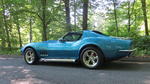
I've read a lot of people have hot start problems with 69 C3's which is what I'm faced with. Starts cold no problem, I think I've narrowed it down by reading the threads to either a fuel vapor lock, leaking metering plate in the 4160 Holley carb, a low voltage at the coil when the engines hot or too higher fuel pressure at the carb.
I don't know the answers to any of these potential causes as yet but I'm a bit confused about this calibrated resistance wire that is supposed to run between the ign sw and the coil and whether I do or don't need a ballast resistor. I think I have the resistance wire, the loom was a replacement loom so I can see the colours pretty well. There is a yellow and a white with a red tracer crimped together and a red going to the + on the coil and a green that is running from the distributor. There is no ballast resistor in the circuit. The details on the Mallory series 42 breakerless distributor say "Make sure the vehicle is equipped with a ballast resistor OR a loom resistance wire" The car has been running ok for years except it has had this hot start problem for as long as I can remember. I changed the started motor a couple of years ago because I thought that was the problem and it was a problem but it seems I have two problems. Before I changed the starter it wouldn't crank when hot now it cranks fine but wont fire when its hot. If I wait 5 mins it will start MAYBE. I also had a fuel pump fitted as I thought it might be a weak manual pump, hence the concern about pressure.
I know lots of people have this problem but can anyone steer me to good order of troubleshooting to try and eliminate what's happening here and do I or don't I need a ballast res, or is the yellow or white cloth covered wire going to the coil doing the job of reducing the current to coil. This is some supession that I might have damaged the ignition module in dist. but as it runs fine when it's cold doesn't missfire at revs above 3000 it seems like it might be ok.
Help, thanks.
I don't know the answers to any of these potential causes as yet but I'm a bit confused about this calibrated resistance wire that is supposed to run between the ign sw and the coil and whether I do or don't need a ballast resistor. I think I have the resistance wire, the loom was a replacement loom so I can see the colours pretty well. There is a yellow and a white with a red tracer crimped together and a red going to the + on the coil and a green that is running from the distributor. There is no ballast resistor in the circuit. The details on the Mallory series 42 breakerless distributor say "Make sure the vehicle is equipped with a ballast resistor OR a loom resistance wire" The car has been running ok for years except it has had this hot start problem for as long as I can remember. I changed the started motor a couple of years ago because I thought that was the problem and it was a problem but it seems I have two problems. Before I changed the starter it wouldn't crank when hot now it cranks fine but wont fire when its hot. If I wait 5 mins it will start MAYBE. I also had a fuel pump fitted as I thought it might be a weak manual pump, hence the concern about pressure.
I know lots of people have this problem but can anyone steer me to good order of troubleshooting to try and eliminate what's happening here and do I or don't I need a ballast res, or is the yellow or white cloth covered wire going to the coil doing the job of reducing the current to coil. This is some supession that I might have damaged the ignition module in dist. but as it runs fine when it's cold doesn't missfire at revs above 3000 it seems like it might be ok.
Help, thanks.

2026 Loser of the Year


Joined: Sep 2013
Posts: 36,599
Likes: 7,046
From: New Or-leens Loo-z-anna
I'm an amateur at this, but have had similar problems.
I do not know about the ballast resistor as I have converted to an HEI distributor which eliminates the resistance wire and the ballast resistor. HEI requires at least 12V to the positive connector to the distributor (NO resistance wire is used).
I connected a voltmeter to my coil and checked the voltage with the key ON.....then with the key in the START position with the engine cranking. I saw the voltage drop down to 3 volts while cranking. My problem was a corroded terminal INSIDE the fuse box....after replacing the terminal the coil received the correct voltage.
Remove one of the spark plugs/place the spark plug wire onto the plug and lay the plug on metal where you can see the spark while cranking the COLD engine/the spark should be blue. Reinstall the spark plug and drive the car until it will give you a problem restarting it/remove the spark plug while the car engine is hot (wear gloves) and check the spark while cranking the engine to see if it is a blue spark, or it has degraded to a yellow-looking spark.
I had problems with the fuel "boiling" causing the carb bowls to be empty any time I stopped and turned the engine off. I replaced the old thermostat, the old coolant, and installed the foam seals that were missing across the top of the radiator support so air would not divert over the top of the radiator. I have also read that a rusty/sticking Exhaust Heat Riser Valve can cause hot-start problems because it supplies too much hot air to the carb.
I also replaced my old mechanical fuel pump with an electric pump. The fuel pressure was too high by 4 lbs according to the mini-gauge I installed before the carb, so I added an adjustable fuel pressure regulator to get the correct pressure. My Holley had a leaking Power Valve which I replaced.
Make one change/correction/repair at a time! Then you will be able to notice any improvement.
I do not know about the ballast resistor as I have converted to an HEI distributor which eliminates the resistance wire and the ballast resistor. HEI requires at least 12V to the positive connector to the distributor (NO resistance wire is used).
I connected a voltmeter to my coil and checked the voltage with the key ON.....then with the key in the START position with the engine cranking. I saw the voltage drop down to 3 volts while cranking. My problem was a corroded terminal INSIDE the fuse box....after replacing the terminal the coil received the correct voltage.
Remove one of the spark plugs/place the spark plug wire onto the plug and lay the plug on metal where you can see the spark while cranking the COLD engine/the spark should be blue. Reinstall the spark plug and drive the car until it will give you a problem restarting it/remove the spark plug while the car engine is hot (wear gloves) and check the spark while cranking the engine to see if it is a blue spark, or it has degraded to a yellow-looking spark.
I had problems with the fuel "boiling" causing the carb bowls to be empty any time I stopped and turned the engine off. I replaced the old thermostat, the old coolant, and installed the foam seals that were missing across the top of the radiator support so air would not divert over the top of the radiator. I have also read that a rusty/sticking Exhaust Heat Riser Valve can cause hot-start problems because it supplies too much hot air to the carb.
I also replaced my old mechanical fuel pump with an electric pump. The fuel pressure was too high by 4 lbs according to the mini-gauge I installed before the carb, so I added an adjustable fuel pressure regulator to get the correct pressure. My Holley had a leaking Power Valve which I replaced.
Make one change/correction/repair at a time! Then you will be able to notice any improvement.

Le Mans Master


Joined: Dec 2006
Posts: 8,837
Likes: 1,028
I'm an amateur at this, but have had similar problems.
I do not know about the ballast resistor as I have converted to an HEI distributor which eliminates the resistance wire and the ballast resistor.
Remove one of the spark plugs/place the spark plug wire onto the plug and lay the plug on metal where you can see the spark while cranking the COLD engine/the spark should be blue. Reinstall the spark plug and drive the car until it will give you a problem restarting it/remove the spark plug while the car engine is hot (wear gloves) and check the spark while cranking the engine to see if it is a blue spark, or it has degraded to a yellow-looking spark.
I do not know about the ballast resistor as I have converted to an HEI distributor which eliminates the resistance wire and the ballast resistor.
Remove one of the spark plugs/place the spark plug wire onto the plug and lay the plug on metal where you can see the spark while cranking the COLD engine/the spark should be blue. Reinstall the spark plug and drive the car until it will give you a problem restarting it/remove the spark plug while the car engine is hot (wear gloves) and check the spark while cranking the engine to see if it is a blue spark, or it has degraded to a yellow-looking spark.

In the points days, an orange spark meant a bad condenser. With HEI, I would like to know. Mike???
2026 Loser of the Year
Joined: Sep 2013
Posts: 36,599
Likes: 7,046
From: New Or-leens Loo-z-anna
Start looking at voltage/ignition/spark first....
Then the possible fuel over-pressure problem once the engine is running so you can get an accurate pressure reading while the engine is taking in fuel from the carb.
Then correct any overheating problems. If the engine temperature spikes, overheating needs to be corrected first.
Last edited by doorgunner; Apr 22, 2018 at 09:37 PM.
Le Mans Master
Joined: Dec 2006
Posts: 8,837
Likes: 1,028
I've read a lot of people have hot start problems with 69 C3's which is what I'm faced with. Starts cold no problem, I think I've narrowed it down by reading the threads to either a fuel vapor lock, leaking metering plate in the 4160 Holley carb, a low voltage at the coil when the engines hot or too higher fuel pressure at the carb.
I don't know the answers to any of these potential causes as yet but I'm a bit confused about this calibrated resistance wire that is supposed to run between the ign sw and the coil and whether I do or don't need a ballast resistor. I think I have the resistance wire, the loom was a replacement loom so I can see the colours pretty well. There is a yellow and a white with a red tracer crimped together and a red going to the + on the coil and a green that is running from the distributor. There is no ballast resistor in the circuit. The details on the Mallory series 42 breakerless distributor say "Make sure the vehicle is equipped with a ballast resistor OR a loom resistance wire" The car has been running ok for years except it has had this hot start problem for as long as I can remember. I changed the started motor a couple of years ago because I thought that was the problem and it was a problem but it seems I have two problems. Before I changed the starter it wouldn't crank when hot now it cranks fine but wont fire when its hot. If I wait 5 mins it will start MAYBE. I also had a fuel pump fitted as I thought it might be a weak manual pump, hence the concern about pressure.
I know lots of people have this problem but can anyone steer me to good order of troubleshooting to try and eliminate what's happening here and do I or don't I need a ballast res, or is the yellow or white cloth covered wire going to the coil doing the job of reducing the current to coil. This is some supession that I might have damaged the ignition module in dist. but as it runs fine when it's cold doesn't missfire at revs above 3000 it seems like it might be ok.
Help, thanks.
I don't know the answers to any of these potential causes as yet but I'm a bit confused about this calibrated resistance wire that is supposed to run between the ign sw and the coil and whether I do or don't need a ballast resistor. I think I have the resistance wire, the loom was a replacement loom so I can see the colours pretty well. There is a yellow and a white with a red tracer crimped together and a red going to the + on the coil and a green that is running from the distributor. There is no ballast resistor in the circuit. The details on the Mallory series 42 breakerless distributor say "Make sure the vehicle is equipped with a ballast resistor OR a loom resistance wire" The car has been running ok for years except it has had this hot start problem for as long as I can remember. I changed the started motor a couple of years ago because I thought that was the problem and it was a problem but it seems I have two problems. Before I changed the starter it wouldn't crank when hot now it cranks fine but wont fire when its hot. If I wait 5 mins it will start MAYBE. I also had a fuel pump fitted as I thought it might be a weak manual pump, hence the concern about pressure.
I know lots of people have this problem but can anyone steer me to good order of troubleshooting to try and eliminate what's happening here and do I or don't I need a ballast res, or is the yellow or white cloth covered wire going to the coil doing the job of reducing the current to coil. This is some supession that I might have damaged the ignition module in dist. but as it runs fine when it's cold doesn't missfire at revs above 3000 it seems like it might be ok.
Help, thanks.
Fuel issue like vapor lock, dry carb bowl (Boiling), low fuel pressure, clogged fuel filter/backwards.
HEI? Module. Heat kills em. Either sudden death, or intermittent, the one that makes Sparkies crazy.
Coil (Rare) Wires, how old? Incorrect wires cause issues.
Thread Starter
Heel & Toe
Joined: Jun 2011
Posts: 19
Likes: 0
The Mallory Series 42 Comp S/S doesn't have a HEI as far as I know its just a breakerless ign dist. that works with stock ign coils.
Plug wires and coil lead are all new.
I have a phenolic spacer between the manifold and the carb.
I haven't checked the voltage drop because I'm not sure if the same test of voltage drop between points open and points closed works on the breakerless system can someone confirm this will still work if I bump the engine and get the rotor in the right place will the voltage drop??
Engine runs cool and I have a slightly lower thermostat than standard. I seem to remember I put a 180 in there. Gauge reads about 180-200 at full operating temp. I can check spark with a spare plug, any thoughts about fuel leaking into the manifold. The car does always have a strong smell of gas, can't find any fuel line leaks or external leaks around the carb but I don't think you would ever see that anyways because any leaks would evaporate immediately. Doesn't seem to smell fuelie when it's cold and sitting the garage however and if it was a leaking metering block my thought is it would smell all the time. If it's a dry float bowl how can I check that? You can't see it through the sight holes.
Plug wires and coil lead are all new.
I have a phenolic spacer between the manifold and the carb.
I haven't checked the voltage drop because I'm not sure if the same test of voltage drop between points open and points closed works on the breakerless system can someone confirm this will still work if I bump the engine and get the rotor in the right place will the voltage drop??
Engine runs cool and I have a slightly lower thermostat than standard. I seem to remember I put a 180 in there. Gauge reads about 180-200 at full operating temp. I can check spark with a spare plug, any thoughts about fuel leaking into the manifold. The car does always have a strong smell of gas, can't find any fuel line leaks or external leaks around the carb but I don't think you would ever see that anyways because any leaks would evaporate immediately. Doesn't seem to smell fuelie when it's cold and sitting the garage however and if it was a leaking metering block my thought is it would smell all the time. If it's a dry float bowl how can I check that? You can't see it through the sight holes.
Hard start heat related?
Fuel issue like vapor lock, dry carb bowl (Boiling), low fuel pressure, clogged fuel filter/backwards.
HEI? Module. Heat kills em. Either sudden death, or intermittent, the one that makes Sparkies crazy.
Coil (Rare) Wires, how old? Incorrect wires cause issues.
Fuel issue like vapor lock, dry carb bowl (Boiling), low fuel pressure, clogged fuel filter/backwards.
HEI? Module. Heat kills em. Either sudden death, or intermittent, the one that makes Sparkies crazy.
Coil (Rare) Wires, how old? Incorrect wires cause issues.

Team Owner


Joined: Apr 1999
Posts: 21,953
Likes: 1,445
From: Reno Nevada
2024 C3 of the Year Finalist- Modified
I used a mallory unilite in my vette for many years. You can get the manuals online. Mine required a ballast resistor also unilite used an optical module. In 10 or 12 years I had one fail. I pulled into a store and shut off the hot motor. When I came out 3 minutes later my vette wouldn't start. I didn't have any spark. I called up a friend to bring a meter so we could check out the electrical. Any after it cooled off it fired right up. I called mallory and they told me to replace the optical module
Corvette Stories
The Best of Corvette for Corvette Enthusiasts

Top 10 Most Expensive Corvettes Ever Sold on Bring A Trailer
Brett Foote
10 Things Every Corvette Owner Needs (2026 Edition)
Michael S. Palmer
8 Most "Only Corvette Owners Understand" Quirks and Problems
Pouria Savadkouei
10 Reasons the C6 Z06 is Still A Performance Benchmark After 20 Years
Joe Kucinski
How Much Horsepower Every Corvette Engine "LOST" in 1972
Joe Kucinski
Top 10 DOs and DON'Ts for Protecting Your Convertible Top!
Michael S. Palmer
Top 10 Most Explosive Corvettes Ever Made: Power-to-Weight Ratio Ranked!
Joe Kucinski
150 hp to 1,250 hp: Every Corvette Generation Compared by the Specs That Matter
Joe Kucinski
8 Coolest Corvette Pace Cars (and Replicas) of All Time
Verdad Gallardo
Safety Car

Joined: Apr 2006
Posts: 4,057
Likes: 421
From: BC
You describe the two stock cloth covered wires joined at the positive terminal at the coil. There is no ballast resistor on a 69 but the cloth wire going to the coil from the fuse box IS a resistance wire or as described, a loom resistance wire. The resistance is built in to the wire. The other cloth covered wire goes from the same + terminal at the coil to the 3rd terminal at the starter. This wire supplies a full 12 volts to the coil from the starter terminal when the key is in the start position only as the reduced voltage through the resistance wire is sometimes not enough to start the car because of the drain when the starter is engaged. You said you replaced the starter. Did you use a 3 terminal stock type starter or a 2 terminal one with the bypass cloth wire left disconnected? If that wire is not connected at the starter you might not have enough voltage to supply proper ignition voltage when the key is in the start position causing a no start condition.
Last edited by CanadaGrant; Apr 23, 2018 at 11:10 AM.
Race Director


Joined: May 2006
Posts: 18,737
Likes: 2,582
when the engine is hot look down the primary and secondary throttle bores to see if gasoline is dripping into the intake. If you see gas dripping check the float levels.
Your car originally had a fuel filter mounted in front of the passenger side cylinder head with a 1/8" fuel return line. Do you still have the return line connected?
Your car originally had a fuel filter mounted in front of the passenger side cylinder head with a 1/8" fuel return line. Do you still have the return line connected?
Thread Starter
Heel & Toe
Joined: Jun 2011
Posts: 19
Likes: 0
You describe the two stock cloth covered wires joined at the positive terminal at the coil. There is no ballast resistor on a 69 but the cloth wire going to the coil from the fuse box IS a resistance wire or as described, a loom resistance wire. The resistance is built in to the wire. The other cloth covered wire goes from the same + terminal at the coil to the 3rd terminal at the starter. This wire supplies a full 12 volts to the coil from the starter terminal when the key is in the start position only as the reduced voltage through the resistance wire is sometimes not enough to start the car because of the drain when the starter is engaged. You said you replaced the starter. Did you use a 3 terminal stock type starter or a 2 terminal one with the bypass cloth wire left disconnected? If that wire is not connected at the starter you might not have enough voltage to supply proper ignition voltage when the key is in the start position causing a no start condition.
Thread Starter
Heel & Toe
Joined: Jun 2011
Posts: 19
Likes: 0
when the engine is hot look down the primary and secondary throttle bores to see if gasoline is dripping into the intake. If you see gas dripping check the float levels.
Your car originally had a fuel filter mounted in front of the passenger side cylinder head with a 1/8" fuel return line. Do you still have the return line connected?
Your car originally had a fuel filter mounted in front of the passenger side cylinder head with a 1/8" fuel return line. Do you still have the return line connected?
Safety Car
Joined: Apr 2006
Posts: 4,057
Likes: 421
From: BC
Ooo that's interesting, I'm not sure I'll have to get the car up and have a look. I replaced it with one of those small gear ratio high torque starters because I had heat problems with the old original. Not sure about that extra wire, does it matter which terminal on the starter it's connected to?
Last edited by CanadaGrant; Apr 24, 2018 at 12:13 AM.
Le Mans Master
Joined: Dec 2006
Posts: 8,837
Likes: 1,028
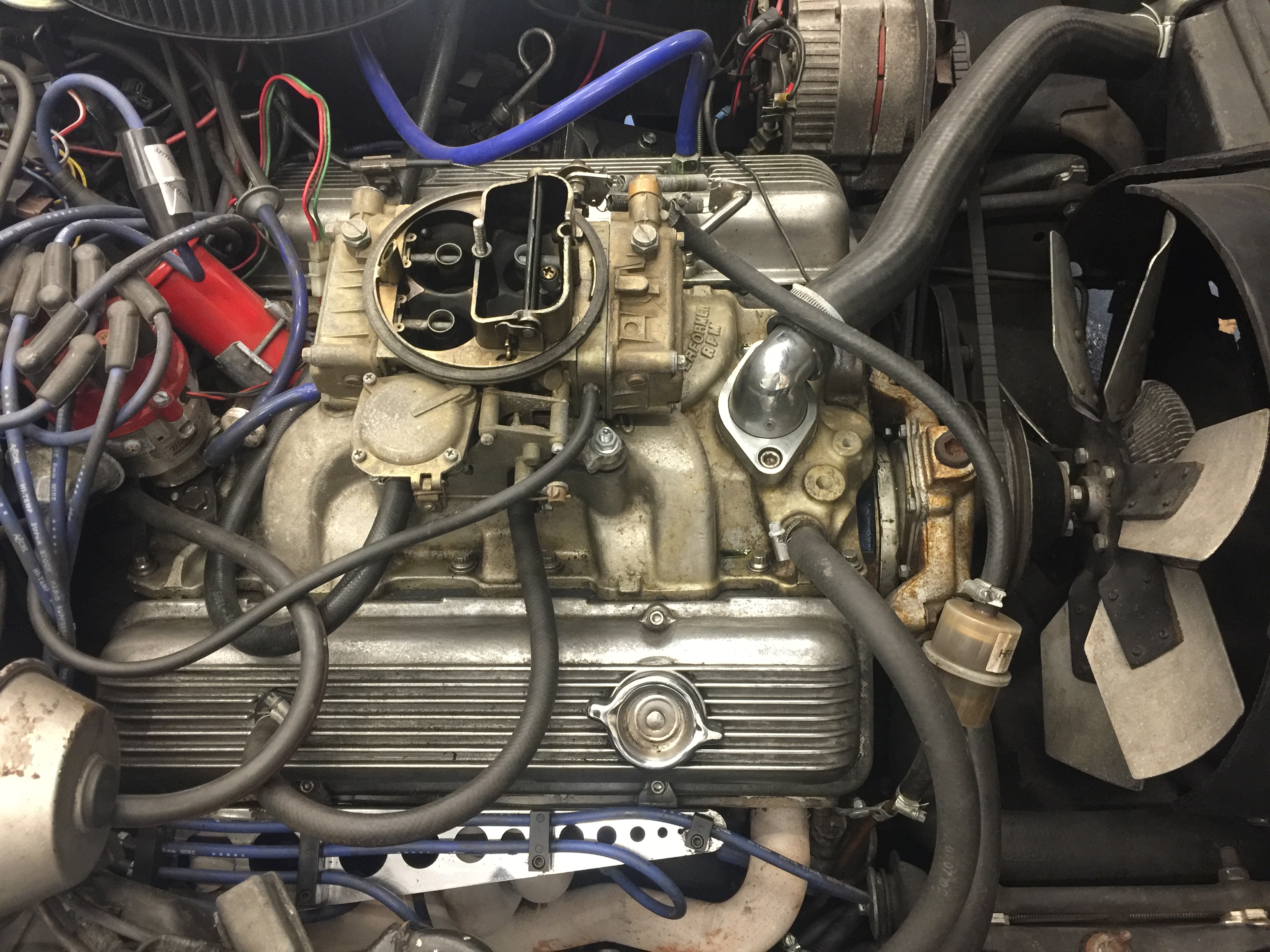
Fuel return is still connected and there is still a fuel filter mounted on the passenger side of the block. Not sure if this was standard or not but photo attached.Attachment 48277337
Race Director
Joined: May 2006
Posts: 18,737
Likes: 2,582
Fuel Filter and Return Line
Fuel return is still connected and there is still a fuel filter mounted on the passenger side of the block. Not sure if this was standard or not but photo attached.Attachment 48277337
Using a plastic filter and rubber hose on the front of the engine is really a bad idea.
Last edited by MelWff; Apr 24, 2018 at 11:55 AM.
Thread Starter
Heel & Toe
Joined: Jun 2011
Posts: 19
Likes: 0
I'll look online to see if I can find a picture of how it's supposed to look.
Thread Starter
Heel & Toe
Joined: Jun 2011
Posts: 19
Likes: 0
Mel do you have any photos of the correct fuel line connections to the carb. Is it just one line in, I've seen some with two lines but I'm guessing that's for a double pumper. I don't think the return line is connected I think it's capped off.
Race Director
Joined: May 2006
Posts: 18,737
Likes: 2,582
below is a link the original type of filter with a nipple to connect the return line. You can either get the original steel line from the pump to the filter along with the steel return line from the filter to the frame or use AN type hose and get rid of the rubber and plastic.

Last edited by MelWff; Apr 27, 2018 at 12:56 PM.
Thread Starter
Heel & Toe
Joined: Jun 2011
Posts: 19
Likes: 0
below is a link the original type of filter with a nipple to connect the return line. You can either get the original steel line from the pump to the filter along with the steel return line from the filter to the frame or use AN type hose and get rid of the rubber and plastic.
https://www.amazon.com/1968-1969-Cor.../dp/B0055V8AGK
https://www.amazon.com/1968-1969-Cor.../dp/B0055V8AGK