




Roll cage forward tubes/engine bay

Thread Starter
Burning Brakes


Joined: Apr 2008
Posts: 825
Likes: 40
From: Glasgow, Scotland

I ran my forward bars out through the hole for the fuse box on left and through the hole for the heater on rt. Ended them right behind the upper a arm mount as per the rule book. (SVRA).
No they are not real high but still feel they will help stiffen up the front clip.
Yes, you should box in the frame horns and tie into the front crossmember.
No they are not real high but still feel they will help stiffen up the front clip.
Yes, you should box in the frame horns and tie into the front crossmember.

Team Owner


Joined: Apr 1999
Posts: 21,953
Likes: 1,445
From: Reno Nevada
2024 C3 of the Year Finalist- Modified
You have all your gauges above the steering wheel. really the bars are made to fit the interior of the car. The only time that you see the bar up high is in windshieldless off road racing. Above the dash.
redvetracr has a cage not really feasible to do within the confines of a street stock vette
redvetracr has a cage not really feasible to do within the confines of a street stock vette
Last edited by gkull; Sep 2, 2018 at 03:24 PM.
Thread Starter
Burning Brakes
Joined: Apr 2008
Posts: 825
Likes: 40
From: Glasgow, Scotland
about being above the steering wheel. That person doesn't know what they are talking about. You have all your gauges above the steering wheel. really bars are made to fit the interior of the car. The only time that you see the bar up high is in windshieldless off road racing
Last edited by corvettedave383; Sep 2, 2018 at 11:39 AM.
Melting Slicks


Joined: Jan 2000
Posts: 3,326
Likes: 523
From: home


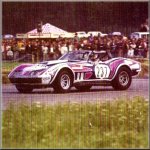
The dash bar looks too low. You may have some serious leg damage if they contact that bar in the event of a collision, even with roll bar padding. Are you running the stock dashboard or a fabricated one? I'll assume the cage is pretty much welded in? If not, I would move the a-pillar bar lower attaching point forward with the bars following the angle of the a-pillar. Although we've haven't done a C3, we have done 100's of C5's and C6's and a few C7's. Here is a vintage racing C3 we did the build but not the cage.
Race Director


Joined: Aug 1999
Posts: 18,126
Likes: 174
From: WI
The dash bar looks too low. You may have some serious leg damage if they contact that bar in the event of a collision, even with roll bar padding. Are you running the stock dashboard or a fabricated one? I'll assume the cage is pretty much welded in? If not, I would move the a-pillar bar lower attaching point forward with the bars following the angle of the a-pillar. Although we've haven't done a C3, we have done 100's of C5's and C6's and a few C7's. Here is a vintage racing C3 we did the build but not the cage.
whose car?
Race Director
Joined: Aug 1999
Posts: 18,126
Likes: 174
From: WI
Corvette Stories
The Best of Corvette for Corvette Enthusiasts

Top 10 Most Expensive Corvettes Ever Sold on Bring A Trailer
Brett Foote
10 Things Every Corvette Owner Needs (2026 Edition)
Michael S. Palmer
8 Most "Only Corvette Owners Understand" Quirks and Problems
Pouria Savadkouei
10 Reasons the C6 Z06 is Still A Performance Benchmark After 20 Years
Joe Kucinski
How Much Horsepower Every Corvette Engine "LOST" in 1972
Joe Kucinski
Top 10 DOs and DON'Ts for Protecting Your Convertible Top!
Michael S. Palmer
Top 10 Most Explosive Corvettes Ever Made: Power-to-Weight Ratio Ranked!
Joe Kucinski
150 hp to 1,250 hp: Every Corvette Generation Compared by the Specs That Matter
Joe Kucinski
8 Coolest Corvette Pace Cars (and Replicas) of All Time
Verdad Gallardo
Thread Starter
Burning Brakes
Joined: Apr 2008
Posts: 825
Likes: 40
From: Glasgow, Scotland
thanks for info/pics guys - i did notice some of the roll cage tubes are just welded direct to the chassis on pics above, thats not allowed here in the Uk, we have plate that up first, then tube welded onto plate and plate welded to chassis
Melting Slicks
Joined: Jan 2000
Posts: 3,326
Likes: 523
From: home
Yes, the correct way is to weld a plate to the frame and then the bars to the plate. We got that car with the cage already done and painted, we had to install the body panels and get it running. I don't know if vintage rules are different than the SCCA and IMSA rules, which are the specs we use to build our cages. Maybe one of our vintage racers here can clarify.

Team Owner


Joined: Sep 2002
Posts: 38,360
Likes: 2,085
From: California
I am going to weld pads or plate (receiver) inside the interior and onto the firewall and then a second one on the frame to create a perch later after finishing the firewall mounting! Then take a second plate and drill through it into the receiver plate welded, then tap! Then thread the receiver plate! Then on the second plates weld the tube on after after aligning the front! Then in the same manner weld, drill and tap like in the firewall location!
Melting Slicks
Joined: Jan 2000
Posts: 3,326
Likes: 523
From: home
I would read the SCCA General Competition Rules (GCR), ecpecially the Touring 1 section and the sections on cages, seats, and belts, and safety equipment. Here is a link to it. https://www.scca.com/pages/cars-and-rules


