



New 2 Vettes

Thread Starter
2nd Gear

Joined: Oct 2002
Posts: 2
Likes: 0
From: Buffalo NY
 New 2 Vettes
Hi everybody out in Vette land
I am new to the whole Corvette thing. Basically I just finished my last project and I was looking for a project car to work on for the next couple of years. I have always loved the lines of the C3 Corvette (well all Corvettes really) and the performance is mind numbing. I have done some research and I will be starting my search for the perfect car as soon as I can. I do have some questions about Corvettes, C3s specifically, which I hope some of you may be able to answer. First of all to fill you in on my restoration background I just completed a 1972 BMW 2002 (motor rebuild, new floors, new rockers, new clutch, new brakes, some electrical etc.) and I have had experience working on water cooled VWs and I have worked with my father on two older Porsches (76’ 911 Turbo, 1978 911SC).
While I think I have a solid mechanical and body background you may have noticed I don’t have any experiences with Yankee Iron or fiberglass. I have worked a little on a buddy’s 89 Mustang LX 5.0 but I have never owned one myself. I think a Corvette would be a great way to get into a domestic restoration and I like the looks of the Corvette.
As for type of Corvette my budget would be in the $5,000-$10,000 range so I wouldn’t be able to touch any complete C1 or C2 cars and the C4 (IMHO) is still a little to fresh to be considered a “classic”. The 68’-72’ chrome bumper cars are my favorite and have the least emissions control equipment to contend with and I have seen several coupes and roadsters which “need work” in my price range. I would be using the car as a daily driver in the summer (4 months/year) and store it for the winter once the restoration was complete.
Now that you know a little about me and what I am looking for I hope you may be able to answer some questions:
1) What does NOM stand for, I assume it stands for “matching numbers” i.e. correct engine and transmission for that chassis? How much does having matching numbers add or subtract to the value of a (non LT-1) small block car?
2) How much room does a Corvette have, I am a big guy at 6’5” and 285lbs. I know I fit in a 911, 2002 or Scirocco just fine and all those cars are smaller than a C3 Corvette but I understand there is no adjustment for rake (seat angle) on the 68-72 cars. If there a fore-aft adjustment? How much leg room is there?
3) What are the specific components which make up the LT-1 for 1970, I understand it uses a mechanical solid lifter cam. Can you use the LT-1 cam and mechanical lifters with a standard 350 block? (say out of a 1978 Suburban)? I know that on fords, mechanical lifters won’t work without a special block.
4) How does the Corvette drive? I figure I would be interested in an early car with a small block. I know it would be quick because of the power to weight ratio, but I am interested in the car’s transient response. I would assume a corvette would display power on oversteer with understeer on lift throttle or braking. Of course the suspension is a trailing arm setup so It may oversteer on lift-throttle as well. If there are any auto crossers out there tell me what you think.
5) I understand that a 4 wheel brake job can cost upwards of $700, Why? I have checked out the prices for rotors and pads and I can’t understand how it could be so high?
6) Are there any other unusually expensive repairs to look out for on the Corvette, what about the vacuum tank in the nose?
7) What was the last year of the factory dual exhaust? What was the first year for cat. Converters?
I really appreciate your help and look forward to finding that perfect Vette soon.
I am new to the whole Corvette thing. Basically I just finished my last project and I was looking for a project car to work on for the next couple of years. I have always loved the lines of the C3 Corvette (well all Corvettes really) and the performance is mind numbing. I have done some research and I will be starting my search for the perfect car as soon as I can. I do have some questions about Corvettes, C3s specifically, which I hope some of you may be able to answer. First of all to fill you in on my restoration background I just completed a 1972 BMW 2002 (motor rebuild, new floors, new rockers, new clutch, new brakes, some electrical etc.) and I have had experience working on water cooled VWs and I have worked with my father on two older Porsches (76’ 911 Turbo, 1978 911SC).
While I think I have a solid mechanical and body background you may have noticed I don’t have any experiences with Yankee Iron or fiberglass. I have worked a little on a buddy’s 89 Mustang LX 5.0 but I have never owned one myself. I think a Corvette would be a great way to get into a domestic restoration and I like the looks of the Corvette.
As for type of Corvette my budget would be in the $5,000-$10,000 range so I wouldn’t be able to touch any complete C1 or C2 cars and the C4 (IMHO) is still a little to fresh to be considered a “classic”. The 68’-72’ chrome bumper cars are my favorite and have the least emissions control equipment to contend with and I have seen several coupes and roadsters which “need work” in my price range. I would be using the car as a daily driver in the summer (4 months/year) and store it for the winter once the restoration was complete.
Now that you know a little about me and what I am looking for I hope you may be able to answer some questions:
1) What does NOM stand for, I assume it stands for “matching numbers” i.e. correct engine and transmission for that chassis? How much does having matching numbers add or subtract to the value of a (non LT-1) small block car?
2) How much room does a Corvette have, I am a big guy at 6’5” and 285lbs. I know I fit in a 911, 2002 or Scirocco just fine and all those cars are smaller than a C3 Corvette but I understand there is no adjustment for rake (seat angle) on the 68-72 cars. If there a fore-aft adjustment? How much leg room is there?
3) What are the specific components which make up the LT-1 for 1970, I understand it uses a mechanical solid lifter cam. Can you use the LT-1 cam and mechanical lifters with a standard 350 block? (say out of a 1978 Suburban)? I know that on fords, mechanical lifters won’t work without a special block.
4) How does the Corvette drive? I figure I would be interested in an early car with a small block. I know it would be quick because of the power to weight ratio, but I am interested in the car’s transient response. I would assume a corvette would display power on oversteer with understeer on lift throttle or braking. Of course the suspension is a trailing arm setup so It may oversteer on lift-throttle as well. If there are any auto crossers out there tell me what you think.
5) I understand that a 4 wheel brake job can cost upwards of $700, Why? I have checked out the prices for rotors and pads and I can’t understand how it could be so high?
6) Are there any other unusually expensive repairs to look out for on the Corvette, what about the vacuum tank in the nose?
7) What was the last year of the factory dual exhaust? What was the first year for cat. Converters?
I really appreciate your help and look forward to finding that perfect Vette soon.

Drifting


Joined: Mar 2001
Posts: 1,411
Likes: 2
From: St. Louis, Missouri
Re: New 2 Vettes (JD2004)
1) What does NOM stand for, I assume it stands for “matching numbers” i.e. correct engine and transmission for that chassis? How much does having matching numbers add or subtract to the value of a (non LT-1) small block car?
Non-Original Motor (engine)
2) How much room does a Corvette have, I am a big guy at 6’5” and 285lbs. I know I fit in a 911, 2002 or Scirocco just fine and all those cars are smaller than a C3 Corvette but I understand there is no adjustment for rake (seat angle) on the 68-72 cars. If there a fore-aft adjustment? How much leg room is there?
You are going to be uncomfortable unless you find a roadster and drive with the top down.
Non-Original Motor (engine)
2) How much room does a Corvette have, I am a big guy at 6’5” and 285lbs. I know I fit in a 911, 2002 or Scirocco just fine and all those cars are smaller than a C3 Corvette but I understand there is no adjustment for rake (seat angle) on the 68-72 cars. If there a fore-aft adjustment? How much leg room is there?
You are going to be uncomfortable unless you find a roadster and drive with the top down.

Le Mans Master


Joined: Aug 2000
Posts: 9,662
Likes: 7
From: Semper ubi, sub ubi
Cruise-In VI Veteran
Cruise-In VII Veteran
Re: New 2 Vettes (JD2004)
Welcome to the Forum, I'll try and answer a few of your questions but I'll leave some room for the other guys to chime in.
1. NOM, Not Original Motor .... If you are looking for an NCRS car, this is not the car for you. Serious point deduction for not original motor. Numbers matching is an NCRS (National Corvette Restoration Society) term. It means that all (I mean ALL) of the parts are the factory correct parts for the car, almost every major piece of the car has a date code stamped on it somewhere (alternator, starter, A/C compressor, carb, hell almost everything.) But most people say "numbers matching" when they really mean the engine and transmission are original to the car.
2. You'll be really, really tight. I'm only 6' 1" and 245 and it is a fairly tight for me. If you are too big you won't have room to shift the car (if a manual) because your right leg and knee will be in the way. Tilt steering wheel is a must option for big guys.
3. Yes, you can use a mechanical lifter cam in a standard block. LT-1s had forged steel cranks and forged rods and pistons. These aren't usually found on normal passenger car engines. LT-1 also had four bolt main bearing caps, many passenger and light truck engines had two bolt mains.
4. It depends on a lot of factors, but generally the steering is what you would expect from a steering system practically unchanged from 1953. A very popular recent upgrade is a bolt on rack and pinion system from Steeroids. Makes a world of difference I've been told.
5. The calipers are what usually go bad, the design of the calipers wasn't the best the piston bores was plain cast iron, and with the effinity for water that DOT 3 brake fluid has, rust in the bores ruined many calipers. All new and rebuilt calipers are stainless steel lined to prevent rust. If the brakes are original, plan on 4 new calipers and a master cylinder, I would suggest O-ring type pistons in the calipers. Corvette calipers had a tendency to suck air in through the seals without them. Also rear rotors have to be trued on the spindles for correct fit. You can do this by shimming between the hub and rotor, but it is time consuming and requires a dial indicator to check the run-out. A top notch set of break rebuild parts, including the mechanical parking brake stuff could cost $600.00 or $700.00, that would pretty much include everything including brake lines.
6. Pretty much everything cost more on a Corvette, but the real killer of most 'vettes is rust! The birdcage which surrounds the cockpit and cabin are very prone to rust! Also frame rails, particularly in front of the trailing arms. Before you buy any 'vette, get it on a rack and check the entire frame. Also check the front of the frame around the A-arms for cracking, this seems very common for some reason. A major expense besides the frame rust is the trailing arms, rear hubs and bearings, they could cost you $500 for rebuilt or $1000 for new (each.) Electrical problems seem to haunt a lot of vettes also. A lot of time it is ground related.
7. I think 1974 was the last year before the cats, although it could have been 1975, just a guess on my part.
Good luck searching for a 'vette.
1. NOM, Not Original Motor .... If you are looking for an NCRS car, this is not the car for you. Serious point deduction for not original motor. Numbers matching is an NCRS (National Corvette Restoration Society) term. It means that all (I mean ALL) of the parts are the factory correct parts for the car, almost every major piece of the car has a date code stamped on it somewhere (alternator, starter, A/C compressor, carb, hell almost everything.) But most people say "numbers matching" when they really mean the engine and transmission are original to the car.
2. You'll be really, really tight. I'm only 6' 1" and 245 and it is a fairly tight for me. If you are too big you won't have room to shift the car (if a manual) because your right leg and knee will be in the way. Tilt steering wheel is a must option for big guys.
3. Yes, you can use a mechanical lifter cam in a standard block. LT-1s had forged steel cranks and forged rods and pistons. These aren't usually found on normal passenger car engines. LT-1 also had four bolt main bearing caps, many passenger and light truck engines had two bolt mains.
4. It depends on a lot of factors, but generally the steering is what you would expect from a steering system practically unchanged from 1953. A very popular recent upgrade is a bolt on rack and pinion system from Steeroids. Makes a world of difference I've been told.
5. The calipers are what usually go bad, the design of the calipers wasn't the best the piston bores was plain cast iron, and with the effinity for water that DOT 3 brake fluid has, rust in the bores ruined many calipers. All new and rebuilt calipers are stainless steel lined to prevent rust. If the brakes are original, plan on 4 new calipers and a master cylinder, I would suggest O-ring type pistons in the calipers. Corvette calipers had a tendency to suck air in through the seals without them. Also rear rotors have to be trued on the spindles for correct fit. You can do this by shimming between the hub and rotor, but it is time consuming and requires a dial indicator to check the run-out. A top notch set of break rebuild parts, including the mechanical parking brake stuff could cost $600.00 or $700.00, that would pretty much include everything including brake lines.
6. Pretty much everything cost more on a Corvette, but the real killer of most 'vettes is rust! The birdcage which surrounds the cockpit and cabin are very prone to rust! Also frame rails, particularly in front of the trailing arms. Before you buy any 'vette, get it on a rack and check the entire frame. Also check the front of the frame around the A-arms for cracking, this seems very common for some reason. A major expense besides the frame rust is the trailing arms, rear hubs and bearings, they could cost you $500 for rebuilt or $1000 for new (each.) Electrical problems seem to haunt a lot of vettes also. A lot of time it is ground related.
7. I think 1974 was the last year before the cats, although it could have been 1975, just a guess on my part.
Good luck searching for a 'vette.

Race Director


Joined: Dec 1999
Posts: 19,610
Likes: 778
From: Forked River NJ
Re: New 2 Vettes (Smokehouse69)
Most of your questions have been answered. If you have 5K to 10K for a budget a 68-72 chrome bumper is going to be tough to find. If you do find one in that price range it is going to need a lot of work and a lot of $$$. If you are looking for a driver in that price range the 75 and later cars are a little more reasonably priced. But they are still going to require work. You are looking at a 25 year old car and anything Corvette related is going to cost you double what you think. Not trying to discourage you but I'd hate to see you by junk and than have to spend way over your budget to get it running. I think most chrome bumper cars that are in good to excellent condition have at least double your budget if not more.
[Modified by Gordonm, 3:58 PM 10/25/2002]
[Modified by Gordonm, 3:58 PM 10/25/2002]
Thread Starter
2nd Gear
Joined: Oct 2002
Posts: 2
Likes: 0
From: Buffalo NY
Re: New 2 Vettes (JD2004)
Thanks for the input, I know I have a lot to learn about Corvettes before I start looking. The calipers do sound a little exotic so It would make sense for them to run 150+ ea. I didn’t think about that. I realize a good 68-72 Corvette for under $10K is a pipe dream But I would like to find a NOM complete, but possibly non-running Corvette as a project for the next couple of years. My dream is to build a NCRS competitor but for now I am setting my sights lower considering this is a learning experience. It looks like it would be hard to lose money on a home Corvette restoration if I get one from the right era and I manage all the work (except paint) myself.
I would like to build a Quasi-LT-1 corvette and I know I would need to find a donor 350 with four bolt main bearings, to provide a built proof bottom end for a high winding small block. From what I understand an M-20 4 speed is fine for the torque of the small blocks, no point in an engine that will spin to 6500 if you can’t control the gearbox? In terms of rust, the ladder frame is all mild steel so I assume you can weld in new sections for rotted ones. I live in Buffalo and just finished restoring a 30 year old uni-body car, man was that a @#$%! So a I would think a ladder framed car would be something of a relief. Espcialy one where the doors, fenders, rockers deck lid and quarters couldn’t rust at all. It also looks like from Hemmings and the auto trader that any chrome bumpered Corvette that looks original (even NOM) can bring in $15K, $20K if it’s a roadster. That would by a good starter LT-1 or even a ZR-1 Basket Case (there I go dreaming again). Anyway, thanks for the advise and let me know anything else I may find helpful in my search for the perfect Vette.
I would like to build a Quasi-LT-1 corvette and I know I would need to find a donor 350 with four bolt main bearings, to provide a built proof bottom end for a high winding small block. From what I understand an M-20 4 speed is fine for the torque of the small blocks, no point in an engine that will spin to 6500 if you can’t control the gearbox? In terms of rust, the ladder frame is all mild steel so I assume you can weld in new sections for rotted ones. I live in Buffalo and just finished restoring a 30 year old uni-body car, man was that a @#$%! So a I would think a ladder framed car would be something of a relief. Espcialy one where the doors, fenders, rockers deck lid and quarters couldn’t rust at all. It also looks like from Hemmings and the auto trader that any chrome bumpered Corvette that looks original (even NOM) can bring in $15K, $20K if it’s a roadster. That would by a good starter LT-1 or even a ZR-1 Basket Case (there I go dreaming again). Anyway, thanks for the advise and let me know anything else I may find helpful in my search for the perfect Vette.
Le Mans Master
Joined: Aug 2000
Posts: 9,662
Likes: 7
From: Semper ubi, sub ubi
Cruise-In VI Veteran
Cruise-In VII Veteran
Re: New 2 Vettes (JD2004)
You are close to Canada, look around up there, prices are usually pretty good compared to what we find in the warm weather southern and western states. There are a number of really good Canadian forum members who would probably help you look for a nice car there.
This is also a good time of the year to buy, the season is over (up north that is) and if people are looking to sell, you might get lucky and find a good deal.
Recently a fellow bought a 69 convertible, with a NOM 454 in really good shape for $6000.00, this is not a usual deal. That is about $6000 to $10,000 under what the car should have bought.
Look at every avenue for a car, check with local parts stores and ask if they know anyone selling a 'vette. Use the web to search for a car, look in Ebay, sometimes you might find a nice car near enough to you to visit, or ask one of the forum members to look at it for you if it is too far away.
Don't believe the seller when he tells you the condition is good. Good to him could be really crappy to you.
Do your homework, keep asking questions here on the forum, it will save you thousands of $ in the long run.
Sometimes a rough project isn't your best investment, it is almost impossible considering the cost of parts and the number of things there are to fail, for you as a restorer or rebuilder to make any money on one of these cars. Look for a project that someone has already started and has run out of money or energy. Their loss can be your gain.
I paid too much for my car, and I have spent way more than I can ever get back for the car. My experience is not unusual in the Corvette world.
Good Luck on your search.
This is also a good time of the year to buy, the season is over (up north that is) and if people are looking to sell, you might get lucky and find a good deal.
Recently a fellow bought a 69 convertible, with a NOM 454 in really good shape for $6000.00, this is not a usual deal. That is about $6000 to $10,000 under what the car should have bought.
Look at every avenue for a car, check with local parts stores and ask if they know anyone selling a 'vette. Use the web to search for a car, look in Ebay, sometimes you might find a nice car near enough to you to visit, or ask one of the forum members to look at it for you if it is too far away.
Don't believe the seller when he tells you the condition is good. Good to him could be really crappy to you.
Do your homework, keep asking questions here on the forum, it will save you thousands of $ in the long run.
Sometimes a rough project isn't your best investment, it is almost impossible considering the cost of parts and the number of things there are to fail, for you as a restorer or rebuilder to make any money on one of these cars. Look for a project that someone has already started and has run out of money or energy. Their loss can be your gain.
I paid too much for my car, and I have spent way more than I can ever get back for the car. My experience is not unusual in the Corvette world.
Good Luck on your search.
Corvette Stories
The Best of Corvette for Corvette Enthusiasts

5 Best & 5 Worst Corvette Daily Drivers
Joe Kucinski
The Headlights of Every Corvette Generation Explained
Joe Kucinski
5 Best & 5 Most Overrated Corvette Track Packages of All Time!
Joe Kucinski
Every 2027 Corvette Engine Explained
Joe Kucinski
Designer Imagines A Corvette That Looks More Like a Corvette Than the Corvette
Verdad Gallardo
10 Ugly Corvettes That We Still Kinda Love
Joe Kucinski
Top 10 Most Expensive Corvettes Ever Sold on Bring A Trailer
Brett Foote
10 Things Every Corvette Owner Needs (2026 Edition)
Michael S. Palmer
8 Most "Only Corvette Owners Understand" Quirks and Problems
Pouria Savadkouei
Drifting
Joined: Jan 2002
Posts: 1,484
Likes: 0
From: Northampton Ma
Re: New 2 Vettes (Smokehouse69)
For the interior room question, I'm 6 feet tall and weigh 175 lbs. I fit perfect and there's plenty of leg room. The only things that are adjustable in my '77 are the tilt/tele steering wheel, and the seat slides forward and backward, that's it. If I were you, I'd look up a local Corvette club and see if anybody is willing to let you sit in, or possibly even drive their vette. Good luck :cheers:
Instructor
Joined: Aug 2001
Posts: 151
Likes: 0
From: Rochester/Greece New York
Re: New 2 Vettes (JD2004)
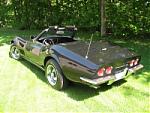
Hey JD2004, welcome. I'm just down the road in Rochester and have a '68 convertible, so stop in for a "test fit" before I store the car for the winter in a couple of weeks.
BIGsteve
BIGsteve

Instructor
Joined: Sep 2001
Posts: 209
Likes: 0
From: Seattle WA
Re: New 2 Vettes (BIGsteve)
I'll try to answer your question about the handling characteristics of c3s by speaking about my 79 with big front and rear swaybars, a fiberglass rear spring, and some new bilstein sport shocks.
The front/rear weight distribution is nearly perfect, and the car is extremely easy to drive at the edge. I've been to 8 or so autocrosses and a few sets of tires and I've only spun in the rain. When I push harder and harder through the corners it just starts to drift sideways very evenly. I have found that it corners best with just enough throttle to maintain speed, although taking off the throttle in a corner doesn't result in under/oversteer. What does end up in oversteer is if you're a little too heavy on the gas, but thats just part of the fun. I did notice with the old gm shocks that the breaking was a little unsettled, and sometimes during a tight slalom the back end was a little slow to get settled down. The new shocks have helped that alot though. I have a friend that I autocross with, who has a similar (not much)amount of experience in motorsports. He drives a 1984 911 in stock form, and we're very close in times at the races. I do have significantly more power than he does now, but c3s can hold their own in the tight turns too. I recommend you get one!
The front/rear weight distribution is nearly perfect, and the car is extremely easy to drive at the edge. I've been to 8 or so autocrosses and a few sets of tires and I've only spun in the rain. When I push harder and harder through the corners it just starts to drift sideways very evenly. I have found that it corners best with just enough throttle to maintain speed, although taking off the throttle in a corner doesn't result in under/oversteer. What does end up in oversteer is if you're a little too heavy on the gas, but thats just part of the fun. I did notice with the old gm shocks that the breaking was a little unsettled, and sometimes during a tight slalom the back end was a little slow to get settled down. The new shocks have helped that alot though. I have a friend that I autocross with, who has a similar (not much)amount of experience in motorsports. He drives a 1984 911 in stock form, and we're very close in times at the races. I do have significantly more power than he does now, but c3s can hold their own in the tight turns too. I recommend you get one!