When you click on links to various merchants on this site and make a purchase, this can result in this site earning a commission. Affiliate programs and affiliations include, but are not limited to, the eBay Partner Network.
The saga with my '69 continues. After installing the GM Performance 350/357 crate motor (with Holley 670 cfm carb) and completing the T5 swap, the car is now running and driving. But it's not running right. At cruising speed, there is a misfire that I can feel as a regular hesitation. Under acceleration, I don't seem to feel it. Here's what we've observed so far and what we've done to try to isolate the root cause.
At idle, we've pulled plug wires and found no change in idle when the #8 and #5 wires are pulled. All other wires cause a stumble when pulled.
We've swapped plugs and plug wires from cylinders that are functioning normally with no change; 5 & 8 still don't react to having the plug wire pulled
We've observed that the HEI distributor is sparking to the plug wire on those posts as the wire is being pulled
Timing is set to GM specs (32 degrees BTDC at 4K RPM) and the carburetor has been vacuum-adjusted (max vacuum observed was 12psi)
We've turned over the engine with the valve cover off and observed that the rocker arms are moving normally
We've checked, double-checked, and triple-checked the firing order
We've noted that there is a common intake runner for cylinders 5 & 8 but don't know how to test for fuel getting into the cylinder.
If anyone has any ideas or suggestions I would love to hear them. My frustration level is through the roof with this car so acceptable suggestions also include reasonable offers to take it off my hands. <grin>
Is it a stock intake manifold? Check for a vacuum tap on that runner also check for the intake leaking from the underside of the manifold on one of these cylinders use starting fluid or carb cleaner to check. There may also be a problem inside the intake if it's new.
If there is a vacuum line going to the same runner temporarely block it off and see if you get your cylinders back .
Maybe spray some brake cleaner on the port to head area of those two cylinders and see if rpm changes to see if the intake gasket is leaking vacuum ..
install vacuum gage and see if the needle of the vacuum gage bounces radically at idle or is smooth steady vacuum reading , bouncey is valves adjust too tight or lifter is pumped up and has not bleed off yet causing the miss fire .
Does it ever Back Fire through the carb ?
Does cold vs warm start produce any variation in symptom?
You should be able to smell gas on the plug tip of a non-firing cylinder (choke it a little to richen it more if it not obvious, you may see soot on the firing Cyls. then also)
Do the Plugs (5 & 8) have any signs of lean condition (if you're not familiar with Plug reading, you can compare to a good Cylinder and web search) normal is light tan with a fairly clean ground strap. You could have a bad cap or reluctor (i think two cylinders is unlikely tho) or intake leaks. I'd guess fuel at this point, I'll be following this one.
I was just having that discussion with my tech. We haven't done a compression test yet or checked the valve adjustment. We're going to do the compression test tomorrow or Friday, depending on when we can get free of customer work to focus on this.
The manifold is the stock one for this crate engine and it came pre-assembled since I bought the Deluxe version. There is a vacuum tap on that runner and it's the spot we used to measure vacuum while adjusting the carb so we know there's 12 PSI of vacuum there.
How exactly do you test the manifold? This level of diagnostic is way beyond anything I've ever done and my tech was hired for his skills with suspensions and lifts, so his knowledge of carbureted engines is being put to the test here as well.
Cold vs. warm start doesn't seem to matter. The plugs all look good. We did notice that the gaps were wrong in some cases, but the plugs have all been re-gapped to the 0.040 called for in the engine specs.
..
install vacuum gage and see if the needle of the vacuum gage bounces radically at idle or is smooth steady vacuum reading , bouncey is valves adjust too tight or lifter is pumped up and has not bleed off yet causing the miss fire .
Does it ever Back Fire through the carb ?
I just showed this to my tech and he said the gauge was bouncing radically, so this is something we'll have to look into more.
I was just having that discussion with my tech. We haven't done a compression test yet or checked the valve adjustment. We're going to do the compression test tomorrow or Friday, depending on when we can get free of customer work to focus on this.
The manifold is the stock one for this crate engine and it came pre-assembled since I bought the Deluxe version. There is a vacuum tap on that runner and it's the spot we used to measure vacuum while adjusting the carb so we know there's 12 PSI of vacuum there.
How exactly do you test the manifold? This level of diagnostic is way beyond anything I've ever done and my tech was hired for his skills with suspensions and lifts, so his knowledge of carbureted engines is being put to the test here as well.
12 inches of vacuum is too low it should be 16-20. If you can find another vacuum port to check attach vacuum gauge there if still low check the ignition and valve timing. A cylinder leak down test might help, you get an air hose fitting that screws into the spark plug hole then put the cylinder at TDC then connect an air hose and listen for leaks in the intake and exhaust. especially the 2 affected cylinders you may have an intake valve stuck in the guide and not closing all the way.
I would recommend you start with the basics. You know #5 and #8 have issues.
Check firing order-
Check plug wires-
Pull spark plugs and do compression check on all cylinders-
Replace #5 and #8 spark plug-
Back off all valves and re-adjust all valves-
Re-torque intake manifold bolts-
Vacuum bouncing radically will be most likely a valve adjusted to tight or a lifter pumped up , I would rotate the two affected cylinders one at a time to TDC and then see if you can spin both the intake and exhaust pushrod easily with your fingers and wiggle the rockers easily , if not you found your tight valve , re-adjust that valve or redo them all if you don't trust the original person that adjusted
32 degrres timing is used on vortec heads, this being said what spark plugs did you use? What is their gap older coils dont have the spark to jump the gap of newer plugs and maybe those plugs are to big of a gap? Also using a standard sbc hed in fastburn heads results in the electrode and strap not reaching the combustion chamber due to their shorter reach unlike plugs for vortec heads.
Firing order rechecked and it's correct.
Checked to verify that #5 and #8 plug wires not reversed; they are not
This engine does have Vortec heads; using R44LTS plugs
Did quick compression check on #8; 140 PSI
Doing leak down test now, so no results yet
Will try Eric P suggestion next
Thanks to all who've replied; keep the suggestions coming since it's helping to focus our efforts!
Firing order rechecked and it's correct.
Checked to verify that #5 and #8 plug wires not reversed; they are not
This engine does have Vortec heads; using R44LTS plugs
Did quick compression check on #8; 140 PSI
Doing leak down test now, so no results yet
Will try Eric P suggestion next
Thanks to all who've replied; keep the suggestions coming since it's helping to focus our efforts!
The leak down test on #8 isn't going as expected. Every time we bring the cylinder to TDC and then connect the tester, the injection of air rotates the engine. We haven't figured out yet how to stop the rotation. Even after calibrating the tester, here's what happens when we connect the tester to the cylinder. Note that the needle rotated backward from zero; it's not showing 100% leakage.




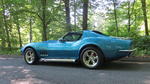


 GM Performance engine misfire