When you click on links to various merchants on this site and make a purchase, this can result in this site earning a commission. Affiliate programs and affiliations include, but are not limited to, the eBay Partner Network.
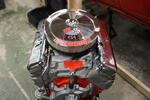
I got my 383 stroker from Blueprint in and I'm figuring out the last few details while my 4 speed is being rebuilt. The new engine came with a 2 line fuel pump (no return line). What are the pros / cons of just blocking the return line off (and what would I need to do if I did this) vs getting a 3 line pump?
My vapor canister has never been hooked up since I got the car and I'm probably just going to remove it, if that makes any difference.
The return line is to keep the fuel cooler under hot conditions.
In addition to a fuel pump with a return line you can have a gas filter with a return line, a GF432 is an example.
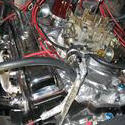
You can also construct your own return system at the lines going to the carburetor bowls.
I have a 72 Buick GS that had a 2 line pump. If I sat in traffic on a hot day, it would vapor lock, stall, and not restart until it cooled off. I installed a 3 line pump with a return and I haven’t had that issue since.
I’d also recommend hooking up your canister. Most of the lines on newer canisters can be tied together into one vacuum line for simplicity. But, it vents the fuel tank into the engine so the vent isn’t stinking up the garage or venting right by the hot engine.
Having a return is the way to go......get a fuel log for the Holley and tap the return off the back of it.......you could use -4 as the return line is 1/4"
But that said......I have never had a problem with a 2 line on a properly tuned engine.
From: Some days your the dog and some days your the hydrant.
Royal Canadian Navy
Run what you got. If it creates a problem later on, go with a 3-line or other mod for a fuel return. My vapour canister has been plugged off since 1988. Never a whiff of fuel and it sits in the garage 99% of the time. Like I mentioned, use what you got and don't fix anything that ain't broke.
Last edited by resdoggie; Nov 4, 2019 at 06:27 PM.
This is an area where you may have to experiment a little.
The factory AC pump is only rated at 40 gph or about 400 hp. Blueprint thought that engine deserved a Holley or Edelbrock pump, probably rated at double that. Your 383 may outflow the "stock" fuel pump, and worse, the repro "AC" pump may put out less than 40gph. If your fuel pressure drops at high rpm you'll have worse issues than vapor lock. I would not run a stock one for that engine, and doing so could void any engine warranty..
The return line is strictly to help with vapor lock issues on hot running stock engines.
If you run a Lars specified timing curve, or a typical performance curve of something like 12-14 initial with 10 degrees vac advance at idle on manifold vacuum, your engine, exhaust valves radiator, and manifolds, will run cooler than stock, be happier, and you may find you have no vapor lock issues. Many high performance vettes only had 2 lines from the factory. If your return line is already present you could just cap it off.
If you get some vapor lock you could hook up the existing return line at a later date, to prevent it, with some easy changes either on a fuel filter near the carb, or the fuel line at the carb, and keep the better fuel pump.
That's what I am going to do and what I recommend you do as well.
On the vapor cannister, that is a separate issue, but getting it working costs zero HP, and may keep from stinking up your garage. I'd fix it.
Last edited by leigh1322; Nov 4, 2019 at 06:59 PM.
I've got a 350 in my 79 that's making over 400hp. I'm using the stock fuel pump with the stock hard line to a Quadrajet. I dynoed my car a year or so ago, and it never leaned out on the top end, which means the fuel pump was supplying everything it needed. I flog the car on the street fairly regularly and have never felt it lean out on the top end, either.
) where they test various capacity mechanical pumps on a 500HP 372 SBC. They tested a 20GPH, 40GPH, 120GPH, and 160 (I think) GPH. The 40GPH and higher all kept up with the engine. The only difference was how stable the fuel pressure was at high RPM under load. Their final conclusion was to get the biggest fuel pump to get the most stable pressure, but my conclusion was that I don't want to redo my entire fuel system after the pump in order to get a slightly more stable pressure when what I've got feeds my engine just fine.
So, yeah, I'd go for a stock replacement pump like the one in the picture.
From: Las Vegas - Just stop perpetuating myths please.
The important feature here is to use the fuel pump with the correct fuel pressure for your carburetor. Rochester's and Holley's use a little different fuel pressure. The mechanical pumps regulate pressure very well. Even more so with a functional return line. Since you already have hard line return line it becomes very easy to add a return all the way from the carb which will prevent vapor lock. Many locations to plumb one in but I suggest adding a 0.050" orifice in that return to reduce return flow and vapor into the tank.




 Fuel pump (2 vs 3 line)