




4 wheel alignment questions

Thread Starter
Safety Car


Joined: Sep 2011
Posts: 4,114
Likes: 1,230
From: Madeira Beach, FL
2024 C8 of the Year Finalist - Unmodified
2024 C2 of the Year Finalist - Unmodified
2023 C2 of the Year Finalist - Unmodified
2020 C3 of the Year Finalist - Unmodified
 4 wheel alignment questions
Hello Forum,
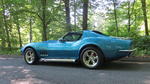
Question regarding my 1968 big block.....
I know nothing about alignment. I get the car back and it feels like it's driving and tracking straight. No problems here. I supplied all new stainless shims front and rears for the alignment. None of the 3 different sizes were used in the front so I presume they were not needed? The rear drivers side trailing arm shims were not needed or used, originals visible. The rear passenger side I see some of the new shims were used. I received a printout of the alignment specs but I just don't have it in front of me as I'm typing. I do not know what the numbers mean. I can post numbers so you can let me know if it's in spec.
My question regarding the alignment is it possible the two front wheels did not need any additional shimming after all these years to be in spec? I will post numbers when I get home. I had the two trailing arms replaced thus the mechanic sent it out for a 4 wheel alignment. I was not able to talk to the alignment shop directly last night when I picked up my car. I just am curious if I got what I paid for a 4 wheel alignment.
Thank you in advance.
Marshal
Question regarding my 1968 big block.....
I know nothing about alignment. I get the car back and it feels like it's driving and tracking straight. No problems here. I supplied all new stainless shims front and rears for the alignment. None of the 3 different sizes were used in the front so I presume they were not needed? The rear drivers side trailing arm shims were not needed or used, originals visible. The rear passenger side I see some of the new shims were used. I received a printout of the alignment specs but I just don't have it in front of me as I'm typing. I do not know what the numbers mean. I can post numbers so you can let me know if it's in spec.
My question regarding the alignment is it possible the two front wheels did not need any additional shimming after all these years to be in spec? I will post numbers when I get home. I had the two trailing arms replaced thus the mechanic sent it out for a 4 wheel alignment. I was not able to talk to the alignment shop directly last night when I picked up my car. I just am curious if I got what I paid for a 4 wheel alignment.
Thank you in advance.
Marshal

Melting Slicks


Joined: Jan 2004
Posts: 3,247
Likes: 210
From: Detroit MI
The factory tolerance on alignment settings is pretty wide, so it's entirely possible the front could still be "in spec". Unless you provide specific numbers that you want them to hit, for the tech, as long as it's in the green it's good.
Last edited by 69autoXr; Jan 9, 2020 at 03:58 PM.

Melting Slicks


Joined: Jun 2011
Posts: 3,114
Likes: 598
Hello Forum,
Question regarding my 1968 big block.....
I know nothing about alignment. I get the car back and it feels like it's driving and tracking straight. No problems here. I supplied all new stainless shims front and rears for the alignment. None of the 3 different sizes were used in the front so I presume they were not needed? The rear drivers side trailing arm shims were not needed or used, originals visible. The rear passenger side I see some of the new shims were used. I received a printout of the alignment specs but I just don't have it in front of me as I'm typing. I do not know what the numbers mean. I can post numbers so you can let me know if it's in spec.
My question regarding the alignment is it possible the two front wheels did not need any additional shimming after all these years to be in spec? I will post numbers when I get home. I had the two trailing arms replaced thus the mechanic sent it out for a 4 wheel alignment. I was not able to talk to the alignment shop directly last night when I picked up my car. I just am curious if I got what I paid for a 4 wheel alignment.
Thank you in advance.
Marshal
Question regarding my 1968 big block.....
I know nothing about alignment. I get the car back and it feels like it's driving and tracking straight. No problems here. I supplied all new stainless shims front and rears for the alignment. None of the 3 different sizes were used in the front so I presume they were not needed? The rear drivers side trailing arm shims were not needed or used, originals visible. The rear passenger side I see some of the new shims were used. I received a printout of the alignment specs but I just don't have it in front of me as I'm typing. I do not know what the numbers mean. I can post numbers so you can let me know if it's in spec.
My question regarding the alignment is it possible the two front wheels did not need any additional shimming after all these years to be in spec? I will post numbers when I get home. I had the two trailing arms replaced thus the mechanic sent it out for a 4 wheel alignment. I was not able to talk to the alignment shop directly last night when I picked up my car. I just am curious if I got what I paid for a 4 wheel alignment.
Thank you in advance.
Marshal
i would always request a before and after print out

Is my vette stock?? HAHA


Joined: Oct 2015
Posts: 20,174
Likes: 9,305
From: Im not allowed to tell you
2020 C3 of the Year Finalist - Modified
2020 Corvette of the Year Finalist (performance mods)
2019 C3 of Year Winner (performance mods)
2016 C3 of Year Finalist
The shims in the front are castor and camber. Unless your ball joints or bearings are bad. It isnt going to change. If you hit a big enough pot hole you can pull on a tie rod enough it would need realignment, that's toe.
The shims in the rear are toe. Unless you have bad bearings that shouldn't change. If you bend one of the rods in back or the bushings or bearings wear out, they shouldn't change either
The shims in the rear are toe. Unless you have bad bearings that shouldn't change. If you bend one of the rods in back or the bushings or bearings wear out, they shouldn't change either
Thread Starter
Safety Car
Joined: Sep 2011
Posts: 4,114
Likes: 1,230
From: Madeira Beach, FL
2024 C8 of the Year Finalist - Unmodified
2024 C2 of the Year Finalist - Unmodified
2023 C2 of the Year Finalist - Unmodified
2020 C3 of the Year Finalist - Unmodified
Follow up..... yes I provided all necessary shims to complete the work. I included 3 different thicknesses for the front and a complete stainless set for the rears. I did get a printout which I'm hoping to attach to this thread, Finally, Rescue Rodgers' advise was very helpful. The front ball joints and tie rod ends were found to be in order. The control arm bushings were recommended for replacement down the road. The alignment was a recommendation after both rear trailing arms were replaced. Hopefully the forum can explain the printout numbers to me.
Thanks,
Marshal
Thanks,
Marshal
Last edited by marshal135; Jan 10, 2020 at 11:13 AM. Reason: typo
Race Director

Joined: May 2006
Posts: 18,703
Likes: 2,572
The document you attached isn't labeled before or after but due to variation from side to side I hope they are before.
You need the after readout
Below is a link to suggested specifications.
https://tech.corvettecentral.com/201...ignment-specs/
The LF appears to have .6 degree camber and the RF appears to have .4 degree camber. For a street driven car a little too much.
The LF appears to have 1.9 degrees of caster and the RF appears to have 2.3 degrees of caster. Not enough and too much of a difference.
The LF appears to have .25 degree of toe-in and the RF appears to have .28 degree of toe-in. Too much toe in.
The LR appears to have .8 degrees of camber and the RR appears to have .8 degrees of camber. Too much for a street driven car
The LR appears to have .09 degrees of toe-in and the RR appears to have .07 degrees of toe-in. Not enough.
You need the after readout
Below is a link to suggested specifications.
https://tech.corvettecentral.com/201...ignment-specs/
The LF appears to have .6 degree camber and the RF appears to have .4 degree camber. For a street driven car a little too much.
The LF appears to have 1.9 degrees of caster and the RF appears to have 2.3 degrees of caster. Not enough and too much of a difference.
The LF appears to have .25 degree of toe-in and the RF appears to have .28 degree of toe-in. Too much toe in.
The LR appears to have .8 degrees of camber and the RR appears to have .8 degrees of camber. Too much for a street driven car
The LR appears to have .09 degrees of toe-in and the RR appears to have .07 degrees of toe-in. Not enough.
Last edited by MelWff; Jan 10, 2020 at 11:59 AM.
Thread Starter
Safety Car
Joined: Sep 2011
Posts: 4,114
Likes: 1,230
From: Madeira Beach, FL
2024 C8 of the Year Finalist - Unmodified
2024 C2 of the Year Finalist - Unmodified
2023 C2 of the Year Finalist - Unmodified
2020 C3 of the Year Finalist - Unmodified
Hmmmm.....
I guess I better ask some more questions as to before or after specs.
Thank you MelWff
I guess I better ask some more questions as to before or after specs.
Thank you MelWff
Corvette Stories
The Best of Corvette for Corvette Enthusiasts

Top 10 Most Explosive Corvettes Ever Made: Power-to-Weight Ratio Ranked!
Joe Kucinski
150 hp to 1,250 hp: Every Corvette Generation Compared by the Specs That Matter
Joe Kucinski
8 Coolest Corvette Pace Cars (and Replicas) of All Time
Verdad Gallardo
Top 10 Corvette Engines RANKED by Peak Torque (70+ Years of Muscle!)
Joe Kucinski
Corvette ZR1X Will Be Pacing the Indy 500, And Could Probably Race, Too!
Verdad Gallardo
Top 10 Corvettes Coming to Mecum Indy 2026!
Brett Foote
Top 10 C9 Corvette MUST-HAVES to Fix These C8 Generation Flaws!
Michael S. Palmer
10 Revolutionary 'Corvette Firsts' Most People Don't Know
Joe Kucinski
5 Reasons to Upgrade to an LS6-Powered Corvette; 5 Reasons to Stay LT2
Michael S. Palmer
Thread Starter
Safety Car
Joined: Sep 2011
Posts: 4,114
Likes: 1,230
From: Madeira Beach, FL
2024 C8 of the Year Finalist - Unmodified
2024 C2 of the Year Finalist - Unmodified
2023 C2 of the Year Finalist - Unmodified
2020 C3 of the Year Finalist - Unmodified
I called the mechanics shop and he advised me that on the print out all the numbers I posted above are after numbers. He said all numbers were in the green vs red on the machine. My printout is in color but it did not transfer over to the pdf copy.
The alignment shop sets up my mechanics race corvettes. He and his wife race c-6's. I was under the impression all parties knew what was needed. My mechanic knows I drive the car on the street on weekends only and no other type of driving ie... auto cross etc.
I'll keep an eye on the tires. The car feels good and drives straight down the street. I don't know what to say from here?
Thanks,
Marshal
The alignment shop sets up my mechanics race corvettes. He and his wife race c-6's. I was under the impression all parties knew what was needed. My mechanic knows I drive the car on the street on weekends only and no other type of driving ie... auto cross etc.
I'll keep an eye on the tires. The car feels good and drives straight down the street. I don't know what to say from here?
Thanks,
Marshal
Instructor

Joined: Aug 2017
Posts: 198
Likes: 90
From: Murphy, Tx.
Your image isn't clear enough to tell what numbers on the rear are toe or camber. If they follow how the front is displayed then the .8 would be toe in and the .07 would be camber, both would be okay. The biggest concern would be the front toe. I can't remember what the factory numbers should be but that does seam a like a little too much toe in on the front. It may be "in the green" but that does not mean it is preferred or ideal. Also, I would like to have as much positive caster as can be added and still maintain acceptable camber numbers if you are running a modern radial tire. The factory suspension has a LOT of deflection in the stock bushings, that's why the alignment tolerances are so wide. The specs are also for a fairly narrow bias ply tire. If it drives straight and corners smoothly then I wouldn't get too worried about the numbers. Watch the inside and outside edges of the tread for accelerated wear, keep the air pressure set and enjoy the ride. Unless you drive the car more than 5k miles a year, the tires will probably dryrot before they wear out.
Thread Starter
Safety Car
Joined: Sep 2011
Posts: 4,114
Likes: 1,230
From: Madeira Beach, FL
2024 C8 of the Year Finalist - Unmodified
2024 C2 of the Year Finalist - Unmodified
2023 C2 of the Year Finalist - Unmodified
2020 C3 of the Year Finalist - Unmodified
Txfatboy1,
Yes, the rear numbers are in the same order as the front numbers.. Front is Camber,Castor,Toe and Rear is Camber and Toe.
So the -.08 is the Camber and the .09 &.07 are Toe numbers. I have driven this car 8,700 miles in the last 9 years of ownership.
I replaced the tires in 2011 with the BFG RWL in 225/70/R15. I see no noticeable wear so far. The alignment was done as a result of replacing the rear trailing arm assemblies. Both were shot and now I can safely drive the car on weekend rides without fear of the rear wheel falling off.
Thank you everyone for your feedback on this thread. I know the data is old for bias ply tires. The alignment shop supposedly aligned for modern tires and typical street driving.
I guess we'll see.
Marshal
Yes, the rear numbers are in the same order as the front numbers.. Front is Camber,Castor,Toe and Rear is Camber and Toe.
So the -.08 is the Camber and the .09 &.07 are Toe numbers. I have driven this car 8,700 miles in the last 9 years of ownership.
I replaced the tires in 2011 with the BFG RWL in 225/70/R15. I see no noticeable wear so far. The alignment was done as a result of replacing the rear trailing arm assemblies. Both were shot and now I can safely drive the car on weekend rides without fear of the rear wheel falling off.
Thank you everyone for your feedback on this thread. I know the data is old for bias ply tires. The alignment shop supposedly aligned for modern tires and typical street driving.
I guess we'll see.
Marshal

Racer

Joined: Jan 2004
Posts: 303
Likes: 28
From: los angeles ca
You do realize that all the numbers are in degrees including toe.
You have a decent slightly aggressive stock alignment for radial tires.
It depends on how you drive the car.
Keep an eye on tire wear.
If you are happy with the way it drives it is good enough.
You have a decent slightly aggressive stock alignment for radial tires.
It depends on how you drive the car.
Keep an eye on tire wear.
If you are happy with the way it drives it is good enough.
Thread Starter
Safety Car
Joined: Sep 2011
Posts: 4,114
Likes: 1,230
From: Madeira Beach, FL
2024 C8 of the Year Finalist - Unmodified
2024 C2 of the Year Finalist - Unmodified
2023 C2 of the Year Finalist - Unmodified
2020 C3 of the Year Finalist - Unmodified
Thanks,
Marshal
Marshal