




1978 - 1982 Walbro EFI Setup

Burning Brakes


Joined: Sep 2020
Posts: 866
Likes: 187
From: CT

Seems like an expensive option to control a pump that doesn't flow enough to really need PWM. I would understand a 525lph hellcat pump or something like the aeromotive 1000 (junk pumps given my experience) if you didn't have adequate line or regulator sizing. The 340 doesn't really flow that much in the aspect that a 3/8 hard line feed and 5/16" return is more than adequate and seems to work fine even with a 450lph. Just be careful with the aeromotive as it does not like pressure (drops like a rock) especially if your running 58psi base and want to add boost.

Thread Starter
Burning Brakes

Joined: Apr 2002
Posts: 1,105
Likes: 114
From: Lawrenceburg, KY
Nah, Not that i'm able to notice. I haven't had a 255pump in any of my cars for a LONGGGG time but I remember them being rather loud due to the gear rotor type design. The aeromotive 340 and walbro 450s are whisper quiet (turbine style pumps), you literally don't even know they are on except when I hear the noise as heck aeromotive regulator prime or see pressure on the gauge.
Burning Brakes
Joined: Sep 2020
Posts: 866
Likes: 187
From: CT
stated that in the response u quoted. The 340-450lph pumps are turbine style which is quieter and offers higher flow than the 255 style which is a gearotor style pump. That’s the biggest difference and why they are so quiet.
Thread Starter
Burning Brakes
Joined: Apr 2002
Posts: 1,105
Likes: 114
From: Lawrenceburg, KY
Duhh moment. Any issue running a 340-450lph pumps in place of a 255 (assuming the 255 was more than adequate in flow for the engine's needs)? I hate listening to a pump whine.
Burning Brakes
Joined: Sep 2020
Posts: 866
Likes: 187
From: CT
nope, not unless you have undersized lines or fuel pressure regulator. You can’t run anything higher than a 255 on the corvette LS style filter/regulator. Also be mindful of pump wiring, the 340 and 450 pull some serious amps and anything less than 14 gauge in the tank could be an issue. A minimum of a 10 or 12 gauge power and ground will be needed outside of the tank and a 14 gauge inside. That means most of the stock style senders won’t work as the wire gauge is 18 at best.

Le Mans Master


Joined: Jan 2001
Posts: 6,742
Likes: 1,384
cagotzmann
Good post. What do you think about using a piece of submersible fuel hose to extend the return line lower in the tank?
Good post. What do you think about using a piece of submersible fuel hose to extend the return line lower in the tank?
Last edited by carriljc; Feb 23, 2021 at 01:02 PM.
Burning Brakes
Joined: Sep 2020
Posts: 866
Likes: 187
From: CT
cagotzmann
Good post. What do you think about using a piece of submersible fuel hose to extend the return line lower in the tank?
Good post. What do you think about using a piece of submersible fuel hose to extend the return line lower in the tank?

Race Director


Joined: Jul 2018
Posts: 10,591
Likes: 8,415
From: San Antonio, TX/Mahopac, NY
2026 Restomod of the Year Winner
2024 Corvette of the Year Finalist - Modified
2024 Corvette of the Year Finalist - Unmodified
2023 C7 of the Year Winner - Modified
Why mess with a return line? Use this one:
https://www.summitracing.com/parts/hly-12-313
Built in regulator, not a dead head as it maintains 58 psi with a built in return. No muss, no fuss.
https://www.summitracing.com/parts/hly-12-313
Built in regulator, not a dead head as it maintains 58 psi with a built in return. No muss, no fuss.
Corvette Stories
The Best of Corvette for Corvette Enthusiasts

Top 10 Most Expensive Corvettes Ever Sold on Bring A Trailer
Brett Foote
10 Things Every Corvette Owner Needs (2026 Edition)
Michael S. Palmer
8 Most "Only Corvette Owners Understand" Quirks and Problems
Pouria Savadkouei
10 Reasons the C6 Z06 is Still A Performance Benchmark After 20 Years
Joe Kucinski
How Much Horsepower Every Corvette Engine "LOST" in 1972
Joe Kucinski
Top 10 DOs and DON'Ts for Protecting Your Convertible Top!
Michael S. Palmer
Top 10 Most Explosive Corvettes Ever Made: Power-to-Weight Ratio Ranked!
Joe Kucinski
150 hp to 1,250 hp: Every Corvette Generation Compared by the Specs That Matter
Joe Kucinski
8 Coolest Corvette Pace Cars (and Replicas) of All Time
Verdad Gallardo
Thread Starter
Burning Brakes
Joined: Apr 2002
Posts: 1,105
Likes: 114
From: Lawrenceburg, KY
Why mess with a return line? Use this one:
https://www.summitracing.com/parts/hly-12-313
Built in regulator, not a dead head as it maintains 58 psi with a built in return. No muss, no fuss.
https://www.summitracing.com/parts/hly-12-313
Built in regulator, not a dead head as it maintains 58 psi with a built in return. No muss, no fuss.
Race Director
Joined: Jul 2018
Posts: 10,591
Likes: 8,415
From: San Antonio, TX/Mahopac, NY
2026 Restomod of the Year Winner
2024 Corvette of the Year Finalist - Modified
2024 Corvette of the Year Finalist - Unmodified
2023 C7 of the Year Winner - Modified
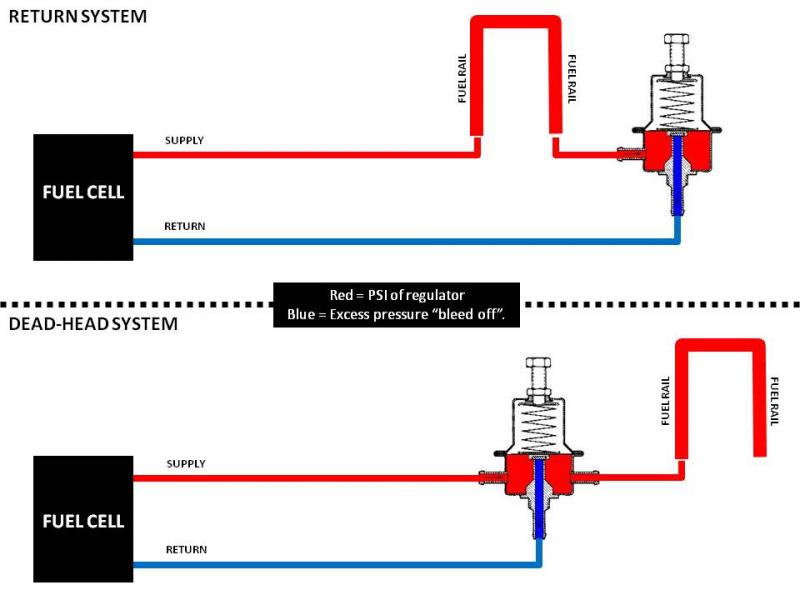
There are two ways to set up an EFI fuel rail with port injection. The first is to place the regulator with bypass after the pump, but before the fuel rails. In effect the regulator keeps the fuel rails at a constant pressure by bypassing excess pressure and fuel before the fuel rail. The second method places the regulator after the fuel rails. The pump keeps the rails pressurized and the regulator bleeds off excess pressure after the rails. Both are very good and acceptable methods.
For throttle body efi, the same two options exist. If you use the first option, whether the regulator is at the throttle body or before (including in the tank as this solution provides) is irrelevant.
Thread Starter
Burning Brakes
Joined: Apr 2002
Posts: 1,105
Likes: 114
From: Lawrenceburg, KY
Nope. By your definition, every EFI system is a dead head. In a true dead head, there is no bypass after the fuel pump. There may be a regulator, but the lack of bypass allows the fuel pressure to vary post the pump including excess pressure which has no where to go, it is dead headed.
There are two ways to set up an EFI fuel rail with port injection. The first is to place the regulator with bypass after the pump, but before the fuel rails. In effect the regulator keeps the fuel rails at a constant pressure by bypassing excess pressure and fuel before the fuel rail. The second method places the regulator after the fuel rails. The pump keeps the rails pressurized and the regulator bleeds off excess pressure after the rails. Both are very good and acceptable methods.
For throttle body efi, the same two options exist. If you use the first option, whether the regulator is at the throttle body or before (including in the tank as this solution provides) is irrelevant.
There are two ways to set up an EFI fuel rail with port injection. The first is to place the regulator with bypass after the pump, but before the fuel rails. In effect the regulator keeps the fuel rails at a constant pressure by bypassing excess pressure and fuel before the fuel rail. The second method places the regulator after the fuel rails. The pump keeps the rails pressurized and the regulator bleeds off excess pressure after the rails. Both are very good and acceptable methods.
For throttle body efi, the same two options exist. If you use the first option, whether the regulator is at the throttle body or before (including in the tank as this solution provides) is irrelevant.
Every fuel system manufacturer (Holley, Aeromotive, Edelbrock) states that the "through the rail" return style (with the regulator mounted after the rail in the engine compartment) is the most consistent and best performing fuel system layout. Everything else "works", but best is still best.
Last edited by ChrisLSx; Feb 23, 2021 at 03:17 PM.
Le Mans Master
Joined: Jan 2001
Posts: 6,742
Likes: 1,384
Nope. you want the fuel to return to the tank below the level of the fuel. Fuel being dumped into an open atmosphere can develop a static charge which is the last thing you want. The weight of fuel in a vehicles tank is irrelevant.
Not only is there no advantage to getting the return line lower in the tank, if anything it could be detrimental as the fuel that is trying to return to the tank has to push past the weight of the fuel in the tank.
Keep in mind, the goal of a return line is for it to see zero resistance to flow as possible. This ensures that the regulator (not the line) is the thing that is regulating fuel pressure at the rail.
Fuel has weight (~6.2 lbs per galon). If the return line is sitting on the bottom of the tank and has 10 gallons of fuel sitting on top of it, then the fuel entering the tank has to push against 62 lbs. That's going to induce backpressure on the return system and can affect the regulator's ability to effectively regulate the pressure at the rail.
Keep in mind, the goal of a return line is for it to see zero resistance to flow as possible. This ensures that the regulator (not the line) is the thing that is regulating fuel pressure at the rail.
Fuel has weight (~6.2 lbs per galon). If the return line is sitting on the bottom of the tank and has 10 gallons of fuel sitting on top of it, then the fuel entering the tank has to push against 62 lbs. That's going to induce backpressure on the return system and can affect the regulator's ability to effectively regulate the pressure at the rail.
Thread Starter
Burning Brakes
Joined: Apr 2002
Posts: 1,105
Likes: 114
From: Lawrenceburg, KY
QUOTE=carriljc;1603054338]Nope. you want the fuel to return to the tank below the level of the fuel. Fuel being dumped into an open atmosphere can develop a static charge which is the last thing you want.[/QUOTE]
Well, I initially had a long response but ran across something that I hadn't thought of before. Aeration of the fuel.
Dumping the fuel above the fuel level WILL NOT cause problems with static charge (a large number of OEM fuel tanks and most aftermarket racing fuel cells return fuel above the fuel level). However, getting the fuel return down under the surface (not necessarily at the bottom) prevents aeration.
Well, I initially had a long response but ran across something that I hadn't thought of before. Aeration of the fuel.
Dumping the fuel above the fuel level WILL NOT cause problems with static charge (a large number of OEM fuel tanks and most aftermarket racing fuel cells return fuel above the fuel level). However, getting the fuel return down under the surface (not necessarily at the bottom) prevents aeration.