When you click on links to various merchants on this site and make a purchase, this can result in this site earning a commission. Affiliate programs and affiliations include, but are not limited to, the eBay Partner Network.
As some of you know, I had a Dart SHP Block 406 SBC built for my 77. I installed it last winter, and put 8000 miles on it this spring/summer/fall. Winter has arrived in PA...so now to resolve a few problems. And I am frustrated with these, given the money I spent, and how well the engine performs.....but these issues annoy the hell out of me.
1. I continuously was losing coolant over the 8000 miles. No external leaks. I pressure tested the system hot and cold with a Stant pressure tester. And at least over 10 minute period, saw very little if any pressure drop....did it cold and hot. Now.....maybe over 1/2 hour, like some suggested, I would have seen some pressure drop. SO......where is it going. Head gasket? I never blew smoke out the exhaust. What other symptoms should I look for?
2. Possibly related, and previously posted, when I run the heater, i.e. open the heat valve connected to a factory vacuum controlled heat valve, I would get this cracking / popping / snapping sound, which ONLY occurred when I had the heater on. And only detectable when idling after hot. The sound was focused on the thermostat housing. I changed the thermostat and it seemed to get better.....but once in awhile, the new one would make the noise. So I cannot say it is gone. Other forums have posted that this is coolant suddenly vaporizing??? Would that cause a coolant loss? And what the hell is going on?
3. I have been dealing with a constant oil leak near back of oil pan or at rear seal. Its a Dart SHP block, two piece rear main seal. I changed the oil pan THREE TIMES, each time with a new expensive Felpro 1 piece seal, and it continues, and is getting worse. I used sealant in the four corners of the pan. I never changed the rear main seal, because the builder claims he installs seals all the time, and they never leak. So, I got under the car again yesterday, and there is oil dripping from the bottom of the bell housing, oil on the back of the oil pan, oil at the seam between the bell housing and the Borg 4-speed transmission. Before anyone suggests it.....there is NO leaks coming from above, i.e. the valve covers, oil pressure fittings, the heads, or anywhere else. Maybe its the rear main seal. The inside of the bell housing is covered in oil......so I am suspecting the seal, or the cam freeze plug....or the oil galley plugs......all of which means I need to pull the engine. I was leaking a good spot after every drive, and constantly needed to keep up by adding oil
4. I also have an oil leak at the front seal on the timing chain cover. Its a good Milidon cover, I installed it properly, and I even lubed the seal for the break in to prevent a dry rub.
I am very irritated about all the above. It was a well built engine, by a well respected builder, and all these problems exist. I am writing to just get any input I can from anyone. I will not let it go, and my current plan is to pull the engine and try to get this stuff fixed.
Those are the problems. The builder talked me in to a Canton Drag race oil pan, with all kinds of fancy trap doors, windage trays and a scraper......but I am wondering if its just not formed well. I don't believe I need all that fancy crap, and frankly think I should just find a good OEM Chevy pan to start. New Felpro rear main seal, clocked, with sealant. If the freeze plug is leaking, fix that, and oil galley plugs. And another new seal on the timing cover. The stupid fancy dipstick he put in will hardly indicate ANY oil because I don't think it goes deep enough......so I am ready to pitch that and go with OEM stick.
As for the coolant problems......I don't know what to do? Pull the heads and check the gasket? The gaskets were Felpro. The reservoir level would NEVER stay put....always coming down, and the snapping noises are very irritating.
I had none of these problems on my 350 I built......so, while this 406 kicks ***, these problems have to be fixed.
And lastly......I would prefer getting the engine run on a dyno to make sure I have no leaks before I reinstall it.....but that is probably an unrealistic dream. Anyone know of a good engine dyno anywhere near Pittsburgh?
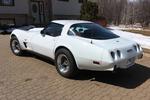
EDIT - ADDED picture just because.
Last edited by Shovels and Vettes; Jul 28, 2022 at 09:21 AM.
SUCCESS!!!!! I started this thread on 12/2/21.....and today, 5/5/23, the engine is back in car and runs. Even though still fatigued from flying till early AM this morning, I got the car out of the garage, did one last inspection, and turned the key. It started immediately, with no grinding starter or kickback, and it sounded awesome. Remember.....this is a no choke double pumper. It was idling pretty high, over 1100 RPM, but I let it run. Now that the drivetrain was turning, I could put the car in gear the first time with the new M23Z transmission. and short throw holes on the arms. Leak checked for fuel leaks...none. Oil leaks....none. Coolant leaks....none. Turned the car in the driveway to get ready to drive around the block......so the car made its first move under power in 17 months. Dialed down the idle a little with idle screw, but could not get it below 1000. I shut it down and smelled the smell of freshly rebuilt engine paint!! And just took a minute to smile.
Mark Jones has been anxious to see what I thought of the engine.....so he was my first call. We talked about the high idle, and he suggested I make sure the secondary butterfly valves were fully closing since the primary valves were closed. As he suspected, they were not. So.....the adjustment on this Holley is on the base of the carb, and typically you have to remove it to make that adjustment. BUT...on this Street HP, with it bolted to this Edelbrock AIr Gap......you can actually see the adjustent screw with mirror. I ended up fashioning a small straight slot screwdriver out of a pair of tweezers, bending it for leverage and was able to turn the adjustment screw till the secondary valves were closed / or more accurately, matched the primariies.. Started it up and it was idling at 600 RPM......so adjusted the primary screw. to bring it to 800-850 RPM, and visually both primary and secondary valves appear to be sitting at same postiion at idle. To be honest.....before I put the carb on, I had made a small adjustment on the secondary valve idle screw as a result of reading about the valves, and I should have left it where it was, cause Mark had it right in the first place. I checked the timing......all in at 35 degrees advanced. Battery voltage and charging good. Oil pressure at 80 PSI cold....and around 65 when warmed up. Coolant temp around 160-170. I will double check the temp with infared tool when I get a chance.
I took it for a short drive just around the neighborhood block to make sure brakes, steering, everything else was roadworthy. Brought it back home, got the wife.....and we hit the road. Right out of my house....we have a beautiful curvy steep road that travels up to Ligonier PA, 10 miles away where I stopped at gas station to top it off with gas. No matter how many times I repeat it, there are no words for how awesome this thing sounds and performs. This thing revs INSTANTLY with that 2.99 first gear / 22 lb flywheel....of course propelled forward dramatically by the VortecPro built engine and 408 cubic inch of American V8 power and torque. The M23Z transmission uses helical cut gears.....so it whines like an M22 Rock Crusher.....also very cool.
It's been fifteen months since I last drove it.....but without a doubt, this is a more powerful engine and noticeably WAY BETTER than the first build. I don't feel ANY low end torque loss with the 10 degree more advance cam....the car launches immediately, and believe me.....I haven't even hit it hard yet. There is no doubt it will spin those Nitto 555 tires if I chose to do that. Most importantly, It delivers 100% of the gear-to-gear acceleration I wanted from the beginning....which was my goal for this engine and car. And I have only drove it 20 miles!!!!
The whole way up the hill, and down the hill, without even pushing it, every time I looked at the speedometer it was doing 65-70!! I had a hard time getting it to slow down to 55!!! That is evidence in itself I have way more power, both torque and HP. I did a bunch of accelerations and decelerations, dropping up and down through the gears. The new transmission is tight, and with the rods connected to the lower holes in arms....the shifting is tighter and less travel. First gear has a beautiful sound to it!!!! I had the wife check the speed with the GPS speed app on my phone, and it is within 2 MPH of accurate, so I have the right speedo gear in the new transmission.
IT SOUNDS AWESOME!!!!......did I say that. The loud valvetrain noise I lived with for 8000 miles is replaced with a very, very quiet sewing machine noise......if any. at all. In fact,....as I ran the engine more , it seemed to get quieter till there is very little valve train noise at all.....a major change from before. It was Mark's first question when I called him. He was and is convinced the cam and lifters were not a good match on the first build and this cam profile he chose combined with the Johnson lifters would deliver.a much quieter valvetrain, without compromising the low end torque I wanted.......TOTAL SUCCESS. I feel no loss in low end power, in fact, this combination of engine/ transmission / driveline is clearly stronger in every way than the first build. I could NOT be happier.
I also have to say that in the short 20 mile drive......It was sheer joy to return to driving this manual steering, manual braking 77 Corvette. After 17 months of thinking about it, and NOT driving it, all the fun of it and how special it is to drive this car, returned today. I have never driven a more fun car to drive, and now with this awesome engine, ......I don't know what to say.......but its as good as it gets.
So....now, its time to continue and drive this thing every chance I get.. My natural tendency of worrying about things always prevents me from being fully relieved, relax and enjoy as I should. My basic mindset in life is to believe that just when you think things are going well is exactly when it all goes bad......because its happenned to me several times in life......I hope it doesn't happen again, but time will tell. In any case, I believe that today I have the best chance ever of owning and driving the perfect Corvette that I always wanted and worked for most of my 64 years on this planet. Its pretty cool and it means alot to me. Its way more than "just a car". Believe me. I have slowly made this Corvette into my version of the PERFECT C3 Corvette......!!!! It has been a long journey but it feels good to be where I am with it today.
Thanks to all of your who have followed this, and helped. This forum has taught me alot. It goes without saying, but I cannot thank Mark Jones enough, and as many others know,......he knows how to build a strong and reliable engine. I don't believe you will find anyone better than Mark.
Was told by 2 seasoned mechanics to pressurize the system let it sit overnight to make 100% sure
Maybe overkill who knows. Leaky intake gasket?
Is the SHP a 1 or 2 pc rear main?
I really doubt if it would hold pressure overnight. What is it expected to do? I mean, can you really expect it to hold pressure when there are rubber gaskets on the tester? If I remember right, I think the instructions suggested that it only hold for a short period of time, and it held it for double that time. If it is leaking......is it the head gasket? Because its not leaking at ANY external place.
Its an SHP two piece rear main seal. I know people say that 2 piece seals always leak, but I don't accept that. My 350 did not leak after I built it.
Last edited by Shovels and Vettes; Dec 2, 2021 at 08:42 PM.
If anyone has an oil pan recommendation, remember the Dart SHP requires passenger side dipstick, and this a 3.75 inch stroker....thinking about a Milidon. or stock oil pan.
1) My best guess is a leaking intake gasket. If that's the case hopefully it's ending up in the combustion chamber. The more serious scenario is that it's ending up in the oil pan. Is your oil level increasing? You can put a dye in the coolant and use a UV light to see if it's ending up in the oil. If this is the case you want to find it ASAP as it will take out your bearings in a hurry.
2) No explanation for the noise.
3) Most likely source is the rear main seal. I have only found one seal that has any chance of not leaking. Its from Fel-Pro, it's very expensive, and as I recall it is red or orange. (I don't have the part number.) And even it doesn't always seal. That's why GM went to the one piece rear main seal.
4) Can't help with the front seal.
I doubt if the pan is the problem. Pan gaskets are available in several configurations. Make sure you have the right one, and a quality gasket, torque it correctly. It should seal.
Finally if your mechanic knows what he is doing he should have calibrated the dipstick when he built the engine. If you are putting in the right quantity of oil and it's not appearing on the stick it isn't calibrated correctly. If you're taking the engine out and pulling the pan anyway, calibrate the stick. Its the only way to be sure the level is correct. You can put in the correct amount of oil and mark where it appears on the stick, but you are depending on the manufacturer's specifications on the pan capacity which won't necessarily guarantee the oil is at the right level.
I know it is very frustrating to open hood and fantasize about seeing level not change..
In my case
- heater core..couldn’t smell it surprisingly..but when on defrost would slightly fog windshield..
- radiator ..replaced with aluminim.( would evaporate and could not see wet)
- leaking past cap dripping from overflow ( the non pressure side)..
never did a pressure test but reading about it always do cool, 30 minutes minimum..do not exceed pressure of cap.
I'm pretty sure there is no such thing as a trouble free build with aftermarket parts.
1. I would check the head bolt torque before pulling heads. It's leaking on the ground, into the oil, or burning up in the cylinders. Eliminate the easy ones first. Spark plug color can be a good indicator of coolant burning in the cylinders.
2. Throw in a new rear main seal, I had one installed properly go on my 383 with a new eagle forged crank. I did the second one the same way the first was done and it's fine now. Either the seal was bad or the crank was a bit rough. I put thin layer of sealant on the back of the rear main cap and the rear of the seal. It's a pretty quick and easy job without the exhaust in the way, Besides the dripping oil in the face is good for the skin.
3. While the pan is off, might as well replace the front timing cover seal, it's easy to get those off just a bit or the surface of the crank was rough.
Next time I'll know to polish the seal surface on any new crank, I don't think my rear main leak was a bad felpro seal rather the lack of a polish on the seal surface. I have always used silicon felpro seals without any issues.
Corvette Stories
The Best of Corvette for Corvette Enthusiasts
10 Ugly Corvettes That We Still Kinda Love
Joe Kucinski
Top 10 Most Expensive Corvettes Ever Sold on Bring A Trailer
Brett Foote
10 Things Every Corvette Owner Needs (2026 Edition)
Michael S. Palmer
8 Most "Only Corvette Owners Understand" Quirks and Problems
Pouria Savadkouei
10 Reasons the C6 Z06 is Still A Performance Benchmark After 20 Years
Joe Kucinski
How Much Horsepower Every Corvette Engine "LOST" in 1972
Joe Kucinski
Top 10 DOs and DON'Ts for Protecting Your Convertible Top!
Michael S. Palmer
Top 10 Most Explosive Corvettes Ever Made: Power-to-Weight Ratio Ranked!
Joe Kucinski
150 hp to 1,250 hp: Every Corvette Generation Compared by the Specs That Matter
Joe Kucinski
8 Coolest Corvette Pace Cars (and Replicas) of All Time
If anyone has an oil pan recommendation, remember the Dart SHP requires passenger side dipstick, and this a 3.75 inch stroker....thinking about a Milidon. or stock oil pan.
This is just a dumb question? The dart blocks use a different pan than chevy SBC. The block pan rails are straight back.
If you are having oil drip from the bell housing area? I would tend to say that the rear main seal is not doing it's job.
As to head gasket leak loosing coolant. I experienced miss fire on one cylinder and water steam out the pipe. Manifold to cylinder is not common. Water pump to the block or shaft seal is a problem as are radiators and low pressure caps
Only the Iron Eagle block uses a different specific oil pan.
I am not a huge fan of aftermarket whiz bang oil pans unless you are class racing or running real hard all the time........windage trays either......a lot of aftermarket pans do not fit right (especially Moroso).....BUT, when the builder is mocking up the pan....it is impossible not to see issues with fitment.....especially when you are snugging the pan down. I doubt very highly that Flyboy's pan is leaking if he resealed it three times......BTW, the oil pan gaskets are reusable. That said.....I believe the stock GM Corvette pan is a damn good one. The centralized sump with the walls does its job very well......I have a stock Vette pan on my own 406, stock pickup, std. oil pump.....works perfect.....the sump is such that the oil cannot move forward during braking and it is slow moving backwards under acceleration.......
The pan Factoid has a great unit for large stroke small blocks......used it many times....BUT, Moroso's QC department needs a thorough revamp.......about half of all Moroso pans I have ever installed do not sit flat on the block...they teeter totter....which to me is not a huge deal til it leaks.....and for the money one spends on this crap.....it should be flat!!!! C'mon man!
If the rear main is leaking......redo the job......Pro engine builder or not.....there are only a few of reasons the rear main could leak....installed backwards, no sealer between the rear cap and block ( there are builders who SWEAR you do not need this....but WHY would you not do it?) Rear journal WAY too large or out of center......but only one journal can be "out".....which is damn near impossible.....and lastly, and this is the important one, the rear seal I believe should be a "line hone" seal for 400 blocks.....you see, on a stock block the journal is bigger than the seal lip/boss in the rear journal and when line honing you knock this lip down........if the seal lip is a standard 350 style seal.....there will be a large gap in the seal lip channel......I believe Dart uses a Rottler which is a through hone shaft all the way from one end to the other......if this is so...then you HAVE to have the correct seal........find out if the builder used a 2900 seal as opposed to a 2909 line hone seal......this may be the issue right there. Is the seal blue? There is the issue right there....
Dart does not spell out which seal to use......which is kinda shitty.
Lastly...is your thermostat drilled and what psi rad cap are you running?
The dart block has a lot of plugs that use o-rings to seal. I would check to make sure some of those are okay. There are 3-4 I think on the back of the block. As for the rear main, so you know what type was used? I know Fel-pro makes 2 different ones for a 350 2900 or 2912. The 400 has a 2909 rear main. With the way you are describing the leak I would be checking everything at the back of the block.
Just a couple points:
Try running it without a thermostat and see if the noise disappears. It will heat up eventually and at least you might be able to narrow down that problem.
If I were you, I would be running a stock oil pan. I have my original 77 pan on my 383 (3.75 stroke), with no problems with all the abuse my car gets. Also you can then use a stock dip stick with no worries about accurate level readings.
There are good motors and there are great motors with all the same part specifications for compression, heads, and cam shaft. It's attention to details that makes the difference. Person A builds a low budget cheap externally balanced stroker motor with a stock oil pan. Where person B builds an internally balanced forged everything with a nice pan and engine balancing down to a gram or less. I've rebuilt both kinds of motors. When you tear into motor A stuff is just worn out. Like the bearings finishes are worn through and the cylinders are worn out of round. Pre tear down leak down tests shows that you have a tired motor. Motor B has leak down tests that show it to be very healthy.
Oil breaks down at something north of 250 degrees. Lots of oil with the best baffles and scrapers is much better for power and longevity. Both of my Vette motors are 8 quart systems.
There are good motors and there are great motors with all the same part specifications for compression, heads, and cam shaft. It's attention to details that makes the difference. Person A builds a low budget cheap externally balanced stroker motor with a stock oil pan. Where person B builds an internally balanced forged everything with a nice pan and engine balancing down to a gram or less. I've rebuilt both kinds of motors. When you tear into motor A stuff is just worn out. Like the bearings finishes are worn through and the cylinders are worn out of round. Pre tear down leak down tests shows that you have a tired motor. Motor B has leak down tests that show it to be very healthy.
Oil breaks down at something north of 250 degrees. Lots of oil with the best baffles and scrapers is much better for power and longevity. Both of my Vette motors are 8 quart systems.
Yes...if road racing and making high G turns...heavy braking and instant acceleration....then a whiz bang oil pan is needed......
Then there is the block.....you don't put $4000 rotating assemblies in a $500 GM block as you do not put $1000 rotating assemblies in a Dart block.......GM stuff if abused will egg shape bores and if the pump cavitates it will scrub bearings of course......the other thing I have seen is trying to push more than 500+ out of a GM block and have the webs move around under hard use.......and this wears bearings......but unless you are class racing, hard autocross...etc.....the stock pan will function just fine......even for Drag racing....for which the only thing that is needed is the rear oil pan baffle that mounts to the oil pump mount pad to keep splash up to a minimum.......
I have seen rear main seal leaks often blamed for the China wall , Oil sending unit or distributor. Make sure those 3 areas are 100%.
My own thoughts on the pressure test. Follow the systems PSI which is on the radiator cap. And walk away. I do not think 10 minutes vs 30 minutes should show any difference in PSI.
Thanks for all the replies and information... Just to be clear about this to avoid any confusion, here is what I have.
Dart SHP block PN 31161211 - this is the SHP block...not one of their more expensive blocks. According to the instructions that came with the block, the plugs in the back and front of the engine are 1/4 NPT plugs....NO o-rings shown. I did not install them. The engine builder or the machine shop did. In the pictures, they appear to be cad plated, allen wrench internal plugs with orange type sealant on it. The instructions say to use a 80-85 oil pan and dipstick....with some modifications required to the dipstick.
Callies Compstar Crankshaft PN SAJ113-CS - listed that main journal diameter is 2.448 inch. The builder showed me plastigage pictures and note that the clearances were 0.0020 inch.
The machining was done by Strasburg Machine in Lindon, Utah. The invoice, and the builder says they would have line honed ....not line bored a brand new block.
The Rear Main seal installed was a Felpro 2900. What I do not understand is if I have a 350 crank journal size, why do I need a 400 crank journal rear main seal.
Last edited by Shovels and Vettes; Dec 3, 2021 at 05:01 PM.
If anyone has an oil pan recommendation, remember the Dart SHP requires passenger side dipstick, and this a 3.75 inch stroker....thinking about a Milidon. or stock oil pan.
When I built my 496 two years ago, my engine builder told me that Canton was going through some fitment issues and suggested that I use either Milidon, Moroso or Champ.
He said he never had any fitment issues with any Champ pans he used and they were better constructed than other pans.
I contacted Champ and they do have some very nice well constructed pans.
I went with the Moroso, only because I had used them in the past and never had any issues with them.
It's nothing fancy, but it is made to clearance the 496 stroke.
Last edited by OldCarBum; Dec 3, 2021 at 05:25 PM.
Radiator cap(s) I have installed are Stant 16 psi. Thermostat is 180 Stant, with a 1/8 holes drillled in base.
Also, for those that do not know, Dart SHP blocks do NOT have the bypass hole that Chevy blocks do, the third hole in the right side of the water pump mounting flange.....which is channeled up to the head to circulate coolant when the thermostat is CLOSED. Dart apparently thinks its not needed. BUT....thats why I drilled the thermostat. Is this possibly why I am getting these noises?
I want to get rid of this Canton oil pan, no matter what. I am fed up with the dipstick issue, a $75 fancy dipstick for nothing. And all the doors, screens and scrapers are not necessary...I am not racing. Does Chevy make an oil pan, right side dipstick that will work on this Dart SHP block with 3.75 inch stroke? I know Jebby uses Chevy pan,....but he has a stock block with driver side dipstick. The Dart SHP uses right side dipstick (80-85).. It would seem I could use a 80-85 oil plan, and factory OEM dipstick....as long as it will work on this block, and with 3.75 inch stroke, and clear the four bolt splayed caps.
Last edited by Shovels and Vettes; Dec 3, 2021 at 05:07 PM.
Is a Dart SHP 400 block different than a Chevrolet 400 block, in regards to the crankshaft bores, rear main seal lip area? I believe my Callies Compstar crankshaft PN SAJ113-CS is is 350 main crank as far as main crank bore size, with 3.75 inch stroke.
Last edited by Shovels and Vettes; Dec 3, 2021 at 05:06 PM.







 406 SBC Problems to Resolve This Winter