When you click on links to various merchants on this site and make a purchase, this can result in this site earning a commission. Affiliate programs and affiliations include, but are not limited to, the eBay Partner Network.
Refreshing my 1971 454 so I up graded the original 820 heads with a big valve kit. Has anybody had experience with this upgrade on their C3 and how did it run after. Just did not want to go the modern aluminum head route.
Heads will be fine. Big valves is a good add. Just please change the pistons and get the compression up. Ovals actually flow better / make more HP that R-ports on a stockish / milder street motor. But stock these years BBs were only 8.25: 1 or so CR. Pretty pitiful. Part of it was the big open chamber heads, but a lot of it was the pistons.
Shoot for 10:1 or so but really watch your dynamic compression ratio (DCR) with your cam duration and keep that in the low 8s. 8.0-8.5 DCR.
With stock pistons you could be at / below 7 DCR. And a larger cam would only make it worse, if you go that way it would be a real dog.
Heads will be fine. Big valves is a good add. Just please change the pistons and get the compression up. Ovals actually flow better / make more HP that R-ports on a stockish / milder street motor. But stock these years BBs were only 8.25: 1 or so CR. Pretty pitiful. Part of it was the big open chamber heads, but a lot of it was the pistons.
Shoot for 10:1 or so but really watch your dynamic compression ratio (DCR) with your cam duration and keep that in the low 8s. 8.0-8.5 DCR.
With stock pistons you could be at / below 7 DCR. And a larger cam would only make it worse, if you go that way it would be a real dog.
Good luck with the build!
i have chosen a .510/.520 lift 110LSA hydraulic roller Comp Cam for this setup. Nothing to radical. Engine has extremely low miles with the crosshatching still visible so a piston change can be painless.
I really like the valve unshrouding work your guy did on the heads. Nice!
I found these quotes recently on don terrill 's speed talk: It could make a terrific street motor if set up right. Sounds like you are already on your way! They say you need to keep the CR down a bit with the iron heads...
<quote> An 820 BBC head is a good head when it's reworked especially the exhaust short side radius, with bigger valves. why? because they would make really good power and you could run the engine on pump gas with the 116cc chambers. The smaller intake port will keep the velocity up and it will be a tire shredder
You didn't tell us the use of the car, street only, street and drag or drag only, but assuming a street car with iron heads, we will hold the static compression ratio down to around 9.5:1 on pump gas. Aluminum heads would allow 10.5:1 or maybe a little more, depending on the cam timing and fuel quality.
A 454, with 4.280" bore and 4.000" stroke, will make a nice 460. Stock block deck height is 9.800", so you will want to measure that before proceeding. The block may have been cut by a previous owner.
But assuming 9.800" on all four corners (not likely that the block is square), a fellow would want to use a stack height of parts (crank radius added to rod length added to piston compression height) of around 9.780". This would leave the piston crown down in the bore by 0.020" with the piston at top dead center. Using a steel shim head gasket that compresses to around 0.020" would yield a squish/quench of ~0.040", right in the middle of the specification for maximum detonation resistance on pump gas.
A good quality hypereutectic piston, such as the Keith Black KB201-030 would be my choice for a nice street motor on pump gas, yielding a 9.53:1 static compression ratio with its 12cc dome popping up into a 113cc chamber with a Mr. Gasket #1131G steel shim head gasket that compresses to 0.020". This is a piston that was originally designed for use with closed chamber heads, but its small dome works out well with a larger open chamber head to come together with a nice pump gas motor. Check piston crown to cylinder head clearance closely before buttoning up the combo. KB Performance Pistons KB203.030-1 Chevy 454ci Hypereutectic Pistons Solid Dome | eBay
Many years ago, the cam genius Harvey Crane came up with a method of determining the agressiveness of a cam grind. Subtracting the 0.050" duration from the advertised duration will yield a number somewhere between 30 and 80, called the Hydraulic Intensity of the grind. 30 would be a very fast, take no prisoners grind that bangs the valve open and effectively slams it shut, so that the valve is open for a longer time than it would be with a more moderate cam grind. Like I said, this is OK if you are using the motor in a competition venue and you need that extra 5 horsepower, but in a street application, it simply is not needed or wanted due to decreased service life of the cam and lifters, beating hell out of them for no good reason in my opinion.
Harvey, for a very long time, cut all his cams on a H.I. of 62, a conservative lobe design. Since Harvey has passed on and others are in charge of Crane Cams, the HI has changed some in the lineup. Personally, I would use a street grind down into the lower 50's, like 54 or 53, in that range, but would spurn lower H.I. numbers as being too aggressive for a street grind. Some other manufacturers such as Speed Pro and Melling still cut their cams on a very long H.I. up into the mid-70's. These grinds are VERY easy on the valvetrain, but leave a considerable amount of valve open window on the table which will not make as much power as a grind with a smaller H.I. number.
I will not recommend flat tappet cams any longer, particularly in a BBC where the application is critical. There is only one choice for these motors and that is a roller cam. Roller hydraulic or roller solid. For a street application at 9.53:1 static compression ratio and 0.040" squish/quench, I would use a Howards Hydraulic Roller cam something like this....
CL120235-10 (the CL in front of the part number gets you a kit including cam and roller lifters to match)
Advertised duration 266 /274
0.050" duration 213 /221
Hydraulic Index 53
Valve lift 0.510 /0.538"
Intake centerline 106
Exhaust centerline 114
Lobe separation angle 110
Operating range 1200-5000
Good idle, Off-Road & Street Performance.
9.0:1+ Compression Ratio Advised
<quote>
Personally I think their cam rec'd is a little mild. But depends what you want. A 224/234 split dur HR would run great! Think of it as an L46 350-350 HP, but way bigger! Cams like a GM ZZ-502 or a Crane ZHR-288.
Last edited by leigh1322; Jan 15, 2022 at 10:03 PM.
The car is a street weekend driver and the occasional coffee run. The automatic has the stock converter which I will change out to a 2200-2500 stall. It is all stock with a torker intake and Headmen Headers with Dyna Max exhaust.
The Entire drive train has numbers matching engine, TH400 and rear end. The block deck has not been touched and retains the Two serial numbers. The motor has the original alternator, starter, distributor, water pump and even the Air and rad are all original.
It was making valve train noise which remained even after a lash adjustment. I planned on removing the single plane anyways so I decided to take the time to check the cam lobs and lifters. To my surprise I found a clip missing on two of them. This is where the snowball began.
try very hard not to deck that block. just cuz the guy who runs the shop tells you he won't machine the numbers off doesn't mean every employee he has is qualified to obey simple instructions. if you have to use an .029 or .040 head gasket, pistons can be had with 10 and 20 higher compression height. i like the ZZ502 cam cuz it is made by GM. they had a bunch of bad cams in the 80's. they learned. GM front office people hate to give away free parts or engines under warranty. they keep their lift and spring pressures down to make the engine last. their spring pressures are a little on the conservative side, though. but these boat big blocks with over 600 lift crane cams and 500 lbs spring pressure have to have the heads pulled and gone through every 300 hours.
I have a 1968 C3 with it's 427 and I went with 12.25-1compression using parts from an L88. The higher compression works well for me as I did my homework and learned that the GM Cylinder heads made of cast iron #3931063 are Oval Port, Closed Chamber heads and they really deter detonation from occurring. Cool air being sucked into the cylinders is denser and can make more power. I have driven this engine almost 10k miles like it is and it works great on pump gas. I do have a Back up system of the Water/Methanol Injection system in case the engine is running hot in traffic. I have not measured the times using the Water/Methanol but you do feel it working as it gives you a kick in the butt.
The other trick that makes High Compression work really well are the L88 style Hoods that have a Cold Air Intake built into them. The air is pulled from the bottom of the windshield and is frequently within 10* of ambient where today's cars ingest 100* plus hot air into the engine and that hurts power. The bad side of high compression is being sure that none of the rotating parts hit each other so we used a lot of clay to be absolutely sure. The L88 Pistons have a valve pocket that sticks out above the top of the cylinders and it looks odd. Fortunately the heads fit the notches perfectly. I had both heads cleaned up and then about $1k was spent on porting the heads before installing all new larger valves.
This combination will hit 0-60 in less than 4 seconds and down into the lower 3 second range when trying hard. It will accelerate really hard up to 5500 rpm where it then peters out. The rotating assembly was balanced to 7000 rpm and is all forged components.
My biggest limitation happens to be the cam shaft at the time. Comp cams would not sell me a more aggressive cam because I have a 3.36 rear end. I would like to add Roller Lifters along with a Roller Cam and aluminum heads at the first affordable opportunity to improve on what I have already. I would not have a clue where to start the search for a good affordable pair of Aluminum Cylinder heads for a 427. Any ideas?
try very hard not to deck that block. just cuz the guy who runs the shop tells you he won't machine the numbers off doesn't mean every employee he has is qualified to obey simple instructions. if you have to use an .029 or .040 head gasket, pistons can be had with 10 and 20 higher compression height. i like the ZZ502 cam cuz it is made by GM. they had a bunch of bad cams in the 80's. they learned. GM front office people hate to give away free parts or engines under warranty. they keep their lift and spring pressures down to make the engine last. their spring pressures are a little on the conservative side, though. but these boat big blocks with over 600 lift crane cams and 500 lbs spring pressure have to have the heads pulled and gone through every 300 hours.
oh believe me I am concerned about retaining the numbers even after the machine shop insists “we do this all the time for Vette owners”. I was biting my tongue from asking when was the last time he did machining for an all numbers matching 71 of anything.
ctmccloskey
AFR 305 Magnums https://www.summitracing.com/parts/a...make/chevrolet
The same $ as I spent on my 074 GM original aluminum.
And dyno says they are worth 70HP with this one change alone!
My 485HP LS6 would shoot up to 560HP. All the gains are above 4500 rpm.
But with those pistons you have you will have to make sure the domes fit the combustion chambers.
But yeah you need more rear or 1st gear too.
The 820 is a bruiser if done right......but you should really pull an intake and exhaust valve and have a look.....if the bowls were not blended to the valve job to take advantage of the larger diameter....the larger valaves mean about next to nothing......this is exactly why 2.02 small block heads are not worth it either unless work is done.
A piston change as stated is in your best interests here.......you will need a small domed piston and need to have it all re-balanced.
You will see a nice gain with the head work. Those heads start out around 113-114 CCs, a picture of 820s I used on my 390 HP 427 build, very similar. To answer your question: Although my engine was a 427 but did have a small dome piston, I did get 492 HP with the factory type smooth idle cam 214/218 460/480 fat tappet hyd cam with cast iron intake and Q-Jet, looking to run high 10s in my car next month.
Last edited by Vortecpro; Jan 17, 2022 at 09:23 AM.
Designer Imagines A Corvette That Looks More Like a Corvette Than the Corvette
Slideshow: A Jaguar designer's personal project imagines what a modern front-engined Corvette might look like if Chevrolet revisited the golden age of the Stingray.




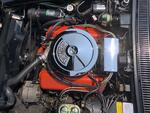


 Original 454 820 Heads