When you click on links to various merchants on this site and make a purchase, this can result in this site earning a commission. Affiliate programs and affiliations include, but are not limited to, the eBay Partner Network.
My 1980 'vette has the L-48 engine with about 70,000 miles on the clock, and the only deviation from stock is an Edelbrock 2101 intake manifold, a Holley 1850 carb, re-curved distributor (36 degrees all in at 2800 rpm) and shorty "block-hugger" headers going into a 2 1/2" dual exhaust with Magnaflow mufflers. 87 octane gas is the only fuel I've ever put in the tank, and she runs just fine on it.
I'm planning on installing some aftermarket aluminum heads with 64cc combustion chambers, which should bump my compression ratio up about 1 point. That is still less than the 10.25:1 that the 300HP 350 had back in the day, because of the dished pistons. I'm giving serious consideration to keeping the stock "929" camshaft that came in the engine. It has a relatively early intake valve closing event. As it stands now, I'm getting about 150 psi during a cranking compression test. What sort of cranking compression should I see with the new heads, and do you think I'll still be able to run 87 octane gas? Or will I be lucky to get away with 93 octane? Bear in mind that these new heads have a Fast Burn combustion chamber, and 30 degrees of advance is supposed to be optimal for them. I'm not sure if that applies while using the stock dished pistons, though. Anyway, what say you, Corvette nuts?
You will need the thin steel shim head gaskets if you want to minimize the octane sensitivity.
The L-46 350/350 cam would make a few more HP but cost you down low in the RPM range as compared to the "929".
You really should not use the intake closing event on a "929" cam to estimate the dynamic compression. The DCR recommendations are based on empirical evidence with aftermarket cam grinds. The GM grinds are very slow ramped and low lift. The DCR targets do not apply to those cams.
I have run a "962" cam with 10.4 CR and modern bathtub chambered iron heads with the thin steel shim gaskets in my '80 and it was no problem at all to run pump gas. It's a very nice setup.
good question.
lets see.
9 to 1 seems to be cr that is friendly to pump gas.
the math says 10 to 1.
aluminum heads is supposed to act like a cr reducer about 1 point so your are back to
9 to 1.
add good quench number and you have more
protection.
polish the head chambers and further reduce
the need for higher octane.
then a cam to give the dynamic ratio and you are all good.
do it
No quench to be had in the full round dish piston......also, most chambers are lost foam cast so polishing is a waste as the chamber surface as cast is pretty smooth.
A 64cc chamber should raise it one full point to the low 9's.......and all new chambers are fast burn so no need to worry about running 87 octane.
If you do not change the camshaft...don't bother putting heads on it......the L-48 cam is so pathetic that even Comp's smallest cam is a 30 horsepower increase.....
My 1980 'vette has the L-48 engine with about 70,000 miles on the clock, and the only deviation from stock is an Edelbrock 2101 intake manifold, a Holley 1850 carb, re-curved distributor (36 degrees all in at 2800 rpm) and shorty "block-hugger" headers going into a 2 1/2" dual exhaust with Magnaflow mufflers. 87 octane gas is the only fuel I've ever put in the tank, and she runs just fine on it.
I'm planning on installing some aftermarket aluminum heads with 64cc combustion chambers, which should bump my compression ratio up about 1 point. That is still less than the 10.25:1 that the 300HP 350 had back in the day, because of the dished pistons. I'm giving serious consideration to keeping the stock "929" camshaft that came in the engine. It has a relatively early intake valve closing event. As it stands now, I'm getting about 150 psi during a cranking compression test. What sort of cranking compression should I see with the new heads, and do you think I'll still be able to run 87 octane gas? Or will I be lucky to get away with 93 octane? Bear in mind that these new heads have a Fast Burn combustion chamber, and 30 degrees of advance is supposed to be optimal for them. I'm not sure if that applies while using the stock dished pistons, though. Anyway, what say you, Corvette nuts?
Scotty
The cam timing has a lot to do with whether you can run 87 without pinging, some build compression and some help bleed it off, basically this is where those DCR dynamic compression ratio calculators come in handy.
I run 89 safely but normally use 91 I have flat top pistons with 64cc heads 10.16:1 cr with iron heads... with the 270hr cam I found it lowered my DCR enough to where it was in the safe zone even with going bigger. there are online calculators to find all this info when you punch in cam specs and measurements.
Quench also has a lot to do with this, this is the block deck height plus head gasket thickness. I never got my block decked so I had like .023-24 deck hieght which caused me to go with a steel felpro 1094 .015 thickness gasket to give me a .039 quench area. the tighter the quench the less likely to detonate from what Ive been told.
Off topic but I am in the process of upgrading to the $300 chinese aluminum head castings I ported and just removed my 1094 gaskets which were sprayed with copper cote gasket sealer 10 years ago when I built the engine... now they only had 2000 miles on them but they looked brand new with zero evidence of rust or corrosion.
I dont know what the rest of your combo is (as far as trans stall speed and rear end gears since it matters) but I had the voodoo 262/268 cam in mine before going to the retro roller 270hr cam and they both perform well. the 262 had better cold start and faster warm up times otherwise I prefer the 270 cam.
I also believe the warmup issue might be air fuel related as I found all my passenger side plugs were fairly black with soot compared to the drivers side.
Last edited by augiedoggy; May 12, 2022 at 09:39 AM.
From: Some days your the dog and some days your the hydrant.
Royal Canadian Navy
My specs are below. My cylinder cranking pressure is 190-200 psi. SCR 10.7. DCR 8.3. Those numbers are not precise but should be close to within a tenth of a point or so up or down. I use 91 octane whether I need it or not. I can't hear any ping as the side pipes drown everything out. The intake valve closes at 67* abdc if I remember correctly. I use a Mr Gasket head gasket 0.026" compressed. I considered using the Felpro 0.015" gasket but that would raise my scr and dcr higher than I feel comfortable with the 280 cam.
You will need the thin steel shim head gaskets if you want to minimize the octane sensitivity.
The L-46 350/350 cam would make a few more HP but cost you down low in the RPM range as compared to the "929".
You really should not use the intake closing event on a "929" cam to estimate the dynamic compression. The DCR recommendations are based on empirical evidence with aftermarket cam grinds. The GM grinds are very slow ramped and low lift. The DCR targets do not apply to those cams.
I have run a "962" cam with 10.4 CR and modern bathtub chambered iron heads with the thin steel shim gaskets in my '80 and it was no problem at all to run pump gas. It's a very nice setup.
I will be using the Fel-Pro 1094 gasket, so I guesstimate the quench will be around .040" (If the piston-to-deck height turns out to be .025"). However, I don't think the stock dished pistons will be able to make much use of that quench number like a flat-top piston would. Also, I don't know if Fast Burn chambers require a flat-top piston with good quench in order to do their magic as far as being detonation resistant. Also, if the dished pistons eliminate the advantages of tight quench, maybe I should just use a more conventional composition gasket at around .040" compressed thickness to get a more manageable compression level. I think I'm going to try the shim gasket, though. I live in a part of the country where our three grades of pump gas are 87, 89, and 93 octane. I'd sure love to continue to burn 87 octane, but if I can get away with burning the 93 octane, I can live with it.
It can be difficult to find .006" duration numbers for the GM cams, seems like they liked to use lash-to-lash numbers back in the day, but I was able to find info from more than one source that says the 929 camshaft is sporting an intake duration of 258 and an exhaust duration of 269, both at .006". I used these numbers in several DCR calculators, and wound up with a stock DCR of slightly less than 7:1, and a post-install DCR of 7.7:1 Even assuming the tight quench and fast burn chambers don't add any detonation resistance, this seems to be just barely within the rule-of-thumb for running 93 octane pump gas. I guess I'll find out, one way or the other. I can always pop the heads off and re-install with a thicker gasket if need be.
The heads I'll be using have good flow numbers up to .500" of valve lift, so I'm thinking I could put some 1.6:1 rocker arms to good use here. A 1.6:1 rocker arm will raise the nominal intake valve lift from .390" to .416", and the exhaust from .410" to .437".
I'm working on getting a TH-700R4 tranny into the car, but my diff ratio is 3.07:1. Even with the steeper first gear ratio of the new tranny, I'd like a lot of low rpm torque, maybe shifting around 5,000 rpm. I'm hoping the stock cam will give me the power range I want. Another thing that enters into my thinking is that I am afraid of the dreaded flat-tappet cam break-in. I'd like to drive the car with the new heads and the stock cam and see how it goes, while I save up for possibly doing a retro-fit roller cam swap in a year or two.
I will be using the Fel-Pro 1094 gasket, so I guesstimate the quench will be around .040" (If the piston-to-deck height turns out to be .025"). However, I don't think the stock dished pistons will be able to make much use of that quench number like a flat-top piston would. Also, I don't know if Fast Burn chambers require a flat-top piston with good quench in order to do their magic as far as being detonation resistant. Also, if the dished pistons eliminate the advantages of tight quench, maybe I should just use a more conventional composition gasket at around .040" compressed thickness to get a more manageable compression level. I think I'm going to try the shim gasket, though. I live in a part of the country where our three grades of pump gas are 87, 89, and 93 octane. I'd sure love to continue to burn 87 octane, but if I can get away with burning the 93 octane, I can live with it.
It can be difficult to find .006" duration numbers for the GM cams, seems like they liked to use lash-to-lash numbers back in the day, but I was able to find info from more than one source that says the 929 camshaft is sporting an intake duration of 258 and an exhaust duration of 269, both at .006". I used these numbers in several DCR calculators, and wound up with a stock DCR of slightly less than 7:1, and a post-install DCR of 7.7:1 Even assuming the tight quench and fast burn chambers don't add any detonation resistance, this seems to be just barely within the rule-of-thumb for running 93 octane pump gas. I guess I'll find out, one way or the other. I can always pop the heads off and re-install with a thicker gasket if need be.
The heads I'll be using have good flow numbers up to .500" of valve lift, so I'm thinking I could put some 1.6:1 rocker arms to good use here. A 1.6:1 rocker arm will raise the nominal intake valve lift from .390" to .416", and the exhaust from .410" to .437".
I'm working on getting a TH-700R4 tranny into the car, but my diff ratio is 3.07:1. Even with the steeper first gear ratio of the new tranny, I'd like a lot of low rpm torque, maybe shifting around 5,000 rpm. I'm hoping the stock cam will give me the power range I want. Another thing that enters into my thinking is that I am afraid of the dreaded flat-tappet cam break-in. I'd like to drive the car with the new heads and the stock cam and see how it goes, while I save up for possibly doing a retro-fit roller cam swap in a year or two.
Scotty
if you have dished pistons, even with 64cc heads your compression ratio is still lower than most, not sure why you would want to lower it further? there are performance benefits to igher compression, most in your situation would with shim gaskets to get more... and the quench still helps if you have modern heart shaped chambers on the heads even with dished pistons... My DCR is also over 8 I have never heard pinging but im afraid to go lower than 89 octane. (also have loud sidepipes)..
Now is not a great time to buy upgrades... the new cam I bought last spring for $285 shipped is now 428 from the same supplier...
Many like Jebby recommend the 58-60cc trick flow heads for the dished piston l48s to get that extra compression and power.. and you can always go with a less aggressive grind larger cam in the 268 range for the best of both worlds without fear of wiping the cam. This is being discussed in another thread but the comp XE and voodoo cams are more aggressive than most to try to emulate the roller cams and this is why they have a higher likelyhood to fail. there are a lot of other options...Not a plug but I have an older single pattern comp 268 (mild 218/218 @.050) and matching lifters id let go for $150 + shipping... came with the shortblock I tore down and rebuild for my car. im sure you can find many similar deals from others who upgraded.
as someone who did what your considering (tearing back into the engine again to update in stages,) I can say its a pain in the *** and any saving is lost with replacing gaskets and such every time. I strongly urge you to have patience and do everything at once. I wish I had replaced my heads last year the last time I was in the engine upgrading the cam and lifters and adding the electric fan upgrade along with the new carb. finally I can say all my ports are matched to the 1205 intake gasket at least...
Last edited by augiedoggy; May 12, 2022 at 11:01 AM.
The problem, well one problem, with using the original cam is that you cannot take advantage of the higher RPM range that I'm sure your new heads will offer due to greater intake volume and flow capabilities.
I bet if you take out the lifters on that cam that you'll find several that no longer have a convex surface and may even have a a concave surface now and are on borrowed time already.
Change the cam...
If you're going to go through the trouble of changing the heads then go about it in a way that you can at least get some decent benefit from doing so. You're already there. I know where you are at with that L-48. I was there too.
In the end I figured if I was going to do it to do it right which meant changing just about everything in a L-48 motor. You don't have to do that unless you're prepared to. You might as well forget about quench, it's not there with those pistons, period.
As far as octane, It's going to depend on many factors. Based only on CR and DCR, sure you should be ok with 87. However you still got that 3.08 rear with a three speed and stock stall converter on a hot day?, then it may not be ok. Getting a 2500+ stall converter will help A LOT. I did that before I modded my engine and it made it feel like a different engine.
What heads are you considering BTW? keep in mind just because the heads say they are 46cc does not mean they actually are. As cast heads often have more volume than advertised, in which case your CR will take a hit.
No quench to be had in the full round dish piston......also, most chambers are lost foam cast so polishing is a waste as the chamber surface as cast is pretty smooth.
A 64cc chamber should raise it one full point to the low 9's.......and all new chambers are fast burn so no need to worry about running 87 octane.
If you do not change the camshaft...don't bother putting heads on it......the L-48 cam is so pathetic that even Comp's smallest cam is a 30 horsepower increase.....
Jebby
I tend to look at things with a "change one variable at a time and test" point of view. You seem to be an experienced engine builder, but I am not, and part of the reason I want to swap heads but not cam is that I want to see for myself what will happen. I can always change the cam later if I decide to, but if I do, it will be a retro-roller cam. Also, the head swap is part of my overall weight reduction plan for the car. Aluminum heads is a good 40 lbs. off the car, and it is weight reduction in a great spot, high up in the car above the center of gravity.
I have always thought that it was smart to learn from other people's experience, but on the other hand, sometimes ya gotta just jump in and see for yourself.
On a side not, Jebby, are you telling me that modern fast-burn type combustion chambers will still work their magic even with poor quench?
My specs are below. My cylinder cranking pressure is 190-200 psi. SCR 10.7. DCR 8.3. Those numbers are not precise but should be close to within a tenth of a point or so up or down. I use 91 octane whether I need it or not. I can't hear any ping as the side pipes drown everything out. The intake valve closes at 67* abdc if I remember correctly. I use a Mr Gasket head gasket 0.026" compressed. I considered using the Felpro 0.015" gasket but that would raise my scr and dcr higher than I feel comfortable with the 280 cam.
Using the best numbers I could come up with, it seems that the 929 cam closes the intake valve at 57* ABDC, but my SCR will be quite a bit less than yours, hence a DCR of 7.7:1 It is my understanding that cranking compression correlates much more closely with DCR than it does with SCR, because SCR is just a straight volume-to-volume ratio, whereas cranking compression and DCR are all about the intake valve closing angle. I'm hoping for a cranking compression somewhere around 175 psi. It's beginning to look like I should be able to at least get by with 93 octane. I don't think I would even bother with 89 octane gas in my area. The price of gasoline per gallon in my area typically jumps about 30 cents from 87 to 89 octane, but only about 20 cents from 89 to 93 octane, so compared to 87, it's 30 cents more for 2 more octane, and 50 cents more for 6 more octane.
I have always thought that it was smart to learn from other people's experience, but on the other hand, sometimes ya gotta just jump in and see for yourself.
Scotty
I can relate to that, while I have gotten great open minded advise from folks like Reelav8r based on thier own experience which helped me trmendously when building my engine. If I took the majority of advice I got from here as gospel my car would likely still be collecting dust waiting for me to save for all the high end expensive components recommended here because its a corvette forum. This is also why I visit other chevy forums to see what other cost consciousness folks do and what issues actually do or dont arise from those decisions. I went out on a limb by using thses retro roller lifters from Rock auto for only $123 for the full set, https://www.rockauto.com/en/parts/en...ve+lifter,5548 I went out on a limb when I bought my $300 shortblock and trusted the seller (I did have to replace the cam and bearing due to grooves but otherwise the freshly machined 4 bolt block and other components were great), I went out on a limb when buying my used $300 iron eagle 64cc heads and now again by buying my #300 new aluminum heads and porting them myself. I went out on limb when buying the stainless OBX sidepipes new for $650 when folk here were ******* them for being cheap chinese junk at the same time they were themselves buying and praising the same exact pipes for $1495+ shipping from a vendor who was rebranding them and misleading customers. I took a chance on a cheap reproduction smaller s10 starter 10 years ago with no issues and even the $60 tach drive HEI from KMJ performance on ebay.. same with my assult intake, and champion radiator and lets not forget the debranded/ knock off spall fan clones many oon the hot rod forums praised but folks here have the luxury and $ to dog on without experience. I took a HUGE chance when I decided to buy this car for $2700 and tackle everything myself with no experience. the body work and paint alone was a learning experience but for $800 I think it turned out well. as you can guess I am frugal as I have to be with so many hobbies.. I have less than about 11 grand total invested in my car if I include the rebuilt 2004r trans and rebuild 3.55 posi rear end I picked up last summer. I was told here after buying the car I would have to spend at least that much in a budget paint job..
PS I apologize for the off topic rant but I just want to stress YOUR way might be better for YOU and beware off those who offer advice as gospel without citing valid reason or experience trying what your planning.
Last edited by augiedoggy; May 12, 2022 at 11:38 AM.
I tend to look at things with a "change one variable at a time and test" point of view. You seem to be an experienced engine builder, but I am not, and part of the reason I want to swap heads but not cam is that I want to see for myself what will happen. I can always change the cam later if I decide to, but if I do, it will be a retro-roller cam. Also, the head swap is part of my overall weight reduction plan for the car. Aluminum heads is a good 40 lbs. off the car, and it is weight reduction in a great spot, high up in the car above the center of gravity.
I have always thought that it was smart to learn from other people's experience, but on the other hand, sometimes ya gotta just jump in and see for yourself.
On a side not, Jebby, are you telling me that modern fast-burn type combustion chambers will still work their magic even with poor quench?
Scotty
You can do what you like but after building and updating like 400 of these engines I would never do heads without a cam........do it all at once.....the gain is immense......
Yes.....the 96-98 Vortec fast burn 350's have **** quench and the chamber still only wants 33-34 degrees timing.
The problem, well one problem, with using the original cam is that you cannot take advantage of the higher RPM range that I'm sure your new heads will offer due to greater intake volume and flow capabilities.
I bet if you take out the lifters on that cam that you'll find several that no longer have a convex surface and may even have a a concave surface now and are on borrowed time already.
Change the cam...
If you're going to go through the trouble of changing the heads then go about it in a way that you can at least get some decent benefit from doing so. You're already there. I know where you are at with that L-48. I was there too.
In the end I figured if I was going to do it to do it right which meant changing just about everything in a L-48 motor. You don't have to do that unless you're prepared to. You might as well forget about quench, it's not there with those pistons, period.
As far as octane, It's going to depend on many factors. Based only on CR and DCR, sure you should be ok with 87. However you still got that 3.08 rear with a three speed and stock stall converter on a hot day?, then it may not be ok. Getting a 2500+ stall converter will help A LOT. I did that before I modded my engine and it made it feel like a different engine.
What heads are you considering BTW? keep in mind just because the heads say they are 46cc does not mean they actually are. As cast heads often have more volume than advertised, in which case your CR will take a hit.
I have Flo-tek 180cc heads. According to this article,
they are roughly equivalent to Vortec heads, power-wise, but they're aluminum and don't need a special intake manifold. I bought them bare for 319 bucks apiece, and I'm slowly gathering the valvetrain parts to complete them. I'm going to clean up the ports a bit while I'm at it, removing as little material as possible, just smoothing out casting flash and such. I have just acquired a piece of plexiglass, and I'm going to measure the combustion chamber ccs when my intake valves come in. This whole thing is a buncha quesswork, anyway. I do think about putting a Summit Racing SUM-1102 cam in it when I do the heads, just on the "kill two birds with one stone" principle. It is a very small jump up from the 929 cam, 278/288 @ .006" tappet lift, 204/214 @ .050" tappet lift, .421" in./.444" ex., 112 LSA. Nice, gentle ramps and not an outrageous amount of lift, maybe it'll have a good chance at properly breaking in with new stock valve springs? I have a new torque converter for the TH-700R4 tranny I have, it's a new replacement part for an '87 Corvette, and it's supposed to have a stall speed of around 2000-2200 rpm. I'm not sure how much faith I have in that figure, though, torque converter stall speed can vary due to a multitude of different factors. I guess I'll find out one way or another.
Scotty
A bit of a correction here. My torque converter is actually a remanufactured unit for a '94 Chevy S-10 with a 4.3L V-6. It is advertised as having a stall speed of 2075 rpm. (B29DCLF) It makes sense to me, cuz when I was a kid, the hot setup was to go to the junkyard and get a torque converter out of a six-cylinder car to get a little more stall.
Scotty
Last edited by scottyp99; May 14, 2022 at 02:58 PM.
I just want to point out the overdrive in the 700r4 with 3.08 gears is going to lug the engine a bit when locked up and if your going to get pinging I would think this might be when it will occur.. I still dont think you have to worry based on my 3.08 gears and compression but I realize its not quite the same quench wise.
I can relate to that, while I have gotten great open minded advise from folks like Reelav8r based on thier own experience which helped me trmendously when building my engine. If I took the majority of advice I got from here as gospel my car would likely still be collecting dust waiting for me to save for all the high end expensive components recommended here because its a corvette forum. This is also why I visit other chevy forums to see what other cost consciousness folks do and what issues actually do or dont arise from those decisions. I went out on a limb by using thses retro roller lifters from Rock auto for only $123 for the full set, https://www.rockauto.com/en/parts/en...ve+lifter,5548 I went out on a limb when I bought my $300 shortblock and trusted the seller (I did have to replace the cam and bearing due to grooves but otherwise the freshly machined 4 bolt block and other components were great), I went out on a limb when buying my used $300 iron eagle 64cc heads and now again by buying my #300 new aluminum heads and porting them myself. I went out on limb when buying the stainless OBX sidepipes new for $650 when folk here were ******* them for being cheap chinese junk at the same time they were themselves buying and praising the same exact pipes for $1495+ shipping from a vendor who was rebranding them and misleading customers. I took a chance on a cheap reproduction smaller s10 starter 10 years ago with no issues and even the $60 tach drive HEI from KMJ performance on ebay.. same with my assult intake, and champion radiator and lets not forget the debranded/ knock off spall fan clones many oon the hot rod forums praised but folks here have the luxury and $ to dog on without experience. I took a HUGE chance when I decided to buy this car for $2700 and tackle everything myself with no experience. the body work and paint alone was a learning experience but for $800 I think it turned out well. as you can guess I am frugal as I have to be with so many hobbies.. I have less than about 11 grand total invested in my car if I include the rebuilt 2004r trans and rebuild 3.55 posi rear end I picked up last summer. I was told here after buying the car I would have to spend at least that much in a budget paint job..
PS I apologize for the off topic rant but I just want to stress YOUR way might be better for YOU and beware off those who offer advice as gospel without citing valid reason or experience trying what your planning.
I was looking at those roller lifters from Rock Auto the other day, they are out of stock right now, but if they ever come back, for 123 bucks they're worth taking a gamble on, I think.
People like to say, "You get what you pay for." but I have found that this is not always true. It can be true if the seller is charging a fair price, but that is not always the case. Often, you DON'T get what you paid for.
Another thing is that some of the people on this forum are professionals, and that affects their point of view. As my dad, who was a big-time DIYer and a very frugal man, used to say, "The difference between amateurs and professionals is that amateurs spend time to save money, while professionals spend money to save time." He also used to say, "If you need something done by an expert, you have two choices: you can spend the money and hire an expert, or you can spend the time and become an expert. You just have to figure out how much your time is worth." Of course, another thing he used to say to my mother was, "Scotty sure looks an awful lot like the guy who delivers the mail every day. What's up with that?" so ya had to take everything he said with a grain of salt. I didn't look anything like the mailman, my dad just loved to tease.(I think that's the best proof there is that I couldn't possibly be anybody else's son but his!)
BTW, I'm looking for a mild roller cam to use with those retro-fit roller lifters if I can ever get my hands on 'em. Any suggestions? Can a factory roller cam be used with the aftermarket retro-fit roller lifters? And, I hear tell that a used roller cam in good condition can be used, is this true?
Scotty
Last edited by scottyp99; May 12, 2022 at 01:30 PM.
Yes.....the 96-98 Vortec fast burn 350's have **** quench and the chamber still only wants 33-34 degrees timing.
Jebby
They do? I thought it was decent? I mean, for a factory engine.
To the OP, i think you're overthinking this. If you were going to end up in the ragged edge zone, compression-wise, like 11:1... then sure, but even with those tighter chambers, you're still well away from the danger zone... assuming the car is matched to the task and tuned right.
And as much as i love being scientific and changing one thing at a time to see results... especially when you're just learning... i have to agree with Jebby. Its just a LOT more unnecessary work to drop some heads on there, and then go back in later to swap the cam. The difference will be DRASTIC either way. Maybe if you had a T Bucket that was all open, but Corvettes are a mess to work on...
I've done head swaps, cam swaps, and head/cam swaps before, but that was back in the days when we didn't really worry about breaking in a new flat-tappet camshaft. Back then, you installed it, and it just worked. Swapping heads and swapping a cam are really two separate jobs, about the only things that overlap are removing the intake manifold and adjusting the valves. It is nice to just do it all at once, but in this day and age of constant horror stories about flat-tappet camshaft break-ins, I would like to remove as many variables as possible from the equation. If I decide to do a new flat-tappet cam, I want everything else settled and running well before I do it.
That being said, it is difficult to find information on retro-fit roller cam installation that don't assume a certain level of prior knowledge on the subject. For instance, is one of those aftermarket timing chain covers for retro=fit roller cams going to fit behind my extra short Corvette water pump? Will I need a longer water pump, withe the pulleys and accessory issues that will go along with that? It's very confusing.
Scotty
I've done head swaps, cam swaps, and head/cam swaps before, but that was back in the days when we didn't really worry about breaking in a new flat-tappet camshaft. Back then, you installed it, and it just worked. Swapping heads and swapping a cam are really two separate jobs, about the only things that overlap are removing the intake manifold and adjusting the valves. It is nice to just do it all at once, but in this day and age of constant horror stories about flat-tappet camshaft break-ins, I would like to remove as many variables as possible from the equation. If I decide to do a new flat-tappet cam, I want everything else settled and running well before I do it.
That being said, it is difficult to find information on retro-fit roller cam installation that don't assume a certain level of prior knowledge on the subject. For instance, is one of those aftermarket timing chain covers for retro=fit roller cams going to fit behind my extra short Corvette water pump? Will I need a longer water pump, withe the pulleys and accessory issues that will go along with that? It's very confusing.
Scotty
my understanding of the vette waterpump is it has the same clearance behind it as any other water pump in fact im sure of it.. retro roller cam doesnt need any special timing chain cover either that im aware of, I used a cheap ebay aluminum cover and a nylon cam button. its really not hard. just have to make sure the right amount of endplay is present after the cam button is installed which is why I went with the nylon button so I could file or grind it which I did.
they are roughly equivalent to Vortec heads, power-wise, but they're aluminum and don't need a special intake manifold. I bought them bare for 319 bucks apiece, and I'm slowly gathering the valvetrain parts to complete them. I'm going to clean up the ports a bit while I'm at it, removing as little material as possible, just smoothing out casting flash and such. I have just acquired a piece of plexiglass, and I'm going to measure the combustion chamber ccs when my intake valves come in. This whole thing is a buncha quesswork, anyway. I do think about putting a Summit Racing SUM-1102 cam in it when I do the heads, just on the "kill two birds with one stone" principle. It is a very small jump up from the 929 cam, 278/288 @ .006" tappet lift, 204/214 @ .050" tappet lift, .421" in./.444" ex., 112 LSA. Nice, gentle ramps and not an outrageous amount of lift, maybe it'll have a good chance at properly breaking in with new stock valve springs? I have a new torque converter for the TH-700R4 tranny I have, it's a new replacement part for an '87 Corvette, and it's supposed to have a stall speed of around 2000-2200 rpm. I'm not sure how much faith I have in that figure, though, torque converter stall speed can vary due to a multitude of different factors. I guess I'll find out one way or another.
Scotty
A bit of a correction here. My torque converter is actually a remanufactured unit for a '94 Chevy S-10 with a 4.3L V-6. It is advertised as having a stall speed of 2075 rpm. (B29DCLF) It makes sense to me, cuz when I was a kid, the hot setup was to go to the junkyard and get a torque converter out of a six-cylinder car to get a little more stall.
Scotty
Given the flow ratio of intake to exhaust on those heads I would not install a split duration cam. I'd go with a 270/270 or similar on a 110 not overdo the overlap and keep the cylinder pressures up for TQ. Also it looks like the flow really starts happening @ .500 and higher. Given that a 1.6 rr to get the lift up may be a good idea. Stopping @ .4something is limiting to the heads potential.
Maybe something like this https://www.summitracing.com/parts/c...rolet#overview
has 50* overlap and .470 lift. put in 1.6 rr and you get .500 lift.
That 1102 has 59* of overlap and the 1103 has 69* both of those are giving up a lot of bottom end torque.
I'd also pour the intake track on those. I suspect that it is more than 180cc given the flow numbers. This will slow down your intake velocity. At least you'll know what you have.
If you add up split duration on a 112 giving more overlap than required, with larger than advertised intake track, and larger than advertised combustion chamber you end up giving up quite a bit of bottom end torque and torque below peak torque RPM. I'd focus on keeping those items as good as you can. You can't really control the volumes other than limiting material removal, but the cam specs can be tailored a bit to optimize it.
What is going to help is the 700r4 trans. Geared much lower in 1st gear, But big jump to second, so you're still gonna want that bottom end torque. That converter stall will probably work just fine with the trans. Higher is better for sure with 3.08 but it's better than stock on a th350 L-48.
Last edited by REELAV8R; May 15, 2022 at 11:17 AM.
Designer Imagines A Corvette That Looks More Like a Corvette Than the Corvette
Slideshow: A Jaguar designer's personal project imagines what a modern front-engined Corvette might look like if Chevrolet revisited the golden age of the Stingray.







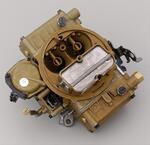


 Increased compression ratio and octane rating