When you click on links to various merchants on this site and make a purchase, this can result in this site earning a commission. Affiliate programs and affiliations include, but are not limited to, the eBay Partner Network.
So I have a set of these just rebuilt and ready to go. The motor I have is an all forged 454. Problem is the pistons have a very small dome on them, it is .125 above the deck. Is there a work around that I don't know that will let me use these heads? Obviously the pistons come in contact with the heads.
probably really small bathtub chambers. everything you would gain from compression increase you will lose twice with badly shrouded valves. those heads are valuable to somebody with an SS396 or similar if the dates work for them. otherwise they are conversation pieces.
2020 Corvette of the Year Finalist (performance mods)
2019 C3 of Year Winner (performance mods)
2016 C3 of Year Finalist
Exactly. Those are 396/402 heads and really hold back a motor. If your dome is that small find a set of small chamber AFR heads with a 100 to 112cc chamber or a set of Edelbrock heads with the 100cc chamber. The only way to get those heads to work is enlarge the chamber or shave the piston. Neither is going to help your performance out, a good set of aluminum heads will make that motor wake up and you will notice. FYI you would probably need to richen your mixture with the new heads because of the increased flow and probably bump up your timing as well
plus shaving the pistons requires removing them from the rods (which means removing them from the engine) and rebalancing the whole rotating assy. what is the casting number of the heads?
Those heads have run very well on engines for many years. Do they flow as well as some others? No....but they can still make decent power. I'd ck to see exactly where they are hitting. Do you have open chamber domes on your pistons or closed? often just a little clearancing will get them to work.
this is the common 1/8th inch 13.5 cc dome 454 piston. the semi closed heads like the 215 will clear them. i think he has a set of 840's or similar.
a backyard a$$hole may consider taking a makita grinder to the domes where they hit the heads. total bubbalicious machine work. and i don't think you want to open these combustion chambers up cuz you are right back with bigger chambers anyway. and these may be the holy grail to somebody with a 65 396 vette or camaro or chevelle SS. your only realistic way to consider is start stacking head gaskets till motor turns over and get out the silly putty to see if some thicker gasket will work. but then you gotta re-check all your volumes to see if the CR is worth the trouble. personally i would get the casting numbers and dates and start shopping for the guy who is shopping for these heads.
They usually just barely touch in the corner of a dome. I wouldn't hesitate for a second to add some clearance where it hits. It's been done that way for many many years. They can easily make near 600 HP with the right parts....
The casting number is 10141279. 1990 something and up.
This motor is going into a 1929 Model A. Probably won't see 1000 miles a year. Weighs less than 2000 LBS. I'm not at all concerned about having a rocket engine. Any BBC in this thing is going to go fast. It has 4 wheel power disc, 4 link in the rear, rack and pinion power steering, TH 400 trans. Going to add A/C if I can figure out how to get glass in the side doors.
ok, this is the last bbc head. 96-02 big block truck. nice head. as long as you don't wanna do 7000 rpm like jim (427hotrod) does. 100 cc chambers. but there is this point in between the valves that is hitting the pistons. whip out a die grinder and start trimming the chambers until they clear the pistons. these heads have no collectors item value like an early closed chamber head. so nobody with a 66 or 67 396 is gonna miss these heads. the point between the valves. across from the spark plug. this is where you start removing metal. what gasket are you planning on using? if the piston doesn't hit the head with no gasket ou have .029 to .041 clearance minimum depending on gasket thickness.
Last edited by derekderek; Jul 10, 2022 at 02:26 PM.
I have been using a set of Closed Chamber cylinder heads on my L88 replica engine and they work very well in my application. The heads I am using are GM part number 3931063 and were cast back in 8/67 and are installed in a early 1968 Corvette. I use a set of L88 pistons under them and the compression is 12.25-1 using the original 1968 L88 pistons. The Closed Chamber heads work well for me as the L88 Pistons fit right into them. After putting in the play dough I was happy to see plenty of clearance between the pistons and the heads. The Crankshaft, rods and Pistons are all forged on my engine as well and with a 4 bolt block I hope it stays together for a few more years. The valve pockets on the pistons do stick out with the pistons at TDC and it was scary until we did the play dough test of all cylinders.
I specifically chose the closed chambers heads because they don't have the same detonation issues/problems that the open chamber heads have. The closed chambers didn't burn as cleanly as the open chamber heads so they were finally replaced with open chambers for emissions reasons is what I read when doing my research into the variety of available cylinder heads. The trick to using them is to have the pistons that were designed to work with those heads. If you do have to have your pistons modified I would take them to a machine shop and have it done so they are all identical.
Compression makes power and these closed chamber heads are good for building a high compression engine that resists pinging. I use a good cold air induction system to feed the engine the coolest air possible allowing it to run without putting race gas into it. To assist in the warmer weather I added a water/methanol injection system to cool down the combustion process and bump the octane. Good old windshield washer fluid gives you the equivalent of 115 octane fuel which a High Compression engine will really like and then it makes great power without any forced induction tricks. One of the bigger problems I ran into was the number of Forged Crankshafts that when Magna-fluxed showed tiny cracks, we bought about 10 of them and returned them due to the tiny cracks and finally found one that had no cracks in it at all. I had several machine shops tell me that they were normal on the forged cranks but I was not willing to take any chances.
Good luck with your combination and I hope that you have sufficient clearance with the heads bolted on with play dough on the pistons! On a car that you are not driving much you should consider the higher compression as it makes a lot of horsepower. There is a reason that so many race cars use high compression! Since you already have a forged bottom end you should be able to enjoy the power and really make the car you are putting the engine into fly.
The casting number is 10141279. 1990 something and up.
This motor is going into a 1929 Model A. Probably won't see 1000 miles a year. Weighs less than 2000 LBS. I'm not at all concerned about having a rocket engine. Any BBC in this thing is going to go fast. It has 4 wheel power disc, 4 link in the rear, rack and pinion power steering, TH 400 trans. Going to add A/C if I can figure out how to get glass in the side doors.
Thanks for all the tips.
OK..that's a whole 'nuther animal. Those are fast burn heads on late model engines. There will definitely be some clearance issues. Need to look closely at water ports on the heads and block also to make sure they will seal.
I'd seriously look into finding another set of heads from a MK IV engine. Basic large oval ports don't cost much and will be a bolt on deal. You're not going to want the compression and high $$ gas it's going to require from what you're describing.
those heads will seal to a MK IV. just have to use a gen 6 head gasket. if they are paid for and good shape, get a 60 buck harbor freight electric die grinder and buy some cutters somewhere other than harbor freight. welding supply is one place has them. a small wheel on a makita will also remove a bunch of those chambers pretty quick. just do one chamber and test fit to piston. put the valves in so you don't hit a valve seat. you have nothing to lose but a 200 buck set of heads. then after clearing the piston by enough with the gasket you want to use, i recommend a standard kind of thick .041 gasket in this case, get a piece of plexi about 6 inches square. drill a 1/2 inch hole near the edge. go to walmart and get a flavor shooter-gravy injector. it also happens to be a decently accurate 25cc burette. and start CC'ing the done chamber and see how much volume it now has. whip out a compression calculator and figure out what the CR will be. that is i am fairly sure a 13.5 cc dome. try to find a part number on a piston to be sure. the one advantage these have over MK 4 heads is that they are done. so you don't have to have guides replaced and seats cut and new valves and springs. but an 049 or 781 or similar will make more power as 427HR says. and he knows big blocks...
I used some weird truck heads on my old 427 that did great. They came from 80's model 366's. They had the large oval ports (not truck style), small valves with hardened exhaust seats and a small semi-closed chamber. I had the intakes cut on a Serdi to install 2.19's and it actually did a beautiful job laying in the valve angles and blending them all the way into the throat as well as "sweeping" the chamber edge for the larger valves. I left the 1.72 exhaust valves in place because seats wouldn't handle 1.88's....but they were fine at that size anyway.
Interestingly they were marked 'Hi-Per"...and not "Hi-Perf" like a rectangular port head would be.
They ran great and were very plentiful and easy to work with.
So I'm grinding the tip off the part that barley hits the piston. I used a small piece of clay, some weak springs and turned the motor over a few times. I need 5/8"'s left to right and less than an 1/8"th top to bottom. The heads are apparently not worth much but they are newly done and paid for. So in they go. If this doesn't work I'm going to get a set from BB Dave.
Thanks for all the help. Especially the guy that came up with the 13.5 CC piston call out as I can't ID the pistons. They have a number stamped on the top. 12509002, underneath there is a triangle with an upper case T in the middle of it. I've searched everywhere I could think of and no luck.
ok, do one chamber first and see how many cc's the chamber is. with 100 cc chambers you are at about 10.5 with a .041 gasket. if you take about 5 cc's out it will be closer to 10:1. here is your 5 dollar burette for cc'ing the chambers... https://www.walmart.com/ip/Mainstays...E&gclsrc=aw.ds this and a 6 inch square of plexi and some grease to seal the plexi tp the head surface. measure a couple of chambers first to see how close to 100cc's you measure. give you a baseline to see how much bigger the chambers are getting. post pics of your work. also measure how far down in the hole the piston is. ok. stupid chromebood won't just post the pic. i highliighted the triangle between the valves that i assume you are cutting on. also the 2 eyebrows shrouding the valves. if you can open them up a little it would breathe a bit better. i am not going into the ski jump in the intake port that could use some removal. this beastie is gonna be ballsy enough and you ain't gonna catch 427Hotrod and his 8 second C2 anyway...
Last edited by derekderek; Jul 12, 2022 at 06:28 PM.
got a big block motor and it's really souped up. model A body makes it look like a pup. got 8 cylinders and it uses em all. got overdrive, just won't stall...
the piston is a mercruiser gen 6. medium and high perf boat engine. 365 to 500 hp depending on cam and valvetrain. basically a copy of the 71 chevelle LS6. iron head version of the corvette LS6.
the piston is a mercruiser gen 6. medium and high perf boat engine. 365 to 500 hp depending on cam and valvetrain. basically a copy of the 71 chevelle LS6. iron head version of the corvette LS6.
I really like to know how you figured that out??? I looked all over.
Designer Imagines A Corvette That Looks More Like a Corvette Than the Corvette
Slideshow: A Jaguar designer's personal project imagines what a modern front-engined Corvette might look like if Chevrolet revisited the golden age of the Stingray.







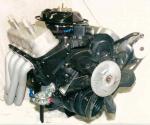







 Closed chamber heads BBC 454