When you click on links to various merchants on this site and make a purchase, this can result in this site earning a commission. Affiliate programs and affiliations include, but are not limited to, the eBay Partner Network.
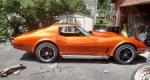
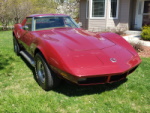
My 1977 L48 was a 100% stock, 4-speed car, 96,000 miles, purchased from the son of the second owner, came with a pile of records and receipts showing it was well cared for, and it ran fine. Slow, but fine. So, this past year I modified it with the usual first steps – headers and dual exhaust, free-flow air cleaner, Lars’ carb and distributor upgrades and an Edelbrock Performer intake manifold. The bonus is that I have a friend with a chassis dyno, so I did a couple baseline runs and a few follow-up runs to try to verify all the numbers that people debate about for these mods. Here’s the bottom line so far:
· Stock condition - 147 hp @ 3,700 rpm and 238 ft-lbs @ 2,800 rpm at the rear wheels.
· Headers, dual exhaust and air cleaner, no other changes - 175 hp @ 4,000 rpm and 254 ft-lbs @ 2,800 rpm.
· Carb and distributor rebuilds, Edelbrock Performer - 182 hp @ 4,200 rpm and 260 ft-lbs @ 2,200 rpm.
Attached are two dyno plots showing the stock baseline versus just the headers, and then the stock baseline versus the final mods.
Here’s the details:
The headers fit perfectly, I even dropped the passenger’s side in from the top. The passenger’s side required a 1” machine bushing at the front hole for the AC bracket, because the stock manifolds are an inch thicker than the header flange. The driver’s side required removal of the clutch cross-shaft and dipstick but slid right in from the bottom.
The exhaust system also fit nicely. I replaced the single support just forward of the cross-member holes with one I fabricated to support the front of the two forward pipes, fabricated simple hangers just behind the rear axles and re-used the stock flex hangers at the back of the mufflers. I also clamped the two pipes together at their closest point and this stabilized the whole assembly. I puzzled over how to connect the header to the forward pipes, my local Midas shop wasn’t a good option, so I decided to try the flex joints. They are pretty heavy duty and have 2.1/2” ID ends so I could slot them and clamp them over the 2.1/2” header outlet and a bent piece of pipe to make up the angle to the forward pipe. The middle bracket on the left is the cross-member support.
I completed the exhaust system first, added the 3" x 14" open air cleaner and did nothing else to the motor. I already had the timing set at ~36 degrees max. I could tell on start-up that the throttle response was much better. My baseline run before the exhaust system produced 147 hp @ 3,700 rpm and 238 ft-lbs @ 2,800 rpm at the rear wheels. Pitiful, I know. Following the exhaust system install, the best run was 175 hp @ 4,000 rpm and 254 ft-lbs @ 2,800 rpm. When you look at the curves the big difference is how well the numbers hold up at higher rpm’s. I also think the free-flow air cleaner by itself is a big part of the results. On the street the difference feels like much more than a 20% increase, it’s so much more responsive.
Next, I tackled the Lars’ mods for the carb and distributor. My Q-jet may have been rebuilt at some point, it was in good shape and when I checked all the adjustments they were all pretty close. I did replace the accelerator pump, plastic float, float needle, inlet filter, gaskets and main jets. Since my plugs and the inside of my exhaust pipes were closer to white than grey, I anticipated needing a little more fuel and went up from #77 to #78 jets.
The distributor was a different story. I made a degree wheel so I could check mechanical advance and set vacuum advance. The adjustable vacuum can was easy - using a small vacuum pump I adjusted the screw with the provided Allen wrench to 8 degrees at the dizzy (16 at the crank). The mechanical was harder. The existing weights and cam allowed almost 25 degrees at the dizzy without springs (50 degrees at the crank!). Who knows how much the stock springs limit that movement, but I recall having some trouble getting the max and initial timing squared away a couple years ago. I tried some different cams and weights, but couldn’t get it below 20 degrees, so I ended up grinding some little stop screws and installing them in the available holes in the plate. Now I have 11 degrees mechanical at the dizzy (22 at the crank), so my initial and max at the crank are 14 and 36 degrees. I used the light springs to start. Finally, I shimmed the end-play down to about 0.012” from the stock 0.050”.
The stock intake manifold came off pretty easily and I used Felpro gaskets and new hardware for the Performer. I took a bunch of pictures of all the hoses and connections so I wouldn’t forget anything. The Performer is only ¾” taller than stock, so air cleaner-hood clearance was not a problem. That ¾” did cause me to get out the tubing bender and adjust the fuel supply line.
After some driving, I felt like there was a little sluggishness off-idle, so I went back to the 77 main jets and it’s crisper now. After re-reading Lars' paper, I was supposed to change the rods with the 78 jets to keep the cruising mixture the same. Anyway, just went back to the dyno and got 182 hp @ 4,200 rpm and 260 ft-lbs @ 2,200 rpm. My buddy got his O2 sensor working this time, and the fuel mixture was right around 15/1 for the whole run. Obviously I’m leaving some horsepower on the table with the 77 jets, and I could feel that lag in torque between 2,200 and 3,200 rpm, so some tuning is needed still. Unless someone has better advice I’ll try the 78’s again and get a set of 79’s as well as matching rods. Want to get closer to 13/1 at full throttle but still be crisp at cruising. I'm guessing I can fill in that lag in the torque curve and get to ~270 ft-lbs around 3,000 rpm.
Here's what everything cost:
· Flowtech Headers - $447.27 with shipping
· Corvette Central 2.1/2” dual exhaust system part # 323737 – $657.35 with shipping
· Summit Racing 2.1/2” x 14” heavy flex joints - $92.81 with shipping
· Misc. clamps, hangers, etc. - ~$50
· Edelbrock Performer - $90 used on Ebay with shipping
· Q-jet rebuilt kit, jets, etc. - ~$50
· 14x3 open air cleaner – $63.25 new on Ebay with shipping
· Distributor springs, shims, vacuum canister - ~$50
I’m pretty happy with what I got out of $1,500 in parts and maybe 40 hours of shop time, especially since my stock exhaust system was rotten and I was looking at ~$750 just to replace the stock system. Of course, I’m thinking about next steps, but I have a bunch of rubber things in the suspension to replace before I add any more power. Also, I’m reluctant to spend too much money on a bottom end with 96,000 miles on it. But even a 383/350 hp crate motor would re-use the exhaust system and probably the Q-jet, so the project was money well spent.
58 or 64cc heads with a mild cam are the last components needed for power. The smaller chamber heads will compensate for the dished pistons. The dished pistons, heads and cam are the only thing different (power wise) vs an l82 at this point I know theres a point of diminishing returns but for about $1300 more you can do heads and a cam and replace the nylon timing chain which is likely loose if it not been replaced yet.. Yes l82 engines were 4 bolt forged component engines but that doesnt make any different on a 400hp or less 5500rpm engine for a street cruiser. The heads can always be reused on your next shortblock.
Very nice writeup. That nearly 30 RWHP gain is impressive on the first stage and I have no doubt you could feel it!
Interesting the Performer intake didn't do as much...but it's really closer to a stock replacement lower RPM piece anyway. I switched from a Performer to a Performer RPM on a 302 Ford and it was definitely a little weaker under 4000 RPM....but really woke up above that through 6500...which is actually well past the valve float area on the engine....but it still runs well in that range.
Cam and heads to extend that HP peak another 1000-1500 RPM will make a world of difference.
You're doing well and being methodical...good stuff!
Thanks for posting your results. . Those kinds of improvements can be felt by the "seat of the pants" dyno and it's great to see it in verified in writing.
On my 75 L48 a previous owner had swapped out the stock exhaust with long tube headers and dual exhaust back to the dual Xlerator turbo mufflers (not crazy about the sound) and changed to what I believe is a later model L82 aluminum intake.. I wasn't overly impressed with it's power so I did the Lars QJet carb & distributor mods, went to full manifold vacuum at idle and it definitely woke that poor anemic powerplant up. I did swap the springs out in the distributor to the Moroso silver springs. It'll actually lay a little rubber from a hole shot now, not much but it wouldn't even chirp before, LOL.
I dunno if I'll invest in heads/cam upgrades for this 2 bolt main 350 or either do or purchase a 4 bolt main 383. But in the mean time this 75 L48 is a nice dependable cruiser that can use some cosmetic work thats screaming for attention.
The Performer didn't yield big mods because the cam is tiny...(.400 lift/200@.050), and your A/F was way off..........now stick a 268H cam in that setup right there and get the A/F spot on and you will see another 60-70 horsepower and about 325ft/lbs. torque......no lie.
Nice to read this info and thanks for sharing. Your changes are nearly identical to what I am doing to my 1975 L48. One difference is I found a Holley sniper EFI setup a local guy purchased then changed his build plan and sold the efi for half price. I am going to remove the carb and go EFI.
Thanks for posting your results. . Those kinds of improvements can be felt by the "seat of the pants" dyno and it's great to see it in verified in writing.
On my 75 L48 a previous owner had swapped out the stock exhaust with long tube headers and dual exhaust back to the dual Xlerator turbo mufflers (not crazy about the sound) and changed to what I believe is a later model L82 aluminum intake.. I wasn't overly impressed with it's power so I did the Lars QJet carb & distributor mods, went to full manifold vacuum at idle and it definitely woke that poor anemic powerplant up. I did swap the springs out in the distributor to the Moroso silver springs. It'll actually lay a little rubber from a hole shot now, not much but it wouldn't even chirp before, LOL.
I dunno if I'll invest in heads/cam upgrades for this 2 bolt main 350 or either do or purchase a 4 bolt main 383. But in the mean time this 75 L48 is a nice dependable cruiser that can use some cosmetic work thats screaming for attention.
The only place a 4 bolt engine has real merit over a 2 bolt is if the engine is going to see repeated hard racing use. How often do you read about 2 bolt crank bearing or retainer failure here? This is simply one of those exaggerated things people think they need for thier street cruisers when most never do.
The only place a 4 bolt engine has real merit over a 2 bolt is if the engine is going to see repeated hard racing use. How often do you read about 2 bolt crank bearing or retainer failure here? This is simply one of those exaggerated things people think they need for thier street cruisers when most never do.
True.....I have built solid roller 383's that made 550+ hp with a studded 2 bolt block......no problem.
Thanks for responses. I ordered 79 and 80 main jets and a set of .054 rods, and I need to make sure the secondaries open on time, so I'll play with those on the street and then try to get back to the dyno to optimize what I have.
I understand the typical next steps- heads and a cam. The Summit Vortec heads, a cam kit and new springs would be close to another $1,500. Since I'm sort of exhausting the old-school inexpensive mods, I'm thinking about pulling the heads, having 0.040" skimmed off to get half a point of compression and gasket-matching intake and exhaust ports, clean up the casting flaws in the ports a little. Everything I've read says the pressed-in studs are ok for mild cams, so would something like the 268H might be the upper limit without going to pressed-in studs?
Nice work.
Just another vote of confidence here for the stock, 2 bolt block. My 77, original, 2 bolt block is still holding up, as a 383 with the original main bearing cap bolts, no less. I have well over 300 low to mid 12 second passes on it, with more to come.
I would be concerned about your cast pistons however as you increase power and rpm levels.
Thanks for responses. I ordered 79 and 80 main jets and a set of .054 rods, and I need to make sure the secondaries open on time, so I'll play with those on the street and then try to get back to the dyno to optimize what I have.
I understand the typical next steps- heads and a cam. The Summit Vortec heads, a cam kit and new springs would be close to another $1,500. Since I'm sort of exhausting the old-school inexpensive mods, I'm thinking about pulling the heads, having 0.040" skimmed off to get half a point of compression and gasket-matching intake and exhaust ports, clean up the casting flaws in the ports a little. Everything I've read says the pressed-in studs are ok for mild cams, so would something like the 268H might be the upper limit without going to pressed-in studs?
.480 lift is the end for press in studs.......
I use the Elgin "Z/28" spring kit for all of these mild performance grinds........
Yes.....a good bowl cleanup and gasket match will yield big benefits......but I think if I was going down and dirty cheap I would find a pair of pre-1971 heads in the 64cc chamber......and port those......a friend had some 69' 2.02 L-46 heads he sold recently for dirt cheap and had maybe 30k miles on them......great for a street build......
Now porting these heads will not make it pull wheel stands but you can add another 25-30 horsepower to the numbers I told you above........with cleaned up heads, intake, 268H cam.....you can expect 360hp at the crank for 290 at the tire....100 more than your 182hp......
This is incredibly exciting to read as I am on nearly the same upgrade path you are on, @ScottinMaine , although I'm doing my steps slightly differently. I've already done a dual exhaust on my stock-ish 1980 4-speed car. I've switched to a Holley Sniper with a Weiand 8120 Street Warrior intake and have a new distributor from D.U.I.. I have a set of Hedman stainless headers on the way and like what @Jebbysan suggested, I have a Summit/Elgin 1065 cam and springs (Comp 268H clone) ready to be swapped in as well (with some roller tip rockers, and a few other goodies). I'm also now running a 3.54 rear gear, up from the stock 3.07. Very cool to see real results being posted of a similar mods list! Thank you!
This is incredibly exciting to read as I am on nearly the same upgrade path you are on, @ScottinMaine , although I'm doing my steps slightly differently. I've already done a dual exhaust on my stock-ish 1980 4-speed car. I've switched to a Holley Sniper with a Weiand 8120 Street Warrior intake and have a new distributor from D.U.I.. I have a set of Hedman stainless headers on the way and like what @Jebbysan suggested, I have a Summit/Elgin 1065 cam and springs (Comp 268H clone) ready to be swapped in as well (with some roller tip rockers, and a few other goodies). I'm also now running a 3.54 rear gear, up from the stock 3.07. Very cool to see real results being posted of a similar mods list! Thank you!
I do recommend you get the whole spring, lock, and retainer kit from Elgin if changing it out.........also a set of viton valve seals or umbrella style......
I just broke in an Elgin 1180p small block cam with the Elgin kit on it with zero issue......I used moly paste on the lobes and 15w40 Rotella with a bottle of Lucas ZDDP additive......
I do recommend you get the whole spring, lock, and retainer kit from Elgin if changing it out.........also a set of viton valve seals or umbrella style......
I just broke in an Elgin 1180p small block cam with the Elgin kit on it with zero issue......I used moly paste on the lobes and 15w40 Rotella with a bottle of Lucas ZDDP additive......
Jebby
I've got the Summit 1065 (218/218 .458"/.458" 110LSA 105 ICL 115 ECL. Its the Elgin cam in a Summit box) and Summit 174001 spring and retainer kit (comes with Viton seals, but I changed my factory style seals with fel-pro replacements and added fel-pro umbrellas last winter. No more issues there). I have a tube of the Moroso moly paste ready to go too. Melling JB-817 lifters and a Summit 6600R-9 double roller timing set.
Cam swap planned for this fall/winter. Hedman Header swap planned for as soon as they arrive (next week, hopefully).
Generally if you want to change your wide open throttle primary jetting on a Qjet and keep the part throttle the same you need to change the rod 2 sizes for every 1 size change on the jets. example - if you have a 77 jet and a 46 rod and you change your jet to 78 then to keep the part throttle aprox the same you would change the rods to 48's etc.
Generally if you want to change your wide open throttle primary jetting on a Qjet and keep the part throttle the same you need to change the rod 2 sizes for every 1 size change on the jets. example - if you have a 77 jet and a 46 rod and you change your jet to 78 then to keep the part throttle aprox the same you would change the rods to 48's etc.
Pat
I'm using Lars' Qjet paper and the tables in the back to try to keep the cruising area the same while adding WOT fuel. But, the availability of the rods is limited, I can't find any 0.056 rods to go with the 80 jets. If anyone has a good source, would love to hear it.













 1977 L48 Basic Mods with Dyno Results