












1969 Corvette Battery Dying

Thread Starter
1st Gear

Joined: May 2023
Posts: 1
Likes: 0
From: Reno, NV
 1969 Corvette Battery Dying
Just bought a 1969 Corvette, #'s matching 427 /435 hp car.
Car runs fine, I do notice that the battery goes dead and I need to charge it on a regular basis.
I'm thinking probably a short somewhere, are there any known issues with this specific year?
Thanks,
Wade
Car runs fine, I do notice that the battery goes dead and I need to charge it on a regular basis.
I'm thinking probably a short somewhere, are there any known issues with this specific year?
Thanks,
Wade

Le Mans Master


Joined: Aug 2006
Posts: 7,427
Likes: 1,560
From: mount holly NC
2025 c3 ('74-'82) of the Year Finalist - Unmodified
2019 C3 of Year Finalist (appearance mods)
Hi and Welcome
This might help you find the drain.
https://www.corvetteforum.com/forums...with-pics.html
https://www.corvetteforum.com/forums...with-pics.html

Melting Slicks


Joined: Feb 2018
Posts: 2,328
Likes: 725
From: Marietta GA
If your car has the rear glove box light, (that works)ensure that is turned off when the door is closed. Park your car is in a really dark place then look inside the cabin and see if the light is on. This happened on my 73 convertible and it took a while till I figured out the problem. Also any after market products, ie. radio, radar detectors etc. can be wired incorrectly.

Le Mans Master
Joined: May 2007
Posts: 5,031
Likes: 1,121
From: North tonawanda NY
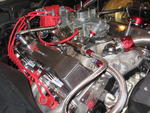
I had this issue on my car and in my case it was a faulty rectifier or regulator in the alternator ( I rebuilt the alternator but cant remember which component caused it.) You may have external regulator, not sure..
Le Mans Master
Joined: Aug 2017
Posts: 8,336
Likes: 2,810
From: Cool Northern Michigan
You say you have to constantly charge the battery.
So, one of two things could be going on here, or both at the same time.
Your ALT is not producing one iota of juice back to the battery. So, your engine ignition, lighting, stereo, everything, is running off of the battery only, not running off the ALT output.
The battery is basically just for starting and the dome light when entering the car. After that event takes place, the ALT takes over for all the juice needed.
Or.
The ALT is producing around 14.6 V but a "parasitic draw (drain)" is removing all your juice when the vehicle is unoccupied.
Testing for a draw at the fuse panel will help a lot. But before you start pulling fuses with an OHM Meter, you need to take a block of wood and jamb it in between the front door jamb and the dome light switch.
So, one of two things could be going on here, or both at the same time.
Your ALT is not producing one iota of juice back to the battery. So, your engine ignition, lighting, stereo, everything, is running off of the battery only, not running off the ALT output.
The battery is basically just for starting and the dome light when entering the car. After that event takes place, the ALT takes over for all the juice needed.
Or.
The ALT is producing around 14.6 V but a "parasitic draw (drain)" is removing all your juice when the vehicle is unoccupied.
Testing for a draw at the fuse panel will help a lot. But before you start pulling fuses with an OHM Meter, you need to take a block of wood and jamb it in between the front door jamb and the dome light switch.

Melting Slicks


Joined: Sep 2015
Posts: 2,757
Likes: 333
From: Southampton MA
Check the wiper override switch under the dash. If turned toward passenger it is electrically holding the wipers in position draining the battery.
It is so easy to move that it may be active. Turn it away from the passenger side. that is off. Wipers will work now and stops the drain.
It is so easy to move that it may be active. Turn it away from the passenger side. that is off. Wipers will work now and stops the drain.
Last edited by A10pilot; May 20, 2023 at 08:02 PM.
Corvette Stories
The Best of Corvette for Corvette Enthusiasts

Top 10 Most Expensive Corvettes Ever Sold on Bring A Trailer
Brett Foote
10 Things Every Corvette Owner Needs (2026 Edition)
Michael S. Palmer
8 Most "Only Corvette Owners Understand" Quirks and Problems
Pouria Savadkouei
10 Reasons the C6 Z06 is Still A Performance Benchmark After 20 Years
Joe Kucinski
How Much Horsepower Every Corvette Engine "LOST" in 1972
Joe Kucinski
Top 10 DOs and DON'Ts for Protecting Your Convertible Top!
Michael S. Palmer
Top 10 Most Explosive Corvettes Ever Made: Power-to-Weight Ratio Ranked!
Joe Kucinski
150 hp to 1,250 hp: Every Corvette Generation Compared by the Specs That Matter
Joe Kucinski
8 Coolest Corvette Pace Cars (and Replicas) of All Time
Verdad Gallardo
Safety Car


Joined: May 2001
Posts: 4,759
Likes: 1,647
From: Fairfax Virginia
Welcome to the Corvette Forum WadeAlex! We are glad you are joining us here at the Corvette Forum. This is THE place to be if you have questions or issues with Corvettes.
I see that you live in Reno, Nevada. Heat is a batteries worst enemy. The hotter it is where they operate the shorter the life they will have. I used to build large Photovoltaic Solar system around the world. When I chose a battery to use in the United Arab Emirates the battery manufacturer suggested that the battery would need to be replaced after 18 and 24 months of use. This exact same battery would last 3 to 4 times as long in a cooler environment. I designed a patented Cooling system to keep the batteries cooler and used it. The customer was so surprised that they had not had to replace the $25k set of batteries after almost a decade of usage in the desert.
In my 1968 C3 I use the noise and thermal insulating material inside the battery box to protect the battery from the extreme heat. In your environment you might want to insulate the inside and outside of the battery box. The cooler the battery is kept the longer it will last.
I agree with checking the windshield washer over-ride. That is a very common cause of dead batteries in the early C3's.
There are so many types of "Battery Tenders" and some are good and some are not. I gave up on them and use my 10 amp battery charger to keep the battery charged up and the electrolyte mixed up properly. Low current charging is okay on Lead calcium batteries like those used in UPS applications. In our older Corvettes they were designed to use a Flooded Lead Acid battery and the standard FLA battery has liquid electrolyte that is made up of acid and Distilled Water. If you use a slow charger like a battery tender on a FLA battery it doesn't get the battery up to 15 volts which is where most FLA batteries start to gas and bubble. The gassing action is very helpful as it helps prevent the electrolyte from stratifying. Just be very careful as when a battery is gassing it is releasing Hydrogen and you want to do this type of charging where you have good ventilation. I suggest doing it outdoors unless you have good ventilation inside the garage.
As batteries start life they have a specific rate of self-discharge, this slowly increases after the battery has been in use. So a new battery will self discharge more slowly than an older battery does. Heat has an effect on this as well, the warmer it is the more self-discharging will happen inside the battery. When it is cold the battery looses capacity because the chemical actions that take place slow down, in the heat they speed up which leads to wearing out the battery more quickly.
Driving your Corvette is the very best way of helping your battery have a nice long life, Charging it with a 10 amp or larger charger is probably the second best way to maximize the life and capacity of the battery.
Here at my home I have 2 Corvettes and they both get battery service regularly. I remove the batteries, wipe off the top and then pop off the caps allowing me to see the electrolyte level inside the cells. If the cell shows the full marks exposed I then top the cell off with Distilled Water and replace the cap. Then I clean the terminals with a good battery brush and attach it to a battery charger that is powerful enough to get the battery up to 15 volts or 2.5 volts per cell. After the battery is recharged and has gassed I then wipe it down and re-install it in the car. I use battery grease and then cover the connection on the outside to keep oxygen from causing any issues inside the connection. Doing this has kept me from having any problems on the road that are battery related.
I used to use the little Blade style power switches or the ones that have the **** you turn to make the connection. Since I now have a EFI system and modern electronics I swapped out the old switches for a Marine Grade Circuit breaker. The breaker turns the power on quickly and securely. When the car is left sitting it is the most effective way to isolate the battery.
If you still have the original clock in your Corvette remove it and put it a modern version. The newer versions are more energy efficient. (So they tell us)
If your alternator has bad diodes in it then it can pull current. Using a Multi-meter to measure amperage you should be able to test for this. Another way is simply test for any Alternating Current coming out of the alternator. To do this simply put the meter on the A/C Voltage range and measure the output. If there is ANY A/C coming out of the alternator this too will kill a battery very quickly. This is another good item to test for!
I see that you live in Reno, Nevada. Heat is a batteries worst enemy. The hotter it is where they operate the shorter the life they will have. I used to build large Photovoltaic Solar system around the world. When I chose a battery to use in the United Arab Emirates the battery manufacturer suggested that the battery would need to be replaced after 18 and 24 months of use. This exact same battery would last 3 to 4 times as long in a cooler environment. I designed a patented Cooling system to keep the batteries cooler and used it. The customer was so surprised that they had not had to replace the $25k set of batteries after almost a decade of usage in the desert.
In my 1968 C3 I use the noise and thermal insulating material inside the battery box to protect the battery from the extreme heat. In your environment you might want to insulate the inside and outside of the battery box. The cooler the battery is kept the longer it will last.
I agree with checking the windshield washer over-ride. That is a very common cause of dead batteries in the early C3's.
There are so many types of "Battery Tenders" and some are good and some are not. I gave up on them and use my 10 amp battery charger to keep the battery charged up and the electrolyte mixed up properly. Low current charging is okay on Lead calcium batteries like those used in UPS applications. In our older Corvettes they were designed to use a Flooded Lead Acid battery and the standard FLA battery has liquid electrolyte that is made up of acid and Distilled Water. If you use a slow charger like a battery tender on a FLA battery it doesn't get the battery up to 15 volts which is where most FLA batteries start to gas and bubble. The gassing action is very helpful as it helps prevent the electrolyte from stratifying. Just be very careful as when a battery is gassing it is releasing Hydrogen and you want to do this type of charging where you have good ventilation. I suggest doing it outdoors unless you have good ventilation inside the garage.
As batteries start life they have a specific rate of self-discharge, this slowly increases after the battery has been in use. So a new battery will self discharge more slowly than an older battery does. Heat has an effect on this as well, the warmer it is the more self-discharging will happen inside the battery. When it is cold the battery looses capacity because the chemical actions that take place slow down, in the heat they speed up which leads to wearing out the battery more quickly.
Driving your Corvette is the very best way of helping your battery have a nice long life, Charging it with a 10 amp or larger charger is probably the second best way to maximize the life and capacity of the battery.
Here at my home I have 2 Corvettes and they both get battery service regularly. I remove the batteries, wipe off the top and then pop off the caps allowing me to see the electrolyte level inside the cells. If the cell shows the full marks exposed I then top the cell off with Distilled Water and replace the cap. Then I clean the terminals with a good battery brush and attach it to a battery charger that is powerful enough to get the battery up to 15 volts or 2.5 volts per cell. After the battery is recharged and has gassed I then wipe it down and re-install it in the car. I use battery grease and then cover the connection on the outside to keep oxygen from causing any issues inside the connection. Doing this has kept me from having any problems on the road that are battery related.
I used to use the little Blade style power switches or the ones that have the **** you turn to make the connection. Since I now have a EFI system and modern electronics I swapped out the old switches for a Marine Grade Circuit breaker. The breaker turns the power on quickly and securely. When the car is left sitting it is the most effective way to isolate the battery.
If you still have the original clock in your Corvette remove it and put it a modern version. The newer versions are more energy efficient. (So they tell us)
If your alternator has bad diodes in it then it can pull current. Using a Multi-meter to measure amperage you should be able to test for this. Another way is simply test for any Alternating Current coming out of the alternator. To do this simply put the meter on the A/C Voltage range and measure the output. If there is ANY A/C coming out of the alternator this too will kill a battery very quickly. This is another good item to test for!

Melting Slicks

Joined: Dec 2014
Posts: 2,786
Likes: 2,332
From: Central UT
Hey Wade, welcome and congratulations!! We have a '68 L71 - fun cars for sure!
You don't mention how old the battery is. That's where I'd start. Most of the time there's a sticker on the battery that can give you the mfg date. As mentioned, test the battery in the car - - - but if it's very old at all (4-5 years+) I'd just replace it. If I had to guess, I'd suggest that rather than a short or real parasitic loss you're dealing with a dead beat battery. Once you get that sorted, a good battery tender is your friend. Best, Paul
PS: pics!!!
You don't mention how old the battery is. That's where I'd start. Most of the time there's a sticker on the battery that can give you the mfg date. As mentioned, test the battery in the car - - - but if it's very old at all (4-5 years+) I'd just replace it. If I had to guess, I'd suggest that rather than a short or real parasitic loss you're dealing with a dead beat battery. Once you get that sorted, a good battery tender is your friend. Best, Paul
PS: pics!!!