When you click on links to various merchants on this site and make a purchase, this can result in this site earning a commission. Affiliate programs and affiliations include, but are not limited to, the eBay Partner Network.
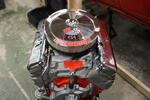
I'm interested in input regarding cam specifications for the engine I am building for the frame off restoration of my 1971 LT1 Roadster.
The components of the engine are as follows:
Block: Scat internally balanced rotating assembly The short block is already assembled.
383 stroke, 0.030" over bore
6" Scat Ultra rods
Floating pins
Mahle flat top pistons
Scat damper
Heads: AFR 195cc Eliminator
Stud, spring upgrades
Titanium retainers
54cc or 65cc - recommendations?
Hydrolic or solid roller cam
Roller rocker arms, probably 1.6:1 ratio or high to get necessary lift.
AED (Holly) carb tuned to engine
Intake Manifold - to be determined.
Long tube Stainless headers.
TKX 5 speed with 0.68 5th gear
3.73 rear end.
While I love the sound of a really rough idle, I don't want so much overlap or duration that low to mid range torque is destroyed.
All recommendations will be welcome, especially those with explanations concerning your configuration recommendations. Any non cam recommendations are also welcome as well.
Something like the old comp xr282hr should be close spec wise.Someone smarter than me will come along with a better/more modern option I'm sure. I would think a performer rpm would be a default intake choice if you have the hood clearance for it.
I'd hold off on the 1.6 rockers till yo get a cam selected. And a single plane intake may work well, you don't really lose much low end torque.
I wouldn't get wrapped up on low speed torque in a Corvette a pick up yes a bigger car yes. But you can easily create a situation where you can't hook up the power. I need drag radials and it still spins them pretty hard. Just some thoughts. Others may disagree.
Basic cam selection guidelines depend on what you want it to do:
Suggest you call several cam companies for advice, mull those over, then come back here.
You have some great components so far!
Questions to ask your self:
How much HP do you want? What makes you happy?
How high of an RPM range do you want? How high do you want the HP peak? and the TQ peak?
What is your rear gear? and trans?
What are your driving objectives? cruising, racing, MPG, top speed, toy, sound, etc.
How much low rpm driveability are you willing to give up for high rpm HP?
Everything else follows after you know the answers to the above.
.050 durations at or below 230 make nice street cams. Above that you start sacrificing a lot of low rpm for gains in high rpm. The L88 cam is way out there at 264.The DZ 302 cam is 255. The LT-1 cam is 242. The L46 is 224. LT-1 duration is still a pretty nice street cam, but definately performance oriented, a little mild. The DZ is a lot more rowdy, has that HP stacatto idle. That 13 degrees matters a lot.
Every 10 degrees of duration moves the rpm band up about 700 rpm, but could gain you around 50 HP, at the top, with losses at the bottom.
Pay attention to the manufacturers suggested rpm range, especially the lower number, that tells you the lowest rpm the cam basically "likes"
With bigger cams, Decide on the rpm range first, then pick the cam, then pick the pistons (CR) then do the block decking. IN THAT ORDER. But they all get selected at once.
You want to wind up with a DCR of 8.0-8.2 after all that is done. Depending on the cam that could mean 10:1 , 11:1 or 12:1 pistons.
Put the best heads on it you can afford. AFRS are great ones.
Last edited by leigh1322; Sep 9, 2023 at 09:16 AM.
I do not think you will need that much RPM.
CorvettePassions 406 made 566 with this cam:Isky steel core HR camshaft - 234/238 @ 0.050, .560/530 lift, 110 LSA
559 HP @ 5500 & 566TQ @ 4500
Now his is an excellent Mark Jones build with excellent CNC ported AFR 195 Competition heads.
With 20 less cubes you might need a little more cam and a little more rpm, but not much, just small increments.
Your 383 will not peak until 5800 with the same setup, just cause it's smaller, it will have to rev higher to move that much air.
Even 5 or 10 more degrees more cam won't gain you that much unless you have the head flow. His is a decent performance street cam, you could go bigger, but you may not need to.
You will gain more power by spending lots of effort on the head flow. His are excellent. Just copy them. And get the DCR correct.
Last edited by leigh1322; Sep 9, 2023 at 04:46 PM.
I haven’t measured yet but the block was decked to 9”.
Kinda an important spec to know TBH.
Example: A piston that is .005” down vs .015 down in the hole makes nearly 1/2 a point difference in static compression. This can change what head gasket you choose to cam selection. Kinda want to know that.
Designer Imagines A Corvette That Looks More Like a Corvette Than the Corvette
Slideshow: A Jaguar designer's personal project imagines what a modern front-engined Corvette might look like if Chevrolet revisited the golden age of the Stingray.




 Cam specifications recommendations