When you click on links to various merchants on this site and make a purchase, this can result in this site earning a commission. Affiliate programs and affiliations include, but are not limited to, the eBay Partner Network.
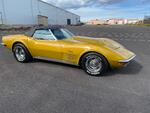
I’m in the process of building my 73 big block project.
The car was originally equipped with power brakes.
My plan was to switch over to manual brakes but, I’m thinking about staying with power brakes.
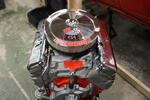
The problem I’m having is the new 496 I’ve built is only pulling 11” of vacuum and all the power brake booster manufacturers are telling me that I need at least 16” of vacuum for their boosters to perform safely and properly.
I’ve read numerous comments on the forum from members who state they are running power brakes and their engines are also only pulling about 10”-11” vacuum.
I want the brakes to function safely and would rather keep the manual brakes than run a power brake booster that is not functioning properly or to its full potential.
I have upgraded to Wilwood D8-6 front calipers and D8-4 rear calipers and will be running a Wilwood master cylinder.
I do not want to run hydro boost or a vacuum pump on my car.
Will a power brake booster safely and properly operate off 11” of vacuum or should I just continue on with building my car with the manual brakes like I originally planned?
Additionally, I don’t need power brakes and will be just fine staying to my original plan of running a manual brake system.
I've operated safely for years with 8-10" of vacuum for brakes. No problems, good pedal. ( I now have Hydra-Boost brakes ). But if I were you and had the chance, I would continue with plans for manual as a personal preference.
My brakes function perfectly with 11" of vacuum, never a hint of a problem....the headlights go up and down as well just as if the stock engine was still in there.
Move on no concern here...
As I said in your other thread I am running 8-9" of vacuum with no problems - HOWEVER - if you already have manual brakes I would not convert to power. the reason is the booster takes up a lot of room on the drivers side and is one more part that can fail. I have to get my #7 spark plug from the bottom. I have driven the same year car as mine with manual brakes and they worked fine for me. I probably will never convert to manual but I think I would have liked it better if the car came with manual.
Pat
My LT-1 had 10.5" of vac at idle and the OEM power brakes were just fine, even in competition use, which I did a lot of.
As soon as you rev it the vac goes higher.
Even at idle I had plenty.
The mfgrs are playing lawyer = "CYA".
Manual brakes stop the car every bit as well as a power brakes.....ZERO DIFFERENCE in stopping power. It just requires a little more pressure, and for me, its irrelevant and not even noticeable. The bonus is much better brake feel, and less garbage to clutter up the comparment and break. In a C3 Corvette.....manual brakes are more than adequate with no downside. Remember, these cars have four wheel disc brakes.....its not a drum brake that IS a different story.
But..... on most subects, .I am always diffrerent than most people....so you are better off ignoring my comments and join the mob.
Manual brakes stop the car every bit as well as a power brakes.....ZERO DIFFERENCE in stopping power. It just requires a little more pressure, and for me, its irrelevant and not even noticeable. The bonus is much better brake feel, and less garbage to clutter up the comparment and break. In a C3 Corvette.....manual brakes are more than adequate with no downside. Remember, these cars have four wheel disc brakes.....its not a drum brake that IS a different story.
But..... on most subects, .I am always diffrerent than most people....so you are better off ignoring my comments and join the mob.
I have wanted to switch it to manual brakes.
So I might as well.
What is the difference as far as mounting the pedals and reinforcing the firewall?
I read that there was an additional steel plate installed to the firewall to help strengthen it on the manual brake cars.
If so does anyone have a part number or picture of that plate?
Or even an extra plate they are willing to sell?
I have wanted to switch it to manual brakes.
So I might as well.
What is the difference as far as mounting the pedals and reinforcing the firewall?
I read that there was an additional steel plate installed to the firewall to help strengthen it on the manual brake cars.
If so does anyone have a part number or picture of that plate?
Or even an extra plate they are willing to sell?
You essentially duplicate what Chevy did, so I just looked at the AIM, and identify the differences by studying the drawings. The pedal box is useable on both, the brake light switch tabs have to be changed, the master cyliinder connection to the pedal swapped, and the plate is a simple piece of metal to cover the opening that exists on the power brake firewall glass. You have to identify the exact location of the master cylinder mounting point...which is somewhere between the four holes of the booster mount. You can't just bolt it up to the top two holes...too high. I gathered all the information from the AIM, and I believe if you search this forum, you will find lots of information on it. I did it after the car was assembled....much easier at your stage. Of course, you have to use a the correct master cylinder, and hard lines. I did it on a 77....would be different on a 73.
Well I have an OEM manual setup and want to switch to power.
Should we talk?
I know the booster rod is mounted at a diff height on the pedal arm, the pedal arm may have both holes hi & lo, the main bracket has 2 studs on one version only, the brake switch bracket varies, a bigger firewall hole needs to be drilled, or glassed up. I am not aware of any brace.
The MC has a diff bore.
It makes access to that side of a BBC much easier.
I had a manual car before, and have driven power ones. Honestly, the leg pressure is pretty similar (due to the geometry changes), the feel or at limit modulation is improved, but you have to lift your leg, not just roll your heel, and the pedal travel to get the brakes on is approximately 50% greater. The specs are in the maintenance manual and I thought it was objectionable. It took me too much time to get the brakes on hard. But I think like an autocrosser. Many don't mind that. But I hated it.
Last edited by leigh1322; Apr 5, 2024 at 07:52 PM.
Well I have an OEM manual setup and want to switch to power.
Should we talk?
I know the booster rod is mounted at a diff height on the pedal arm, the pedal arm may have both holes hi & lo, the main bracket has 2 studs on one version only, the brake switch bracket varies, a bigger firewall hole needs to be drilled, or glassed up. I am not aware of any brace.
The MC has a diff bore.
It makes access to that side of a BBC much easier.
I had a manual car before, and have driven power ones. Honestly, the leg pressure is pretty similar (due to the geometry changes), the feel or at limit modulation is improved, but you have to lift your leg, not just roll your heel, and the pedal travel to get the brakes on is approximately 50% greater. The specs are in the maintenance manual and I thought it was objectionable. It took me too much time to get the brakes on hard. But I think like an autocrosser. Many don't mind that. But I hated it.
PB firewall holes. I don't "think" the 4 bolt holes move, I think it is the MC hole. I saw one somewhere where someone cut the MC hole eggshaped. But looking at those 2 brackets again, the top bolt holes might move also.
PM'd
Last edited by leigh1322; Apr 6, 2024 at 04:30 PM.
Manual brakes stop the car every bit as well as a power brakes.....ZERO DIFFERENCE in stopping power. It just requires a little more pressure, and for me, its irrelevant and not even noticeable. The bonus is much better brake feel, and less garbage to clutter up the comparment and break. In a C3 Corvette.....manual brakes are more than adequate with no downside. Remember, these cars have four wheel disc brakes.....its not a drum brake that IS a different story.
But..... on most subects, .I am always diffrerent than most people....so you are better off ignoring my comments and join the mob.
With a manual transmission, power steering (but tiny steering wheel) I find the 'weighting' of steering, clutch, gearshift and braking is all resonably balanced - (IMHO nothing worse that an overly light brake pedal and risking locking-up at times) - I increased return spring pressure on accelerator to give more 'feel' when secondaries activate too.
With a manual transmission, power steering (but tiny steering wheel) I find the 'weighting' of steering, clutch, gearshift and braking is all resonably balanced - (IMHO nothing worse that an overly light brake pedal and risking locking-up at times) - I increased return spring pressure on accelerator to give more 'feel' when secondaries activate too.
Agreed! I took efforts to balance all of this on my solo car.
Nothing worse than a "little finger" PS wheel and yet a two-legged cutch pedal, light gas pedal, etc etc.
There are 5 things you touch when driving: clutch , brake, gas, wheel, gearshift.
It is so much more pleasureable when they are all sort of equal firmness.
My 383 was running 11” of vacuum and the power brakes were ok, I swapped in a tunnel ram and it dropped to 9” which isn’t ok with vacuum brakes. I ordered a hydroboost system for it.
Leigh and Richard,
Thanks for posting these pictures and the information.
I think I need to keep to my original plan and swap over to manual brakes.
You have lot's of CI and a mild cam. I would wonder why you are even worried about low vacuum? I've had my motor shut off on several occasions and you notice that the brake pedal becomes hard and it just requires a little more leg to stop. No big deal!
Designer Imagines A Corvette That Looks More Like a Corvette Than the Corvette
Slideshow: A Jaguar designer's personal project imagines what a modern front-engined Corvette might look like if Chevrolet revisited the golden age of the Stingray.






 Minimum Vacuum For Power Brake Boosters