When you click on links to various merchants on this site and make a purchase, this can result in this site earning a commission. Affiliate programs and affiliations include, but are not limited to, the eBay Partner Network.
Alright so I have a 1979 corvette with a BBC 540 and I can’t get the thing to run cool.
I have a 4 core champion radiator running a 80/20 mix with water wetter added to it.
Dual maradyne electric fans with shroud about 3500cfm
Stewart stage 2 aluminum water pump with a march under drive pulley.
Timing is set at 18 initial with mechanical advance all the way to 38 at 3000rpm
165 thermostat that is operational and doesn’t stick(confirmed in boiling water)
Car runs great but temps consistently climb past 220 with ease. Am I missing something?
Lower rad hose getting sucked shut, no spring? All seals around rad? Proper lower spoiler to pull air up? Seal above rad to hood in place and sealing to hood?
Is it running hot sitting at the lights? Or going down the highway?
Lower rad hose getting sucked shut, no spring? All seals around rad? Proper lower spoiler to pull air up? Seal above rad to hood in place and sealing to hood?
Is it running hot sitting at the lights? Or going down the highway?
lower radiator hose was changed out and does not suck shut, car has a 78 pace car spoiler and no it is not sealed above to the hood. And regardless if driving or stationary it climbs, driving it does takes longer.
If Stationary, not enough timing, and or inadequate fans.
So, you stated your running 18 degrees initial timing. How much vacuum timing? 10 degrees? 12?
have you tested the vacuum can to check at what vacuum it takes to pull all the timing in?
If for instance, it takes 18 inches of vacuum to get full vacuum timing, and your car idles at 12 inches of vacuum. Your going to overheat. Idling you want around 30 degrees of timing total. Your initial plus vacuum timing.
The Fans you mentioned I have never heard of. That doesn't mean much. But are you certain they move enough air?
I too fought with overheating at one point. I have a aftermarket hood. I found the seal above the rad was at least an inch from touching the hood in the center. Air on the highway would just go over the top of the rad. I fixed that. On the highway my fans never needed to run anymore.
I still got warm sitting still. Vacuum advance wasn't matched to the vacuum level of the engine. Repairing that helped a lot. Still, wasn't perfect.
Installed C5 Fans. They blow a hurricane! Fans kick on, I can watch the temp guage drop.
HUGE! Difference.
Just some things for you to try. And make darn certain that lower rad hose has the spring in it. Most do not come with one.
It took me years to reduce running temperatures on my '68. You'd have thought that a 'late' body C3 with all its front-end aero wouldn't have a overheating issue.
Have you tried running the car in all conditions you mention without a hood? - it might give a few clues.
Given the relatively small radiator surface exposed to cooling air on a C3 it is essential that all cooling air only passes throught the radiator........so 'sealing' the radiator is 100% essential. Does the thicker 4 row radiator present a restriction due to its additional thickness? - if so, (and using a high volume water pump) is the water flow actually too fast vs any possible air flow restriction created by that radiator? - as has been said, have you tried a modified advance curve. Going back to the 4 core radiator........presumably the electric fan is clipped directly to the rear of the radiator? - if so and without a OEM type or sized shroud it will only cool a radiator surface area equivalent to its diameter. The OEM viscous fan set-up of early C3's really works well if correctly installed and maintained........perhaps add-in a fan blade from an early BB car with a/c and a 'severe' duty viscous fan sitting in an oem shroud for best cooling option.
lower radiator hose was changed out and does not suck shut, car has a 78 pace car spoiler and no it is not sealed above to the hood. And regardless if driving or stationary it climbs, driving it does takes longer.
Famous last words. My Lower Rad Hose does not collapse.
This somewhat common event will NOT happen while in your garage. And will NOT happen while revving the snot out of the throttle.
It will only happen at highway speed. You can not see this happening.
The only way to verify it is NOT happening is with a mounted Go-Pro recording on the highway. And no one does that.
Without a "spring" inside the lower hose, the odds are very good the hose is truly collapsing.
Took me 6 months to get my 68 cooling properly. Every little 'leak' of air flow going around the radiator is of great importance. Must be sealed. My car also did not have the added opened areas up above the lower air dam. I had to open that up. Severe fan clutch. 6 bladed fan. Added overflow tank. (Got tried of antifreeze on my floor.) Aluminum radiator. Also you have to get all the air out of the system. Thinking the overflow tank help with that. I mounted it as high as possible on right fender well. Took time but I got it cooling. Thinking I will go with less blade fan now, down to 5 blade just to cut down on fan noise on hiway.. Do everything you hear on the Forum. You'll get it.
I have to thank the Forum for all the guidance. 427 390 hp. 4 speed
If Stationary, not enough timing, and or inadequate fans.
So, you stated your running 18 degrees initial timing. How much vacuum timing? 10 degrees? 12?
have you tested the vacuum can to check at what vacuum it takes to pull all the timing in?
If for instance, it takes 18 inches of vacuum to get full vacuum timing, and your car idles at 12 inches of vacuum. Your going to overheat. Idling you want around 30 degrees of timing total. Your initial plus vacuum timing.
The Fans you mentioned I have never heard of. That doesn't mean much. But are you certain they move enough air?
I too fought with overheating at one point. I have a aftermarket hood. I found the seal above the rad was at least an inch from touching the hood in the center. Air on the highway would just go over the top of the rad. I fixed that. On the highway my fans never needed to run anymore.
I still got warm sitting still. Vacuum advance wasn't matched to the vacuum level of the engine. Repairing that helped a lot. Still, wasn't perfect.
Installed C5 Fans. They blow a hurricane! Fans kick on, I can watch the temp guage drop.
HUGE! Difference.
Just some things for you to try. And make darn certain that lower rad hose has the spring in it. Most do not come with one.
pulled timing to about 10 as recommended and idle was readjusted she ran for 30 min stationary not once passed 200, gonna continue on and seal the top of radiator since I do have a L88 hood and there is a massive gap above
Famous last words. My Lower Rad Hose does not collapse.
This somewhat common event will NOT happen while in your garage. And will NOT happen while revving the snot out of the throttle.
It will only happen at highway speed. You can not see this happening.
The only way to verify it is NOT happening is with a mounted Go-Pro recording on the highway. And no one does that.
Without a "spring" inside the lower hose, the odds are very good the hose is truly collapsing.
So original radiator hose did have a spring in it so I assumed it would not suck shut and I never saw it. It did press up against cross member so I ended up changing it out. The only piece of hose I am now using on it is a 90 degree coming out of the pump and a small piece to connect piping. Similar to what came on the 454 big block cars but more tubing and less hose. Cut spring out of old hose and was put placed in straight section of hose for extra precaution.
You mentioned “under drive” pulleys, are you sure you aren’t slowing the water pump down too much? I’d start out with pulley measurements and try to get as close back to stock pulley ratios as possible. It seems like you have all the other pertinent hardware you need.
Well there are five important things I have not seen mentioned:
The upper rad seal must be on or the air just bounces off the 45* angle rad and goes over the top
Do you have another 10* of vacuum advance at idle? (So 28* at idle with it on)
The radiator cap needs to be pressure tested, 15 psi
Verify your gauge temps with a cheap infrared heat gun on the upper rad hose, sometimes the dash ones are way off
80% may actually be too much water. The coolant will boil at 216*. I'd suggest 60/40 at least to get 220+* boilover and corrosion protection for that aluminum rad! Vettes tend to run a little hotter than regular cars. That may have worked in a Chevelle etc, but it may not work here.
And show us a pic of your fan shroud! There are some horrible ones out there.




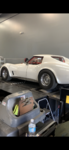





 Big block overheating