When you click on links to various merchants on this site and make a purchase, this can result in this site earning a commission. Affiliate programs and affiliations include, but are not limited to, the eBay Partner Network.
Let me introduce myself formally. Im Rick, a USMC vet currently living abroad in Madrid Spain. This year i was lucky enough to buy my first C3 74' Corvette, manual 4 speed, L48. As far as i can tell everything is stock with a quadrajet carb. This is my first summer with the C3 and im noticing some symptoms of what high heat and city driving can do. I recently had the valve cover, intake, oil pan gaskets redone, and i had a new clutch installed.
I had the radiator rebuilt and installed a new water pump and themometer. Engine temp wise everything is perfect. After driving around for about an hour in city traffic the vette gets up to operating temps between 180-200. the max ive seen is a hair over 200 when sitting in traffic but it drops down once i get space to get up to speed. However now i have 3 issues.
After i get up to operating temp and park the vette its really hard to start agin. One of two things will happen:
The engine will seem to be flooded. When i crank it, i have to give it a ton of gas and for a min it wont hold idle and wants to die.
Sometimes when i return to start it won't even turn over. Like the starter is dead. I have to wait about 30 min and go back and then i can try to crank. Sometimes experiencing the first problem and other times it runs just fine.
It seems that when the corvette is hot the clutch is difficult to put into reverse. Even when i press down as hard as i can. I wonder if the heat could be affecting the pedal or springs somehow?
The interior of the vette is hot to the touch. I mean when i touch the clutch and window buttons on center console they are hot. And i doesnt feel like heat from direct sun. I drove around for awhile during sunset and still felt heat from the center console area.
Ive seen info online about heat soaked starters and flooded carbs. Nothing much about the clutch pedal or hot consoles. If any of you live in hot summer areas, have you experienced these things and what did you do to fix them? If i manage to adjust the float level on the carb to help with flooding will i have to readjust it in the winter months again? The clutch issue seem like a problem i could do in the garage myself or do i need to take it back to the shop? I put some heat reflection tape on the starter but not on the cylanoid yet, ill give that a try unless there are other suggestions.
I have a 427 in my 1968 running an L88 engine inside of it. The higher compression makes for extreme heat and I have done lots to my engine to keep it from having heat related issues. Having the radiator well sealed is really important but the Shifter Tunnel Insulation Collar is critical to keeping the air from getting into the underside of the center console area. On ZIP PRODUCTS.com they have it as part number: ZM-2548 for $26. They also make a cover for the underside of the center console that is part Number: ZM-317. ZIP is in Virginia and they ship internationally.
1. A Gear Drive Starter is an easy way to make hot engines CRANK much faster. This alone would make a huge difference in the ability to crank the engine while hot. I have had mine for over 25 years and it still works.
2. I used a Edelbrock RPM Air Gap Intake manifold which really helps keep the throttle body cooler. This intake will help eliminate the gas from boiling over and help the engine run cooler. If using a standard intake then you can put an insulator between the intake and the carburetor
3. MSD and other companies are now offering a feature that pulls timing only while cranking. The new MSD 6AL has that built in I believe. I have a MSD Digital retard switch which allows me to pull up to 20* (5*-20*) from the timing which unloads the starter motor allowing it to spin faster all by itself.
4. The clutch in your Corvette is likely needs to be adjusted and that is causing you to have issues with putting the car into reverse. This is fairly normal for a well worn or out of adjustment clutch.
5. Install the Shifter Tunnel insulation piece that blocks hot air from going into the console area. If this piece is missing you will feel much more heat than normal.
6. Buy some DEI Insulation blankets and put this material under the floor and center console area.
7. Plug up the heater core outlets and stop circulating hot water in the dashboard.
8. Keeping the engine cool is the coolants job, if you are using too much anti-freeze in the coolant then the engine can and will run hotter. Here the norm is 50/50 but I use 70% reverse osmosis water and 30% anti-freeze as it doesn't get below zero around this area. This works very well for me with my engine and it's ability to make heat. I also switched to electric cooling fans (SPAL two-11") fans in a shroud and have them controlled by a DeRale PWM Controller which starts the fans at 50% power/speed and will continue to speed up the fans as the heat increases.
A retired Marine in Madrid? That is a new one, it must be nice over there! I have never been to Spain but have been in 40+ Countries so far. So what is it like to cruise in Spain with a cool American car? Do they have good gas to make your C3 happy? I would imagine that you don't see to many Corvettes in Spain.
Best regards,
Chris a.k.a. ctmccloskey
Last edited by ctmccloskey; Aug 5, 2024 at 11:08 AM.
More info is needed!
For interior heat, do you have the aluminum skinned insulation tunnel blanket? It is roughly the length of the transmission and sits on the underside of the trans tunnel. Next would be the "horse collar" foam that is a horseshoe shape that fits between the trans bell housing and the first bit of the trans tunnel. That's it for factory components; a lot of people also put in heat barriers under the carpets.
It doesn't sound like your engine is overheating if it's not at 230° or above. Do you have factory exhaust manifolds or aftermarket headers? The starter sits just a couple inches away from the exhaust and heat soak is a real issue. You can put header insulation on the pipe(s) to help block the direct transfer of heat to the starter. Big blocks had a metal shield that may also fit small blocks.
If factory exhaust manifolds, does your exhaust have the heat riser valve at the junction between the manifold and the pipe on the passenger side? This flap-valve sends exhaust heat over the top of the engine, through the intake manifold, to the driver's side for winter starts. If the valve is stuck, it's always sending the heat under the carb which will cause the carb to flood the intake when shut down. Many owners wire the valve open, put in a dummy space with no valve, or cut out the flap on their current riser.
Before digging deep into the new clutch, make sure both the pedal and the shift linkage are adjusted properly. If it's only a reverse issue, I'd check linkage first. (You know the reverse gear is not synchronized like forward gears... it can be slightly more effort to get engaged. When it's not going in, release the clutch, re-engage, and try again.)
I just had a brand new clutch installed, so it has to be an adjustment. any info on how to do that?
Pushing on the peddle with your fingers you should be able to move it from 1.25" to 1.5". If not the rod under the hood has two nuts. Look at post 4 in this link for a diagram. https://www.corvetteforum.com/forums...djustment.html
Pushing on the peddle with your fingers you should be able to move it from 1.25" to 1.5". If not the rod under the hood has two nuts. Look at post 4 in this link for a diagram. https://www.corvetteforum.com/forums...djustment.html
Yea i measured it at 1.18", i adjusted it one full turn down and is now at 1.4". That combined with putting it into first gear first has seem to resolve this issue even at operating temp!
After i get up to operating temp and park the vette its really hard to start agin. One of two things will happen:
1.The engine will seem to be flooded. When i crank it, i have to give it a ton of gas and for a min it wont hold idle and wants to die. Sounds like fuel vapor lock to me. When it's hot and you park the fuel boils out of the float bowl.
2. Sometimes when i return to start it won't even turn over. Like the starter is dead. I have to wait about 30 min and go back and then i can try to crank. Sometimes experiencing the first problem and other times it runs just fine. Again, sound's like your starter is heat soaking. Once it cools a bit it starts working again. They make insulation blankets that may help but it's best to get a modern mini-starter.
It seems that when the corvette is hot the clutch is difficult to put into reverse. Even when i press down as hard as i can. I wonder if the heat could be affecting the pedal or springs somehow?
Normal - Reverse has not synchro's. Try putting it in first before shifting into reverse. Also your rods may need adjustment.
The interior of the vette is hot to the touch. I mean when i touch the clutch and window buttons on center console they are hot. And i doesnt feel like heat from direct sun. I drove around for awhile during sunset and still felt heat from the center console area.
Welcome to the club. Really the only way to reduce this is to pull the carpet and install heat reflecting insulation.
Someone else installed your clutch. Not you!
So, when they did, did they get that foam collar back on the bellhousing ? Did they properly reinstall the inner shift boot?
Always a lot of unknowns when you let someone else touch your car.
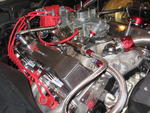
I have added some improvements to combat the high heat, see photos below.
I gave this a test. Drove around for an hour in 96-98 heat. When i parked and immediately cranked the engine the starter kicked in just fine. I then waited around 25 min to let the heat soak set and the starter fired up just fine again. However, seems the engine is still flooding. So at least im one step closer. I was reading that i need to adjust the floats on the carb maybe? is this something i can do without requiring a rebuild kit or should i wait for this?
Last edited by mavrik_dev; Aug 11, 2024 at 10:17 AM.
Also does anyone have this problem where the rearview mirror wont stay in place. If i slighly touch it or close the door it moves. Even when driving down the highway it won't keep position. Is there some kind of gel/substance I can use for this that will withstand hot days?
Also does anyone have this problem where the rearview mirror wont stay in place. If i slighly touch it or close the door it moves. Even when driving down the highway it won't keep position. Is there some kind of gel/substance I can use for this that will withstand hot days?
This is my write-up on how I fixed this problem. Worked great.
Well mavrik,
you certainly did a much better job than I did wrapping the starter / solenoid. That blanket should help a lot.
Now, it appears you have a fuel "percolation" issue. When a carbureted vehicle is shutoff, all the engine heat acts as a stove and cooks the fuel in the fuel bowls.
It expands and the only exit is up through the fuel-bowl vents.
On Holley, it looks like a percolating coffee maker on hot days.
To compound the problem, some of us purposely set the fuel level high in the bowl, so as to never run in a lean condition during aggressive acceleration.
This vapor-lock / percolation issue can be remedied by isolating the carb from the heat of the Intake.
If you have hood clearance, an insulating spacer can be placed under the carb. They can be purchased in several different heights, several different materials;
wood, plastic, metal, and a couple different configurations such as open-style, 4 hole, or Quadra, etc.
With low hood clearances on these Vettes, your best option is a spacer of 1/4" thick.
Another option that works well on mine, anyway, is an aluminum shield that fits between carb & Intake. I believe Holley makes one for the square-bore.
Snoop around on Summits web site, for spacers. They really do help.
In some cases, a drop-base air cleaner may be in order OR
an air filter cartridge 2.75 inches tall.
I have added some improvements to combat the high heat, see photos below.
...
I gave this a test. Drove around for an hour in 96-98 heat. When i parked and immediately cranked the engine the starter kicked in just fine. I then waited around 25 min to let the heat soak set and the starter fired up just fine again. However, seems the engine is still flooding. So at least im one step closer. I was reading that i need to adjust the floats on the carb maybe? is this something i can do without requiring a rebuild kit or should i wait for this?
Good looking wrap job. I wonder about the reflecting tape on the starter though as I'd not want the tape to act as an insulator for the absorbed heat from the engine block. If it works, great!
On the passenger side, do you have a "heat riser valve" between the manifold and the down-pipe? If so, does the spring weighted arm move freely from horizontal to downward vertical? The spring, when cold, forces exhaust air up and over the intake manifold to the driver's exhaust. This is/was to increase cold start warm ups and prevent carb icing in very cold weather. If the spring is broken or the flapper valve is seized, this hot air will be constantly heating the carb, causing boil-over which floods the engine.
A lot of folks take out the riser valve and put in a dummy spacer since the vast majority of us do not drive our cars in the dead of winter. I've left mine in place but make sure it's freely pivoting and have used spray graphite on the shaft to keep it lubed.









 C3 Corvette On Hot Days