When you click on links to various merchants on this site and make a purchase, this can result in this site earning a commission. Affiliate programs and affiliations include, but are not limited to, the eBay Partner Network.
The great thing about these is that they just don't leak, but after a decade, mine is dusty. In the old days I would go for a drive to heat the motor up, then wash it and start it right up again to dry it off.
But with all the exposed electrical on today's motor, that may be taking a big chance.
Here it is as of today. And yes it is carbureted. It looks better in this picture than in real life out in the sunshine. All the hoses could use some gloss and the valve covers and coils could benefit from something but don't know what. There's no crud, just dust and a sort of film on things that would wash right off if I was brave enough to take a hose to it. Much of the stuff that's not motor would benefit from a simple cleaner and a hosing down. I have a foaming attachment for my pressure washer.
No answers yet? You might want to ask in C5 as well.
I followed some of the ideas in this video, and had great results with some non-Corvette engines. I don't know about wire wheeling aluminum parts in the engine bay, but you can certainly remove the valve covers, clean them up, and paint them.
The #1 tip is that detailing brushes really work. Inside the car, too!
No answers yet? You might want to ask in C5 as well.
I followed some of the ideas in this video, and had great results with some non-Corvette engines. I don't know about wire wheeling aluminum parts in the engine bay, but you can certainly remove the valve covers, clean them up, and paint them.
The #1 tip is that detailing brushes really work. Inside the car, too!
On my LS swaps I pretty much just spray some window cleaner on an old bath towel and start wiping it down.
All my LS swaps I have been using GM FI stuff. All engine connectors water proof.
Would I spray high pressure water at the engine? No. But I drove my 68 C10 with a LS6/4L60E swap in a massive rain storm on the freeway with zero issues.
Same with my 80 Camaro LS3/4L60E swap.
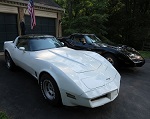
Couple of pics.
Modern engines are pretty much impervious to low pressure water, but not high pressure water. I worked in European car dealerships for roughly 30 years, and I have never heard of engine/electrical trouble from using a low pressure spray. Usually the lot lizards in the detail department use a regular low pressure garden hose to rinse the engine cleaner off when they are working underhood.
On my cars I spray a bottle of good quality engine cleaner/degreaser and let it sit for 5 minutes. Then I remove it with a spray wand in a self serve car wash. My local wash bays have 2 settings of water pressure for this purpose. The low pressure one is no more worse than a stream of rain. I towel dry and dress when done if I am feeling ambitious or going cruising. Never had a problem in, what, 40 years now ?
Whatever you do, do not hold the regular wand with high pressure even close to the "sealed" computer and fuse boxes, or wiring components, as this will be a mi$$$$$take.
I regularly spray the engines and engine compartments with a pressure washer. I don't get closer than 12" to anything important or to connectors. Been doing that for at least 30 yrs without one problem.....don't overthink this, they are designed to get wet.
I always wrap any fuse boxes, etc for protection. Tin foil works great. Easily moldable around the item and stays put. Even still, I will only use regular hose water pressure as it is plenty to wash away any degreaser, Dawn Platinum, or other stuff I may be using.
I always wrap any fuse boxes, etc for protection. Tin foil works great. Easily moldable around the item and stays put. Even still, I will only use regular hose water pressure as it is plenty to wash away any degreaser, Dawn Platinum, or other stuff I may be using.
My fuze box is protected by fifty years of grease. Not going anywhere near that.
My motor is essentially naked on top so all the connectors there worry me. Even if the motor starts right up, any condensation could eventually lead to corrosion if the heat of the motor doesn't vaporize everything. So If I spray I will likely wrap all the stuff there. Big job, relatively speaking.
My fuze box is protected by fifty years of grease. Not going anywhere near that.
My motor is essentially naked on top so all the connectors there worry me. Even if the motor starts right up, any condensation could eventually lead to corrosion if the heat of the motor doesn't vaporize everything. So If I spray I will likely wrap all the stuff there. Big job, relatively speaking.
Lol! Yep, I’ve read instances of people degreasing engines, internally or externally, and leaks appearing. Sometimes that gunk is like a sealant!









 Cleaning LS motors