







Noise after top end install

Thread Starter
Racer


Joined: Mar 2019
Posts: 385
Likes: 102
From: Virginia
 Noise after top end install
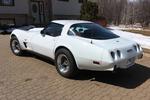
I installed the E-Street EFI 338 HP Top End Kit in a 1977 corvette. New chain, lifters, cam, intake, pushrods, heads, and carb.
After install I started car and ran for 30 seconds and shut off and fixed an exhaust leak. started car again and the car ran great. Started to bring throttle up to break in cam. The car started making a weird. noise. I have not clue what it is. See the attached video link.
I have since taken car back apart. All lifters look great, nothing rubbing on valve covers, nothing rubbing on timing cover, timing chain looks great no rubbing.
Any help would be appreciated.
After install I started car and ran for 30 seconds and shut off and fixed an exhaust leak. started car again and the car ran great. Started to bring throttle up to break in cam. The car started making a weird. noise. I have not clue what it is. See the attached video link.
I have since taken car back apart. All lifters look great, nothing rubbing on valve covers, nothing rubbing on timing cover, timing chain looks great no rubbing.
Any help would be appreciated.

Melting Slicks


Joined: Sep 2016
Posts: 2,230
Likes: 984
From: Wauconda IL
I suspect that sound is coming from one of belt driven accessories ie, power steering, alternator, AC compressor, water pump. I think I'd put it back together and run it without the belts for those accessories and put them on one at a time to find the noise.

Drifting

Joined: Jun 2025
Posts: 1,728
Likes: 600
Break-in raise revs right away: as in Immediately & Coincidentally with startup.
Check those belts and pulleys; also water pump itself for that ugly noise. If you take belts off and noise stops as a result; that all but guarantees noise ain't from within motor.
Check for wobbling-failing fan clutch which may let fan tip scrape against shroud. Drizzle a little water on belts will briefly quiet them if they are offending.
Seems you have Two belts? Remove one at-a-time which, by elimination, May (may not) focus your sonar to home-in on culprit(s).
Also, remove valve covers and check each & all 16 pushrods and verify they are rotating while at idle. if PRs are rotating that's a good sign that verifies Lifters are rotating as well. Yes, it's messy.
Also, verify flywheel/pressure plate/flexplate/converter bolts are torqued to spec; if flexplate, verify it's Not cracked.
*Flat Tappet Lifters Must Rotate or else Both Lifter & Lobe Quickly Fails: terminally.
** is that noise coming from distributor? if cap ain't seated both squarely & tightly, it'll run but rotor can hit inside cap making noise.
Check those belts and pulleys; also water pump itself for that ugly noise. If you take belts off and noise stops as a result; that all but guarantees noise ain't from within motor.
Check for wobbling-failing fan clutch which may let fan tip scrape against shroud. Drizzle a little water on belts will briefly quiet them if they are offending.
Seems you have Two belts? Remove one at-a-time which, by elimination, May (may not) focus your sonar to home-in on culprit(s).
Also, remove valve covers and check each & all 16 pushrods and verify they are rotating while at idle. if PRs are rotating that's a good sign that verifies Lifters are rotating as well. Yes, it's messy.
Also, verify flywheel/pressure plate/flexplate/converter bolts are torqued to spec; if flexplate, verify it's Not cracked.
*Flat Tappet Lifters Must Rotate or else Both Lifter & Lobe Quickly Fails: terminally.
** is that noise coming from distributor? if cap ain't seated both squarely & tightly, it'll run but rotor can hit inside cap making noise.
Last edited by Rebelyell; Jun 16, 2025 at 02:48 PM.
Thread Starter
Racer
Joined: Mar 2019
Posts: 385
Likes: 102
From: Virginia
I started the car and brought the RPM up right away.
I left all the belts off the accessories and still have the same noise
Verified the distributor cap is in place and tight.
I didn't touch the flex plate but I will pull the cover off and verify the bolts are tight.
I'm at a loss to be honest.
I left all the belts off the accessories and still have the same noise
Verified the distributor cap is in place and tight.
I didn't touch the flex plate but I will pull the cover off and verify the bolts are tight.
I'm at a loss to be honest.
1967 Pedal Car Champion

Joined: Mar 2020
Posts: 9,140
Likes: 4,248
From: US-PNW
I don't think this is an engine noise because it's irregular, so I'd forget about it temporarily and make sure you break in the cam before anything else. After that, a stethoscope (very inexpensive at Harbor F. works extremely well) poked around on various parts and engine locations will lead to the source. It's actually kinda cool to hear ball bearings and engine workings.
I'd bet it's coming from your water pump pulley and fan setup. You can remove these parts completely and run the engine without them for a couple minutes without risking any damage.
I'd bet it's coming from your water pump pulley and fan setup. You can remove these parts completely and run the engine without them for a couple minutes without risking any damage.
Thread Starter
Racer
Joined: Mar 2019
Posts: 385
Likes: 102
From: Virginia
Corvette Stories
The Best of Corvette for Corvette Enthusiasts

Top 10 Most Expensive Corvettes Ever Sold on Bring A Trailer
Brett Foote
10 Things Every Corvette Owner Needs (2026 Edition)
Michael S. Palmer
8 Most "Only Corvette Owners Understand" Quirks and Problems
Pouria Savadkouei
10 Reasons the C6 Z06 is Still A Performance Benchmark After 20 Years
Joe Kucinski
How Much Horsepower Every Corvette Engine "LOST" in 1972
Joe Kucinski
Top 10 DOs and DON'Ts for Protecting Your Convertible Top!
Michael S. Palmer
Top 10 Most Explosive Corvettes Ever Made: Power-to-Weight Ratio Ranked!
Joe Kucinski
150 hp to 1,250 hp: Every Corvette Generation Compared by the Specs That Matter
Joe Kucinski
8 Coolest Corvette Pace Cars (and Replicas) of All Time
Verdad Gallardo
Safety Car


Joined: Nov 2005
Posts: 3,532
Likes: 1,185
From: Arizona - If you don’t know CFI, STOP proliferating the myths around it...
After install I started car and ran for 30 seconds and shut off and fixed an exhaust leak. started car again and the car ran great. Started to bring throttle up to break in cam. The car started making a weird. noise.
I hope you didn't really try and break-in a cam like that. Once you start a motor with a FT cam for break-in, you take it up immediately to 2k and hold it there and then vary it a small amount (couple hundred rpm up and down and NEVER idle) for at least 20/30minutes and an exhaust leak is no reason to stop the process IMO. I have done plenty of FT cam break-ins with open headers. Starting and then shutting off and starting again and waiting to go up in rpm is not good on a new break-in. However, that sound does not sound like a cam related issue, but more like a bad belt. If you removed all the belts and started it with the same sound, obviously there is an issue inside the motor somewhere in your installation process... (timing chain maybe?) I personally do not believe in wasting money on a FT cam anymore and always go roller or retro roller kit no matter what. To me, it's just not worth the possible aggravation today to not go roller, I will spend a few dollars more for piece of mind and better performance. Can something go wrong with a roller, yes, but the chances are MUCH less. Everyone has their own opinion on this topic, but that's just me. GL and post up what you find.


Drifting
Joined: Jun 2025
Posts: 1,728
Likes: 600
Did you remove ALL belts from engine ? Yes ? And engine continues to make same noise ? Yes ?
Have you applied a hi-pressure grease/paste to BOTH distributor's bottom gear AND Cam's dist drive gear ? Yes ?
Did you inspect distributor And confirm rotor is firmly attached AND cap is properly seated & secured ? Yes ?
Are Both Cap & Rotor name-brand pieces ? Yes ? Are they Both of same brand ? Yes ?
*add*
Did you confirm the Fuel Pump is firmly & squarely attached to passenger side of block and its bolts are torqued to spec ? Yes ?
Did you install a "different" or "new" oil Dipstick OR dipstick Tube ? Yes ?
Last edited by Rebelyell; Jun 18, 2025 at 02:00 PM.

Race Director


Joined: Nov 2006
Posts: 13,258
Likes: 7,847
From: Sunshine Coast, Queensland, Australia
2025 C3 of the Year Finalist - Modified
2024 C3 of the Year Finalist- Modified
2022 C3 of the Year Finalist - Modified
Cruise-In VIII Veteran
I think Mr. Buccaneer would be mortified if he saw how I break in a new flat tappet cam.
Imagine back in the day, every GM , Ford and Chrysler product engine was running flat tappet cams. I have no idea how many years factory engine's were made this way. A lot.
And ALL those brand new flat tappet engine's. We just started them and drove away. Absolutely nothing else.
When I put a new flat tappet cam in my 350 8 years ago. I just started it up. Set the timing, adjusted the idle speed mixture screws. Yes, with it idling. And then took it for a drive. Never gave it a second thought. We never did when they were brand new. Why now?
Imagine back in the day, every GM , Ford and Chrysler product engine was running flat tappet cams. I have no idea how many years factory engine's were made this way. A lot.
And ALL those brand new flat tappet engine's. We just started them and drove away. Absolutely nothing else.
When I put a new flat tappet cam in my 350 8 years ago. I just started it up. Set the timing, adjusted the idle speed mixture screws. Yes, with it idling. And then took it for a drive. Never gave it a second thought. We never did when they were brand new. Why now?


Burning Brakes

Joined: Dec 2017
Posts: 1,043
Likes: 414
2023 C3 of the Year Finalist - Modified
When I first heard the video my thought was a pulley/belt squeak. But you said it makes the same noise with all accessories idle.
the fact that it’s squeaky makes me think it’s a rubbing issue.
are any of the pushrods in a bind against a guide plate? Is the front of the cam/timing gear rubbing the timing cover?
Can you tell if it’s louder at the front of the engine or the rear?
the fact that it’s squeaky makes me think it’s a rubbing issue.
are any of the pushrods in a bind against a guide plate? Is the front of the cam/timing gear rubbing the timing cover?
Can you tell if it’s louder at the front of the engine or the rear?
1967 Pedal Car Champion
Joined: Mar 2020
Posts: 9,140
Likes: 4,248
From: US-PNW
I think Mr. Buccaneer would be mortified if he saw how I break in a new flat tappet cam.
Imagine back in the day, every GM , Ford and Chrysler product engine was running flat tappet cams. I have no idea how many years factory engine's were made this way. A lot.
And ALL those brand new flat tappet engine's. We just started them and drove away. Absolutely nothing else.
...
Why now?
Imagine back in the day, every GM , Ford and Chrysler product engine was running flat tappet cams. I have no idea how many years factory engine's were made this way. A lot.
And ALL those brand new flat tappet engine's. We just started them and drove away. Absolutely nothing else.
...
Why now?
I've not looked deeply into the CE program, but I think I've seen CEx Cxxxxx stamps, meaning for that single year they produced over 60,000 warranty replacement engines from a single engine plant. That seems like a pretty substantial number of engine failures in a warranty period.
Safety Car
Joined: Nov 2005
Posts: 3,532
Likes: 1,185
From: Arizona - If you don’t know CFI, STOP proliferating the myths around it...
I think Mr. Buccaneer would be mortified if he saw how I break in a new flat tappet cam.
Imagine back in the day, every GM , Ford and Chrysler product engine was running flat tappet cams. I have no idea how many years factory engine's were made this way. A lot.
And ALL those brand new flat tappet engine's. We just started them and drove away. Absolutely nothing else.
When I put a new flat tappet cam in my 350 8 years ago. I just started it up. Set the timing, adjusted the idle speed mixture screws. Yes, with it idling. And then took it for a drive. Never gave it a second thought. We never did when they were brand new. Why now?
Imagine back in the day, every GM , Ford and Chrysler product engine was running flat tappet cams. I have no idea how many years factory engine's were made this way. A lot.
And ALL those brand new flat tappet engine's. We just started them and drove away. Absolutely nothing else.
When I put a new flat tappet cam in my 350 8 years ago. I just started it up. Set the timing, adjusted the idle speed mixture screws. Yes, with it idling. And then took it for a drive. Never gave it a second thought. We never did when they were brand new. Why now?
 Yikes! OK, it's cool and I get it really and value your opinion, as always. Back in the day, you could more than likely get away with doing that, I never did that, even back then though. Remember getting Sunoco 260 at the pump as well for cents on the dollar?
  Today, that's a completely different story IMO because of various reasons, material used from various country's, quality control (or lack of it) oil quality, zinc etc... That is also why today I never go FT, only roller regardless of the cost. 25 plus years ago, which would have been my last FT cam install and I even used a bottle of GM EOS during break-in just to have that extra warm fuzzy that maybe my cam would not go flat, it never did nor on any motor I ever built, but it only takes one right? Also, how far you are going back? ALL my back in the day motors were solid lifter cams starting with the 69 Z28.
  The only reason I even mentioned my post is because I cringe when I see a member here tell the horror story of a new build with a FT cam that went south at break-in regardless of technique used and have to spend a boat load more money again and a ton of a&& pain to fix it. Everybody has their own way of doing things and if it works, it works, I guess.


Race Director
Joined: Nov 2006
Posts: 13,258
Likes: 7,847
From: Sunshine Coast, Queensland, Australia
2025 C3 of the Year Finalist - Modified
2024 C3 of the Year Finalist- Modified
2022 C3 of the Year Finalist - Modified
Cruise-In VIII Veteran
How far back do I go? Early 60's. I wasn't really a professional mechanic until the early 70's. My most recent build? Yes I used plenty of assembly lube. Yes I add the required extra zinc. And a half bottle with each oil change after break in for two changes.
But that's is actually more than required, and all that I do.
In the mid 70's. The car was started on the assembly line, driven out to a storage yard. No revving break in. Then started. Driven onto transport. Then driven into the dealership yard. Sat for several months
someone finally purchased it. Drove out of the dealership with the rear tires screaming! And, yes, there were a few issues. But I was there. There were actually damn few issues!
I have never done anything above making certain that proper assembly lube and brake in oil is being used. I have never run the engine up to 2K RPM and held it there for 20 minutes. Never.
I have never had a problem.
But that's is actually more than required, and all that I do.
In the mid 70's. The car was started on the assembly line, driven out to a storage yard. No revving break in. Then started. Driven onto transport. Then driven into the dealership yard. Sat for several months
someone finally purchased it. Drove out of the dealership with the rear tires screaming! And, yes, there were a few issues. But I was there. There were actually damn few issues!
I have never done anything above making certain that proper assembly lube and brake in oil is being used. I have never run the engine up to 2K RPM and held it there for 20 minutes. Never.
I have never had a problem.

Le Mans Master

Joined: May 2007
Posts: 5,029
Likes: 1,120
From: North tonawanda NY
I think Mr. Buccaneer would be mortified if he saw how I break in a new flat tappet cam.
Imagine back in the day, every GM , Ford and Chrysler product engine was running flat tappet cams. I have no idea how many years factory engine's were made this way. A lot.
And ALL those brand new flat tappet engine's. We just started them and drove away. Absolutely nothing else.
When I put a new flat tappet cam in my 350 8 years ago. I just started it up. Set the timing, adjusted the idle speed mixture screws. Yes, with it idling. And then took it for a drive. Never gave it a second thought. We never did when they were brand new. Why now?
Imagine back in the day, every GM , Ford and Chrysler product engine was running flat tappet cams. I have no idea how many years factory engine's were made this way. A lot.
And ALL those brand new flat tappet engine's. We just started them and drove away. Absolutely nothing else.
When I put a new flat tappet cam in my 350 8 years ago. I just started it up. Set the timing, adjusted the idle speed mixture screws. Yes, with it idling. And then took it for a drive. Never gave it a second thought. We never did when they were brand new. Why now?
I had good luck breaking mine in but decided after 8 years to go to a retro roller anyway for other improvements and to be able to run modern oil formulas without the additives. Then again it cost me about $600 to convert from a flat tappet to a comp retro roller cam and many here claim it costs thousands so YMMV.. My engine was already upgraded from the stock stamped rocker arms and had performance heads. the roller just made sense for its improved power from the area under the curve which widened the power band by keeping the valves open longer for more filling and exhaust on each stroke making it a better pump.
Last edited by augiedoggy; Jun 20, 2025 at 08:23 AM.
Race Director
Joined: Nov 2006
Posts: 13,258
Likes: 7,847
From: Sunshine Coast, Queensland, Australia
2025 C3 of the Year Finalist - Modified
2024 C3 of the Year Finalist- Modified
2022 C3 of the Year Finalist - Modified
Cruise-In VIII Veteran
Absolutely Augie. Now imagine you are on the other side of the planet. And you're 600 dollars becomes 1,800 dollars just like that! And you question, is it really 1,800 dollars more power? And even if it is, do I wish to wait another year to save that much more money? Or drive now?
Le Mans Master
Joined: May 2007
Posts: 5,029
Likes: 1,120
From: North tonawanda NY
Absolutely Augie. Now imagine you are on the other side of the planet. And you're 600 dollars becomes 1,800 dollars just like that! And you question, is it really 1,800 dollars more power? And even if it is, do I wish to wait another year to save that much more money? Or drive now?
Thread Starter
Racer
Joined: Mar 2019
Posts: 385
Likes: 102
From: Virginia
I looked all over the car including fuel pump and flex plate and torque converter. Nothing. I knew I couldn't start and idle the car anymore. I made the call to start the car and break the cam and lifters in. It was either going to break in or break!
I started and ran the car at 2000-2500 for 30 min per the instructions. The sound in the video lasted for about 20 seconds and then it was gone. Motor ran great during the break in. After the break in I brought the car back to idle, it ran perfect no noise.
Shut the car off and then notice a radiator fin leaking. F$%K this car is fighting me.
I started and ran the car at 2000-2500 for 30 min per the instructions. The sound in the video lasted for about 20 seconds and then it was gone. Motor ran great during the break in. After the break in I brought the car back to idle, it ran perfect no noise.
Shut the car off and then notice a radiator fin leaking. F$%K this car is fighting me.