When you click on links to various merchants on this site and make a purchase, this can result in this site earning a commission. Affiliate programs and affiliations include, but are not limited to, the eBay Partner Network.
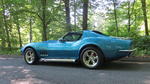
I have a numbers matching LT1, 1971 model. Engine still has good compression but is smoking at the start and I think even a little when I’m driving.
I am looking for a good shop to give me an honest assessment of what I need to do. I live in Ky but would be willing to travel anywhere in the east to get my engine, probably just the top end rebuilt.
Smoke at startup is valve seals. Smoke running? Rings perhaps? Have you done a leakdown test?
If you want to keep the original LT-1, I know of a place I would trust in Virginia. PM me if that is an option. They work on some high-end hot rods, but also on expensive classics. If you only need valve seals, any hot rod shop can do that. Look for the garage with a bunch of GM trucks parked out front.
Guides are probably worn and the valve seals are trashed at this point. If it isnt loosing coolant it sounds like you are burning a bit of oil. Maybe just replace the rubber O-ring valve seals while you look for a shop to rebuild the heads? Easy and cheap. That would help for now.
If this was mine, I would probably just pull the whole thing for an overhaul. Stone hone, re-ring, bearings, gaskets, cam, lifters, seals. Keep it 100% original as possible. Clean and paint
It might be worth your while looking at shops like TONY'S Corvettes in Gaithersburg, MD. They are a "one-stop" Corvette shop and they have a huge building where they do everything for any year Corvette! They have several LT1 Experts as one of them helped me install my engine in my C3. I had rebuilt my 427 and while doing so I stuck a 1970 LT1 in the car and boy that engine was nice!! I spent almost a year without my 427 so it made sense to buy a SB and stick it between the fenders for the time. The mechanics at Tony's Corvette Shop were able to really make my car look and drive nicely, the best part is they painted my engine compartment while the engine was removed. When done it was beautiful and drove so nicely back with the 427 again.
A good friend of mine had a 1970 White convertible LT1 and it was magnificent! He spent some money on buying an original un-molested copy of the 1970 LT1. He and I used to go driving together and we learned to really love that power band of the 1970 and it's extra compression. That is the closest you will find to BB power with a SB, the torque that the 1970 LT1 made is wonderful.
If I were going to rebuild a 1971 LT1 then you might consider building the compression up using the 1970 parts and undoing the 1971 De-Powering (De-Fanging) the engines of the day. I am using a L88 clone in my C3 and the compression makes the car what it is. I am running 12.25-1 and am able to handle the extra compression pretty well. The 1970 LT1 had a habit of detonating or pinging under loads so you need to run 93 Octane pretty much all the time. Any engine I build for performance will have the higher compression in it. If you feed it cool air the engine might run without detonating and live very happily while showing the other cars that a 1970 LT1 is nothing to play with.
You need to see if your engine was equipped with the same bottom end parts as the 1970 LT1 was. Mine had the cast iron, double hump heads on it and they flowed pretty nicely even though they were 60 year old technology, with today's aluminum heads you have a lot of great choices. I pulled my 350 LT1 engine and it is wrapped in a large garbage bag on an engine stand. I am sure I will find a good use for it...
If you were able to do a leak down test it would show you where the engine is worn the most. It is a great test and one performed on piston powered aircraft every year. If you record the numbers it will show you the progressive wear in the engine. It helps predict when parts need to be replaced... The tools are readily available but it also requires a lot of compressed air, I did the test using 100 psi but I have sen many using less air pressure. My airplane mechanic taught me to use the 100 psi and I stick with it for consistency.
Agreed! Run a compression test, a cylinder leak-down test, measure your oil consumption, and tell us your mileage, then decide.
I raced my '70 LT-1 for 30 years, and built many engines in my best friends machine/speed shop.
Likely oil seals are shot, just from age. They dry out, crack and fall off, and you can see the o-rings lying on the top of the head by the valve springs. O-rings are almost a waste of time, use the umbrella seals if they will fit. Blue smoke on start-up. But these engines do not typically consume measureable oil, it is only on start-up.
If you have more than 50k on it, the valve guides are likely worn, and it will burn oil, while driving. Seals will not fix it for long. First thing to wear on an old school SBC. You can test them once the springs are off. Heads need new valve guides, and maybe some new valves. If a number matching car, get the OEM heads rebuilt. If not, new ones will make 40+ more HP.
If more than 75k miles likely the bores are tapered. Especially an LT-1 with hard forged pistons and loose wall clearances. Only a bore job will fix that. Forged piston motors are not really 100k mile engines, the pistons rock more, and they wear faster.
Check the cylinder leak-down. That will tell you about the condition of the compression rings, and the bore surface / seal. Over 93% is considered good. If it is in the 80s% you have worn rings or tapered bores. Plus you can hear where the leaks are coming from, intake valve side or exhaust valve side or oil dipstick (rings).
Measure your oil consumption. If it is burning respectable amounts of oil likely the oil rings are worn out. Say more than 1200 miles per qt? They seem to go first in the block, before compression rings. I just put new oil rings in my 2008 daily with 200k miles on it. Burned 1 QT oil per 300 miles, or 20 Qts per oil change. New oil rings fixed it. Block and compression rings measured fine. I still had 96-93% leak-down, so the compression rings were fine. But the oil rings were shot.
Agreed! Run a compression test, a cylinder leak-down test, measure your oil consumption, and tell us your mileage, then decide.
I raced my '70 LT-1 for 30 years, and built many engines in my best friends machine/speed shop.
Likely oil seals are shot, just from age. They dry out, crack and fall off, and you can see the o-rings lying on the top of the head by the valve springs. O-rings are almost a waste of time, use the umbrella seals if they will fit. Blue smoke on start-up. But these engines do not typically consume measureable oil, it is only on start-up.
If you have more than 50k on it, the valve guides are likely worn, and it will burn oil, while driving. Seals will not fix it for long. First thing to wear on an old school SBC. You can test them once the springs are off. Heads need new valve guides, and maybe some new valves. If a number matching car, get the OEM heads rebuilt. If not, new ones will make 40+ more HP.
If more than 75k miles likely the bores are tapered. Especially an LT-1 with hard forged pistons and loose wall clearances. Only a bore job will fix that. Forged piston motors are not really 100k mile engines, the pistons rock more, and they wear faster.
Check the cylinder leak-down. That will tell you about the condition of the compression rings, and the bore surface / seal. Over 93% is considered good. If it is in the 80s% you have worn rings or tapered bores. Plus you can hear where the leaks are coming from, intake valve side or exhaust valve side or oil dipstick (rings).
Measure your oil consumption. If it is burning respectable amounts of oil likely the oil rings are worn out. Say more than 1200 miles per qt? They seem to go first in the block, before compression rings. I just put new oil rings in my 2008 daily with 200k miles on it. Burned 1 QT oil per 300 miles, or 20 Qts per oil change. New oil rings fixed it. Block and compression rings measured fine. I still had 96-93% leak-down, so the compression rings were fine. But the oil rings were shot.
This is an excellent forum/thread for accurate knowledge on GEN1 LT-1 engines. Very fortunate to have this resource available to us.
We are working on a (presently running) 1970 LT-1 engine in a 1970 Z28 RS project and the information herein is extremely useful. We suspect the motor has had the compression lowered during a early 1990's rebuild and we are looking to return it to original compression specs or better if sustainable. Thanks for all of this good information we are learning a lot.
You're kidding you are in Marlton also???
You should PM me and we should meet.
Mine was a Daytona Yellow 70 Z28 RS also.
Drove it around Marlton for 27 years.
To the OP:
Here's a second vote to contact Jerry McNeish in MD.
He is the Camaro / Z28 expert.
Last edited by leigh1322; Jul 15, 2025 at 09:26 PM.
That's a great looking RS. Thanks for reaching out.
Yes, in Marlton, NJ. It is my son's car and we are working on it together. The car is gold with black '70.
We are sorting it out now for drivability but it is all there and intend to start taking it to local events soon (C&C, etc.)
I will PM you later today if things get slow at work. it is cool we are so close.








 LT1 Engine Rebuild Shop