







69 Corvette will not start

Thread Starter
Cruising


Joined: Apr 2020
Posts: 13
Likes: 1
 69 Corvette will not start
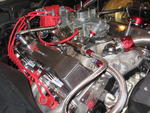
My 69 corvette has new blueprint 400sb w/850 Holley.
Never driven, it ran good originally, but after sitting up for awhile, I had to replaced the Holley because couldn’t get gas from primary jets. The new carburetor works well but car still will not start. The distributor has never been pulled out and the marks on the shaft and block line up. NGK plugs foul out quick, when it did run and I have to clean and re-gap.
Never driven, it ran good originally, but after sitting up for awhile, I had to replaced the Holley because couldn’t get gas from primary jets. The new carburetor works well but car still will not start. The distributor has never been pulled out and the marks on the shaft and block line up. NGK plugs foul out quick, when it did run and I have to clean and re-gap.
Le Mans Master


Joined: Aug 2017
Posts: 8,336
Likes: 2,810
From: Cool Northern Michigan
Por2,
Why would you get rid of a Holley just for a simple issue?
By the way. You can't see the jets. They are hidden inside the fuel bowl. So, if I had to guess, I think you mean:
"can't get gas out of the squirters" / shooters which is an accelerator pump issue. It's a $20 part.
Those Holleys are easy to work on. Parts are inexpensive.
Plugs will fire even if saturated with gas. No need to clean constantly.
I suspect that is the issue, way too much fuel.
Float stuck down. Needle valve open. Fuel level is too high, flooding everything.
Pull your dipstick and sniff for gas in oil.
Why would you get rid of a Holley just for a simple issue?
By the way. You can't see the jets. They are hidden inside the fuel bowl. So, if I had to guess, I think you mean:
"can't get gas out of the squirters" / shooters which is an accelerator pump issue. It's a $20 part.
Those Holleys are easy to work on. Parts are inexpensive.
Plugs will fire even if saturated with gas. No need to clean constantly.
I suspect that is the issue, way too much fuel.
Float stuck down. Needle valve open. Fuel level is too high, flooding everything.
Pull your dipstick and sniff for gas in oil.
Last edited by HeadsU.P.; Jul 10, 2025 at 08:40 PM.
Thread Starter
Cruising
Joined: Apr 2020
Posts: 13
Likes: 1
I replaced the accelerator pump, cleaned the bowl and metering block, blew air through had no blocked air. I adjusted both floats to show fuel just below the view glass bottom. Blueprint recommended that I send back the other carburetor.
i do have a manual fuel pump and that what has always even on the block.
thanks I will check oil
i do have a manual fuel pump and that what has always even on the block.
thanks I will check oil

Heel & Toe
Joined: Jul 2025
Posts: 22
Likes: 9
From: Central Valley CA
The condition of your spark plugs can tell you a lot about what's happening inside the engine. Since you mentioned your NGK plugs are fouling quickly, the first step is to "read" them.
Dry, black, sooty deposits on the spark plugs indicate a rich fuel mixture. This means there's too much gasoline and not enough air in the combustion chamber.
Wet, oily black deposits suggest that oil is entering the combustion chamber, which could be due to issues like worn or improperly installed piston rings or valve seals. On a brand new engine, this is less likely but still a possibility.
Even with a new carburetor, the fuel system can be the source of your starting problems.
Gasoline can degrade and lose its combustibility in as little as a few months. If the car has been sitting, the fuel in the tank may no longer be effective. It can also lead to clogged fuel lines and filters.
A new Holley carburetor might not be perfectly adjusted for your specific engine right out of the box. An incorrect float level setting or a malfunctioning choke can lead to an excessively rich condition, flooding the engine and fouling the plugs.
While the carburetor is new, a weak fuel pump or a clogged fuel filter can prevent an adequate and consistent supply of fuel from reaching the carburetor. When a carbureted car sits, the fuel in the carburetor's float bowls can also evaporate. This means the engine needs to crank for a while to allow the mechanical fuel pump to pull fuel from the tank and refill the bowls.
Here is what I would do:
With the air cleaner off, check the position of the choke plate (the flat plate at the top of the carburetor's front barrels). When the engine is cold, the choke should be mostly closed.
Operate the throttle linkage by hand. You should see a squirt of fuel from the accelerator pump nozzles inside the primary venturis. This confirms that the carburetor's float bowls have fuel in them. If you don't see a squirt, the float bowls may be empty, and you may need to crank the engine for 15-30 seconds to allow the fuel pump to fill them.
Dry, black, sooty deposits on the spark plugs indicate a rich fuel mixture. This means there's too much gasoline and not enough air in the combustion chamber.
Wet, oily black deposits suggest that oil is entering the combustion chamber, which could be due to issues like worn or improperly installed piston rings or valve seals. On a brand new engine, this is less likely but still a possibility.
Even with a new carburetor, the fuel system can be the source of your starting problems.
Gasoline can degrade and lose its combustibility in as little as a few months. If the car has been sitting, the fuel in the tank may no longer be effective. It can also lead to clogged fuel lines and filters.
A new Holley carburetor might not be perfectly adjusted for your specific engine right out of the box. An incorrect float level setting or a malfunctioning choke can lead to an excessively rich condition, flooding the engine and fouling the plugs.
While the carburetor is new, a weak fuel pump or a clogged fuel filter can prevent an adequate and consistent supply of fuel from reaching the carburetor. When a carbureted car sits, the fuel in the carburetor's float bowls can also evaporate. This means the engine needs to crank for a while to allow the mechanical fuel pump to pull fuel from the tank and refill the bowls.
Here is what I would do:
With the air cleaner off, check the position of the choke plate (the flat plate at the top of the carburetor's front barrels). When the engine is cold, the choke should be mostly closed.
Operate the throttle linkage by hand. You should see a squirt of fuel from the accelerator pump nozzles inside the primary venturis. This confirms that the carburetor's float bowls have fuel in them. If you don't see a squirt, the float bowls may be empty, and you may need to crank the engine for 15-30 seconds to allow the fuel pump to fill them.

Safety Car


Joined: May 2001
Posts: 4,757
Likes: 1,647
From: Fairfax Virginia
While you are at it if the Holley carburetor you have has a Power Valve in it be sure and take a good hard look at it. You should also see what size the power valve number is for when it opens. While you are checking the power valves this will allow you to put a new gasket and accelerator pump diaphragm in as well.
If you have any backfires or even a good pop it is possible to blow-out the Power Valves and when they fail, they dump lots of raw fuel into the engine. It is a fairly common issue with older Holley carburetors, there is a kit that allows you to put a protective one way valve to prevent them from blowing out. The other potential would be that the power valve is too small and opening too easily which is could cause flooding. My engine was running ~14" of vacuum and I used a 6.5 Power Valve with an earlier application.
Many a poor running car has suffered from a blown Power Valve, fortunately it is an easy thing to fix. I wish you the best and hope to hear that your C3 is running and driving again!
Best regards,
Chris
If you have any backfires or even a good pop it is possible to blow-out the Power Valves and when they fail, they dump lots of raw fuel into the engine. It is a fairly common issue with older Holley carburetors, there is a kit that allows you to put a protective one way valve to prevent them from blowing out. The other potential would be that the power valve is too small and opening too easily which is could cause flooding. My engine was running ~14" of vacuum and I used a 6.5 Power Valve with an earlier application.
Many a poor running car has suffered from a blown Power Valve, fortunately it is an easy thing to fix. I wish you the best and hope to hear that your C3 is running and driving again!
Best regards,
Chris
Corvette Stories
The Best of Corvette for Corvette Enthusiasts

Top 10 Most Expensive Corvettes Ever Sold on Bring A Trailer
Brett Foote
10 Things Every Corvette Owner Needs (2026 Edition)
Michael S. Palmer
8 Most "Only Corvette Owners Understand" Quirks and Problems
Pouria Savadkouei
10 Reasons the C6 Z06 is Still A Performance Benchmark After 20 Years
Joe Kucinski
How Much Horsepower Every Corvette Engine "LOST" in 1972
Joe Kucinski
Top 10 DOs and DON'Ts for Protecting Your Convertible Top!
Michael S. Palmer
Top 10 Most Explosive Corvettes Ever Made: Power-to-Weight Ratio Ranked!
Joe Kucinski
150 hp to 1,250 hp: Every Corvette Generation Compared by the Specs That Matter
Joe Kucinski
8 Coolest Corvette Pace Cars (and Replicas) of All Time
Verdad Gallardo
Le Mans Master
Joined: Aug 2017
Posts: 8,336
Likes: 2,810
From: Cool Northern Michigan
Power Valve blow-out was an issue many moons ago. A back-fire up thru the carb destroyed the P.V.
However, the carb would have to be ancient, garage sale special for that to happen lately.
How lately? Blow-out protection was added by Holley in 1989.
However, the carb would have to be ancient, garage sale special for that to happen lately.
How lately? Blow-out protection was added by Holley in 1989.


