When you click on links to various merchants on this site and make a purchase, this can result in this site earning a commission. Affiliate programs and affiliations include, but are not limited to, the eBay Partner Network.
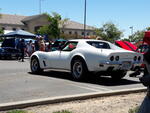
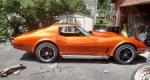
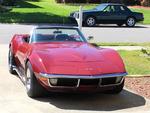
I have a 1970 LT-1 that the engine got swapped out around early 80's. True LT-1? Probably not I'm guessing. About 5 years ago motor blew and that owner had it built as a long block and put back in. But was not dressed. Sat in storage for 2-3 years before I got it last spring. I finished putting it together and ran it about 1000 miles over summer. Started running like crap and found it ate a lifter and cam lobe. Threw another cam and lifters in and used it for few hours to finish up our summer plans with it. Motor was planned to come out this winter anyway because of oil leaks that just won't stop to include the Muncie 4 speed. Motor and tranny is out now and disassembled for inspection. Hopping if I list the current components, I could get feedback on what's good, bad and ugly and recommendations to make it all play well together. I have no idea what the compression might be. From what I found all the aftermarket stuff was installed back in the 80's during a swap.
casting 3970010 4 bolt main
sealed power pistons H645DCP/H345DCP .060
cam shaft SUM-1121 GM 386315 equivalent
lifters SUM-HT81716 FT hydraulic
push rods 8.400 .080
rocker arms comp 1.52 (only info I saw)
trick flow heads TFS-SBC-2 patten number 5873641 (that's all I saw)
edelbrock performer rpm intake
holley 750 4150 carb
msd 8570 dizzy
msd plaster 2 coil
msd 6a 6201 ignition box
headman long tube headers
2.5" pipes with blackwiddow angry housewife mufflers
Have you been using the necessary oil with or with an additive of zinc? I’m surprised after multiple failures you’re not wanting to convert to a hydraulic roller.
the less attractive parts n pieces, JME:
pistons are Short rebuilder grade (1.548 CH v. OE =1.560), decent but cheap Cast hypereutectic (brittle, hi-silicon), flat w/ 4 VRs, and uses old-fashioned, hi-friction, thick tractor rings (the 645 prefix used when those pistons are in boxed set of six for 4.3L 262" V6). 345 is for sets of eight. All same piston. Offset pins (like OE) and Each will fit any/all holes; so long as dimple is forward.
at +60, block is bored to practical limit --- and may need overbore (but few if any shelf pistons larger than +60) --- or may be junk?
Suggest any serious T&E spent should be in a different/later roller block.
Crank? no mention; probably cast and may or may not be decent ?
cam nothing special; cheap summit copy of old fashioned classic hydraulic flat tappet.
* If ya simply threw a cam & lifters in it without First thoroughly washing out entire long block of all that failed cam-lifter trash, it likely damaged every other moving-sliding surface, All of it including 8 piston bores & 16 lifter bores + oil pump.+ bearings-inserts + journals.
I'll look at the crank to see what it is. It can easily just be polished. No gouges or nicks. No large pieces of metal in anything. Oil filter cut open and nothing. Just shinny oil. No pieces in the pan either. When it ate the cam the motor was disassembled as far as possible while in the car and extensively flushed out. Oil pump was replaced. If this motor is used again, from the list of concerns above, the pistons (besides the block bored to its max) is its weak point? Without question it would be getting all new bearings, lifters, cam, oil pump.... This car does not get driven hard at all. No racing, burnouts or even punching it. We us it to get pizza.
I'll look at the crank to see what it is. It can easily just be polished. No gouges or nicks. No large pieces of metal in anything. Oil filter cut open and nothing. Just shinny oil. No pieces in the pan either. When it ate the cam the motor was disassembled as far as possible while in the car and extensively flushed out. Oil pump was replaced. If this motor is used again, from the list of concerns above, the pistons (besides the block bored to its max) is its weak point? Without question it would be getting all new bearings, lifters, cam, oil pump.... This car does not get driven hard at all. No racing, burnouts or even punching it. We us it to get pizza.
Who wants a toy you can't reliably beat-on every now and then ? Otherwise, just send it.
Three leading weak points:
Thin Cylinder Walls contribute to overheating & are unstable-weak; leading to inconsistent-poor ring seal. Sleeving all 8 Not economically feasible.
Any occult, fine, lingering, abrasive schmutz-trash.
Depending If / How Much decks have been milled, Short Pistons' Quench Distance likely Too Much; rendering Quench ineffective. Depends.
If you’re tearing it apart, just find a new sbc block and build it.
The blocks are a dime a dozen now days and a good 4 bolt 350 block might be found for $300.00.
Not certain of the intended use of this car. But I've used hyper pistons numerous times. And I personally like them.
No there not as strong as forged pistons. But in a engine that rarely see's 5K RPM. They are more than good enough.
So, consider that. Also a lot of people really put **** on the old fashioned rings. Claiming they cost power. How much power really? Mostly, they are pretty dependable.
I have an 1970 LT1 engine that I bought back in the early 1990's. I put it in my C3 while waiting for the 427 to be rebuilt. It still has the double hump cylinder heads and 11-1 compression ratio.
A true LT1 engine for your 1970 would really make the car fun to drive. I had a buddy who had an original 1970 LT1 and it was close to being as quick as a big block in some circumstances. That combination was fun despite it's affection for high octane gasoline. The LT1 would detonate when hot with cheaper gas in it.
If I had to buy another C3 it would likely be a 1970 LT1 Corvette!
My 1988 C4 has roller rockers and is setup for the roller systems, no more issues with Zinc.
Waiting on a little warmer weather to get in my shop and take time to look over all the components carefully. Any comments if these older Trick Flow heads is a good option?
One of the coolest points of an LT-1 is it's ability to rev.
Almost unlike any other small block.
The only other ones that rev similarly are the early 327 Fuelies, the 365HP 327, and the DZ 302. But this one has way more TQ!
And it makes equivalent power to most normal big blocks. (Just not the really HiPerf ones.)
6600 to 7000 rpm can be really fun!
And it makes unique engine noises that remind you it is something special.
The Solid lifter sewing machine purr, and forged piston rattle.
It's American Hot Rod Music!
Add headers and you have the steel header "ring" from the cam overlap, and you have quite a mechanical symphony going on under the hood!
It's just lovely!
But to do all that reving, reliably, all the basic LT-1 engine components were upgraded.
Finding a number matching LT1 engine will be incredibly tough.
But if you just want to build a parts-equivalent, just make sure you duplicate all the parts.
Much- much easier, there are millions of these parts out there. An L82 is a great place to start.
Mine was an original, but I built it this way anyway and rev'd that thing for near 30 years. So much fun!
Finding a 4 bolt block is super easy. A date coded correct one is more difficult, but then you could have the pad stamped, and call it "restoration correct". Just please do not call it "factory original." The dated blocks are just more money. Your preference. Since you have a supposed original & rare 70 LT-1 car, that would be my preference. But originality of that type of car is almost impossible to prove without the original engine, unless you have lots of paperwork documentation.
Steel crank, 8.0" balancer. Easy.
Forged pistons, not hyper ones. Stronger, if you want to rev it, and they give that distinctive rattle. I would try hard to keep the C.R. in the low to mid 10s, then you could run pump gas, and a good timing curve. With my 11:1 CR, it was either one or the other. Shave the domes, custom pistons, what-ever it takes. 11:1 is a liability these days if you want to drive it and enjoy it.
Make sure you deck the block and get the quench low, like .045-.050 if you want to run pump gas. Higher and you'll ping badly on pump. 0 to .010" piston/deck height and .039 gaskets works well.
186 2.02 intake valves, with valve chamber backcuts. Honestly this is the one thing I would change. Modern aluminum AFRs are seen by most as a huge improvement, and likely worth 50 HP. And not much more $ than trying to revive tired 50 yr old heads. AFRs are way better than trick flow. But Trickflow are not bad, depending on which ones you have. You want 64cc chambers. Those TFS heads are kind of in the middle, between stockers and AFRs.
Slightly upgraded Off road Z28 "brown" valve springs, or similar specs, so it can rev to it's full potential.
Hi Psi not hi vol oil pump. 65 psi. Do not listen to the drag race guys that will tell you otherwise. Hi vol is a waste.
Stock oil pan with baffles, and stock windage tray.
Decent aftermarket rods with ARP bolts. Then you do not have to be afraid to rev it. The bottom end will be bullet proof to 7500. (Not so with old stock rods and stock style bolts.) I would not run stock rods. But you do not need expensive H-beam rods either. Just good quality I-beam rods, and ARP rod bolts. No one will ever see them anyway, but you need their strength, for reliability.
LT-1 solid lifter camshaft, or something really close. The sound it makes is part of the enjoyment. If you really want to race it, there are better cams.They will not sound the same. Modern cams run "tight lash" and do not make the valve-train "purr" like the .030 lash old school cams. It is about as big as you can go and still have a nice driving street cam. I ran the slightly larger 30-30 cam for 27 years, and it is slightly more demanding to drive, with a little less idle vacuum, like 10.5". It might rev 3-400 rpm higher, approaching 7K. These days run GOOD DLC lifters. And break it in very carefully or even with 1/2 of dual valve springs.
Hi rise LT-1 GM Winters snowflake intake manifold. It is still hard to improve on. They are out there, if you do not restrict yourself to 1970 date codes. It has the look, and the power.
780 CFM Vac sec Holley, as original. Even if not a matching number. Great driveabilty and smoother. Extremely little HP difference between that and a double pumper. Drag cars use a DP to tune the tire hit on launch. DP can be a little abrupt. But some like it that way.
GM Drop base air cleaner. Still reproduced.
Those lovely aluminum finned valve covers. Stock rocker arms. Roller rockers will not fit those valve covers very well. You could try some stainless rollers and some thick cover gaskets. Poly loks are almost mandantory, they cut down on valve adjustments and make a solid cam easy to live with. I barely needed to adjust my valves after like 10 years with poly-loks.
Andpleaseput headers & 2.5" exhaust on it. It wants & needs to breathe!
Easy 400-450HP and the car will fly and be crazy fun to drive. That is a large part of the LT-1 "mystique".
That's as close as you can get to a real numbers matching LT-1 without finding a rare needle in a haystack!
Yes any old 350 can be made to run well.
And a 383 will make way more power and TQ.
But none of them have that linear power curve of an LT-1!
It just keeps getting stronger and stronger the more you rev it.
It is just begging you to rev it!
Last edited by leigh1322; Jan 17, 2026 at 12:39 PM.
If those TFS heads check out fine I would run them. They are better than any factory head especially if you are only getting ice cream. I run an older set of AFR 195's than people tell me are obsolete but they ran 9.50's on a friends drag car( with different springs of course) so they will work just fine on my street car.
It seems like you have a lot of good parts.
I would check the crank closely to determine if cast or forged:
If you intend to rev it like an LT-1 can, you will need the 4 bolt block, steel crank, good rods & forged pistons to make it tough enough to live long & prosper.
If you never really intend to take it past 5500 rpm, none of that really matters.
Waiting on a little warmer weather to get in my shop and take time to look over all the components carefully. Any comments if these older Trick Flow heads is a good option?
I know you posted some numbers in an attempt to ID the TFS heads; from that, I tried but cannot interpret which heads. Perhaps someone else can ? Or perhaps, there are additional identifying characters ? Perhaps your inquiry to TFS could yield most answers ? Of course TFS manufactures good heads, just as some were not so much. You'd best determine what the chamber volume is.
TFS did offer a "Twisted Wedge" head for sbc and it has canted valves which prefers (if not requires) specific piston crown design; seems those didn't quite set the world afire.
Not sure. Could be a cast crank. The corners on that rib appear to be rounded. Which a cast crank would be.
Someone could have ground down the thin cast parting line.
A true forged crank has a very wide parting line, like 3/4" the grinding marks are easily visible, and 90* to the crank, and both edges are sharp at the grinding location.
Tap it lightly with a box wrench A forged crank will ring like a bell. If it is out of the block. Cast gives a dull thud.
Check the corners of the counterweight throws also.
And there is a big number on it somewhere.
Appears you have it out of the block? Should be easy to find the number. 1182, 3814671, 3941182, 3941188 are common forged 350 crank numbers.
I found 1182 stamped on it. It's at .020 now. After a quick inspection I see nothing more than light scratches. No nicks or anything that catch a fingernail or a penny. I believe a polish will fix it up.







 Help with engine setup












 I run an older set of AFR 195's than people tell me are obsolete but they ran 9.50's on a friends drag car( with different springs of course) so they will work just fine on my street car.


