




Head swap pitfalls

Thread Starter
Instructor


Joined: Sep 2022
Posts: 209
Likes: 81
From: Dalbo, Minnesota
 Head swap pitfalls
I’m looking for need to know info on swapping vortec heads out for aluminum aftermarket heads.
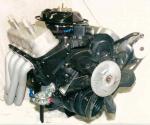
My car came with a new crate motor. Vortec heads, roller block, high lift cam. 10:1 compression. dyno tested to 400 hp near redline. Bolted to a freshly rebuilt TH 350.
All fine and good, but I want a reliable cruiser with good low end torque that doesn’t shake like a magic fingers bed at idle.
I am going to install a milder cam and a TPI intake setup. I like TPI, I have a complete setup sitting in my garage, I’ve tuned memcals in the past, and that is what I am going to do.
I can keep the Vortec heads and buy a vortex lower manifold to fit them or I can remove the heads and put the money toward aluminum heads. What problems can I expect? Valve train gotcha’s? Pushrod lengths?
I’m guessing the block is a mid 90’s truck model. Thanks in advance.
My car came with a new crate motor. Vortec heads, roller block, high lift cam. 10:1 compression. dyno tested to 400 hp near redline. Bolted to a freshly rebuilt TH 350.
All fine and good, but I want a reliable cruiser with good low end torque that doesn’t shake like a magic fingers bed at idle.
I am going to install a milder cam and a TPI intake setup. I like TPI, I have a complete setup sitting in my garage, I’ve tuned memcals in the past, and that is what I am going to do.
I can keep the Vortec heads and buy a vortex lower manifold to fit them or I can remove the heads and put the money toward aluminum heads. What problems can I expect? Valve train gotcha’s? Pushrod lengths?
I’m guessing the block is a mid 90’s truck model. Thanks in advance.

Melting Slicks


Joined: May 2021
Posts: 2,256
Likes: 1,299
From: Fleming Island, FL
A Vortec base Plate is the least expensive and easiest way to get TPI on your car. Got to ask why would you want to tune that ancient GM ECM when there's more modern self-tuning systems available. That's were I would put my money.
I did a TPI swap a few years ago
https://www.corvetteforum.com/forums...ld-thread.html
I did a TPI swap a few years ago
https://www.corvetteforum.com/forums...ld-thread.html
Pro


Joined: Jun 2005
Posts: 581
Likes: 60
From: USA
not so sure if Vortec TPI baseplate manifolds are readily available. The aftermarket for aftermarket TPI manifolds, runners has certainly dried up, so you're limited to what you can find on ebay, or using your OEM TPI base with OEM-intake runner heads. The corvette TPI intake manifold has the bolt holes in the traditional location. I think the camaro TPI intake manifold bolt holes are those vertical ones. I think that's the middle bolt holes, "IIRC". you know what you got, i'm sure. Whatever aftermarket heads you buy, if you go that route, needs to be compatible with your TPI base.
I think the aftermarket TPI manifold base has the multi-angle accomodation, my Edelbrock TPI base does.
I think the aftermarket TPI manifold base has the multi-angle accomodation, my Edelbrock TPI base does.
Melting Slicks
Joined: May 2021
Posts: 2,256
Likes: 1,299
From: Fleming Island, FL
Vortec TPI baseplates are available. https://www.ebay.com
I also spoke with Ken at First TPI earlier in the month and he is taking orders for the First TPI intake. There's a 3 week lead time. He can machine baseplates in standard and Vortec ports, 8 or 12 bolt pattern.
I also spoke with Ken at First TPI earlier in the month and he is taking orders for the First TPI intake. There's a 3 week lead time. He can machine baseplates in standard and Vortec ports, 8 or 12 bolt pattern.
Pro
Joined: Jun 2005
Posts: 581
Likes: 60
From: USA
Vortec TPI baseplates are available. https://www.ebay.com
I also spoke with Ken at First TPI earlier in the month and he is taking orders for the First TPI intake. There's a 3 week lead time. He can machine baseplates in standard and Vortec ports, 8 or 12 bolt pattern.
I also spoke with Ken at First TPI earlier in the month and he is taking orders for the First TPI intake. There's a 3 week lead time. He can machine baseplates in standard and Vortec ports, 8 or 12 bolt pattern.

Heel & Toe
Joined: Jan 2025
Posts: 20
Likes: 2
From: Oklahoma City
Sounds like you might have a ZZ4 engine. There is a chance it could have fast burn heads and those have both bolts hole pattern for intake bolt holes. Roller cam engines use 7.200” length push rods and flat tappet uses 7.800” length some heads are different, Best to check what length exactly length push rod you will need. Have you thought about changing the cam and installing thicker head gaskets to lower compression? A thicker head gasket could lower the compression to nine to one. This set up would make a great daily driver, The TPI intake system is set up for less than 250 HP. You may not be happy with the performance after having 400 HP. I would suggest one of the newer systems from Holley some of the systems require a laptop and some don’t. Good luck and let us know which way you go and how it works out..

Drifting

Joined: Jun 2025
Posts: 1,577
Likes: 559
ZZ4 heads' comb chambers Not FastBurn
Sounds like you might have a ZZ4 engine. There is a chance it could have fast burn heads and those have both bolts hole pattern for intake bolt holes. Roller cam engines use 7.200” length push rods and flat tappet uses 7.800” length some heads are different, Best to check what length exactly length push rod you will need. Have you thought about changing the cam and installing thicker head gaskets to lower compression? A thicker head gasket could lower the compression to nine to one. This set up would make a great daily driver, The TPI intake system is set up for less than 250 HP. You may not be happy with the performance after having 400 HP. I would suggest one of the newer systems from Holley some of the systems require a laptop and some don’t. Good luck and let us know which way you go and how it works out..
Gen 1 sbc C4 got those heads mid-eighties thru 1991.
ZZ4 spec sheet/ GM: https://www.chevrolet.com/content/da...e-24502609.pdf
OTOH
both ZZ5 and ZZ6 Do Have Same aluminum heads with FastBurn combustion chambers; those Gen 1 sbc heads Not OE in any serial production passenger vehicle.
ZZ5 spec sheet/ GM: https://www.chevrolet.com/content/da...s-19301293.pdf
ZZ6 spec sheet/ GM: https://www.chevrolet.com/content/da...e-19419198.pdf
Corvette Stories
The Best of Corvette for Corvette Enthusiasts

10 Revolutionary 'Corvette Firsts' Most People Don't Know
Joe Kucinski
5 Reasons to Upgrade to an LS6-Powered Corvette; 5 Reasons to Stay LT2
Michael S. Palmer
2027 Corvette vs The World: Every C8 vs Its Closest Competitor
Joe Kucinski
10 Most Common Corvette Problems of the Last 20 Years!
Joe Kucinski
5 MOST and 5 LEAST Popular Corvette Model Years in History!
Joe Kucinski
2027 Corvette Buyer's Guide: Everything You Need to Know!
Joe Kucinski
10 Things C8 Corvette Owners Hate (But Won't Tell You)
Joe Kucinski
10 Best Corvettes Coming to Barrett-Jackson Palm Beach 2026!
Brett Foote
Every Corvette Grand Sport Explained! (C2, C4, C6, C7, & C8)
Joe Kucinski
Melting Slicks
Joined: May 2021
Posts: 2,256
Likes: 1,299
From: Fleming Island, FL
Richard Holder tested a L98 with a upgraded cam and made 332HP. He said that in the past stock L98's make 295HP. He also tested aftermarket TPI systems with big runners non stock 350's and was able to break the 400HP barrier. Keep in mind those were gross ratings. I built a very mild 350 with a stock TPI intake, 700r4, 3.07 gears for my 82 and I got a 1/8 mile Dragy time of 8.81@79.67.
To the OP, I don't think I would have gotten that time trying to tune a GM ECM. Too many wonky tables and difficult to fine tune.
To the OP, I don't think I would have gotten that time trying to tune a GM ECM. Too many wonky tables and difficult to fine tune.
Last edited by Fly skids up!; Feb 27, 2026 at 10:56 AM.
Thread Starter
Instructor
Joined: Sep 2022
Posts: 209
Likes: 81
From: Dalbo, Minnesota
Thanks for the replies.
The switch to aluminum heads isn’t cost related. Yes the Vortec base is cheaper, but the $450 I would spend on it could instead go to the heads. The reason for the switch is better heat flow and lower risk of detonation vs iron heads. Same chamber design as the Vortecs. Same chamber volume. Lower cracking risk.
400 to 245 hp is not as big a drop as it first seems. The crate motor dyno tested to 418 hp and 400 ft-lbs @ 5600 rpm. 32 degree total timing. Carbureted. 308 hp and 450 ft - lbs @3600. That’s on a dyno open intake, open exhaust, no accessories. Maybe an electric water pump. Add on an air cleaner, exhaust, and accessories it’s maybe a respectable 425 ft-lbs @3600 rpm.
I drive closer to 3600 rpm than 5600.
A stock ‘91 L98 is 345 ft-lbs @3200 rpm. I’d expect a bump up with Vortec style heads.
Compare that with a 1995 LT1 with 340 ft-lbs @ 3600rpm. If frankenmotor accelerates my C3 like my C4 I’m happy. I can’t afford any more tickets anyway.
I will fab up an adjustable push rod to determine the length needed and report it back here.
A thicker gasket to lower compression is not a bad idea, but I would have to revert to non-Vortec style heads. Otherwise the decreased quench can cause detonation.
The switch to aluminum heads isn’t cost related. Yes the Vortec base is cheaper, but the $450 I would spend on it could instead go to the heads. The reason for the switch is better heat flow and lower risk of detonation vs iron heads. Same chamber design as the Vortecs. Same chamber volume. Lower cracking risk.
400 to 245 hp is not as big a drop as it first seems. The crate motor dyno tested to 418 hp and 400 ft-lbs @ 5600 rpm. 32 degree total timing. Carbureted. 308 hp and 450 ft - lbs @3600. That’s on a dyno open intake, open exhaust, no accessories. Maybe an electric water pump. Add on an air cleaner, exhaust, and accessories it’s maybe a respectable 425 ft-lbs @3600 rpm.
I drive closer to 3600 rpm than 5600.
A stock ‘91 L98 is 345 ft-lbs @3200 rpm. I’d expect a bump up with Vortec style heads.
Compare that with a 1995 LT1 with 340 ft-lbs @ 3600rpm. If frankenmotor accelerates my C3 like my C4 I’m happy. I can’t afford any more tickets anyway.
I will fab up an adjustable push rod to determine the length needed and report it back here.
A thicker gasket to lower compression is not a bad idea, but I would have to revert to non-Vortec style heads. Otherwise the decreased quench can cause detonation.
Drifting
Joined: Jun 2025
Posts: 1,577
Likes: 559
Thanks for the replies.
The switch to aluminum heads isn’t cost related. Yes the Vortec base is cheaper, but the $450 I would spend on it could instead go to the heads. The reason for the switch is better heat flow and lower risk of detonation vs iron heads. Same chamber design as the Vortecs. Same chamber volume. Lower cracking risk.
400 to 245 hp is not as big a drop as it first seems. The crate motor dyno tested to 418 hp and 400 ft-lbs @ 5600 rpm. 32 degree total timing. Carbureted. 308 hp and 450 ft - lbs @3600. That’s on a dyno open intake, open exhaust, no accessories. Maybe an electric water pump. Add on an air cleaner, exhaust, and accessories it’s maybe a respectable 425 ft-lbs @3600 rpm.
I drive closer to 3600 rpm than 5600.
A stock ‘91 L98 is 345 ft-lbs @3200 rpm. I’d expect a bump up with Vortec style heads.
Compare that with a 1995 LT1 with 340 ft-lbs @ 3600rpm. If frankenmotor accelerates my C3 like my C4 I’m happy. I can’t afford any more tickets anyway.
I will fab up an adjustable push rod to determine the length needed and report it back here.
A thicker gasket to lower compression is not a bad idea, but I would have to revert to non-Vortec style heads. Otherwise the decreased quench can cause detonation.
The switch to aluminum heads isn’t cost related. Yes the Vortec base is cheaper, but the $450 I would spend on it could instead go to the heads. The reason for the switch is better heat flow and lower risk of detonation vs iron heads. Same chamber design as the Vortecs. Same chamber volume. Lower cracking risk.
400 to 245 hp is not as big a drop as it first seems. The crate motor dyno tested to 418 hp and 400 ft-lbs @ 5600 rpm. 32 degree total timing. Carbureted. 308 hp and 450 ft - lbs @3600. That’s on a dyno open intake, open exhaust, no accessories. Maybe an electric water pump. Add on an air cleaner, exhaust, and accessories it’s maybe a respectable 425 ft-lbs @3600 rpm.
I drive closer to 3600 rpm than 5600.
A stock ‘91 L98 is 345 ft-lbs @3200 rpm. I’d expect a bump up with Vortec style heads.
Compare that with a 1995 LT1 with 340 ft-lbs @ 3600rpm. If frankenmotor accelerates my C3 like my C4 I’m happy. I can’t afford any more tickets anyway.
I will fab up an adjustable push rod to determine the length needed and report it back here.
A thicker gasket to lower compression is not a bad idea, but I would have to revert to non-Vortec style heads. Otherwise the decreased quench can cause detonation.
When spark rattle's right on the ragged-edge, an old 'restricted class' CT race trick is to sink some valves (slightly-increasing effective chamber volume).
Drifting
Joined: Jun 2025
Posts: 1,577
Likes: 559
Thanks for the replies.
The switch to aluminum heads isn’t cost related. Yes the Vortec base is cheaper, but the $450 I would spend on it could instead go to the heads. The reason for the switch is better heat flow and lower risk of detonation vs iron heads. Same chamber design as the Vortecs. Same chamber volume. Lower cracking risk.
400 to 245 hp is not as big a drop as it first seems. The crate motor dyno tested to 418 hp and 400 ft-lbs @ 5600 rpm. 32 degree total timing. Carbureted. 308 hp and 450 ft - lbs @3600. That’s on a dyno open intake, open exhaust, no accessories. Maybe an electric water pump. Add on an air cleaner, exhaust, and accessories it’s maybe a respectable 425 ft-lbs @3600 rpm.
I drive closer to 3600 rpm than 5600.
A stock ‘91 L98 is 345 ft-lbs @3200 rpm. I’d expect a bump up with Vortec style heads.
Compare that with a 1995 LT1 with 340 ft-lbs @ 3600rpm. If frankenmotor accelerates my C3 like my C4 I’m happy. I can’t afford any more tickets anyway.
I will fab up an adjustable push rod to determine the length needed and report it back here.
A thicker gasket to lower compression is not a bad idea, but I would have to revert to non-Vortec style heads. Otherwise the decreased quench can cause detonation.
The switch to aluminum heads isn’t cost related. Yes the Vortec base is cheaper, but the $450 I would spend on it could instead go to the heads. The reason for the switch is better heat flow and lower risk of detonation vs iron heads. Same chamber design as the Vortecs. Same chamber volume. Lower cracking risk.
400 to 245 hp is not as big a drop as it first seems. The crate motor dyno tested to 418 hp and 400 ft-lbs @ 5600 rpm. 32 degree total timing. Carbureted. 308 hp and 450 ft - lbs @3600. That’s on a dyno open intake, open exhaust, no accessories. Maybe an electric water pump. Add on an air cleaner, exhaust, and accessories it’s maybe a respectable 425 ft-lbs @3600 rpm.
I drive closer to 3600 rpm than 5600.
A stock ‘91 L98 is 345 ft-lbs @3200 rpm. I’d expect a bump up with Vortec style heads.
Compare that with a 1995 LT1 with 340 ft-lbs @ 3600rpm. If frankenmotor accelerates my C3 like my C4 I’m happy. I can’t afford any more tickets anyway.
I will fab up an adjustable push rod to determine the length needed and report it back here.
A thicker gasket to lower compression is not a bad idea, but I would have to revert to non-Vortec style heads. Otherwise the decreased quench can cause detonation.
You can also help assuage your risk-averse take on cast iron Vortec:
Have them Cryogenically treated. Many more metal-treat facilities now make that service available and for far less $ than before. Cryo truly toughens em up.
Large volume Head & Engine manufactures Now offer brand new iron Vortecs that have been Cryo-treated. That, specifically to help prevent cracking.
Similarly, Aluminum does also crack and there's help for that as well.
HIP (Hot Isostatic Pressing) is a proven treatment; often referred to as HIPPED or HIPPING.