



82 Alternator Hot Wire

Thread Starter
Melting Slicks


Joined: Apr 2023
Posts: 2,765
Likes: 1,616
From: Poplar Bluff MO
 82 Alternator Hot Wire
I'm cleaning up some wiring mess in the engine compartment and Bubba ran a wire from the alternator rather randomly over to the starter. It does work but will need a new wire as the insulation is brittle from being next to the exhaust manifold.
I can at this point very easy run a 10 gauge wire back to the battery and connect it up to the terminal that goes to the hot side of the battery. In fact it might be easier to do that than try and snake the wire behind the wiper motor and down to the starter hot terminal.
Is there any reason to not just run it back to the battery?
JT
I can at this point very easy run a 10 gauge wire back to the battery and connect it up to the terminal that goes to the hot side of the battery. In fact it might be easier to do that than try and snake the wire behind the wiper motor and down to the starter hot terminal.
Is there any reason to not just run it back to the battery?
JT

Race Director


Joined: Nov 2006
Posts: 13,199
Likes: 7,798
From: Sunshine Coast, Queensland, Australia
2025 C3 of the Year Finalist - Modified
2024 C3 of the Year Finalist- Modified
2022 C3 of the Year Finalist - Modified
Cruise-In VIII Veteran
I'm not an expert on 82's. But I thought all 82's ran the alternator charge wire through the frame and directly to the battery.
In answer to your question. No, there is absolutely no reason not to run the charge wire directly to the battery. It is the very best way.
In answer to your question. No, there is absolutely no reason not to run the charge wire directly to the battery. It is the very best way.

Melting Slicks
Joined: May 2021
Posts: 2,265
Likes: 1,310
From: Fleming Island, FL
That's how GM did it on the ETR cars. It also has a 10GA ground wire running from the alternator back to the battery.
In fact Zip Corvette makes a replacement harness to do just that.
https://www.zip-corvette.com/80-82-a...g-harness.html
In fact Zip Corvette makes a replacement harness to do just that.
https://www.zip-corvette.com/80-82-a...g-harness.html
Thread Starter
Melting Slicks
Joined: Apr 2023
Posts: 2,765
Likes: 1,616
From: Poplar Bluff MO
JT
Race Director
Joined: Mar 2017
Posts: 11,934
Likes: 4,498
From: Virginia
At any rate, 10 gauge is kinda thin, if you are going to be adding any other electrical loads in the future (electric fans, etc), or even just upgrading the alternator.
Thread Starter
Melting Slicks
Joined: Apr 2023
Posts: 2,765
Likes: 1,616
From: Poplar Bluff MO
That's not how I read it. My 80 certainly has the alternator going straight to the battery (well, in stock configuration). There's a junction block inside the battery compartment behind the seat.
At any rate, 10 gauge is kinda thin, if you are going to be adding any other electrical loads in the future (electric fans, etc), or even just upgrading the alternator.
At any rate, 10 gauge is kinda thin, if you are going to be adding any other electrical loads in the future (electric fans, etc), or even just upgrading the alternator.
I don't plan on adding any electrical loads at all.
JT
Race Director
Joined: Nov 2006
Posts: 13,199
Likes: 7,798
From: Sunshine Coast, Queensland, Australia
2025 C3 of the Year Finalist - Modified
2024 C3 of the Year Finalist- Modified
2022 C3 of the Year Finalist - Modified
Cruise-In VIII Veteran
Perhaps they just didn't update that part of the manual. It happens. Earlier cars did run to the starter. From a junction first however.
Going straight to the battery is a definite upgrade any way you look at it.
Going straight to the battery is a definite upgrade any way you look at it.
Corvette Stories
The Best of Corvette for Corvette Enthusiasts

10 Reasons the C6 Z06 is Still A Performance Benchmark After 20 Years
Joe Kucinski
How Much Horsepower Every Corvette Engine "LOST" in 1972
Joe Kucinski
Top 10 DOs and DON'Ts for Protecting Your Convertible Top!
Michael S. Palmer
Top 10 Most Explosive Corvettes Ever Made: Power-to-Weight Ratio Ranked!
Joe Kucinski
150 hp to 1,250 hp: Every Corvette Generation Compared by the Specs That Matter
Joe Kucinski
8 Coolest Corvette Pace Cars (and Replicas) of All Time
Verdad Gallardo
Top 10 Corvette Engines RANKED by Peak Torque (70+ Years of Muscle!)
Joe Kucinski
Corvette ZR1X Will Be Pacing the Indy 500, And Could Probably Race, Too!
Verdad Gallardo
Top 10 Corvettes Coming to Mecum Indy 2026!
Brett Foote
Thread Starter
Melting Slicks
Joined: Apr 2023
Posts: 2,765
Likes: 1,616
From: Poplar Bluff MO
I "think" I remember reading somewhere that was done to reduce static on the radio... probably not needed with a modern radio.
JT

Safety Car


Joined: May 2001
Posts: 4,754
Likes: 1,643
From: Fairfax Virginia
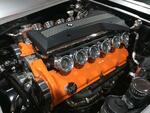
If I need a size 10 wire then I will regularly up size it at least one size for safety. I have a 100 amp alternator that feed the battery Positive terminal on the Starter motor through a #6 (?) wire. It never gets warm from current going through it nor do I exceed the wire's capacity.
For my cooling fans and other electrical loads I ran a #6 wire to the right inner fender to a post where it is distributed. I have a 100 amp Marine (Weather resistant) circuit breaker that protects the loads for me from near the battery. Between the marine grade electrical wire and circuit breakers it made the system safer and being weather resistant should help the parts survive in my convertible.
I don't see any reason to run all the way to the battery when such a large wire connection is available right there on the starter motor. The battery cable is sized large enough to handle a lot of current. With the gear drive starter my engine uses less current to get it started and running which makes the battery Positive cable from the battery to starter motor way oversized for the loads on it.
For the aftermarket EFI systems it is critical that you run the power from the battery directly. For this I ran a pair of 10 gauge wires from the battery to the EFI controller. The power wires were twisted together to help control electrical noise getting into my EFI system. That is separate from the wiring. All the rest of the electrical loads run off the "aux" battery post on my right inner fender.
For my cooling fans and other electrical loads I ran a #6 wire to the right inner fender to a post where it is distributed. I have a 100 amp Marine (Weather resistant) circuit breaker that protects the loads for me from near the battery. Between the marine grade electrical wire and circuit breakers it made the system safer and being weather resistant should help the parts survive in my convertible.
I don't see any reason to run all the way to the battery when such a large wire connection is available right there on the starter motor. The battery cable is sized large enough to handle a lot of current. With the gear drive starter my engine uses less current to get it started and running which makes the battery Positive cable from the battery to starter motor way oversized for the loads on it.
For the aftermarket EFI systems it is critical that you run the power from the battery directly. For this I ran a pair of 10 gauge wires from the battery to the EFI controller. The power wires were twisted together to help control electrical noise getting into my EFI system. That is separate from the wiring. All the rest of the electrical loads run off the "aux" battery post on my right inner fender.
Le Mans Master


Joined: May 2003
Posts: 8,876
Likes: 3,556
From: Fernandina Beach FL
2023 Restomod of the Year finalist
2020 C3 of the Year Winner - Modified
If I need a size 10 wire then I will regularly up size it at least one size for safety. I have a 100 amp alternator that feed the battery Positive terminal on the Starter motor through a #6 (?) wire. It never gets warm from current going through it nor do I exceed the wire's capacity.
For my cooling fans and other electrical loads I ran a #6 wire to the right inner fender to a post where it is distributed. I have a 100 amp Marine (Weather resistant) circuit breaker that protects the loads for me from near the battery. Between the marine grade electrical wire and circuit breakers it made the system safer and being weather resistant should help the parts survive in my convertible.
I don't see any reason to run all the way to the battery when such a large wire connection is available right there on the starter motor. The battery cable is sized large enough to handle a lot of current. With the gear drive starter my engine uses less current to get it started and running which makes the battery Positive cable from the battery to starter motor way oversized for the loads on it.
For the aftermarket EFI systems it is critical that you run the power from the battery directly. For this I ran a pair of 10 gauge wires from the battery to the EFI controller. The power wires were twisted together to help control electrical noise getting into my EFI system. That is separate from the wiring. All the rest of the electrical loads run off the "aux" battery post on my right inner fender.
For my cooling fans and other electrical loads I ran a #6 wire to the right inner fender to a post where it is distributed. I have a 100 amp Marine (Weather resistant) circuit breaker that protects the loads for me from near the battery. Between the marine grade electrical wire and circuit breakers it made the system safer and being weather resistant should help the parts survive in my convertible.
I don't see any reason to run all the way to the battery when such a large wire connection is available right there on the starter motor. The battery cable is sized large enough to handle a lot of current. With the gear drive starter my engine uses less current to get it started and running which makes the battery Positive cable from the battery to starter motor way oversized for the loads on it.
For the aftermarket EFI systems it is critical that you run the power from the battery directly. For this I ran a pair of 10 gauge wires from the battery to the EFI controller. The power wires were twisted together to help control electrical noise getting into my EFI system. That is separate from the wiring. All the rest of the electrical loads run off the "aux" battery post on my right inner fender.
. "Under the Hood Temps" = Increased Resistance
- The Physics: The resistance of a metal conductor (like copper) increases as its temperature increases.
- The Problem: Under-hood temperatures are high, and ambient heat soak causes wire resistance to rise. When a wire is hot, it struggles to carry the same amount of current it could when cold.
- The Result: A wire that is perfectly adequate in the passenger compartment might be undersized in the engine bay.
- The Cycle: When a wire is too thin (or gets too hot), its resistance rises. This higher resistance makes it harder for electrons to flow.
- Thermal Runaway: The increased resistance creates more heat through Joule heating, which makes the wire hotter, which increases the resistance further.
- The Impact: This cycle leads to voltage drops (low power to components) and can melt insulation, causing short circuits or fires.
aftermarket EFI systems it is critical that you run the power from the battery directly.
Exactly- the battery filters "dirty " power as the alternator's power has some AC ripple left over from the it's simple diode conversion design. The battery also provides a more stable power- not surging.
Electronics like that!
The power wires were twisted together to help control electrical noise getting into my EFI system
I believe it was BMW that first started doing this in the 80's with their speaker wires to keep out noise- albeit Alexander Graham Bell patented twisted pair wires in 1881 for telegraph!

Here's a guesstimate for what size wire to run - and fuse appropriately-
Fuse are designed to protect the wire before it melts- not save the device-


Melting Slicks

Joined: Aug 2004
Posts: 2,906
Likes: 228
From: Oakbank Manitoba
That's how GM did it on the ETR cars. It also has a 10GA ground wire running from the alternator back to the battery.
In fact Zip Corvette makes a replacement harness to do just that.
https://www.zip-corvette.com/80-82-a...g-harness.html
In fact Zip Corvette makes a replacement harness to do just that.
https://www.zip-corvette.com/80-82-a...g-harness.html


Thread Starter
Melting Slicks
Joined: Apr 2023
Posts: 2,765
Likes: 1,616
From: Poplar Bluff MO