




New Engine Fireup Advice?

Thread Starter
Burning Brakes

Joined: Jul 2000
Posts: 1,162
Likes: 2
From: Beaverton, OR
 New Engine Fireup Advice?
Okay, Mark at AR has apparently been very busy and there were shipping issues with my directions and fuel pump... I honestly don't know if he shipped them or not as his excuse about them not making it to me seemed very lame... Anyhow, I won't do any bad mouthing here since I just don't know... He should be shipping the stuff out soon (again?), but it could be a few days before he gets to it. I think all the good words are spreading and he just cannot keep up any longer...
So, this brings me to questions about firing up my engine. I may be ready this weekend (using my old stock style mechanical pump for now) and would like to be able to fire her up, directions or not. I've never done an initial fire up before, so I'd love a step-by-step checklist of what should be done. Also, Mark said that the fireup and breakin is slightly different for my engine because of the nitrous setup. I'd assume that is in regards to the looser tolerances for the forged pistons... I've got a hydraulic lifter cam and the rest of the specs can be seen from the link in my signature. I am not even sure which viscosity of oil I should use for the breakin. I'm thinking of running a heavier grade oil than a lot of folks do as it seems like a good idea for a forged setup... Maybe 20w50?
Thanks in advance,
-dath
So, this brings me to questions about firing up my engine. I may be ready this weekend (using my old stock style mechanical pump for now) and would like to be able to fire her up, directions or not. I've never done an initial fire up before, so I'd love a step-by-step checklist of what should be done. Also, Mark said that the fireup and breakin is slightly different for my engine because of the nitrous setup. I'd assume that is in regards to the looser tolerances for the forged pistons... I've got a hydraulic lifter cam and the rest of the specs can be seen from the link in my signature. I am not even sure which viscosity of oil I should use for the breakin. I'm thinking of running a heavier grade oil than a lot of folks do as it seems like a good idea for a forged setup... Maybe 20w50?
Thanks in advance,
-dath

Safety Car

Joined: Jun 2002
Posts: 4,844
Likes: 0
From: Pearland TX
St. Jude Contributor
Re: New Engine Fireup Advice? (dath)
dath,
I have yet to fire up the 355, but Mark told me to use straight 30W for the initial 20 minute break-in of the cam @ 1800 RPM's. Plug gap .040-.045. After the break-in drain the oil & throw away the oil filter. Put oil(weight depending on your climate) in & new oil filter on. I am in Texas and going with 20W-50W.
500 miles of initial break-in of the engine then *let'r rip*.
Good luck! :cheers:
I have yet to fire up the 355, but Mark told me to use straight 30W for the initial 20 minute break-in of the cam @ 1800 RPM's. Plug gap .040-.045. After the break-in drain the oil & throw away the oil filter. Put oil(weight depending on your climate) in & new oil filter on. I am in Texas and going with 20W-50W.
500 miles of initial break-in of the engine then *let'r rip*.
Good luck! :cheers:
Thread Starter
Burning Brakes
Joined: Jul 2000
Posts: 1,162
Likes: 2
From: Beaverton, OR
Re: New Engine Fireup Advice? (bgrice)
So I wonder which part of those directions would differ for a forged setup... That sounds pretty standard... What about pre-oiling? I'm not exactly sure how to accomplish that..
Safety Car
Joined: Jun 2002
Posts: 4,844
Likes: 0
From: Pearland TX
St. Jude Contributor
Re: New Engine Fireup Advice? (dath)
Definitely pre-oiling is needed. Borrow(or buy) an oil priming tool from your local NAPA(or any other automotive parts place). You'll need to pull your distributor and pull your plugs. You will need to turn your engine over with a socket & wrench on the harmonic balancer during priming to get oil to all of the rocker arms and with the plugs in you will just be building up compression. Attach the primer tool on a good drill and insert it into the slot that your distibutor gear locks into. No need to *wing* it, but rotate the oil pump shaft at a pretty good pace until you start getting oil to some of the rockers. You will get alot of resistance. After you get good oiling to some of the rockers turn the motor another 90 degrees and again prime the system. By the time you get around to 360 degrees you should have oil flow to all of the rockers. If not, go through it again.
Thread Starter
Burning Brakes
Joined: Jul 2000
Posts: 1,162
Likes: 2
From: Beaverton, OR
Re: New Engine Fireup Advice? (bgrice)
With the pre oiling, would there be any reason to oil the cylinders prior to fireup as well, or does that pretty much take care of what's needed?
Safety Car
Joined: Jun 2002
Posts: 4,844
Likes: 0
From: Pearland TX
St. Jude Contributor
Re: New Engine Fireup Advice? (dath)
I don't see any reason for oiling the cylinder walls. Mark claims(not saying he does not) that he has these engines pre-oiled to last at least a year.
If things go right I might even have mine fired up tomorrow afternoon. Not betting on it though.
If things go right I might even have mine fired up tomorrow afternoon. Not betting on it though.

Safety Car


Joined: Jul 2002
Posts: 4,269
Likes: 3
From: St. Charles IL
Cruise-In 5-6-7-8-9-11-12 Veteran
A CI-6 Car Show Winner
Re: New Engine Fireup Advice? (dath)
I used a oil charging cylinder when I started mine. Works real slick, all you do is pour in your five quarts of oil, close the lid, connect it to the oil pressure port on the rear of the engine. Then pressurize the charging cylinder with compressed air and it forces oil throughout all the oil ports and passages. When all the oil is in the engine, disconnect the cylinder and you are ready to go, no messing around with having to re-install the distributor. This system is actually made for the later model cars that don't have a distributor.

Safety Car
Joined: Jun 2001
Posts: 4,004
Likes: 2
From: Severna Park Md
Re: New Engine Fireup Advice? (dath)
Just my 2 cents but I think youde be better off(after break in) with a 10w/30 Mobil1. The thinner oil will circulate at a higher rate. More oil passing thru will provide better protection as its replaced across the critical parts faster. Also the more oil flowing past parts that create friction will be cooler. Yur pressure might be a little lower with the thinner oil but the volume of flow is a more important factor then pressure. The Mobil1 is excellant stuff. you wont have any failures related directly to the oil with the Mobil1. It will be circulating thru the engine faster, which means the oil wont heat up as much since its being pushed away from the critical areas between crank and bearings at a higher rate.
Corvette Stories
The Best of Corvette for Corvette Enthusiasts

Top 10 Most Explosive Corvettes Ever Made: Power-to-Weight Ratio Ranked!
Joe Kucinski
150 hp to 1,250 hp: Every Corvette Generation Compared by the Specs That Matter
Joe Kucinski
8 Coolest Corvette Pace Cars (and Replicas) of All Time
Verdad Gallardo
Top 10 Corvette Engines RANKED by Peak Torque (70+ Years of Muscle!)
Joe Kucinski
Corvette ZR1X Will Be Pacing the Indy 500, And Could Probably Race, Too!
Verdad Gallardo
Top 10 Corvettes Coming to Mecum Indy 2026!
Brett Foote
Top 10 C9 Corvette MUST-HAVES to Fix These C8 Generation Flaws!
Michael S. Palmer
10 Revolutionary 'Corvette Firsts' Most People Don't Know
Joe Kucinski
5 Reasons to Upgrade to an LS6-Powered Corvette; 5 Reasons to Stay LT2
Michael S. Palmer
Le Mans Master

Joined: May 2003
Posts: 5,642
Likes: 1
Re: New Engine Fireup Advice? (Jvette73)
:rant: :party:
Don't break in with synthetic fluids, when we used to build out 427 race engines for our boats, all the old engine farts would say that it can sometimes affect the rings seating properly.
If you have a roller cam then it really doesn't need to be broken in...the cam that is.
u can break in the rings by driving up to 35 mph after you let it run for a bit and then letting the tranny slow it back down, i don't mean down shift manually, just let it slow its self down, do that a couple times and then go up to 55 mph. I've done this with several engines and it worked out great, except the boat engines, all the got was a bottle of prolong snake oil, 30 min break in, and then 8800 rpm for 4 months
Don't break in with synthetic fluids, when we used to build out 427 race engines for our boats, all the old engine farts would say that it can sometimes affect the rings seating properly.
If you have a roller cam then it really doesn't need to be broken in...the cam that is.
u can break in the rings by driving up to 35 mph after you let it run for a bit and then letting the tranny slow it back down, i don't mean down shift manually, just let it slow its self down, do that a couple times and then go up to 55 mph. I've done this with several engines and it worked out great, except the boat engines, all the got was a bottle of prolong snake oil, 30 min break in, and then 8800 rpm for 4 months
Thread Starter
Burning Brakes
Joined: Jul 2000
Posts: 1,162
Likes: 2
From: Beaverton, OR
Re: New Engine Fireup Advice? (bgrice)
bgrice: Sounds good enough for me:D
Big Fish: I'm not too worried about taking the distributor off as it's just sitting on the engine now and I was going to pull it off to drop her in...
Jvette73: Are you referring to standard Mobile 1, not the synthetic stuff? I used the tri-synthetic Mobile 1 in my last engine. It seemed fine, but the engine leaked quite a lot. I attributed that to switching to synthetic after it had spent most of it's life with the dino remains... With the new engine, I was thinking that the sloppier tolerances on the pistons would be a good reason to run a heavier grade. Perhaps not?
munday: Yep, no way I would break it in with synthetic. I've heard the exact same thing and it just isn't worth risking anything by doing it wrong. I don't mind a bit of superstition even, though I suspect that there is a certain point to not breaking in with synthetic. I do not have a roller cam, just a normal old hydraulic for now...
Thanks for all the advice everyone! I ran into a little trouble with my transmission that I need to solve. Hopefully between that and attending a party today at 3pm, I'll still be able to get this thing going this weekend:D If you're interested in my transmission woes, the thread is:
http://forums.corvetteforum.com/zerothread?id=618977
Big Fish: I'm not too worried about taking the distributor off as it's just sitting on the engine now and I was going to pull it off to drop her in...
Jvette73: Are you referring to standard Mobile 1, not the synthetic stuff? I used the tri-synthetic Mobile 1 in my last engine. It seemed fine, but the engine leaked quite a lot. I attributed that to switching to synthetic after it had spent most of it's life with the dino remains... With the new engine, I was thinking that the sloppier tolerances on the pistons would be a good reason to run a heavier grade. Perhaps not?
munday: Yep, no way I would break it in with synthetic. I've heard the exact same thing and it just isn't worth risking anything by doing it wrong. I don't mind a bit of superstition even, though I suspect that there is a certain point to not breaking in with synthetic. I do not have a roller cam, just a normal old hydraulic for now...
Thanks for all the advice everyone! I ran into a little trouble with my transmission that I need to solve. Hopefully between that and attending a party today at 3pm, I'll still be able to get this thing going this weekend:D If you're interested in my transmission woes, the thread is:
http://forums.corvetteforum.com/zerothread?id=618977

Race Director


Joined: Mar 2001
Posts: 11,322
Likes: 1
From: Living in the Hartland
Re: New Engine Fireup Advice? (dath)
Get a clamp down oil primer, better upper end lubrication. When re-installing dist leave it just a loose enough to turn so when the eng fires you can adj the timing to get it ti run the best at the 1800 to 2000 for cam break in. Also when filling with oil save a quart and dump it over the the rocker arms to fully lube them and the push rods.
Here is the primer I have:
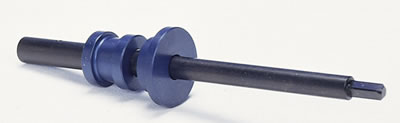
Notices the diff from this one:
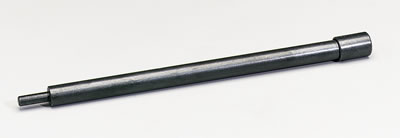
The lower coller on the first one helps route oil to the lifters.
Here is the primer I have:
Notices the diff from this one:
The lower coller on the first one helps route oil to the lifters.
Safety Car
Joined: Jun 2001
Posts: 4,004
Likes: 2
From: Severna Park Md
Re: New Engine Fireup Advice? (dath)
Yes i am refering to Mobil1 10w/30 fully synthetic. Silver bottle, green cap. I wouldnt use it for break in but as soon as the break in is complete switch over to it. Far superior to any dino oil. :yesnod:



Drifting

Joined: Jan 2002
Posts: 1,484
Likes: 0
From: Northampton Ma
Re: New Engine Fireup Advice? (Jvette73)
Yes i am refering to Mobil1 10w/30 fully synthetic. Silver bottle, green cap. I wouldnt use it for break in but as soon as the break in is complete switch over to it. Far superior to any dino oil. :yesnod:
Safety Car
Joined: Jul 2002
Posts: 4,269
Likes: 3
From: St. Charles IL
Cruise-In 5-6-7-8-9-11-12 Veteran
A CI-6 Car Show Winner
Re: New Engine Fireup Advice? (keith72)
Big Fish,
Where'd you get this oil charging cylinder thingy? Sounds like a lot less work.
Where'd you get this oil charging cylinder thingy? Sounds like a lot less work.
