



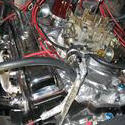





Is There A Relationship between These??

Thread Starter
Melting Slicks


Joined: Apr 2000
Posts: 2,145
Likes: 1
From: Ft. Walton Beach, Fl USA
 Is There A Relationship between These??
Valve lash adjustment and engine temperature? I loosened up my lash (hyd.flat tap.) just a touch and my car now runs about 30 degrees warmer, 190 -200 degrees. Coincedence, evidence of another problem, or related to the lash setting? It never ran hot before.  (not related to the post, I just like this little guy!)
(not related to the post, I just like this little guy!)

Melting Slicks

Joined: Oct 1999
Posts: 2,581
Likes: 14
From: Tolar Texas
Originally Posted by nastee383
Valve lash adjustment and engine temperature?...
My best guess would be that there is no relationship based on a minor lash adjustment, but even if I'm wrong the explaination would be worth reading. Sooooo, here's a trip back ttt!
Thread Starter
Melting Slicks
Joined: Apr 2000
Posts: 2,145
Likes: 1
From: Ft. Walton Beach, Fl USA
What about oil in the combustion chamber from say...poor ring seal. Could that cause a rise in operating temp? I have teflon valve seals. I have 4 oily plugs (1,2,7,8) threads and firing area. Any significance that it's the four corners? Over full sump? The car doesn't smoke. At startup I get a light puff but that's it. The car is running well except for the temp which goes down at cruise. Even the oily plugs are firing probably because the ACCEL300+ is lighting them off.
Melting Slicks
Joined: Oct 1999
Posts: 2,581
Likes: 14
From: Tolar Texas
Originally Posted by nastee383
What about oil in the combustion chamber from say...poor ring seal. Could that cause a rise in operating temp? I have teflon valve seals. I have 4 oily plugs (1,2,7,8) threads and firing area. Any significance that it's the four corners? Over full sump? The car doesn't smoke. At startup I get a light puff but that's it. The car is running well except for the temp which goes down at cruise. Even the oily plugs are firing probably because the ACCEL300+ is lighting them off.
Hopefully someone else will provide additional input.
Thread Starter
Melting Slicks
Joined: Apr 2000
Posts: 2,145
Likes: 1
From: Ft. Walton Beach, Fl USA
Originally Posted by MIKER
My GUESS about the 4 corners having oily plugs is that your intake manifold gasket isn't sealing properly in the corners.
Hopefully someone else will provide additional input.
Hopefully someone else will provide additional input.
Melting Slicks
Joined: Oct 1999
Posts: 2,581
Likes: 14
From: Tolar Texas
Hmmm. What are the odds that the valve seals failed on ALL FOUR CORNERS.... Strange indeed.
Perhaps those 4 valve guides are out of spec... But, why ONLY those 4?
The reason I guessed intake gasket failure was that a similar problem showed up on a friend's small block chevy and it turned out to be the center ports on one side of the intake manifold weren't sealing. Oil was even oozing up around the intake bolts. After removing the intake, like you saw, there was no visible oil in the intake port of the head but the valves had massive buildup.
I'm anxious to hear what you find the problem to be. I'll be watching.
Perhaps those 4 valve guides are out of spec... But, why ONLY those 4?
The reason I guessed intake gasket failure was that a similar problem showed up on a friend's small block chevy and it turned out to be the center ports on one side of the intake manifold weren't sealing. Oil was even oozing up around the intake bolts. After removing the intake, like you saw, there was no visible oil in the intake port of the head but the valves had massive buildup.
I'm anxious to hear what you find the problem to be. I'll be watching.
Corvette Stories
The Best of Corvette for Corvette Enthusiasts

Top 10 Most Expensive Corvettes Ever Sold on Bring A Trailer
Brett Foote
10 Things Every Corvette Owner Needs (2026 Edition)
Michael S. Palmer
8 Most "Only Corvette Owners Understand" Quirks and Problems
Pouria Savadkouei
10 Reasons the C6 Z06 is Still A Performance Benchmark After 20 Years
Joe Kucinski
How Much Horsepower Every Corvette Engine "LOST" in 1972
Joe Kucinski
Top 10 DOs and DON'Ts for Protecting Your Convertible Top!
Michael S. Palmer
Top 10 Most Explosive Corvettes Ever Made: Power-to-Weight Ratio Ranked!
Joe Kucinski
150 hp to 1,250 hp: Every Corvette Generation Compared by the Specs That Matter
Joe Kucinski
8 Coolest Corvette Pace Cars (and Replicas) of All Time
Verdad Gallardo
Melting Slicks


Joined: Jul 2002
Posts: 3,000
Likes: 22
From: Boulder Creek California
That really sounds like intake gasket. Take a micrometer to your valvestems and check out the ID of your teflon gaskets to look for anything abnormal, or try trading them to other valves. If there's goop on the intake valves, then it has to be coming from above, e.g. not ring seal. Are you using gaskets or just sealer?
-Chris
-Chris

Melting Slicks

Joined: Dec 2000
Posts: 3,407
Likes: 2
From: Carmichael CA
There definitely is a relationship between valve lash and engine temperature. With an engine it's all about overcoming friction. Each time a piston compresses air/fuel mixture and ignites it there is a lot of friction that heats up the engine as much as the heat from combustion (most of the heat is converted to mechanical energy to push the piston down). So, if you loosen up the valve lash and now your valves don't open soon enough then there won't be as much air/fuel mixure and hence less combustion and thus require more RPM's even to keep the engine at idle. More RPM's come with more heat and less mechanical energy available to do things like drive the fan and water pump.
Also, you can get more heat by having the valve lash too tight such that the valves start floating you start getting incomplete compression/combustion. I'd recommend following specs which is one turn down from zero lash. When I put an engine together I pre-adjust all the lash by spinning the push-rod and tightening the nut and leave the nut at the point where the push-rod can stop the push-rod from turning. I also disassemble all my lifters and make sure they are filled with fresh oil.
When I start an engine for the first time I usually get a little chatter at first, but it quiets down after about 3 seconds as the oil pressure fills up the lifters. Then I loosen one rocker nut at a time until it clatters and then tighten it until it stops clattering; then, at 1/4 turn interverals waiting about 2 seconds between turns to allow the oil in the lifters to adjust I tighten the nut one full turn.
I found a great place to get valve covers cheap...like $5 each. A local Pick-N-Pull wrecking yard had mostly old trucks. Aparently the Cheyenne 20's had 350's. The one I got my valve covers from even had an orange engine. I'll be cutting the centers out of these valve covers so oil doesn't spray around while I'm adjusting the valves.
Also, you can get more heat by having the valve lash too tight such that the valves start floating you start getting incomplete compression/combustion. I'd recommend following specs which is one turn down from zero lash. When I put an engine together I pre-adjust all the lash by spinning the push-rod and tightening the nut and leave the nut at the point where the push-rod can stop the push-rod from turning. I also disassemble all my lifters and make sure they are filled with fresh oil.
When I start an engine for the first time I usually get a little chatter at first, but it quiets down after about 3 seconds as the oil pressure fills up the lifters. Then I loosen one rocker nut at a time until it clatters and then tighten it until it stops clattering; then, at 1/4 turn interverals waiting about 2 seconds between turns to allow the oil in the lifters to adjust I tighten the nut one full turn.
I found a great place to get valve covers cheap...like $5 each. A local Pick-N-Pull wrecking yard had mostly old trucks. Aparently the Cheyenne 20's had 350's. The one I got my valve covers from even had an orange engine. I'll be cutting the centers out of these valve covers so oil doesn't spray around while I'm adjusting the valves.
Thread Starter
Melting Slicks
Joined: Apr 2000
Posts: 2,145
Likes: 1
From: Ft. Walton Beach, Fl USA
Originally Posted by MIKER
Hmmm. What are the odds that the valve seals failed on ALL FOUR CORNERS.... Strange indeed.
Perhaps those 4 valve guides are out of spec... But, why ONLY those 4?
The reason I guessed intake gasket failure was that a similar problem showed up on a friend's small block chevy and it turned out to be the center ports on one side of the intake manifold weren't sealing. Oil was even oozing up around the intake bolts. After removing the intake, like you saw, there was no visible oil in the intake port of the head but the valves had massive buildup.
I'm anxious to hear what you find the problem to be. I'll be watching.
Perhaps those 4 valve guides are out of spec... But, why ONLY those 4?
The reason I guessed intake gasket failure was that a similar problem showed up on a friend's small block chevy and it turned out to be the center ports on one side of the intake manifold weren't sealing. Oil was even oozing up around the intake bolts. After removing the intake, like you saw, there was no visible oil in the intake port of the head but the valves had massive buildup.
I'm anxious to hear what you find the problem to be. I'll be watching.
Thread Starter
Melting Slicks
Joined: Apr 2000
Posts: 2,145
Likes: 1
From: Ft. Walton Beach, Fl USA
Originally Posted by LiveandLetDrive
That really sounds like intake gasket. Take a micrometer to your valvestems and check out the ID of your teflon gaskets to look for anything abnormal, or try trading them to other valves. If there's goop on the intake valves, then it has to be coming from above, e.g. not ring seal. Are you using gaskets or just sealer?
-Chris
-Chris
Thread Starter
Melting Slicks
Joined: Apr 2000
Posts: 2,145
Likes: 1
From: Ft. Walton Beach, Fl USA
Rocknroll, when I adjust lash on my motor, anything much past one quarter turn is too tight. The motor starts running ragged and vacuum decreases. I initially tried a half turn and the motor didn't even turn over, just whined, too tight. One quarter turn is about right for my motor. I had it set at 1/4 on all 16 then I went back and loosened it about a 1/16 turn on all 16. Thats when the temp shot up. Maybe it was coincidence. I did some checking after I got home from work today and noticed a loose bolt on the alternator which was alowing it to move around and possibly allowing the v belt turning the water pump to slip. Maybe (hopefully) that was the source of the temp rise.
Melting Slicks
Joined: Oct 1999
Posts: 2,581
Likes: 14
From: Tolar Texas
Not related to the heat issue... but the VERY limited amount of lash adjustment you describe doesn't seem right for hydraulic lifters.
However, based on the history of your engine and the fact that it has been a solid performer, the limited adjustment must not be much of a problem.
EDIT to ADD:...
Has your engine always had small range of lash adjustment or did that occur following the cam changes?
However, based on the history of your engine and the fact that it has been a solid performer, the limited adjustment must not be much of a problem.
EDIT to ADD:...
Has your engine always had small range of lash adjustment or did that occur following the cam changes?
Last edited by MIKER; Sep 24, 2004 at 09:11 PM.
Thread Starter
Melting Slicks
Joined: Apr 2000
Posts: 2,145
Likes: 1
From: Ft. Walton Beach, Fl USA
Originally Posted by MIKER
Not related to the heat issue... but the VERY limited amount of lash adjustment you describe doesn't seem right for hydraulic lifters.
However, based on the history of your engine and the fact that it has been a solid performer, the limited adjustment must not be much of a problem.
EDIT to ADD:...
Has your engine always had small range of lash adjustment or did that occur following the cam changes?
However, based on the history of your engine and the fact that it has been a solid performer, the limited adjustment must not be much of a problem.
EDIT to ADD:...
Has your engine always had small range of lash adjustment or did that occur following the cam changes?