





Blue smoke at idle ... help

Thread Starter
Race Director


Joined: Jun 2000
Posts: 10,023
Likes: 657
From: FL
 Blue smoke at idle ... help
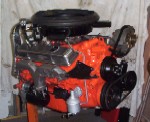
Well, the new engine is stilling puffing blue smoke at idle. More from the driver's side now. Was the passenger's side. This is starting to get frustrating. Probably burning about a quart of oil every 200 miles.
Anyboy have any ideas. Hope it is not the rings. Prefer it be the intake manifold sealing or worst case, stem seals.
Maybe the car is telling me that it really wants that LS-1/LS-6 swap.
Anyboy have any ideas. Hope it is not the rings. Prefer it be the intake manifold sealing or worst case, stem seals.
Maybe the car is telling me that it really wants that LS-1/LS-6 swap.
Melting Slicks

Joined: Dec 2000
Posts: 2,198
Likes: 2
From: Eastern Connecticut
Are you using dinosaur oil or synthetic oil? Break-in should always be with dino oil to seat the rings.
What kind of oil seals are on the valves? Sometimes the shops forget to put the little o-rings on the valves when using stock seals. They make aftermarket seals you can add without removing the valves or doing any machine work. Just have to remove the keepers/springs.
Good luck
Joe
What kind of oil seals are on the valves? Sometimes the shops forget to put the little o-rings on the valves when using stock seals. They make aftermarket seals you can add without removing the valves or doing any machine work. Just have to remove the keepers/springs.
Good luck
Joe

Le Mans Master


Joined: Mar 2004
Posts: 7,423
Likes: 1,458
From: Little Rock AR
Common problem for start-up would be intake manifold gasket leaks. Pull the plugs and see what they look like. Upside down rings can do it too but I bet it is the intake manifold gasket.
What sealer did you use around the ports? RTV can melt from exposure to gasoline.
-Mark.
What sealer did you use around the ports? RTV can melt from exposure to gasoline.
-Mark.

Melting Slicks
Joined: Aug 2004
Posts: 2,165
Likes: 950
From: Keizer Oregon
My new Ar 383 smoked quite a bit for the first 200-300 miles.I was starting to get worried abou rings seal---valve stem---intake manifold and Etc.........but It just quit smoking after around 300+ miles (and quit burning and leaking oil).now at 700 miles it runs perfect... so if your under 500 miles you might just be breaking in rings or something????? goood luck 

Safety Car


Joined: Jul 2002
Posts: 4,269
Likes: 3
From: St. Charles IL
Cruise-In 5-6-7-8-9-11-12 Veteran
A CI-6 Car Show Winner
What is your cranking compression? I can't buy this stuff about seating rings, sorry. Buy a new car and it doesn't smoke or burn oil.
Thread Starter
Race Director
Joined: Jun 2000
Posts: 10,023
Likes: 657
From: FL
Thanks for all the replies. Haven't had a chance yet to put a compression gage on it. May try to do that after the next pay-day.
I think I'll try to drive it some more. Probably have less than 500 miles on it honestly. Passenger side used to smoke now stopped. Driver's side just started. I may also look into a crankcase evacuation system however it will have to be a pump since I am running baffles in the pipes.
Oh well, just another fun Corvette day.
I think I'll try to drive it some more. Probably have less than 500 miles on it honestly. Passenger side used to smoke now stopped. Driver's side just started. I may also look into a crankcase evacuation system however it will have to be a pump since I am running baffles in the pipes.
Oh well, just another fun Corvette day.
Corvette Stories
The Best of Corvette for Corvette Enthusiasts

10 Most Common Corvette Problems of the Last 20 Years!
Joe Kucinski
5 MOST and 5 LEAST Popular Corvette Model Years in History!
Joe Kucinski
2027 Corvette Buyer's Guide: Everything You Need to Know!
Joe Kucinski
10 Things C8 Corvette Owners Hate (But Won't Tell You)
Joe Kucinski
10 Best Corvettes Coming to Barrett-Jackson Palm Beach 2026!
Brett Foote
Every Corvette Grand Sport Explained! (C2, C4, C6, C7, & C8)
Joe Kucinski
Grand Sport & Grand Sport X Launch Alongside All-New 535hp LS6 V8!
Michael S. Palmer
5 Reasons Bad Drivers Crash & 5 Ways to Avoid a Costly Mistake!
Joe Kucinski
7 Bolt-On Upgrades From Extreme Online Store to Level Up Your C6 Corvette
Pouria Savadkouei
Racer

Joined: Nov 2001
Posts: 478
Likes: 3
From: Huntsville AL
I just went through this on mine fresh upper end rebuild. Thinking they had used crappy seals when they did the valve job. When I pulled the intake/heads could see a lot of oil on the mainfold gasket and in the intake runners of the head/underside of the valves. After disassembly of the heads all valves had positive seals so it must have been the intake manifold gasket. I would try that first, then dig deeper is that doesn't fix it. I ended up having new valve guides, valves and springs when I don't really think I need to, but "while I was at it" I did it anyway. No more smoke 
YBnormal...drive a vette
YBnormal...drive a vette

Race Director
Joined: Sep 2004
Posts: 10,275
Likes: 0
From: Arkansas
Please correct me if I'm wrong, but doesn't:
Blue Smoke = Gas
Black Smoke = Oil
White Smoke = Coolant
If you're blowing blue smoke, you could be dumping too much fuel.
Check your timing possibly?
Blue Smoke = Gas
Black Smoke = Oil
White Smoke = Coolant
If you're blowing blue smoke, you could be dumping too much fuel.
Check your timing possibly?



Race Director
Joined: Apr 2000
Posts: 17,646
Likes: 189
From: Who says "Nothing is impossible" ? I've been doing nothing for years.
All new motors should have the rings seated properly, this is done by loading the engine by driving it or on a dyno. Taking it to 3000RPMs and letting your foot off the gas a couple of times and let the engine slow the car down and then take it to 5000 RPMs a few more times. If you don't due this you risk premature ring wear and oil consumption problems
This should be done as soon as possible after the first startup and while the crosshatch on the cylinder wall is fresh
I am not saying that is your problem, just too many people are getting motors rebuilt or buying crate engines and don't have a clue about this critical process. I would look at few things like already mentioned first like screw in studs that were not sealed properly or cheap seals on the valves.
This should be done as soon as possible after the first startup and while the crosshatch on the cylinder wall is fresh
I am not saying that is your problem, just too many people are getting motors rebuilt or buying crate engines and don't have a clue about this critical process. I would look at few things like already mentioned first like screw in studs that were not sealed properly or cheap seals on the valves.
Last edited by MotorHead; Oct 11, 2004 at 12:26 PM.

Le Mans Master
Joined: Apr 2000
Posts: 7,562
Likes: 9
From: B'Ville NY
Cruise-In III Veteran
St. Jude Donor '05
I'm experiencing the same thing with my new engine. I spoke with the builder about the possibility of intake gasket leaking and he didn't think that could be the cause of the smoke bellowing out of the exhaust at idle. He said that he learned long ago that it was best to just mill the intake to match the heads angles while building an engine. He also showed me the gauges he uses to check the different angles.
I know how frustrating this is because I have alot of money into this new engine and it's embarassing to be at a stop light with a car that's got smoke rolling out of the exhaust.
I too still need to do a compression test. I may just pull the thing apart. I didn't have much timing advance when I 1st started and ran the engine. The builder said that I could have either prematurely wore out the rings (which I have a hard time believing) or the valve guides may be burned out which I could believe a bit more if it is true that the low timing could allow the chamber heat to pass thru the exhaust valves.
I'm interested to know if you find out the cause
I know how frustrating this is because I have alot of money into this new engine and it's embarassing to be at a stop light with a car that's got smoke rolling out of the exhaust.
I too still need to do a compression test. I may just pull the thing apart. I didn't have much timing advance when I 1st started and ran the engine. The builder said that I could have either prematurely wore out the rings (which I have a hard time believing) or the valve guides may be burned out which I could believe a bit more if it is true that the low timing could allow the chamber heat to pass thru the exhaust valves.
I'm interested to know if you find out the cause

Thread Starter
Race Director
Joined: Jun 2000
Posts: 10,023
Likes: 657
From: FL
Originally Posted by SmokedTires
I'm experiencing the same thing with my new engine. I spoke with the builder about the possibility of intake gasket leaking and he didn't think that could be the cause of the smoke bellowing out of the exhaust at idle. He said that he learned long ago that it was best to just mill the intake to match the heads angles while building an engine. He also showed me the gauges he uses to check the different angles.
I know how frustrating this is because I have alot of money into this new engine and it's embarassing to be at a stop light with a car that's got smoke rolling out of the exhaust.
I too still need to do a compression test. I may just pull the thing apart. I didn't have much timing advance when I 1st started and ran the engine. The builder said that I could have either prematurely wore out the rings (which I have a hard time believing) or the valve guides may be burned out which I could believe a bit more if it is true that the low timing could allow the chamber heat to pass thru the exhaust valves.
I'm interested to know if you find out the cause
I know how frustrating this is because I have alot of money into this new engine and it's embarassing to be at a stop light with a car that's got smoke rolling out of the exhaust.
I too still need to do a compression test. I may just pull the thing apart. I didn't have much timing advance when I 1st started and ran the engine. The builder said that I could have either prematurely wore out the rings (which I have a hard time believing) or the valve guides may be burned out which I could believe a bit more if it is true that the low timing could allow the chamber heat to pass thru the exhaust valves.
I'm interested to know if you find out the cause

Race Director


Joined: Dec 1999
Posts: 16,945
Likes: 9
Could it be that people here baby their new engine too much? You should not stay at a high or constant rpm with a new engine but DO full theottle accelerations from low to about 3500-4000 rpm or so and also try to engine brake (with an auto just put it in a lower gear to force it to brake on the engine), this will create higher cylinder pressures and will force the rings into the walls. If you do not do this, the walls will glaze up before the rings seat and you will have a nice oil burner as a result. Taking the engine apart will then clearly show brown burned oil spots and soothed piston tops & chambers as a result of poor sealing rings.
Le Mans Master
Joined: Apr 2000
Posts: 7,562
Likes: 9
From: B'Ville NY
Cruise-In III Veteran
St. Jude Donor '05
I got on my engine a few times after a few short drives after getting the car back together. I ran a 12.8 at 112mph at the strip as well as gone to autocross. I certainly have tried to get the cylinder pressures up to seat those rings