







Marine cams...

Melting Slicks


Joined: Jun 2001
Posts: 2,429
Likes: 14
From: CA

Marine cams tend to be ground with a wider lobe seperation angle (LSA) for increased low end torque. Boats need more low end than cars because water is a constant resistance (Until the boat planes out).
A marine cam would probably work well in a heavier car with a tall rear highway gear.
A marine cam would probably work well in a heavier car with a tall rear highway gear.

Melting Slicks
Joined: Oct 2002
Posts: 3,255
Likes: 0
From: Manalapan FL
Originally Posted by Summerfun
What makes a marine cam different??
Can they be used successfully in a car?

Can they be used successfully in a car?
D. Ocean
Miami, FLA

Thread Starter
Race Director

Joined: May 2004
Posts: 11,920
Likes: 2
Originally Posted by 74FLCONV
Go here and do a search on cams (Forums: Technical Q & A). You'll find enough threads on marine engines/cams to keep you reading for a year: www.offshoreonly.com
D. Ocean
Miami, FLA
D. Ocean
Miami, FLA
I've been poking around in there!
Interesting stuff....and lots of it.


Thread Starter
Race Director
Joined: May 2004
Posts: 11,920
Likes: 2
Originally Posted by jcswm
Some Marine engines do turn the wrong way. The torque curve is also way wrong for a street car!!!
1)Isn't the torque curve just like bolting in a 411 rear or something like that....getting LOTS of torque at very low RPM's?
2)How quick will it run out of steam.....when you hear those boats go it sounds like they rev right up there!
Not that I want to put one in my car, but I would like to know the physiology behind the grind madness.
What do the increased LSA do physically?
Corvette Stories
The Best of Corvette for Corvette Enthusiasts

Top 10 Most Explosive Corvettes Ever Made: Power-to-Weight Ratio Ranked!
Joe Kucinski
150 hp to 1,250 hp: Every Corvette Generation Compared by the Specs That Matter
Joe Kucinski
8 Coolest Corvette Pace Cars (and Replicas) of All Time
Verdad Gallardo
Top 10 Corvette Engines RANKED by Peak Torque (70+ Years of Muscle!)
Joe Kucinski
Corvette ZR1X Will Be Pacing the Indy 500, And Could Probably Race, Too!
Verdad Gallardo
Top 10 Corvettes Coming to Mecum Indy 2026!
Brett Foote
Top 10 C9 Corvette MUST-HAVES to Fix These C8 Generation Flaws!
Michael S. Palmer
10 Revolutionary 'Corvette Firsts' Most People Don't Know
Joe Kucinski
5 Reasons to Upgrade to an LS6-Powered Corvette; 5 Reasons to Stay LT2
Michael S. Palmer
Instructor

Joined: Apr 2004
Posts: 235
Likes: 0
From: Mansfield Ohio
You gotta realize boats only have one gear and pretty much run at a constant RPM. Having owned several cabin cruisers, you want lots of power is at low RPM to get you on plane then you just cruise at max of 3500 most of the time. If you ever see 5000 rpm, you're probably out of the water! The constant RPM also isn't really good on an engine but that's the way they run. Of course, that's for a cruiser and not an offshore race prepped boat (hopefully my next big purchase!).
Melting Slicks
Joined: Jun 2001
Posts: 2,429
Likes: 14
From: CA
Originally Posted by Summerfun
Stupid question, but here goes:
1)Isn't the torque curve just like bolting in a 411 rear or something like that....getting LOTS of torque at very low RPM's?
2)How quick will it run out of steam.....when you hear those boats go it sounds like they rev right up there!
Not that I want to put one in my car, but I would like to know the physiology behind the grind madness.
What do the increased LSA do physically?
1)Isn't the torque curve just like bolting in a 411 rear or something like that....getting LOTS of torque at very low RPM's?
2)How quick will it run out of steam.....when you hear those boats go it sounds like they rev right up there!
Not that I want to put one in my car, but I would like to know the physiology behind the grind madness.
What do the increased LSA do physically?
Just to add on the reverse rotation motors; They also produced regular-rotation marine motors with reverse-rotation cams...Why? Because GM thought a 2-gear drive setup was more reliable than a timing chain at continuous high rpm operation (and more cost effective than reinventing the wheel on a 3-gear arrangement) The only way to make 2 gears work is to spin the cam the opposite direction.

Le Mans Master


Joined: Oct 2000
Posts: 8,897
Likes: 1,356
From: Santa Ana CA
Originally Posted by 71coupe
The only way to make 2 gears work is to spin the cam the opposite direction.
 , no, 2 gears can be setup to spin in the same direction if one gear spins within the other gear. The outter gear would have its teeth along its inside perimeter. This could be applied to automotive use, but is probably not practical as it would require a major re-design.
Melting Slicks
Joined: Jun 2001
Posts: 2,429
Likes: 14
From: CA
Originally Posted by toddalin
Just to be a smart *** , no, 2 gears can be setup to spin in the same direction if one gear spins within the other gear. The outter gear would have its teeth along its inside perimeter. This could be applied to automotive use, but is probably not practical as it would require a major re-design.
, no, 2 gears can be setup to spin in the same direction if one gear spins within the other gear. The outter gear would have its teeth along its inside perimeter. This could be applied to automotive use, but is probably not practical as it would require a major re-design.EDIT: A new reverse-rotation distributor gear is required - available from the supplier of the reverse rotation cam.
Last edited by 71coupe; Nov 7, 2004 at 12:21 AM. Reason: sp
Intermediate
Joined: Sep 2004
Posts: 39
Likes: 0
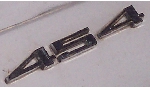
I talked to the original owner of my '70 the other night. He's the guy that built the engine, and to drag. It's a 454 running a boat cam. He didn't remember the lift/duration but let's just say it has a very hefty lope. The block has been bored twice, 11:1 TRW pistons, different heads, C396 intake, big double pumper Holley, magneto, Hooker headers/sidepipes (no baffles), different (lower) 1st and 2nd gear in the auto trans, shift kit, 411 rear end. It will jump.
On the boat cam, mostly used for low end torque. Mine works very well. I do wish I knew the specs on it but probably never will.
VaporLockd
On the boat cam, mostly used for low end torque. Mine works very well. I do wish I knew the specs on it but probably never will.
VaporLockd
Thread Starter
Race Director
Joined: May 2004
Posts: 11,920
Likes: 2
1)The question that follows is whether one would be able to take advantage of the wider LSA for lower end torque.....
..when using large intake runner rectangular port open chamber heads and a single plane high rise intake?
2)Would one benefit from a marine cam, where you usually have to go with more cubes with that type of combination in order to compensate for the losses due to reduced flow velocity at lower rpm's?
3)Would you still be able to take advantage of your top end combination by being able to rev higher or will a marine cam cause your bottom end to run out of steam due to inefficiency at higher rpm's
4)I'm trying to put a lot of thoughts into as few as possible words for fear of boring everyone with lengthy posts that sound stupid.....and is probably stupid. It does however put little pieces into a big puzzle for me
..when using large intake runner rectangular port open chamber heads and a single plane high rise intake?
2)Would one benefit from a marine cam, where you usually have to go with more cubes with that type of combination in order to compensate for the losses due to reduced flow velocity at lower rpm's?
3)Would you still be able to take advantage of your top end combination by being able to rev higher or will a marine cam cause your bottom end to run out of steam due to inefficiency at higher rpm's
4)I'm trying to put a lot of thoughts into as few as possible words for fear of boring everyone with lengthy posts that sound stupid.....and is probably stupid. It does however put little pieces into a big puzzle for me
Melting Slicks
Joined: Jun 2001
Posts: 2,429
Likes: 14
From: CA
Originally Posted by Summerfun
1)The question that follows is whether one would be able to take advantage of the wider LSA for lower end torque.....
..when using large intake runner rectangular port open chamber heads and a single plane high rise intake?
2)Would one benefit from a marine cam, where you usually have to go with more cubes with that type of combination in order to compensate for the losses due to reduced flow velocity at lower rpm's?
3)Would you still be able to take advantage of your top end combination by being able to rev higher or will a marine cam cause your bottom end to run out of steam due to inefficiency at higher rpm's
4)I'm trying to put a lot of thoughts into as few as possible words for fear of boring everyone with lengthy posts that sound stupid.....and is probably stupid. It does however put little pieces into a big puzzle for me
..when using large intake runner rectangular port open chamber heads and a single plane high rise intake?
2)Would one benefit from a marine cam, where you usually have to go with more cubes with that type of combination in order to compensate for the losses due to reduced flow velocity at lower rpm's?
3)Would you still be able to take advantage of your top end combination by being able to rev higher or will a marine cam cause your bottom end to run out of steam due to inefficiency at higher rpm's
4)I'm trying to put a lot of thoughts into as few as possible words for fear of boring everyone with lengthy posts that sound stupid.....and is probably stupid. It does however put little pieces into a big puzzle for me
 who knows. Never heard of Midway Performance

Drifting

Joined: Jul 2001
Posts: 1,418
Likes: 1
Actually there is not such a thing as a Marine Cam . It's just a section in a catalog for cam maker to market some of the cams commonly used .
Now here n there you'll see GM cams for sale that come out of the Marinised engines " over the counter crate motors " These are low lift and pretty much just long , heavy paper weights
When choosing cams think of it this way , all boats are not created equal . Some are Jet Drives , some V-Drives and then enter the Mercruiser or other brand outdrives so the engine builder or cam selector should have been there n done that to be able to give best advice ... anything less is guessing
All three of the type drives like specific series of cams . All three of these drives can be regeared like the impeller size of the pump , the prop size and pitch on the outdrive and both the v-drive case gears and props of the v-drive be them the negative lift for the flat bottoms or positive lift style props for the Hydro's in both diameter and pitch .
Stern Drives need a solid idle unless they are using a blown engine . Then when the blower roam is on the low side you can cram them in gear .
V-Drives with compression just cam them like a light drag car for the most part
Jet Drives with compression just cam them like an oval track car for the most part
Take into consideration how good the exhaust is when choosing a cam on any of them and yes , tuning with LCA's and intake-Exhaust centerlines properly is what gets one boat 4 lenghts ahead of the one with a poor choice in cam and other engine components
Now here n there you'll see GM cams for sale that come out of the Marinised engines " over the counter crate motors " These are low lift and pretty much just long , heavy paper weights
When choosing cams think of it this way , all boats are not created equal . Some are Jet Drives , some V-Drives and then enter the Mercruiser or other brand outdrives so the engine builder or cam selector should have been there n done that to be able to give best advice ... anything less is guessing
All three of the type drives like specific series of cams . All three of these drives can be regeared like the impeller size of the pump , the prop size and pitch on the outdrive and both the v-drive case gears and props of the v-drive be them the negative lift for the flat bottoms or positive lift style props for the Hydro's in both diameter and pitch .
Stern Drives need a solid idle unless they are using a blown engine . Then when the blower roam is on the low side you can cram them in gear .
V-Drives with compression just cam them like a light drag car for the most part
Jet Drives with compression just cam them like an oval track car for the most part
Take into consideration how good the exhaust is when choosing a cam on any of them and yes , tuning with LCA's and intake-Exhaust centerlines properly is what gets one boat 4 lenghts ahead of the one with a poor choice in cam and other engine components
Last edited by mountainmotor; Nov 7, 2004 at 07:55 AM.

Melting Slicks
Joined: Sep 2004
Posts: 2,655
Likes: 19
First of all, not even Merc makes reverse rotation anymore. BTW, they reverse the rotation of the crank only by using a gear rather than chain drive.
Second, marine cams are generally made for a broader torque range and usually only good to about 5000 rpm. They are also designed with less overlap of talve timing to prevent reversion. Water is generally introduced into the exhaust to quiet it. If your exhaust valve is open too long after TDC of the exhaust stroke, water will be sucked in.
Second, marine cams are generally made for a broader torque range and usually only good to about 5000 rpm. They are also designed with less overlap of talve timing to prevent reversion. Water is generally introduced into the exhaust to quiet it. If your exhaust valve is open too long after TDC of the exhaust stroke, water will be sucked in.
