



Engine Problem

Thread Starter
Cruising

Joined: Mar 2006
Posts: 10
Likes: 0
From: Proctorville OH
 Engine Problem
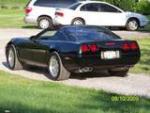
I have a 91 Vette, 6 speed. I had the car out early this summer. The engine was running perfect. Idle perfect. Acceleration perfect. I went to shift from 3rd to 4th gear and the engine just died. No odd sounds from the engine, no smoke, no antifreeze in the oil. It was running normal one minute and the nex minute it died. I finally got the engine restarted and it would run for a couple of minutes and die again. Fuel pressure ok, compression is 180 to 190 psi on each cyliner. The only computer code was a code 42, iginition contol module. Changed that. Did not fix the problem. Any ideas on what to look for?

Safety Car


Joined: Jan 2004
Posts: 3,783
Likes: 15
From: Northern California
Did you buy a Quality Ignition Control Module? Also, did you install the Module with the Thermo Paste?
Low quality ignition control modules are known to be defective right out of the box.
Low quality ignition control modules are known to be defective right out of the box.

Race Director


Joined: Dec 2000
Posts: 17,551
Likes: 26
From: El Paso Texas
When you say "fuel pressure OK"....what was the exact reading? Does the fuel pressure maintain during an "event", and have you verified no spark during an event also?
Did you test the module before replacing it? Here's why I ask that.....If the ECM sets a DTC for the module, it has detected a fault in that circuit. The module is a portion of that circuit, but not the only thing that can fail. There is also associated wiring, harnesses and connectors, etc...that are all susceptible to failure. And as mentioned above, you did put a thin coating of the heat sink grease under the new module, correct?
Remove your new module and take it to any parts store and they will test it. Test the old one as well. Then if they both test good, get out your ohm meter and Factory Service Manual and start tracing wiring. Test the coil as well. Run through the entire troubleshooting procedure in the manual.....the problem will rear it's ugly head along the line.
Did you test the module before replacing it? Here's why I ask that.....If the ECM sets a DTC for the module, it has detected a fault in that circuit. The module is a portion of that circuit, but not the only thing that can fail. There is also associated wiring, harnesses and connectors, etc...that are all susceptible to failure. And as mentioned above, you did put a thin coating of the heat sink grease under the new module, correct?
Remove your new module and take it to any parts store and they will test it. Test the old one as well. Then if they both test good, get out your ohm meter and Factory Service Manual and start tracing wiring. Test the coil as well. Run through the entire troubleshooting procedure in the manual.....the problem will rear it's ugly head along the line.
Race Director
Joined: Dec 2000
Posts: 17,551
Likes: 26
From: El Paso Texas
Oh....almost forgot....something to remember during troubleshooting....the code 42 may be A problem, but not necessarily THE problem. Or it could be a symptom of another problem. That is why it's important to follow the troubleshooting sequence in the manual.
During a no-start event, if it turns up you have fuel pressure, compression, timing, and spark, put a noid light on the injectors and see if the ECM is grounding them.
Troubleshooting a No-Start is really just checking things off a list in a logical order. Good luck....and let us know how it turns out.
During a no-start event, if it turns up you have fuel pressure, compression, timing, and spark, put a noid light on the injectors and see if the ECM is grounding them.
Troubleshooting a No-Start is really just checking things off a list in a logical order. Good luck....and let us know how it turns out.
Thread Starter
Cruising
Joined: Mar 2006
Posts: 10
Likes: 0
From: Proctorville OH
Engine Problems
My fuel pressure is around 40 psi but the vacuum pressure was around 3 psi. I am told it should be around 18 psi.
The ignition control module was purchased at NAPA auto parts. They ususally have quality auto parts, but the new part could be defective.
The car will start but as soon as you try to press on the gas pedal the engine dies.
The ignition control module was purchased at NAPA auto parts. They ususally have quality auto parts, but the new part could be defective.
The car will start but as soon as you try to press on the gas pedal the engine dies.
Last edited by RH53; Sep 5, 2010 at 06:52 PM.
Race Director
Joined: Dec 2000
Posts: 17,551
Likes: 26
From: El Paso Texas
Can you clarify a bit on "vacuum pressure".....do you mean inches of vacuum?
At idle, you should have 15-18 inches of manifold vacuum depending on your elevation. If you have only 3 inches of vacuum, you have a MAJOR vacuum leak and it is probably running incredibly rich. Given your compression readings, you don't have a stuck valve, so it would be a hose or a intake gasket issue if that's the case. And yes, with a huge vacuum leak, it won't idle correctly and will fall on it's face when you open the throttle plates.
Let me know if I'm on the right path there....
At idle, you should have 15-18 inches of manifold vacuum depending on your elevation. If you have only 3 inches of vacuum, you have a MAJOR vacuum leak and it is probably running incredibly rich. Given your compression readings, you don't have a stuck valve, so it would be a hose or a intake gasket issue if that's the case. And yes, with a huge vacuum leak, it won't idle correctly and will fall on it's face when you open the throttle plates.
Let me know if I'm on the right path there....
Thread Starter
Cruising
Joined: Mar 2006
Posts: 10
Likes: 0
From: Proctorville OH
Yes you are on the right path.
I went back today and did another compression test before installing the spark plugs. Here are the readings I got:
1st test 2nd test
cyl 1 175 psi 200 psi
cyl 3 180 psi 180 psi
cyl 5 175 psi 185 psi
cyl 7 160 psi 190 psi
cyl 2 180 psi 230 psi
cyl 4 190 psi 210 psi
cyl 6 170 psi 185 psi
cyl 8 150 psi 195 psi
On the 2nd test I cranked the engine at least 4 or 5 revolutions. The 1st test I was having trouble with the battery, maybe that is why I was getting lower readings.
The spark plugs were black with carbon but not deposits or burned electrodes. Generally looked ok. I cleaned and checked the gap on the plugs. They were set at 0.035.
I checked the computer for any codes it had stored, right now there are no codes stored. Before I was getting code 42, ignition control module. Now the only code flashing is code 12.
I have checked vacuum hoses for leaks, so far I have not found any obvious leaks or cracked hoses. I am not ruling these out yet, I am going to be doing more checking this week.
I have checked all of the fuses. All of the fuses are good.
I took the distributor cap off, cranked the engine. The rotor was turning as it should.
I have also be cleaning elecrical connections with electrial connnection cleaner.
So far nothing is just standing out as a problem. I need to do more investigating.
I can take a timing light and move the timing marks back and foward. The timing is set correctly. Not ruling out just yet that the timing chains may have jumped time, but I just put new chains and gears on about 2 years ago. I purchased them from NAPA auto parts.
Just taking things one day at a time and trying to eliminate possible causes.
I need to check the vacuum again. The guy that checked the vacuum had trouble get the gauge on the schrader valve, so I am not 100% positive that he had a good reading but I don't think he would make a mistake like that.
Things are not making sense, to have a vacuum reading at 3 in. and having the timing and compression looking ok.
Thanks for you help, I'll keep at it unitl I find the problem.
I went back today and did another compression test before installing the spark plugs. Here are the readings I got:
1st test 2nd test
cyl 1 175 psi 200 psi
cyl 3 180 psi 180 psi
cyl 5 175 psi 185 psi
cyl 7 160 psi 190 psi
cyl 2 180 psi 230 psi
cyl 4 190 psi 210 psi
cyl 6 170 psi 185 psi
cyl 8 150 psi 195 psi
On the 2nd test I cranked the engine at least 4 or 5 revolutions. The 1st test I was having trouble with the battery, maybe that is why I was getting lower readings.
The spark plugs were black with carbon but not deposits or burned electrodes. Generally looked ok. I cleaned and checked the gap on the plugs. They were set at 0.035.
I checked the computer for any codes it had stored, right now there are no codes stored. Before I was getting code 42, ignition control module. Now the only code flashing is code 12.
I have checked vacuum hoses for leaks, so far I have not found any obvious leaks or cracked hoses. I am not ruling these out yet, I am going to be doing more checking this week.
I have checked all of the fuses. All of the fuses are good.
I took the distributor cap off, cranked the engine. The rotor was turning as it should.
I have also be cleaning elecrical connections with electrial connnection cleaner.
So far nothing is just standing out as a problem. I need to do more investigating.
I can take a timing light and move the timing marks back and foward. The timing is set correctly. Not ruling out just yet that the timing chains may have jumped time, but I just put new chains and gears on about 2 years ago. I purchased them from NAPA auto parts.
Just taking things one day at a time and trying to eliminate possible causes.
I need to check the vacuum again. The guy that checked the vacuum had trouble get the gauge on the schrader valve, so I am not 100% positive that he had a good reading but I don't think he would make a mistake like that.
Things are not making sense, to have a vacuum reading at 3 in. and having the timing and compression looking ok.
Thanks for you help, I'll keep at it unitl I find the problem.
Last edited by RH53; Sep 6, 2010 at 10:05 PM.
Corvette Stories
The Best of Corvette for Corvette Enthusiasts

Top 10 Most Expensive Corvettes Ever Sold on Bring A Trailer
Brett Foote
10 Things Every Corvette Owner Needs (2026 Edition)
Michael S. Palmer
8 Most "Only Corvette Owners Understand" Quirks and Problems
Pouria Savadkouei
10 Reasons the C6 Z06 is Still A Performance Benchmark After 20 Years
Joe Kucinski
How Much Horsepower Every Corvette Engine "LOST" in 1972
Joe Kucinski
Top 10 DOs and DON'Ts for Protecting Your Convertible Top!
Michael S. Palmer
Top 10 Most Explosive Corvettes Ever Made: Power-to-Weight Ratio Ranked!
Joe Kucinski
150 hp to 1,250 hp: Every Corvette Generation Compared by the Specs That Matter
Joe Kucinski
8 Coolest Corvette Pace Cars (and Replicas) of All Time
Verdad Gallardo
Team Owner

Joined: Oct 2000
Posts: 96,443
Likes: 9
From: Fort Knox, KY
Cruise-In IV Veteran
Cruise-In VI Veteran
Cruise-In VII Veteran
Cruise-In VIII Veteran
Low quality ignition control modules are known to be defective right out of the box.
Ditto for oxygen sensors. I bought a Bosch Premium Heated 02 sensor from AZ for my wife's car Friday, installed it, and it died in less than 10 minutes.
Ditto for oxygen sensors. I bought a Bosch Premium Heated 02 sensor from AZ for my wife's car Friday, installed it, and it died in less than 10 minutes.


Thread Starter
Cruising
Joined: Mar 2006
Posts: 10
Likes: 0
From: Proctorville OH
Don't think it's the fuel pump. We check it, the pump had 40 psi pressure. I also changed the fuel filter. The car will start but idle very rough and dies if you try to press on the gas pedal.
Race Director
Joined: Dec 2000
Posts: 17,551
Likes: 26
From: El Paso Texas
I just changed the plugs on my '96 F150. This makes twice in 15 years of ownership. They had 60K miles on them, and other than a little wear, were clean as a whistle. Yours should look the same.

Race Director
Joined: Dec 2000
Posts: 17,551
Likes: 26
From: El Paso Texas
Good point.
Yes, you should ohm your injectors. One more question....you have 40 psi of fuel pressure, but how long does it hold pressure after key off? At what rate is it bleeding off? You're fouling plugs....the question is, are the injectors leaking, or is the computer artificially richening the mixture?
Yes, you should ohm your injectors. One more question....you have 40 psi of fuel pressure, but how long does it hold pressure after key off? At what rate is it bleeding off? You're fouling plugs....the question is, are the injectors leaking, or is the computer artificially richening the mixture?

Team Owner


Joined: Jan 2009
Posts: 73,568
Likes: 33
From: Somewhere in Mo
St. Jude Donor '09-'10, '14
How's your EGR? Black fouled plugs makes me think vacuum leak as well as FF suggested. A bad EGR can do this. cause it to die and stumble at idle.
Last edited by RetiredSFC 97; Sep 8, 2010 at 02:18 PM.

Drifting


Joined: Jan 2007
Posts: 1,908
Likes: 3
From: Supreme Soviet Peace-Loving Pipple's Kollektive of Seattle Wa
 3 inches of vacuum means an intake leak somehere....He may have one or more marginal issues but this one is a biggie!
Last edited by SQUIRMIN VERMIN 84; Sep 8, 2010 at 05:08 PM.
Thread Starter
Cruising
Joined: Mar 2006
Posts: 10
Likes: 0
From: Proctorville OH
Ok,
The car has 40 psi fuel pump pressure.
I changed the coil, distributor cap, cleaned and regapped the sprk plugs.
I checked each spark plug with a noid light. Each plug is firing.
I got the engine started. It would idle, but it ran rough. Still wants to die if you press on the gas pedal.
I did get shocked once while moving the distrubutor, kind of sounds like it time to change the spark plug wires now.
Computer is not storing any codes. It is showning only code 12 (self diagonstic test code)
I stll suspecting a vacuum leak somewhere, but the lines that I have check didn't seem to be loose or dry rotted. Doesn't mean that they couldn't still be bad. I think I need to do another vacuum test to verify the last test reading to be sure that the reading was correct.
Enigine didn't have any odd sounds. It sounded good. Doesn't seem to be mechanical.
Any more ideas anyone.
Thanks for your help.
I might have to wait until next summer to drive, but that's ok as long as I get it running again.
The car has 40 psi fuel pump pressure.
I changed the coil, distributor cap, cleaned and regapped the sprk plugs.
I checked each spark plug with a noid light. Each plug is firing.
I got the engine started. It would idle, but it ran rough. Still wants to die if you press on the gas pedal.
I did get shocked once while moving the distrubutor, kind of sounds like it time to change the spark plug wires now.
Computer is not storing any codes. It is showning only code 12 (self diagonstic test code)
I stll suspecting a vacuum leak somewhere, but the lines that I have check didn't seem to be loose or dry rotted. Doesn't mean that they couldn't still be bad. I think I need to do another vacuum test to verify the last test reading to be sure that the reading was correct.
Enigine didn't have any odd sounds. It sounded good. Doesn't seem to be mechanical.
Any more ideas anyone.
Thanks for your help.
I might have to wait until next summer to drive, but that's ok as long as I get it running again.