



1984 Crossfire

Drifting


Joined: Feb 2013
Posts: 1,465
Likes: 48

Okay, A couple of questions.
1) first time I did this I pulled all the water into the engine. SEVERAL times so I gave up.
How long should the tube from the manometer to the engine be?
2) Does anyone know where I can buy injector nozzels? I understand that the stock nozzels are little under sized for the stock manifold. I have ported mine and would like to take full advantage of the porting. Someone mentioned the Police Caprice Nozzels. Should I be looking for them?
3) My car pulls twenty inches of vacuum at idle. is that too much to use the water manometer?
I have access to a digital manometer will it work for this?
thank you for the help. I plan on doing this project next month. when I reduce my usage of the car. just trying to get ready.
1) first time I did this I pulled all the water into the engine. SEVERAL times so I gave up.
How long should the tube from the manometer to the engine be?
2) Does anyone know where I can buy injector nozzels? I understand that the stock nozzels are little under sized for the stock manifold. I have ported mine and would like to take full advantage of the porting. Someone mentioned the Police Caprice Nozzels. Should I be looking for them?
3) My car pulls twenty inches of vacuum at idle. is that too much to use the water manometer?
I have access to a digital manometer will it work for this?
thank you for the help. I plan on doing this project next month. when I reduce my usage of the car. just trying to get ready.

Team Owner


Joined: Aug 2004
Posts: 21,543
Likes: 3,216
From: Park City Utah
^NO!
1. You're using the wrong vacuum ports. You need to use the vacuum ports on the TB's that are "Ported vacuum".
2. Look on ebay (or elsewhere) for "90 pph TBI injectors". They were commonly used in the 454 TBI and marine TBI applications. Easy to get. Direct drop-in.
3. 20" is great. As I stated above you're using the wrong ports.
You can also balance them by closing them both, until the plates bind in the bores. Then adjust the balancing screw such that they BOTH crack open from "bind" or fully closed, at the same time. Then re-set your minimum air. That method works and is easy.
1. You're using the wrong vacuum ports. You need to use the vacuum ports on the TB's that are "Ported vacuum".
2. Look on ebay (or elsewhere) for "90 pph TBI injectors". They were commonly used in the 454 TBI and marine TBI applications. Easy to get. Direct drop-in.
3. 20" is great. As I stated above you're using the wrong ports.
You can also balance them by closing them both, until the plates bind in the bores. Then adjust the balancing screw such that they BOTH crack open from "bind" or fully closed, at the same time. Then re-set your minimum air. That method works and is easy.
Drifting
Joined: Feb 2013
Posts: 1,465
Likes: 48
^NO!
1. You're using the wrong vacuum ports. You need to use the vacuum ports on the TB's that are "Ported vacuum".
2. Look on ebay (or elsewhere) for "90 pph TBI injectors". They were commonly used in the 454 TBI and marine TBI applications. Easy to get. Direct drop-in.
3. 20" is great. As I stated above you're using the wrong ports.
You can also balance them by closing them both, until the plates bind in the bores. Then adjust the balancing screw such that they BOTH crack open from "bind" or fully closed, at the same time. Then re-set your minimum air. That method works and is easy.
1. You're using the wrong vacuum ports. You need to use the vacuum ports on the TB's that are "Ported vacuum".
2. Look on ebay (or elsewhere) for "90 pph TBI injectors". They were commonly used in the 454 TBI and marine TBI applications. Easy to get. Direct drop-in.
3. 20" is great. As I stated above you're using the wrong ports.
You can also balance them by closing them both, until the plates bind in the bores. Then adjust the balancing screw such that they BOTH crack open from "bind" or fully closed, at the same time. Then re-set your minimum air. That method works and is easy.
What is the pph of the stock TBIs?
Can I put a fuel pressure gauge inline between the two TBIs?
Thanks for all the help. really excited about getting it running corrrectly.
Team Owner
Joined: Aug 2004
Posts: 21,543
Likes: 3,216
From: Park City Utah
You have to use the ported vacuum ports. Who ever told you otherwise was dead wrong. How can measuring manifold vacuum tell you anything about air that is passing the throttle plates? It can't.
The ported vacuum ports are extremely sensitive to the throttle blade's position next to the port. This is why it's used as a device to align the two plates. If the minimum air (aka idle speed screw) is adjusted correctly, there should be some vacuum at the ported vacuum ports. If there is none, the throttles are closed beyond the ports, or open way too far.
Again, you can completely avoid the complexity of messing with vacuum, manometers, etc. and simply align the throttle plates mechanically, and that will be plenty "good enough".
Stock injectors are something like 65 and 63 PPH. They aren't the same front/rear in an attempt to improve even fuel distribution, but in my experience, the "staggered" set up isn't necessary and does nothing meaningful. At any rate, stock injectors are in the mid 60's pph. You should be able to find injectors in a pretty wide range of flow ratings; they were used in everything from the 90hp 2.5L "Iron Duke", all the way up to the 235hp Chevy 454SS truck, and more recently, up to ~330hp in marine applications. Because the fuel pressure is so low, you can make large fueling changes with fuel pressure; changing the pressure 1 PSI in a 13 pound system is a far greater %change than 1 PSI change in a 40 PSI multiport system. So there is quite a bit of flexibility there.
You can install a fuel pressure gauge any where you want, before the rear TB (where the regulator is). It's probably best to install the gauge after the filter. In line between the TB's is a handy place -once you do the work to fabricate the hook up. I never bothered w/that; I'd simply "T" into the rubber hose, between the frame and the engine on the rare occasions that I needed to check or adjust pressure, then I'd remove it all when done.
The ported vacuum ports are extremely sensitive to the throttle blade's position next to the port. This is why it's used as a device to align the two plates. If the minimum air (aka idle speed screw) is adjusted correctly, there should be some vacuum at the ported vacuum ports. If there is none, the throttles are closed beyond the ports, or open way too far.
Again, you can completely avoid the complexity of messing with vacuum, manometers, etc. and simply align the throttle plates mechanically, and that will be plenty "good enough".
Stock injectors are something like 65 and 63 PPH. They aren't the same front/rear in an attempt to improve even fuel distribution, but in my experience, the "staggered" set up isn't necessary and does nothing meaningful. At any rate, stock injectors are in the mid 60's pph. You should be able to find injectors in a pretty wide range of flow ratings; they were used in everything from the 90hp 2.5L "Iron Duke", all the way up to the 235hp Chevy 454SS truck, and more recently, up to ~330hp in marine applications. Because the fuel pressure is so low, you can make large fueling changes with fuel pressure; changing the pressure 1 PSI in a 13 pound system is a far greater %change than 1 PSI change in a 40 PSI multiport system. So there is quite a bit of flexibility there.
You can install a fuel pressure gauge any where you want, before the rear TB (where the regulator is). It's probably best to install the gauge after the filter. In line between the TB's is a handy place -once you do the work to fabricate the hook up. I never bothered w/that; I'd simply "T" into the rubber hose, between the frame and the engine on the rare occasions that I needed to check or adjust pressure, then I'd remove it all when done.
Last edited by Tom400CFI; Nov 9, 2013 at 02:37 PM.
Drifting
Joined: Feb 2013
Posts: 1,465
Likes: 48
You have to use the ported vacuum ports. Who ever told you otherwise was dead wrong. How can measuring manifold vacuum tell you anything about air that is passing the throttle plates? It can't.
The ported vacuum ports are extremely sensitive to the throttle blade's position next to the port. This is why it's used as a device to align the two plates. If the minimum air (aka idle speed screw) is adjusted correctly, there should be some vacuum at the ported vacuum ports. If there is none, the throttles are closed beyond the ports, or open way too far.
Again, you can completely avoid the complexity of messing with vacuum, manometers, etc. and simply align the throttle plates mechanically, and that will be plenty "good enough".
Stock injectors are something like 65 and 63 PPH. They aren't the same front/rear in an attempt to improve even fuel distribution, but in my experience, the "staggered" set up isn't necessary and does nothing meaningful. At any rate, stock injectors are in the mid 60's pph. You should be able to find injectors in a pretty wide range of flow ratings; they were used in everything from the 90hp 2.5L "Iron Duke", all the way up to the 235hp Chevy 454SS truck, and more recently, up to ~330hp in marine applications. Because the fuel pressure is so low, you can make large fueling changes with fuel pressure; changing the pressure 1 PSI in a 13 pound system is a far greater %change than 1 PSI change in a 40 PSI multiport system. So there is quite a bit of flexibility there.
You can install a fuel pressure gauge any where you want, before the rear TB (where the regulator is). It's probably best to install the gauge after the filter. In line between the TB's is a handy place -once you do the work to fabricate the hook up. I never bothered w/that; I'd simply "T" into the rubber hose, between the frame and the engine on the rare occasions that I needed to check or adjust pressure, then I'd remove it all when done.
The ported vacuum ports are extremely sensitive to the throttle blade's position next to the port. This is why it's used as a device to align the two plates. If the minimum air (aka idle speed screw) is adjusted correctly, there should be some vacuum at the ported vacuum ports. If there is none, the throttles are closed beyond the ports, or open way too far.
Again, you can completely avoid the complexity of messing with vacuum, manometers, etc. and simply align the throttle plates mechanically, and that will be plenty "good enough".
Stock injectors are something like 65 and 63 PPH. They aren't the same front/rear in an attempt to improve even fuel distribution, but in my experience, the "staggered" set up isn't necessary and does nothing meaningful. At any rate, stock injectors are in the mid 60's pph. You should be able to find injectors in a pretty wide range of flow ratings; they were used in everything from the 90hp 2.5L "Iron Duke", all the way up to the 235hp Chevy 454SS truck, and more recently, up to ~330hp in marine applications. Because the fuel pressure is so low, you can make large fueling changes with fuel pressure; changing the pressure 1 PSI in a 13 pound system is a far greater %change than 1 PSI change in a 40 PSI multiport system. So there is quite a bit of flexibility there.
You can install a fuel pressure gauge any where you want, before the rear TB (where the regulator is). It's probably best to install the gauge after the filter. In line between the TB's is a handy place -once you do the work to fabricate the hook up. I never bothered w/that; I'd simply "T" into the rubber hose, between the frame and the engine on the rare occasions that I needed to check or adjust pressure, then I'd remove it all when done.
Corvette Stories
The Best of Corvette for Corvette Enthusiasts

Top 10 Most Expensive Corvettes Ever Sold on Bring A Trailer
Brett Foote
10 Things Every Corvette Owner Needs (2026 Edition)
Michael S. Palmer
8 Most "Only Corvette Owners Understand" Quirks and Problems
Pouria Savadkouei
10 Reasons the C6 Z06 is Still A Performance Benchmark After 20 Years
Joe Kucinski
How Much Horsepower Every Corvette Engine "LOST" in 1972
Joe Kucinski
Top 10 DOs and DON'Ts for Protecting Your Convertible Top!
Michael S. Palmer
Top 10 Most Explosive Corvettes Ever Made: Power-to-Weight Ratio Ranked!
Joe Kucinski
150 hp to 1,250 hp: Every Corvette Generation Compared by the Specs That Matter
Joe Kucinski
8 Coolest Corvette Pace Cars (and Replicas) of All Time
Verdad Gallardo
Melting Slicks


Joined: Sep 2006
Posts: 3,194
Likes: 27
From: Monroe Twp, NJ
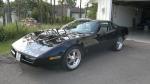
Here is how my 84 has been set up. It was and old conversion by the last owner who got tired of listening to other Corvette owners knock the CFI. What I always find strange is the 82 Collectors Edition has the same motor and people are shelling out $10,000 for nice well kept examples.You never hear a bad word about the 82 Crossfire engine. No fires, no dump it, get a new title. It's always the 84 that is the worst Corvette ever built. Personally I like the 84 because I dont want and aidbag steering wheel stearing me in the face or a split console abs sensors going bad and I dont need all the luxury bells and whistles. of the newer cars. My car has the old Xram set up which is no longer available. It also has the 85 fuel pump conversion and a free flow exhaust system. I have the orginal timming chain with 150,000 miles and there are no timming issues. The ICM is a 8746 which I believe is out of a newer Camaro. It also has inlarged TBs and a chip which was programed by a fellow who worked for GM. The exhaust system is free flow and the car has instance response. I do not believe in stop light drag racing because by todays standards causing and accident which can be very common with todays hi powered cars is a felony which will buy you a few years in jail. I do not drag race my 84 but the previous owner said newer TPI Corvettes were not a problem. The 84 is unique in itself and with the stiff Z51 suspension is a great handling car. Since making modifications will most likely cause you to fail smog tests check you state to see if they apply. Most states dont because of the age of the car. Be prepared to see a check engine like if you start removing pollition parts of the engine. ALL of that stuff was removed by my last owner who lived in florida which has no inspaction laws. The 84 runs great when set up right but as most stated you will never get a dime of what you put into it back. The 84 is the least wanted Corvette IMO based in part on false stories. Trim parts are expensive but available. If you dont plan to keep it for many years you should look for something newer.
Burning Brakes


Joined: Feb 2013
Posts: 1,173
Likes: 152
From: norway

Heel & Toe

Joined: Jun 2013
Posts: 19
Likes: 0
From: lorain Ohio
i am kind of in the same boat as the original poster, the car is very sentimental to me so I'm not selling/or trading it for anything. But I'm thinking about just swapping the engine out for a 383, if i went to a 383 would i have hood clearance to keep the 383 carbed?

Race Director

Joined: Dec 2000
Posts: 17,551
Likes: 26
From: El Paso Texas


Safety Car

Joined: Jan 2004
Posts: 3,556
Likes: 13
Drifting
Joined: Feb 2013
Posts: 1,465
Likes: 48
Okay fuel pressure regulator. There is one on each TBI, correct? The fuel from the filter enters the Passenger side, front, TBI and then goes to the rear, drivers side TBI correct?
So I want to know the fuel pressure from the filter to the TBIs and then I want to know the Fuel pressure from the front to rear tbi. But why does the other TBI have a regulator two regulators. does the regulator control the fuel to the injector nozzel?
It seems like only one of the regulators serves a pirpose.
So I want to know the fuel pressure from the filter to the TBIs and then I want to know the Fuel pressure from the front to rear tbi. But why does the other TBI have a regulator two regulators. does the regulator control the fuel to the injector nozzel?
It seems like only one of the regulators serves a pirpose.

Racer
Joined: Apr 2010
Posts: 372
Likes: 23
From: Harper Woods MI
I love my '84, I purchased four years ago. I've spent many, many thousands repairing and replacing a lot of the previous owners modifications. Putting the car back to stock form I think costs more than what the P.O.'s reckless mods. My fav was the TV installed where the bread box was.
I bought the car because it was a late production car with the Doug Nash 4+3 and low mileage. It definitely was not well taken care of. I am just amazed at how people cheap out with their modifications and repairs. When I bought the car the P.O. gave me a coffee can filled with extra screws, nuts and bolts that was handed to him by the previous owner to him. The car used to creak and moan with every bump. Amazing when you replace the interior screws a lot of that noise disappears.
The only engine mod has been the removal of the air pump and a cat removal with Magnaflow mufflers. Thankfully the P.O's did not do a carb conversion.
The interior is done. I've recently replaced the head gaskets, timing chain, water pump and radiator. Next year a new clutch and the DN 4+3 transmission will be rebuilt.
My only issue is no air, no heat and no cruise control. Which has to be a vacuum leak. But that can wait unitl next spring.
I also have a '91 with a 6-speed with the FX3 option, that was well cared for and needs nothing. But I have great fondness for my '84. I really enjoy working on it.
I bought the car because it was a late production car with the Doug Nash 4+3 and low mileage. It definitely was not well taken care of. I am just amazed at how people cheap out with their modifications and repairs. When I bought the car the P.O. gave me a coffee can filled with extra screws, nuts and bolts that was handed to him by the previous owner to him. The car used to creak and moan with every bump. Amazing when you replace the interior screws a lot of that noise disappears.
The only engine mod has been the removal of the air pump and a cat removal with Magnaflow mufflers. Thankfully the P.O's did not do a carb conversion.
The interior is done. I've recently replaced the head gaskets, timing chain, water pump and radiator. Next year a new clutch and the DN 4+3 transmission will be rebuilt.
My only issue is no air, no heat and no cruise control. Which has to be a vacuum leak. But that can wait unitl next spring.
I also have a '91 with a 6-speed with the FX3 option, that was well cared for and needs nothing. But I have great fondness for my '84. I really enjoy working on it.
Drifting
Joined: Feb 2013
Posts: 1,465
Likes: 48
And I had a GMC with TBI ran AWESOME. So I have faith that after all is said and done the car will perform very well.
Burning Brakes
Joined: Feb 2013
Posts: 1,173
Likes: 152
From: norway
