When you click on links to various merchants on this site and make a purchase, this can result in this site earning a commission. Affiliate programs and affiliations include, but are not limited to, the eBay Partner Network.
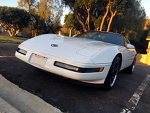
Hey everyone, im new here. I have a 91 c4 63k miles. The car just stalls while driving down the road. I checked the converter and exhaust. Nothing seems clogged, so i took the exhaust off to make sure, it ran fine. Was loud but ran great. I put the exhaust back on and same problem immediately. I replaced the injectors. Fuel tank and fuel pump. Most sensors, just didnt replace the throttle position sensor yet. Im at a lost what it could possibly be.
Hey everyone, im new here. I have a 91 c4 63k miles. The car just stalls while driving down the road. I checked the converter and exhaust. Nothing seems clogged, so i took the exhaust off to make sure, it ran fine. Was loud but ran great. I put the exhaust back on and same problem immediately. I replaced the injectors. Fuel tank and fuel pump. Most sensors, just didnt replace the throttle position sensor yet. Im at a lost what it could possibly be.
if removing the exhaust fixed it then you have excessive back pressure. Clogged cat, bad up stream o2 sensor, possibly collapsed muffler
A bad O2 sensor should not be able to affect fueling sufficiently enough to cause the car to stall. I would be looking elsewhere. Feel free to replace it anyway though, it's probably old and in need of replacement regardless.
A bad O2 sensor should not be able to affect fueling sufficiently enough to cause the car to stall. I would be looking elsewhere. Feel free to replace it anyway though, it's probably old and in need of replacement regardless.
The 02 sensor, adjust for fuel and air, not woking properly you will be burning lot of gas. Nothing to do with stalling of the car. Might want to look into the ECM?
I dont know if it is the same for our corvettes but back in the day that is what the old GM cars would do when the ignition control module was going bad. They'd get warm and shut down. Although the fact that the issue went away without exhaust makes me suspicious of the Cat.
No codes, I assume?
If the O2 was bad, I would think you would get a code. Seems a plugged exhaust would overheat the O2 sensor and also give a code??
Check your plugs on your ECM for loose or corroded connections. That is an easy and free thing to check. If you say you are driving when it happens, is there anything in common to the conditions? Speed, distance traveled, engine temp?
At this point, my humble meager knowledge is pointing at the ECM or distributor components also.
I have had bad catalytic converters on 3 different Chevys. None set a code.
Interesting. I’m learning all the time.
How bad were they? Bad enough to choke the engine to stall or just run poorly? In all the hundreds of thousand mile junkers I have run in my life, been fortunate to never had a converter collapse internally so bad it stalled my engine. One more thing on my troubleshooting checklist.
I have had bad catalytic converters on 3 different Chevys. None set a code.
Accurate. A bad catalytic converter wouldn't set any codes until the 96 model year when they added catalytic converter efficiency sensors (rear O2s). While the 94-95 had the ability in code to do the same thing as the 96, they only had a rear O2 on one side, not both, and the code wouldn't pop the SES light or show up in a normal code request. It can only be seen with a Tech 2 or a laptop computer. Irrelevant since OP has a '91, so the car has no way of telling if the cats are bad electronically.
OP, it occurs to me, but have you run an exhaust backpressure test? It's basically a compression tester that threads into the O2 sensor bung. It should read almost nothing if the exhaust is working properly, but will jump around like crazy if there's restriction in the exhaust. Something to consider.
“occurs to me, but have you run an exhaust backpressure test? It's basically a compression tester that threads into the O2 sensor bung. It should read almost nothing if the exhaust is working properly, but will jump around like crazy if there's restriction in the exhaust.”
Thanks Nomake!
Sweet. Another tool for my shelf! I have one slot left!!
Interesting. I’m learning all the time.
How bad were they? Bad enough to choke the engine to stall or just run poorly? ....
Didn't stall. Just ran like shizz, especially when I'd get on it. Symptoms were like a defective rev limiter. RPM's produced misfires and engine seemed to choke.
Years ago I had an 85 K Blazer that did what you describe. Ran normally for awhile then would just stall and die. Sit and wait awhile, would start up and be drive-able, again for awhile. Many failed tries to repair as it wouldn't replicate symptoms in shop. Turned out, in that case, to be all in the ignition system. If I recall correctly, something about knock sensor pulling timing too much. Guy who fixed it made some kind of jumper to work around that. I know, clear as mud.
Didn't stall. Just ran like shizz, especially when I'd get on it. Symptoms were like a defective rev limiter. RPM's produced misfires and engine seemed to choke.
Years ago I had an 85 K Blazer that did what you describe. Ran normally for awhile then would just stall and die. Sit and wait awhile, would start up and be drive-able, again for awhile. Many failed tries to repair as it wouldn't replicate symptoms in shop. Turned out, in that case, to be all in the ignition system. If I recall correctly, something about knock sensor pulling timing too much. Guy who fixed it made some kind of jumper to work around that. I know, clear as mud.
A '91 Corvette, even if somehow the knock sensor were sending a constant signal to the ECM that the knock filter was identifying as true knock (or if the knock filter were shorted out), could not pull enough timing to stall the motor. At idle, the car has 26 (6 base, 20 advance) degrees of ignition advance. The most the knock feedback system can pull at idle MAP is 6 degrees.
At higher MAP values it's allowed to pull up to 20 degrees of timing, but with caveats; namely the car cannot be in PE mode (so not full throttle), and of course that to attain such a high MAP without being at WOT you must be at a higher RPM........and the higher RPM cells have a lot more ignition advance. At WOT, the most the knock feedback system on a '91 can pull is 15 degrees at 3200 RPM. For reference, the ignition advance for WOT at 3200 RPM is 26 degrees. However, any RPM lower or higher than 3200 pulls much less timing, yet the spark advance curve at 100 MAP is roughly static.
So basically, while maybe that was the solution on an 85 Blazer, it won't apply to a '91 Corvette.
Last edited by Nomake Wan; Jun 2, 2021 at 09:01 AM.
Clearly you know more about this than I. 30-ish years ago, so my recollection may be quite wrong. What I do know with confidence is that symptoms were similar - vehicle just stalled driving along (not WOT) and fix was in the ignition system. Have had completely failed O2 sensors and vehicle merely ran rich, never stalled, but did set code.
It's just that the systems involved are different is all. I happened to have access to the BIN for the '91 Corvette, so I just went and looked up what the ignition advance was and what the maximum knock retard was. Generally poor knock feedback isn't going to stall a C4. Run like crud, sure, but not stall.
Designer Imagines A Corvette That Looks More Like a Corvette Than the Corvette
Slideshow: A Jaguar designer's personal project imagines what a modern front-engined Corvette might look like if Chevrolet revisited the golden age of the Stingray.



 91 C4 just stalls



 The 02 sensor, adjust for fuel and air, not woking properly you will be burning lot of gas. Nothing to do with stalling of the car. Might want to look into the ECM?