


Long term disassembly engine protection?


Thread Starter
Advanced

Joined: Jul 2015
Posts: 61
Likes: 5
From: Washington state
 Long term disassembly engine protection?
I have A 94 6 speed that will be going up on blocks in August for a long time. I'll be dropping nearly every single component and fixing all rubber parts and seals and replacing many components. Many of these procedures required draining fluids.
my question is in regards to protecting those fluid filled cavities during a long period of disassembly. Especially in the coolant system, Where I know things can corrode fairly quickly. How can I protect these areas from corrosion during the time when it will be disassembled?
I anticipate that in total the job will likely take months. I can put off the jobs that will require draining fluids till the last possible time, but even then I think it will likely be awhile before filling it with fluids again. The coolant system has already been damaged by rust, So I suppose I should also ask how to repair the internal area cavities...
Are there any other considerations I should take into place regarding long term disassembly? Like how to store and care for components that will be removed and reinstalled later?
I want to be able to go very slowly, take my time, double and triple check, and not have any sort of deadline hanging above my head.
my question is in regards to protecting those fluid filled cavities during a long period of disassembly. Especially in the coolant system, Where I know things can corrode fairly quickly. How can I protect these areas from corrosion during the time when it will be disassembled?
I anticipate that in total the job will likely take months. I can put off the jobs that will require draining fluids till the last possible time, but even then I think it will likely be awhile before filling it with fluids again. The coolant system has already been damaged by rust, So I suppose I should also ask how to repair the internal area cavities...
Are there any other considerations I should take into place regarding long term disassembly? Like how to store and care for components that will be removed and reinstalled later?
I want to be able to go very slowly, take my time, double and triple check, and not have any sort of deadline hanging above my head.
Last edited by Socalsalas; Jul 9, 2021 at 03:17 PM.
Safety Car


Joined: Jul 2003
Posts: 3,500
Likes: 879
From: Saratoga Springs NY
2024 C4 of the Year Finalist - Modified
2022 C4 of the Year Finalist - Modified
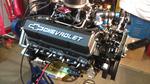
If they are engine parts you can soak them in fogging oil and put in plastic bags.
As far as cooling system goes, if you mean radiator, lay it down flat and fill it with fresh antifreeze. The rest should be fine for a few months. Clean parts before you store them helps too.
As far as cooling system goes, if you mean radiator, lay it down flat and fill it with fresh antifreeze. The rest should be fine for a few months. Clean parts before you store them helps too.
Thread Starter
Advanced
Joined: Jul 2015
Posts: 61
Likes: 5
From: Washington state
I was more concerned about the internal coolant cavities within the engine. I was told to drain the coolant, flush with water until clean and clear, then allow it to dry. Possibly with something like a blow dryer to speed that up maybe?



Safety Car
Joined: Jul 2003
Posts: 3,500
Likes: 879
From: Saratoga Springs NY
2024 C4 of the Year Finalist - Modified
2022 C4 of the Year Finalist - Modified
Yeah, nothing is going to get worse. Your fine. Just a chunk of iron.
BEFORE you re-assemble, go ahead and flush it out to remove the now dried stuff thats in there. Use compressed air as well. Take the 2 block drains out on either side of engine to flush out the junk in there.
Once back up and running, get some time/miles on it, and then do a coolant system flush if you feel the need to. After that good to go!
BEFORE you re-assemble, go ahead and flush it out to remove the now dried stuff thats in there. Use compressed air as well. Take the 2 block drains out on either side of engine to flush out the junk in there.
Once back up and running, get some time/miles on it, and then do a coolant system flush if you feel the need to. After that good to go!
Thread Starter
Advanced
Joined: Jul 2015
Posts: 61
Likes: 5
From: Washington state

Melting Slicks


Joined: Feb 2003
Posts: 2,677
Likes: 812
From: Saskatoon Sask.








