When you click on links to various merchants on this site and make a purchase, this can result in this site earning a commission. Affiliate programs and affiliations include, but are not limited to, the eBay Partner Network.
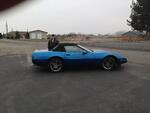
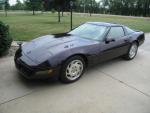
I'm looking for a new battery for my 1994.
I store in the winter, so likely no starting below 50 degrees. I drive it about 2,000 Mi/Year.
I don't know what the CCA specs are on the original battery.
I'm told that EverStarts are made by Johnson Controls as are Diehard, Duralast, Interstate, Motorcraft, and Kirkland.
I can get a 550 CCA EveStart at Walmart for $54.88
A Diehard at Advanced Auto 550 CCA for $119.00
A Diehard at Advanced Auto 650 CCA for $179.00
Do you think I would be OK iwth a 550 CCA or should I go with a 650 CCA ?
I personally would go for the higher CCA! Heat also affects batteries, which we all know the under hood heat is high on our C4's. Another reason is your starter will be much happier having ample current when engaged and likely last longer because of it! My personal choice is the group 75 Interstate battery from Costco, they were around $75 for a long time, but have recently went up to around $100. I believe this is Interstate's middle of the road battery, but Costcos are everywhere and warranty/replacement is easy, I have these batteries in everyone of my vehicles and have never had a problem with a single one of them! One other suggestion I would strongly recommend is getting a GM battery insulator for it (if it doesn't have one stock) my '84 didn't come with one, but I added one. When I first installed it, I went for a couple hour cruise and then popped the hood open when everything was good and hot and felt the battery under the insulation and couldn't believe how much cooler it was compared to the surrounding areas! These can easily be found on ebay, if your truly interested, PM me and I'll link you to the seller I got mine from....make sure to be thorough when looking for these, most are $30-50 but can be bought and shipped for less than $20 (genuine GM!) Anyway, hope this helps, good luck👍
ONE is battery type - and by that I mean AGM vs conventional. The AGM construction is definitely preferred for higher vibration situations, and for instances where the battery can not be mounted in a nice flat orientation.
I personally feel that AGM batteries typically last longer, and are worth the extra money, but I can not cite hard evidence to back that up.
The other thing to at least consider is reserve capacity. While there is some correlation between Cranking Amps and reserve capacity - it's clearly not anything resembling linear. The details of battery construction matter - and if I understand things correctly - there are ways to boost Cranking Amps while not increasing reserve capacity proportionately. However - it does seem that there is pretty good correlation between reserve capacity and battery weight.
The one thing to consider is don't go overboard on CCA. The way batteries are constructed is an issue as the plates need to be thinner to get the higher CCA in a set amount of space. This makes the plates more fragile and subject to breakage. So, a 550 CCA battery will be stronger internally than a 650 or 750 CCA of the same group size. I made the mistake of going to 950 CCA vs 750 in one of my semi tractors and the batteries didn't last nearly as long. So a small upgrade in CCA will be fine but more doesn't mean better.
Equally important is battery maintenance, especially in summer weather. I have been using the series 75 (lead-acid) batteries since 2007 in the 600 CCA range. And, with the use of a Battery Tender, they crank like new for the life of the battery (12-14 years in my experience - about double ++ what is warrantied by the manufactures).
Installing a battery cut-out switch instead of a (Battery Tender) for winter storage has worked for some, especially if storing in sub freezing temperatures. (Sulfate formation, like all chemical reactions, is sensitive to temperature.) But, sulfate is not reduced or prevented by using those switches.
So, if you do store the car for extended periods between uses (e.g., even a litter as a couple weeks between running, especially in hot weather) a good case can be made for using a smart (modern) battery tender/charger.
Last edited by Paul Workman; May 15, 2022 at 04:34 PM.
I've wondered about using a tender through the winter, whether the battery is connected or not. It could be the age of the battery and in a pre-failure mode, but last winter it used a lot of the battery water while on a tender. It worked fine through the summer, but that was it's last gasp.




 Battery CCA