When you click on links to various merchants on this site and make a purchase, this can result in this site earning a commission. Affiliate programs and affiliations include, but are not limited to, the eBay Partner Network.
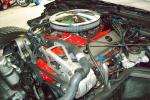
As the title states, I've been experiencing hard pinging. I have a 1989 ZF6 L98. Currently driving from western Washington to Southern Arizona. I've been passing through alot of different weather but the trend is significantly hotter than I'm used to. My c4 normally runs at ~170° (I've heard this is oddly cool). All the way through Nevada and now northern Arizona it's been running at 200-230° depending on the ambient temperature (today it was mostly 100+). The severity of the pinging changes with how hot the engine is. Below 190-200° I can get away with quarter throttle or more without any pinging. If temperatures rise above 210 I'm lucky to get 1/8th throttle without pinging. When cold or below 160° I have 0 ping even under WOT. I've always ran 92 or higher octane (even though most people on here say that's unnecessary). I tried 2 bottles of octane booster in Las Vegas with no change throughout the rest of the day. I suspect my timing was advanced (mechanically at the distributor) by a previous owner for cooler temperature and much lower elevation. I normally am at 500 or less feet and have been driving through 5000+ feet of elevation all day. I have to keep driving tomorrow, but I also cannot let my poor corvette continue to eat itself. I'm at a hotel, but I brought tools and I'm considering retarding the timing by hand in the parkinglot and seeing if I can get the knock to go away. I've seen it done by loosening the distributor and turning it by hand but most people mention using a timing light so I'm not confident about this strategy. Let me know your thoughts, I need a solution!
I dont belive this is related but I recently replaced the knock sensor. The car also has 146k on it which made me consider alot of built up carbon but the octane booster did not effect the pinging so I've dismissed this idea.
A bad or incorrect knock sensor won't actually cause pinging. Though it could prevent the ECM from adjusting the timing to mitigate it.
But from what you're describing, that's an abnormal amount of pinging.
The theory about someone having advanced the timing at the distributor is plausible. But I would caution against adjusting the timing w/o a timing light. Maybe if there's a Harbor Freight or auto parts store nearby, go get a cheap timing light to do the adjustment.
You're correct that you'd loosen the bolt on the clamp at the base of the distributor to allow adjustment. You'd then disconnect the EST connector prior to starting the car. Factory timing should be 6° BTDC.
If the previous owner advanced the distributor, to say, 20° or something (without adjusting the calibration in the ECM to match it), that would essentially blindly add 14° to everywhere in the spark timing maps.
Use only gm ac Delco OEM knock sensors. They are a very sophisticated and sensitive device
That's actually a good point. i did no use oem... you might be onto something. Also thinking back I didn't torque it. I learned recently that they are sensitive to torque and never actually went back to check the torque spec
As the title states, I've been experiencing hard pinging. I have a 1989 ZF6 L98. Currently driving from western Washington to Southern Arizona. I've been passing through alot of different weather but the trend is significantly hotter than I'm used to. My c4 normally runs at ~170° (I've heard this is oddly cool). All the way through Nevada and now northern Arizona it's been running at 200-230° depending on the ambient temperature (today it was mostly 100+). The severity of the pinging changes with how hot the engine is. Below 190-200° I can get away with quarter throttle or more without any pinging. If temperatures rise above 210 I'm lucky to get 1/8th throttle without pinging. When cold or below 160° I have 0 ping even under WOT. I've always ran 92 or higher octane (even though most people on here say that's unnecessary). I tried 2 bottles of octane booster in Las Vegas with no change throughout the rest of the day. I suspect my timing was advanced (mechanically at the distributor) by a previous owner for cooler temperature and much lower elevation. I normally am at 500 or less feet and have been driving through 5000+ feet of elevation all day. I have to keep driving tomorrow, but I also cannot let my poor corvette continue to eat itself. I'm at a hotel, but I brought tools and I'm considering retarding the timing by hand in the parkinglot and seeing if I can get the knock to go away. I've seen it done by loosening the distributor and turning it by hand but most people mention using a timing light so I'm not confident about this strategy. Let me know your thoughts, I need a solution!
I dont belive this is related but I recently replaced the knock sensor. The car also has 146k on it which made me consider alot of built up carbon but the octane booster did not effect the pinging so I've dismissed this idea.
Help!
Your idea of retarding the timing to test is a valid one. You do not need to go and spend money on a timing light. Use a scribe to mark its present position and turn the distributor. It can then always be turned back to where it was. A bit of late timing will hurt nothing.
From: Clifton Park, NY ............Clearwater, FL ... 85 Original Owner
Originally Posted by Ekays
That's actually a good point. i did no use oem... you might be onto something. Also thinking back I didn't torque it. I learned recently that they are sensitive to torque and never actually went back to check the torque spec
Your idea of retarding the timing to test is a valid one. You do not need to go and spend money on a timing light. Use a scribe to mark its present position and turn the distributor. It can then always be turned back to where it was. A bit of late timing will hurt nothing.
Good point
Originally Posted by Cruisinfanatic
why did you replace it?
When flushing the coolant I removed it to drain the block, the end snapped off in the block and I had to weld a nut onto the remaining chunk. After that it wasnt so great at detecting knock
A bad knock sensor can most certainly cause knock in 86-89 cars.
Are you getting a Code 43?
If no knock is detected during an ignition cycle, the ecm will add timing in an attempt to force it to knock until a Code 43 is set. This knock sensor function test only occurs under relatively high load (LV8 > 190) and hot coolant ( coolant temp > 194 °F). The ecm will ramp up timing and can add up to 25 degrees advance during the function test. It takes 3.9 seconds for Code 43 to mature, so the engine may be exposed to excessive advance and real knock which may cause engine damage prior to setting Code 43.
You can either stay on the gas until it sets a Code 43 (risking damage) or disconnect the knock sensor which should cause a Code 43 to be set. The ecm will retard the timing by 8 degrees while Code 43 is active and should keep things relatively safe until you can set the timing properly.
Last edited by tequilaboy; Aug 18, 2024 at 08:31 PM.
Another band-aid solution would be to run it in diagnostic mode by shorting ALDL Pins A and B, which will result in fixed timing of 20 degrees advance. This would not be ideal, but should be safe.
A bad knock sensor can most certainly cause knock in 86-89 cars.
Are you getting a Code 43?
If no knock is detected during an ignition cycle, the ecm will add timing in an attempt to force it to knock until a Code 43 is set. This knock sensor function test only occurs under relatively high load (LV8 > 190) and hot coolant ( coolant temp > 194 °F). The ecm will ramp up timing and can add up to 25 degrees advance during the function test. It takes 3.9 seconds for Code 43 to mature, so the engine may be exposed to excessive advance and real knock which may cause engine damage prior to setting Code 43.
You can either stay on the gas until it sets a Code 43 (risking damage) or disconnect the knock sensor which should cause a Code 43 to be set. The ecm will retard the timing by 8 degrees while Code 43 is active and should keep things relatively safe until you can set the timing properly.
No code, based on what you said the car has been given the opportunity to set it but hasn't. Sounds like I should disconnect the knock sensor for now. I am getting close to getting an acdelco sensor in about another hour or so.
Originally Posted by tequilaboy
Another band-aid solution would be to run it in diagnostic mode by shorting ALDL Pins A and B, which will result in fixed timing of 20 degrees advance. This would not be ideal, but should be safe.
Sounds more complicated than disconnecting the sensor, any benefit of doing this instead?
By not ideal do you mean worse gas mileage and performance? Thats fine by me ive been getting 20-25 mpg which is much better than most cars ive had. Id take the hit to save the engine
Doesn't get much simpler than a paperclip. 20 degrees of fixed timing should idle and run just fine, but performance and fuel economy will suffer a bit.
Note: if the mechanical timing has been advanced (beyond 6 degrees), this will add an offset to the 20 degrees fixed timing.
Doesn't get much simpler than a paperclip. 20 degrees of fixed timing should idle and run just fine, but performance and fuel economy will suffer a bit.
Note: if the mechanical timing has been advanced (beyond 6 degrees), this will add an offset to the 20 degrees fixed timing.
Read the codes (had to replace ses light). I have an egr code (32). Then I unplugged the knock sensor. Haven't read the codes since but it still pings the same amount. Also the ses light does not stay on after taking it out of diagnostic mode, would've thought it would stay on while driving. Nor sure what to do from here. Kinda seems like it's a fuel issue since unplugging the sensor didn't work. Could a clogged filter or bad fuel pump be the issue? Still have 2 hours left to drive today








 Extreme pinging