







Slow to stop at high speed

Thread Starter
Racer


Joined: Oct 2005
Posts: 271
Likes: 0
From: Suisun City CA 1992 Coupe LT1 A4
 Slow to stop at high speed
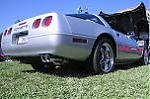
I've only had my 92 Vette a few months but it seems to me that it is not stoppping as quick as it should especially at high speed. This is the first and only vette I have ever driven so I don't know if it's a problem or not. It seems fine around town and on the freeway for normal stopping but for hard braking stops it will get your heart racing waiting for it to stop at freeway speed. I guess what I'm trying to say is that I don't have the same confidence in my Vettes brakes as I do in my other vehicles. I had the brakes inspected right after I bought it and they said that I had about 50% pad wear and the brakes were fine. The car has 70k on it and I don't know when the brake fluid was last flushed and changed. Should I feel this way or should I be looking for a problem?

Le Mans Master

Joined: Dec 2004
Posts: 5,789
Likes: 8
From: Myrtle Beach SC
St. Jude Donor '05-'06
Seems to me you have answered yourself.Bleed your brakes and get some good brake pads.I use Hawk HPS myself and they seem a lot better than my stockers at 50%.Especially after bleeding them.But truely I feel the same about the brake system.It just "feels" inadequate sometimes when stoping from high speed I am sure it has to do with the heating.

Team Owner

Joined: May 2002
Posts: 24,337
Likes: 25
From: San Diego , CA Double Yellow DirtBags 1985..Z51..6-speed
I think the Hawk HP plus pads are a hotter pad.
Stainless brakes lines are a gimmick really. I would only use them if your stock lines are rotting.
Stainless brakes lines are a gimmick really. I would only use them if your stock lines are rotting.
Team Owner
Joined: May 2002
Posts: 24,337
Likes: 25
From: San Diego , CA Double Yellow DirtBags 1985..Z51..6-speed
lines = hoses. Everything I've read on them centers around them being prone to failure at the swivel ends because of how stiff they are during turning, and that fine dirt and carbon dust gets under the braids and chews up the fragile teflon. All this supposedly makes them less reliable than rubber. And it's impossible to inspect them, unlike rubber hoses.
I haven't seen any failures on here, for either SS or rubber. Also keep in mind that forum members with ss lines probably only have a few years on them.
I have ss hoses up front, didn't have any choice really. I applied shrink wrap to them to keep the grit out.
I haven't seen any failures on here, for either SS or rubber. Also keep in mind that forum members with ss lines probably only have a few years on them.
I have ss hoses up front, didn't have any choice really. I applied shrink wrap to them to keep the grit out.
Team Owner
Joined: May 2002
Posts: 24,337
Likes: 25
From: San Diego , CA Double Yellow DirtBags 1985..Z51..6-speed
Hotter pad meaning its friction coefficient is best when warmed up, and usually that coefficient will be higher than for a colder pad... but it might actually be less when cold. Every compound is different.
Wilwood has some coefficient vs temperature graphs for different compounds, I've never seen this for Hawk though.
Wilwood has some coefficient vs temperature graphs for different compounds, I've never seen this for Hawk though.
Corvette Stories
The Best of Corvette for Corvette Enthusiasts

Top 10 Most Expensive Corvettes Ever Sold on Bring A Trailer
Brett Foote
10 Things Every Corvette Owner Needs (2026 Edition)
Michael S. Palmer
8 Most "Only Corvette Owners Understand" Quirks and Problems
Pouria Savadkouei
10 Reasons the C6 Z06 is Still A Performance Benchmark After 20 Years
Joe Kucinski
How Much Horsepower Every Corvette Engine "LOST" in 1972
Joe Kucinski
Top 10 DOs and DON'Ts for Protecting Your Convertible Top!
Michael S. Palmer
Top 10 Most Explosive Corvettes Ever Made: Power-to-Weight Ratio Ranked!
Joe Kucinski
150 hp to 1,250 hp: Every Corvette Generation Compared by the Specs That Matter
Joe Kucinski
8 Coolest Corvette Pace Cars (and Replicas) of All Time
Verdad Gallardo
Thread Starter
Racer
Joined: Oct 2005
Posts: 271
Likes: 0
From: Suisun City CA 1992 Coupe LT1 A4
Originally Posted by Redeasysport
Seems to me you have answered yourself.Bleed your brakes and get some good brake pads.I use Hawk HPS myself and they seem a lot better than my stockers at 50%.Especially after bleeding them.But truely I feel the same about the brake system.It just "feels" inadequate sometimes when stoping from high speed I am sure it has to do with the heating.

Safety Car

Joined: May 2003
Posts: 3,789
Likes: 0
From: [Quote=WOEII] Is dried brown doodie powders man! [/Quote]
Welcome to the club 
A flush and some better pads will do wonders. I changed over to the Valvoline synthetic when I replaced my MC, and EBC Greenstuff pads. Brake fade improved dramitically. My stopping distance didn't change, nor did pedal effort, but I could pull the car down from 100+ and not have to worry about being able to stop and running off the end of the track into the bushes. The pads were a bit pricey but worth every penny, and don't require any warming up for acceptable street performance IMHO.
A flush and some better pads will do wonders. I changed over to the Valvoline synthetic when I replaced my MC, and EBC Greenstuff pads. Brake fade improved dramitically. My stopping distance didn't change, nor did pedal effort, but I could pull the car down from 100+ and not have to worry about being able to stop and running off the end of the track into the bushes. The pads were a bit pricey but worth every penny, and don't require any warming up for acceptable street performance IMHO.

Racer
Joined: Nov 2005
Posts: 447
Likes: 0
From: Titletown WI
I have a few thoughts, but they are just opinions.
Checking out the vettes brakes is a good idea, but I was just thinking that its possible you were stopping from a much higher speed that you probably would likely be traveling in another vehicle. It was just something I thought of. I know in my car, I'll be playfull and mat the gas on the highway, and it almost seems like everyone around me just magically dissappears and next I look down and I'm in tripple digits. I'm not quite used to that, even after owning two LT1 f-bodies! It was just a thought.
You could also see if you have the J55 brakes or not. That is a possible upgrade.
I have not used the Hawk HPS pads, but as I understand it, the HP-Plus is more aggressive than the HPS. I have use the HP-Plus and they stop you like a brick wall , but dust like crazy.
I have also used PFC pads, and I think I agree that they don't dust that much. They do stop great with heat, but you may notice that it takes more effort to stop cold. I don't like them much for in town driving.
Stainless hoses. I have also heard most of the same things. I have full, well I skipped the MC to prop valve, but otherwise complete stainless lines and hoses on my CJ7, and they did give a very solid pedal feel. It is quite unique and I like it, but I don't believe it actually helps you stop "faster" unless maybe you can work in the small time it takes to stretch the hoses to size when braking.
YMMV. »keith
Checking out the vettes brakes is a good idea, but I was just thinking that its possible you were stopping from a much higher speed that you probably would likely be traveling in another vehicle. It was just something I thought of. I know in my car, I'll be playfull and mat the gas on the highway, and it almost seems like everyone around me just magically dissappears and next I look down and I'm in tripple digits. I'm not quite used to that, even after owning two LT1 f-bodies! It was just a thought.
You could also see if you have the J55 brakes or not. That is a possible upgrade.
I have not used the Hawk HPS pads, but as I understand it, the HP-Plus is more aggressive than the HPS. I have use the HP-Plus and they stop you like a brick wall
, but dust like crazy.I have also used PFC pads, and I think I agree that they don't dust that much. They do stop great with heat, but you may notice that it takes more effort to stop cold. I don't like them much for in town driving.
Stainless hoses. I have also heard most of the same things. I have full, well I skipped the MC to prop valve, but otherwise complete stainless lines and hoses on my CJ7, and they did give a very solid pedal feel. It is quite unique and I like it, but I don't believe it actually helps you stop "faster" unless maybe you can work in the small time it takes to stretch the hoses to size when braking.
YMMV. »keith

Racer

Joined: Apr 2003
Posts: 342
Likes: 0
From: Kalamazoo MI
Plug for Hawk pads here. You can also upgrade your brakes to C5 calipers/rotors up front for additional stopping power. Larger rotors, more pad swept area etc. Not really worth is to do the rear. You can also go for more exotic setups but that eats money real quick. There is quite a bit of anticipation on the new C6 Z06 calipers. I don't know if anyone has done the swap on a C4 but they bolt right up on C5 so the theory is there.
Also flushing brake system is of minimal benefit. Brakes are a static pressure system in that the fuid is only a means of transmitting force to the caliper. There is no real "flow" through the system. But hey flush them if it helps you sleep at night.
Also flushing brake system is of minimal benefit. Brakes are a static pressure system in that the fuid is only a means of transmitting force to the caliper. There is no real "flow" through the system. But hey flush them if it helps you sleep at night.
Safety Car
Joined: May 2003
Posts: 3,789
Likes: 0
From: [Quote=WOEII] Is dried brown doodie powders man! [/Quote]
Originally Posted by k99ja04
Also flushing brake system is of minimal benefit. But hey flush them if it helps you sleep at night.

Incorrect. Brake fluid will absorb water from the air and lower the boiling point of the fluid. If the boiling point of the fluid is low enough it will boil when you're trying to pull yourself down from triple digits, or riding the brakes going down a steep grade, and you won't have any brakes!
It's much easier and cheaper to first make sure the braking system is operating as it should then to immediately jump into an upgrade. You may find that for your own driving preference that the stock system is adequate.
Racer
Joined: Nov 2005
Posts: 447
Likes: 0
From: Titletown WI
 I've witnessed the benefits of fresh fluid over old crusty junk, even in a street vehicle because who knows if the last owner ever changed the fluid.
Now, I will say 95% of the time, its not going to affect street braking, but it is an easy 5% to cover and it will definitely help the components last longer.
»keith
Le Mans Master
Joined: Dec 2004
Posts: 5,789
Likes: 8
From: Myrtle Beach SC
St. Jude Donor '05-'06
Look around the cap of your MC if there is any brake fluid there it is due to moisture absorbtion and boiling causing back pressure to the reservoir.Do you think that is good for the system.GM recommends bleeding the brakes evry 2 years I believe.It made a night and day difference in my car and the MC fluid was black, it is clear now.
Pro

Joined: Oct 2004
Posts: 619
Likes: 1
From: Reno Nv
I think the stainless steel line problems that I've heard about here must be due to either a manufacturing defect or they were not assembled by a competent manufacturer.
Stainless steel lines will help firm up the pedal.
I have a set on a race car that are 15+ years old and have no problems from brake dust,road dust or age. In fact, I can't remember ever hearing about a line failure.
Flushing a brake system is of minimal benifit ?
Upstate is correct, brake fluid is hydroscopic, it absorbs water. This increases pedal effort. If I have previously opened can in my shop and it's over 3 months old, I throw it out. Brake fluid is cheap.
Also I bleed the calipers every race and totally change the fluid every 3 races. There is a noticeable color change in the fluid after one race.
Bill Hetzel
MLC Motorsports
Stainless steel lines will help firm up the pedal.
I have a set on a race car that are 15+ years old and have no problems from brake dust,road dust or age. In fact, I can't remember ever hearing about a line failure.
Flushing a brake system is of minimal benifit ?
Upstate is correct, brake fluid is hydroscopic, it absorbs water. This increases pedal effort. If I have previously opened can in my shop and it's over 3 months old, I throw it out. Brake fluid is cheap.
Also I bleed the calipers every race and totally change the fluid every 3 races. There is a noticeable color change in the fluid after one race.
Bill Hetzel
MLC Motorsports
Thread Starter
Racer
Joined: Oct 2005
Posts: 271
Likes: 0
From: Suisun City CA 1992 Coupe LT1 A4
You guys sold me on changing the fluid. I checked the fluid at the master cylinder and it was dark but I did not see any evidence of fluid around the cap. Do you think I should go with the synthetic stuff or is a DOT 3 fluid adequate? Are there any precautions I should know before changing over to synthetic?
Safety Car
Joined: May 2003
Posts: 3,789
Likes: 0
From: [Quote=WOEII] Is dried brown doodie powders man! [/Quote]
Originally Posted by wrw7255
Do you think I should go with the synthetic stuff or is a DOT 3 fluid adequate? Are there any precautions I should know before changing over to synthetic?
The synthetic will have a higher boiling point. Given the cost difference I would just go with the synthetic. The boiling point is higher and you'll have some security should you decide to do some spirited driving. They're aren't any precautions I've heard of about mixing synthetic with regular fluid. But you're going to be flushing the whole system anyway so it shouldn't much matter as you're going to be running brake fluid out of the calipers until it's nice and clear. I run the valvoline synthetic and drive pretty hard and haven't had any problems.
One tip, make sure the resovoir doesn't empty while you're flushing or you'll have even more fun getting the air out of the MC. I'd be sure to follow the factory procedure for bleeding as well. You should bleed in a specific order but I don't know it off the top of my head. Somebody else will chime in with it though
Thread Starter
Racer
Joined: Oct 2005
Posts: 271
Likes: 0
From: Suisun City CA 1992 Coupe LT1 A4
I was reading about the HPS pads and it said there is a bedding in process that needs to be performed to transfer a film from the pad to the rotors to maximize performance. I never done that before and was wondering how it is done. I would be greatful for any info on this. Thanks
Racer
Joined: Nov 2005
Posts: 447
Likes: 0
From: Titletown WI
Originally Posted by wrw7255
I was reading about the HPS pads and it said there is a bedding in process..
This should help:
from Baer
from Pagid, which is new to me, but good example of the variety of bedding procedures out there.
The best procedure is likely whatever the pad manufacturer you have, recommends. The basic idea is to have a controlled heat up of the pads and rotors to help them 'bond' without getting so hot that the pads or rotors get damaged. For most street applications, it can just be allowed to happen naturally, but the safest/best idea is to always bed the pads in any vehicle.
HTH, »keith