










Setting valves

Thread Starter
Le Mans Master


Joined: Dec 2005
Posts: 6,999
Likes: 1,685
From: Southeast TX
 Setting valves
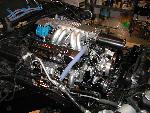
Roller rockers ought to appear tomorrow for my (wife's) '95 LT1. I'm assuming the hyd roller lifters are similar to setting regular hyd lifters. Last time I did those, I tightened them 1/2 to 3/4 turn past the point where all slack removed. Are these the same? TIA.

Large Impressive Member

Joined: Jul 2003
Posts: 65,811
Likes: 71
From: Good health is merely the slowest possible rate at which one can die
St. Jude Donor '04-'05-'06-'07
Opinions vary on this. Lifter design, (I assume yours are stock) end use and personal preference, among other things, can enter into it. I'd go with the half turn on an otherwise stock engine, recheck in a few weeks and then if all is well, you can forget about them. 
Large Impressive Member
Joined: Jul 2003
Posts: 65,811
Likes: 71
From: Good health is merely the slowest possible rate at which one can die
St. Jude Donor '04-'05-'06-'07
Originally Posted by robs87vette
I went a whole turn on the advice from TPIS, is that too tight?
Corvette Stories
The Best of Corvette for Corvette Enthusiasts

Top 10 Most Expensive Corvettes Ever Sold on Bring A Trailer
Brett Foote
10 Things Every Corvette Owner Needs (2026 Edition)
Michael S. Palmer
8 Most "Only Corvette Owners Understand" Quirks and Problems
Pouria Savadkouei
10 Reasons the C6 Z06 is Still A Performance Benchmark After 20 Years
Joe Kucinski
How Much Horsepower Every Corvette Engine "LOST" in 1972
Joe Kucinski
Top 10 DOs and DON'Ts for Protecting Your Convertible Top!
Michael S. Palmer
Top 10 Most Explosive Corvettes Ever Made: Power-to-Weight Ratio Ranked!
Joe Kucinski
150 hp to 1,250 hp: Every Corvette Generation Compared by the Specs That Matter
Joe Kucinski
8 Coolest Corvette Pace Cars (and Replicas) of All Time
Verdad Gallardo

Large Impressive Member
Joined: Jul 2003
Posts: 65,811
Likes: 71
From: Good health is merely the slowest possible rate at which one can die
St. Jude Donor '04-'05-'06-'07
Originally Posted by Quiktrp94
Not to steal the thread, but I think that old motorhead got the advice he needed, so can some one explain to me the diff. between self adjusting and non self adjusting rockers? Thanks, Robert


Race Director


Joined: Jan 2005
Posts: 10,641
Likes: 13
From: Slidell Louisiana
Originally Posted by Corvette Kid NC
Some engines simply have no provision for rocker adjustment. You bolt them on and there you are. I used to mess with some Ford engines that were like that. When a higher lift cam was installed, I'd shim the rockers to remove some of the preload. Obviously they can be modified to be adjustable, but I was a real low-buck hot rodder in those days!
I remember the first time I saw rockers that required no adjustment; I was working on either a Buick or an Olds that had a shaft with the eight rockers on it, and I thought boy this is so much easier to install than setting the lash on Chevys and Mopars.
Thanks for the memory Chris!

Safety Car


Joined: Apr 2004
Posts: 4,532
Likes: 7
From: Lahaina Hi
Adjusting valves is like picking fuel for your car.
http://corvetteactioncenter.com/foru...ad.php?t=45701
http://corvetteactioncenter.com/foru...ad.php?t=45701

Drifting

Joined: May 2003
Posts: 1,730
Likes: 1
From: Charlotte NC
St. Jude Donor '05
Are some of you guys askign for self adjusting or self aligning?
Self aligning and non-self aligning are two different types of rockers. Basically the self aligning has some type of retainer to keep the rocker on the part of the valve sitting above the retainer. Non-SA rockers rely on a guide plate to keep everything square.
Pedistal rockers are really nice.. Ford SBC's are that way and so are LS1's. It can be tricky when you go with a different cam but they sure are nice when it comes to putting a stocker back together.
I actually like to adjust my rockers with the engine running to about 1/4-1/2 on a comp R and a 1/2 to 3/4 on a stock lifter. Doing it while the engine is running is messy but is really quick once you gte the hang of it.
Self aligning and non-self aligning are two different types of rockers. Basically the self aligning has some type of retainer to keep the rocker on the part of the valve sitting above the retainer. Non-SA rockers rely on a guide plate to keep everything square.
Pedistal rockers are really nice.. Ford SBC's are that way and so are LS1's. It can be tricky when you go with a different cam but they sure are nice when it comes to putting a stocker back together.
I actually like to adjust my rockers with the engine running to about 1/4-1/2 on a comp R and a 1/2 to 3/4 on a stock lifter. Doing it while the engine is running is messy but is really quick once you gte the hang of it.

Race Director
Joined: May 2001
Posts: 14,165
Likes: 9
I've done it every way under the sun and I used to swear by doing it running, that is until I figured out how to do it cold. Unfortunately my method only works well if the engine has been run recently and the lifters are fully pumped up. Obviously that doesn't work on a an engine that hasn't been run. In which I case I try to get them close but loose and allow the engine to run long enough to pump up the lifters, then I shut it off and adjust it the way I usually do.
Drifting
Joined: Sep 2005
Posts: 1,867
Likes: 3
From: Pasadena Maryland
I have only adjusted SOLID lifter engines while running hot, with a feeler gauge for the gap. My old 71 dodge had non-adjusting rocker arms, they all ran on a hollow tube. The only way to adjust the valves was to change the lenght of the pushrod tubes.

Race Director
Joined: Sep 2000
Posts: 17,298
Likes: 33
From: The Top of Utah
Originally Posted by Quiktrp94
Not to steal the thread, but I think that old motorhead got the advice he needed, so can some one explain to me the diff. between self adjusting and non self adjusting rockers? Thanks, Robert
RACE ON!!!
Large Impressive Member
Joined: Jul 2003
Posts: 65,811
Likes: 71
From: Good health is merely the slowest possible rate at which one can die
St. Jude Donor '04-'05-'06-'07
Originally Posted by Nathan Plemons
I've done it every way under the sun and I used to swear by doing it running, that is until I figured out how to do it cold. Unfortunately my method only works well if the engine has been run recently and the lifters are fully pumped up. Obviously that doesn't work on a an engine that hasn't been run. In which I case I try to get them close but loose and allow the engine to run long enough to pump up the lifters, then I shut it off and adjust it the way I usually do.
